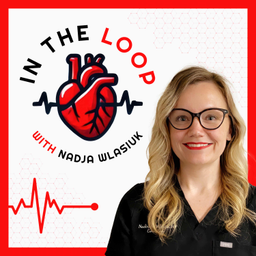
In the Loop with Nadja Wlasiuk
Healthcare education for the novice, the nurse, and the nerd.
5.0from 6 ratings
- 16
- Episodes
- 6
- Ratings
- Monthly
- Cadence
- 2025
- First episode
- 3K
- YouTube views
About In the Loop with Nadja Wlasiuk
Information and education surrounding the world of healthcare for the novice, the nurse, and the nerd hosted by a board certified nurse practitioner. intheloopwithnadja.substack.com (https://intheloopwithnadja.substack.com?utm_medium=podcast)
- Publisher
- Healthcare education for the novice, the nurse, and the nerd.
- Category
- education · science
- Language
- en
- Explicit
- No
- First episode
- 8 Jan 2025
- Latest episode
- 12 Aug 2026
Latest episodes
16 episodes in the feed.
12 Aug 2026
Episode 16: Let's Get Physical. Therapy.
What does a physical therapist actually do? Exercise, apparently. But there’s a lot more to physical therapy than bands, stretches, and making you do exercises you would really rather not do. In this episode, I’m joined by Dr. Austin Padua, a physical therapist with MarinHealth and, full disclosure, my physical therapist. Austin works in outpatient orthopedics with patients across the healthspan, helping them recover from injuries and surgery, manage chronic pain, rebuild strength and function, and get back to the things that matter to them. https://www.mymarinhealth.org/find-a-provider/austin-padua-pt/ (https://www.mymarinhealth.org/find-a-provider/austin-padua-pt/) We talk about how Austin’s own fractured hip as a teenager led him to physical therapy and eventually a career as a PT, as well as his background as an endurance athlete. Then we get into the questions many of us have when something starts hurting: • What’s the difference between soreness, pain, and an actual injury?• How do you know when to keep moving and when to get evaluated?• Why doesn’t an ugly MRI necessarily mean your body is broken?• Should you stop squatting if you have arthritic knees?• What actually helps prevent injuries?• How important are strength training and recovery as we get older?• Is stretching overrated?• And do you really need that massage gun sitting in your drawer? We also talk about the growing role of AI in healthcare and physical therapy. Patients are already using tools like ChatGPT and Claude to interpret imaging reports, troubleshoot pain, modify workouts, and generate exercises. Austin and I talk about where those tools can be useful, where they can go wrong, and why the assessment, judgment, and human relationship with a clinician still matter. Most importantly, this conversation is about function. Physical therapy isn’t necessarily about making every ache and pain disappear. It’s about understanding your body, building confidence in what it can do, and developing the strength and capacity to keep doing the things that make up your life. And because Austin has actually treated me, we also discuss my apparently “basic” pathology, whether I am in fact the problem, and some of the creative forms of torture he continues to prescribe for me. It’s practical, evidence-informed, occasionally ridiculous, and hopefully a reminder that our bodies are meant to move. Here’s a photo of Austin working very diligently: Produced by: Nadja Wlasiuk, DNP, APRN, FNP-BC, CCK Get full access to In the Loop with Nadja Wlasiuk at intheloopwithnadja.substack.com/subscribe (https://intheloopwithnadja.substack.com/subscribe?utm_medium=podcast&utm_campaign=CTA_4)
27 May 2026
Episode 15: ECG Primer-Why Lead Placement Matters
In this episode, we’re breaking down the electrocardiogram—ECG or EKG (same thing). This should be simple. It is.And it isn’t.And it matters more than people think. This is one of the most commonly used tools in medicine, but it’s also one of the most misunderstood when it comes to fundamentals. We’ll cover: * What an ECG actually measures * What all the “squiggly lines” represent * The basic complexes: P wave, QRS, and T wave * How to read an ECG in a consistent, systematic way * What each lead is really showing you (think: different camera angles) * The difference between limb leads and precordial leads * Why electrode placement is NOT optional if you want accurate data Here is a clinical example inspired by The Pitt and how poor placement can miss a life-threatening diagnosis Quotes you can’t argue with: “Bad data is s**t data” “Women are misdiagnosed for heart attacks all the time” “It turns out women want to live” “EKG is a great tool if you use it right” Regarding electrode placement and breast tissue: The current recommendations and available evidence: Kligfield et al., 2007 (https://www.ahajournals.org/doi/10.1161/circulationaha.106.180200)found that reproducibility of ECG measurements was slightly increased when electrodes were placed on top of the breast. Another patient preference study (Wallen et al., 2014 (https://emj.bmj.com/content/31/10/851.short)) found that 52% of women preferred on-breast placement, 38% were indifferent, and only 10% preferred under-breast placement. Nonetheless, the current AHA/ACC/HRS guidelines (https://www.ahajournals.org/doi/10.1161/circulationaha.106.180200) suggest placing electrodes beneath the breast is the most common practice and is thought to reduce amplitude attenuation caused by higher torso impedance from overlying breast tissue. However, placing V4 under the breast can cause V5 and V6 to be positioned too inferiorly (below the horizontal plane of V4), which may alter voltage amplitudes used in diagnosing ventricular hypertrophy. Importantly, whichever method is used, consistency between serial ECGs is critical. If electrodes are placed under the breast, ensure V5 and V6 remain at the horizontal level of V4 rather than following the inframammary fold downward and in patients where intercostal space palpation is difficult (e.g., obesity), the sternal notch-to-xiphoid length can help locate the 4th intercostal space which is approximately 67% of the sternal notch-to-xiphoid distance. UCSF PlaySafe Sports Medicine Program: https://playsafe.ucsf.edu/content/ucsf-playsafe-sports-medicine-program (https://playsafe.ucsf.edu/content/ucsf-playsafe-sports-medicine-program) UCSF PlaySafe Cardiac Physicals: https://playsafe.ucsf.edu/playsafe-cardiac-physicals (https://playsafe.ucsf.edu/playsafe-cardiac-physicals) The Electrocardiogram at 100 Years: History and Future: https://www.ahajournals.org/doi/10.1161/CIRCULATIONAHA.123.065489 (https://www.ahajournals.org/doi/10.1161/CIRCULATIONAHA.123.065489) The Invention of Electrocardiography Machine: https://pmc.ncbi.nlm.nih.gov/articles/PMC6881865/ (https://pmc.ncbi.nlm.nih.gov/articles/PMC6881865/) Einthoven’s Triangle: https://aclscertification.org/acls-einthovens-triangle/ (https://aclscertification.org/acls-einthovens-triangle/) Please visit Life in the FastLane: https://litfl.com/ecg-library/basics/ (https://litfl.com/ecg-library/basics/) My Favorite ECG books: Rapid Interpretation of EKG’s, Sixth Edition 6th Edition by Dale Dubin Sparkson’s Illustrated Guide to ECG Interpretation by Jorge Muniz 12-Lead ECG: The Art of Interpretation Second Edition by Tomas Garcia EKGs for the Nurse Practitioner and Physician Assitant by Maureen Knechtel ECG Mastery: the Simplest Way to Learn ECG by Kuhn, Lang, Wiesbauer Produced by: Nadja Wlasiuk, DNP, APRN, FNP-BC, CCK Get full access to In the Loop with Nadja Wlasiuk at intheloopwithnadja.substack.com/subscribe (https://intheloopwithnadja.substack.com/subscribe?utm_medium=podcast&utm_campaign=CTA_4)
11 Mar 2026
Episode 14: From Thailand to UCSF: The Journey to Electrophysiology Fellowship
In this episode, I sit down with Dr. Jakrin “Joe” Kewcharoen, a Clinical Cardiac Electrophysiology fellow at UCSF to explore the journey of becoming a heart rhythm specialist and the important role fellows play in patient care at academic medical centers. Dr. Kewcharoen shares his unique path from Thailand to the United States and explains how international medical graduates navigate the U.S. training system while pursuing highly competitive specialties like cardiology and electrophysiology. The conversation also provides an inside look at how electrophysiology fellows work alongside attending physicians, nurse practitioners, nurses, and the broader care team in the EP lab. Fellows are already trained cardiologists who perform procedures, evaluate patients, and continue developing advanced procedural skills under expert supervision. Dr. Kewcharoen also discusses the rapidly evolving field of electrophysiology, including new technologies that are transforming arrhythmia care and the complex puzzle-solving involved in treating ventricular tachycardia. About the Guest Dr. Jakrin “Joe” Kewcharoen Dr. Kewcharoen graduated from Chulalongkorn University in Thailand in 2017 and moved to the United States in 2018 to pursue postgraduate medical training. He completed his Internal Medicine residency at the University of Hawai‘i, followed by a Cardiovascular Disease Fellowship at Loma Linda University. He is currently completing a Clinical Cardiac Electrophysiology Fellowship at UCSF. Dr. Kewcharoen has been highly active in academic research, with over 100 peer-reviewed publications during his medical training. His research focuses on electrophysiology procedural outcomes, sudden cardiac death in the community, and inherited arrhythmia syndromes such as Brugada syndrome, a genetic disorder associated with life-threatening arrhythmias. At UCSF, he is currently involved in several research projects examining sudden cardiac death using a unique autopsy-based cohort, helping researchers better understand the cardiac and non-cardiac causes of sudden death. Outside of medicine, Dr. Kewcharoen enjoys weightlifting, basketball, playing guitar, and board games. Topics Discussed * What electrophysiology fellows actually do in the EP lab * The pathway from medical school to electrophysiology training * Differences between medical training in Thailand and the United States * Challenges and opportunities for international medical graduates * The team-based care model in electrophysiology * Pacemakers, defibrillators, and catheter ablation * The future of arrhythmia care and emerging technologies * Ventricular tachycardia ablation and complex arrhythmia management Educational Resources Understanding Electrophysiology What is an electrophysiologist? (https://my.clevelandclinic.org/health/articles/24039-electrophysiologist): https://my.clevelandclinic.org/health/articles/24039-electrophysiologist (https://my.clevelandclinic.org/health/articles/24039-electrophysiologist) Pacemakers and Defibrillators Explained What is a pacemaker?: https://www.ucsfhealth.org/treatments/pacemaker (https://www.ucsfhealth.org/treatments/pacemaker) What is an implantable cardioverter defibrillator (ICD)?: https://www.ucsfhealth.org/treatments/implantable-cardioverter-defibrillator (https://www.ucsfhealth.org/treatments/implantable-cardioverter-defibrillator) What is Brugada Syndrome? Brugada syndrome is an inherited condition that predisposes individuals to ventricular arrhythmias and sudden cardiac arrest, often diagnosed through characteristic ECG patterns. https://www.sciencedirect.com/science/article/pii/S2405500X2101080X?utm_ (https://www.sciencedirect.com/science/article/pii/S2405500X2101080X?utm_) Suggested Further Reading • Research on arrhythmia risk in Brugada syndromeWide QRS complexes have been associated with a higher risk of major arrhythmic events in patients with Brugada syndrome. https://pmc.ncbi.nlm.nih.gov/articles/PMC7011812/?utm_ (https://pmc.ncbi.nlm.nih.gov/articles/PMC7011812/?utm_) • Atrial fibrillation and arrhythmia risk in Brugada syndromeResearch has shown that atrial fibrillation may increase the risk of serious arrhythmic events in patients with Brugada syndrome. https://pubmed.ncbi.nlm.nih.gov/31353765/ (https://pubmed.ncbi.nlm.nih.gov/31353765/) Produced by: Nadja Wlasiuk, DNP, APRN, FNP-BC, CCK Get full access to In the Loop with Nadja Wlasiuk at intheloopwithnadja.substack.com/subscribe (https://intheloopwithnadja.substack.com/subscribe?utm_medium=podcast&utm_campaign=CTA_4)
25 Feb 2026
Episode 13: An Update with Nick and Lydia
⚠️ This episode contains discussion of cancer treatment, radiation, and survivorship anxiety. Welcome back to In the Loop with Nadja Wlasiuk! If you listened to Episode 10, you remember when Nick shared his rare cancer diagnosis. That episode held a lot of uncertainty. We didn’t know exactly how treatment would unfold. We just knew life had changed. In today’s episode our conversation feels different. Nick and my daughter, Lydia, are home after completing treatment in New York at Memorial Sloan Kettering consisting of six weeks of chemotherapy and radiation, including proton therapy. As a clinician, I understand the treatment plan, the radiation dosing, the surveillance scans. But as a mom, I experienced this in a very different way. This episode is about what happens when the appointments slow down. When the scans are clear. When everyone says, “You’re done.” Because sometimes that’s when the fear shows up. Sometimes that’s when the side effects peak. Sometimes that’s when you realize you look different, feel different, and have to renegotiate what normal means. We also talk about Lydia’s experience, not just as a partner, but as a person navigating her own emotional reality while supporting someone she loves. This isn’t just a medical story. It’s a human one. Nick and Lydia, I’m so glad you’re home. 🎧 Missed the Beginning? Listen to Episode 10: https://intheloopwithnadja.substack.com/p/episode-10-nick-and-the-rare-cancer (https://intheloopwithnadja.substack.com/p/episode-10-nick-and-the-rare-cancer) Honey Hounds: https://www.honeyhoundsmusic.com/ (https://www.honeyhoundsmusic.com/) In This Episode We Discuss: * What daily radiation actually feels like * Proton therapy vs photon radiation * Delayed side effects after treatment completion * Chemotherapy-related tinnitus and fatigue * Radiation effects on nasal tissue and hair follicles * Circulating tumor DNA (ctDNA) testing * Surveillance imaging and scan anxiety * Fear of recurrence * The emotional transition into survivorship * The partner experience — and why caregivers deserve space too What is proton therapy: Proton vs Photon Therapy: https://www.moffitt.org/taking-care-of-your-health/taking-care-of-your-health-story-archive/proton-radiation-therapy-vs.-photon-radiation-therapy-for-standard-care (https://www.moffitt.org/taking-care-of-your-health/taking-care-of-your-health-story-archive/proton-radiation-therapy-vs.-photon-radiation-therapy-for-standard-care) What is circulating tumor DNA (ctDNA)? ctDNA testing looks for fragments of tumor DNA in the bloodstream and is increasingly being studied as a tool for detecting minimal residual disease and monitoring recurrence. The Transition from Treatment to Survivorship Many patients report that the weeks following treatment completion can be emotionally complex. Fear of recurrence, delayed side effects, and identity shifts are common. Surveillance typically includes: * Scheduled PET scans and MRIs * Physical exams * Symptom monitoring * Ongoing specialty follow-up Cancer Survivorship: https://www.cancer.org/cancer/survivorship.html (https://www.cancer.org/cancer/survivorship.html) Managing your emotions after cancer treatment: https://www.mayoclinic.org/diseases-conditions/cancer/in-depth/cancer-survivor/art-20047129 (https://www.mayoclinic.org/diseases-conditions/cancer/in-depth/cancer-survivor/art-20047129) https://www.cancer.org/support-programs-and-services.html (https://www.cancer.org/support-programs-and-services.html) For Partners & Caregivers:Supporting someone through cancer affects you too. Explore caregiver support resources here: https://www.cancer.org/cancer/caregivers.html (https://www.cancer.org/cancer/caregivers.html) https://www.cancercare.org/tagged/caregiving (https://www.cancercare.org/tagged/caregiving) Survivorship is not a finish line. It is a new phase-one that requires vigilance, resilience, and often a recalibration of what normal looks like. Thank you for being here for this part of the journey. Produced by: Nadja Wlasiuk, DNP, APRN, FNP-BC, CCK Get full access to In the Loop with Nadja Wlasiuk at intheloopwithnadja.substack.com/subscribe (https://intheloopwithnadja.substack.com/subscribe?utm_medium=podcast&utm_campaign=CTA_4)
8 Jan 2026
Episode 12: Holiday Heart
The holidays are supposed to be festive, but for your heart’s electrical system, they can be a little chaotic. More drinks, less sleep, travel days, salty food, and stress. It’s the kind of combination that can make even a normally well-behaved heart act up. In today’s episode of In the Loop with Nadja Wlasiuk, we’re talking about holiday heart syndrome, that spike in arrhythmias, most commonly atrial fibrillation, that can show up around times of celebration, especially with heavier alcohol intake. Joining me is one of my friends and colleagues, Dr. Albert Liu, a cardiac electrophysiologist and assistant professor at UCSF. He treats patients with heart rhythm disorders and specializes in ablations and lead extractions for devices. And he also has a focused interest in sudden cardiac death. In this conversation, Dr. Liu breaks down what holiday heart actually is, why alcohol can trigger arrhythmias, what other holiday factors can push people towards atrial fibrillation, and practical steps that can reduce risk without turning the season into a stress test. Dr. Liu at UCSF Health: https://www.ucsfhealth.org/providers/albert-liu (https://www.ucsfhealth.org/providers/albert-liu) https://ucsfhealthcardiology.ucsf.edu/people/albert-liu (https://ucsfhealthcardiology.ucsf.edu/people/albert-liu) What You’ll Learn in This Episode * What Holiday Heart Syndrome is and why it’s usually associated with AFib * How binge drinking is defined and why even “moderate” alcohol can matter for some patients * The physiologic mechanisms: alcohol’s effects on atrial conduction, autonomic tone, and electrolytes/oxidative stress * Other common holiday triggers: sleep deprivation, travel/time changes, stress, and high-salt foods * A symptom framework: palpitations vs fatigue vs red flags (syncope, chest pain, dyspnea at rest) * Practical “holiday survival” strategies: moderation, sleep consistency, medication adherence, home monitoring * Where research is going next (e.g., triggers and predictors of recurrence; caffeine studies; lifestyle factors) Key Takeaways * Holiday Heart Syndrome most often refers to new-onset AFib after an episode of heavy alcohol use, often resolving when the trigger stops—but it still warrants follow-up. * The holidays create a perfect storm: alcohol, sleep disruption, travel stress, dietary changes, and autonomic shifts can all increase arrhythmia risk. * Not all palpitations are emergencies—but syncope, chest pressure, or significant shortness of breath at rest should prompt urgent evaluation. Resources Mentioned * American Heart Association News: Before you toast, know the risks of ‘holiday heart syndrome’ (https://www.heart.org/en/news/2025/12/15/before-you-toast-know-the-risks-of-holiday-heart-syndrome) * American Heart Association Scientific Statement: Alcohol Use and Cardiovascular Disease (https://www.ahajournals.org/doi/10.1161/CIR.0000000000001341?utm_) (https://www.ahajournals.org/doi/10.1161/CIR.0000000000001341?utm_) * JAMA Patient Page: Atrial Fibrillation (https://jamanetwork.com/journals/jama/fullarticle/2780488?) (patient-friendly overview) (https://jamanetwork.com/journals/jama/fullarticle/2780488?) * Background reading: Holiday Heart overview (NIH/NCBI Bookshelf) (https://www.ncbi.nlm.nih.gov/books/NBK537185/) * UCSF Health News: * Alcohol Can Cause Immediate Risk of Atrial Fibrillation (https://www.ucsf.edu/news/2021/08/421341/alcohol-can-cause-immediate-risk-atrial-fibrillation) * Drink Up: Coffee Is Safe for People with A-Fib (https://www.ucsf.edu/news/2025/11/431036/coffee-safe-for-a-fib) Medical Disclaimer This podcast is for general education and does not provide individual medical advice. If you have symptoms or concerns, please contact your clinician. If you have chest pain, fainting, severe shortness of breath, or feel acutely unwell, seek emergency care. Produced by: Nadja Wlasiuk, DNP, APRN, FNP-BC Get full access to In the Loop with Nadja Wlasiuk at intheloopwithnadja.substack.com/subscribe (https://intheloopwithnadja.substack.com/subscribe?utm_medium=podcast&utm_campaign=CTA_4)
12 Nov 2025
Episode 11: Pacemaker Primer
Welcome back to In The Loop with Nadja Wlasiuk. Today, we’re diving into something I see nearly every day in practice, pacemakers, the small life-changing devices that keep the heart beating in rhythm when its natural electrical system can’t keep up. Whether it’s from age-related conduction disease, sinus node dysfunction, or for atrial fibrillation, pacemakers can restore energy, prevent fainting, and quite literally give people their lives back. We’ll explore what a pacemaker actually does, how it knows when to step in, and the differences between single chamber, dual chamber, cardiac resynchronization, or CRT, and even leadless pacemakers, pacemakers so small that they look like a vitamin. To help us unpack all of that, I am joined by Lauren Parr, a biomedical engineer and clinical specialist in cardiac rhythm management. She’s IBHRE certified as a cardiac device specialist and a graduate of the University of Missouri, Columbia. With years of experience in the electrophysiology lab supporting device implants, troubleshooting leads, and and educating both clinicians and patients. Lauren brings an engineer’s precision and a clinician’s heart to this conversation, and together we’ll translate pacemaker language into plain English. So whether you’re a nurse, a provider, or someone curious about how these devices keep the rhythm of life steady, this episode is for you. All right, let’s get in the loop on pacemakers. Pacemaker Origin Story: Pacemaker technology was born in two places at once.In 1958, Dr. C. Walton Lillehei, a cardiac surgeon at the University of Minnesota, teamed up with Earl Bakken, an electrical engineer and co-founder of a small medical device company in Minneapolis, to design the world’s first battery-powered external pacemaker. Before then, pacemakers had to be plugged in to an outlet. That same year in Sweden, Dr. Åke Senning and engineer Rune Elmqvist implanted the first fully internal pacemaker, marking the transition from external to implantable devices. Together, these breakthroughs laid the foundation for the modern pacemaker that is smaller, smarter, and life-sustaining. Helpful Patient-Friendly Resources on Pacemakers • American Heart Association — What a pacemaker is, why it’s used, and a plain-language overview of single-, dual-, and biventricular (CRT) pacemakers.🔗 heart.org/pacemaker (https://www.heart.org/en/health-topics/arrhythmia/prevention--treatment-of-arrhythmia/pacemaker) • UCSF Health — Clear, patient-focused explanation of pacemaker types, how implantation is performed, and what recovery and daily life look like.🔗 ucsfhealth.org/treatments/pacemaker (https://www.ucsfhealth.org/treatments/pacemaker) • Cleveland Clinic — Breaks down single-, dual-, biventricular/CRT, and leadless pacemakers in easy-to-understand language, with diagrams and FAQs about surgery and safety.🔗 clevelandclinic.org/permanent-pacemaker (https://my.clevelandclinic.org/health/treatments/17360-permanent-pacemaker) • Stanford Health Care — Outlines different pacemaker options and what to expect before, during, and after implantation.🔗 stanfordhealthcare.org/pacemaker/types (https://stanfordhealthcare.org/medical-treatments/p/pacemaker/types.html) • National Heart, Lung & Blood Institute (NHLBI) — Offers visuals and simple explanations of how pacemakers work, including leadless systems.🔗 nhlbi.nih.gov/pacemakers (https://www.nhlbi.nih.gov/health/pacemakers/how-it-works) • NYU Langone Health — Provides context on pacemakers alongside other cardiac implantable devices, highlighting how each supports rhythm management.🔗 nyulangone.org/cardiac-device-management (https://nyulangone.org/conditions/cardiac-device-management/types) Standard Post Op Wound Care Recommendations (for your individual situation please follow the guidance of your healthcare team) You may shower. Do NOT submerge site in water until fully healed. No swimming, baths, or hot tubs. Try to avoid letting the shower stream hit the incision directly. Pat site dry with paper towel or clean towel. Do not scrub or aggressively dry the incision. Steristrips typically fall of within 2 weeks. If they do not after 2 weeks post procedure it may be okay to just remove them. Avoid touching site. Hands have bacteria. Bacteria can cause infection. If you notice any drainage from your device site please call your clinic immediately. If you notice chills, fever, or you feel unwell, notify your clinic immediately. Lauren and Nadja next to the largest leadless pacemaker Standard Post Op Activity Recommendations (for your individual situation please follow the guidance of your healthcare team) Remember that it takes 6 weeks for the leads to fully heal in place. Avoid sharp jerking motions with the implant arm. Avoid reaching the implant arm high above the head and far behind the back. Avoid lifting, pushing, or pulling anything greater than 5lbs for the first 2-4 weeks. For the life of the device/leads avoid repeated overhead motion in the gym or with activity that could impinge the lead with the clavicle to help maintain lead integrity. Nadja and her demos 🩺 Pacemaker Quick-Check Guide for Non-EP Providers A practical checklist for when you encounter a patient with an implanted pacemaker. 1. Identify and Confirm the Device * Ask the patient if they have a pacemaker (some may not know if it’s also a defibrillator). * Look for a scar or bulge—typically left upper chest, sometimes right or abdominal in pediatrics. * Ask for or locate the patient’s device card — this lists the manufacturer, implant date, and model. * Document the manufacturer and last follow-up date (you’ll need this for MRI or procedure planning). 2. Review the Patient’s Clinical Context * Why do they have it? (e.g., AV block, sick sinus syndrome, post–AV node ablation, heart failure with CRT). * Dependent or not? Ask if they were told they’re “pacemaker dependent.” * Any recent symptoms? Dizziness, syncope, palpitations, fatigue, chest pain, or shortness of breath. 3. Vital Signs and Monitoring * Obtain a rhythm strip or telemetry reading. * Paced rhythm? Look for pacing spikes. * Native rhythm? That’s okay—pacemakers don’t pace 100% of the time. * Do not panic if “asystole” alarms but the patient is talking—tele monitors can misread small paced complexes or small native QRS. * Always assess the patient first, not just the monitor. 4. Diagnostic and Imaging Considerations * MRI: * Most modern pacemakers are MRI-conditional (safe under specific settings). * Check device card or chart; if unsure, contact the implanting center or device representative. * Do not order MRI until compatibility is confirmed. * X-ray or CT: Safe. Chest X-ray can show lead position and number of leads. * Electrocautery/Surgery: * For procedures below the umbilicus, generally safe without special measures. * Above the umbilicus or on the ipsilateral shoulder: a magnet may be required or have EP/device support available. * Avoid monopolar cautery near the generator pocket when possible. 5. Common Post-Implant Considerations * Incision: Watch for erythema, swelling, drainage (possible infection). * Pain or arm immobility: Encourage gentle movement to prevent frozen shoulder after healing. * Pocket revisions or generator changes happen roughly every 7–10 years (battery end-of-life). * Pacemaker-dependent patients may need temporary pacing if generator fails or must be replaced. 6. Remote Monitoring & Follow-Up * Most patients are enrolled in remote monitoring every ~3 months. * Remote transmissions are diagnostic, not emergency alerts.They flag issues like lead impedance/threshold/sensing, battery status, or arrhythmia detection for review. * If the patient reports alerts or “beeping,” contact the device clinic or the manufacturer—not 911 unless symptomatic. 7. When to Call the Device Clinic or EP Team * After other causes for symptoms of dizziness, syncope, chest pain, palpitations, or fatigue have been ruled out. * Recent procedure or trauma near the device site. * Concern for infection (pocket redness, pain, drainage). * Loss of capture or erratic telemetry. * Unknown manufacturer or model (need interrogation). Produced by Nadja Wlasiuk, DNP, APRN, FNP-BC Get full access to In the Loop with Nadja Wlasiuk at intheloopwithnadja.substack.com/subscribe (https://intheloopwithnadja.substack.com/subscribe?utm_medium=podcast&utm_campaign=CTA_4)
21 Oct 2025
Episode 10: Nick and the Rare Cancer Diagnosis
Welcome back to In the Loop with Nadja Wlasiuk. Today’s episode is deeply personal. My guests are my oldest daughter, Lydia, and her partner, Nick, a 35-year-old musician with the rock-and-roll (very bluesy) band Honey Hounds, who was recently diagnosed with a very rare and aggressive cancer (sinonasal teratocarcinosarcoma). What started as a stubborn sinus infection quickly became something far more serious. Together, we talk about how easily symptoms can be minimized or dismissed, what it’s like to fight for answers, and the emotional and practical realities of navigating a rare diagnosis that has brought them all the way from their home in Jacksonville, Florida to New York City for treatment. As a nurse practitioner, this conversation really made me pause. It reminded me how quickly we can default to “routine” thinking, and how crucial it is that we listen, we really listen, to what our patients are telling us. Sometimes the details that sound minor to us are the signals that change everything. This episode isn’t just about medicine; it’s about persistence, partnership, and hope. It’s about the power of love and advocacy when life changes overnight. If you’d like to help support Nick’s care, you’ll find links in the show notes to his GoFundMe and to Honey Hounds on Spotify. Every stream, share, and donation truly helps as they navigate life between Jacksonville and New York for treatment. I’m grateful to Lydia and Nick for their honesty and courage in sharing their story. Let’s get in the loop. Honey Hounds on Spotify: Nick and Lydia visiting San Francisco Sinonasal Teratocarcinosarcoma Sinonasal Teratocarcinosarcoma, a Rare Tumor Involving Both the Nasal Cavity and the Cranial Cavity: https://pmc.ncbi.nlm.nih.gov/articles/PMC7221467/ (https://pmc.ncbi.nlm.nih.gov/articles/PMC7221467/) The neurosurgical management of sinonasal malignancies involving the anterior skull base: a 28-year experience at The MD Anderson Cancer Center: https://thejns.org/view/journals/j-neurosurg/136/6/article-p1583.xml (https://thejns.org/view/journals/j-neurosurg/136/6/article-p1583.xml) Sinonasal Teratocarcinosarcoma of the Head and Neck A Report of 10 Patients Treated at a Single Institution and Comparison With Reported Series: https://jamanetwork.com/journals/jamaotolaryngology/fullarticle/408675 (https://jamanetwork.com/journals/jamaotolaryngology/fullarticle/408675) Treatment of Sinonasal Teratocarcinosarcoma: A Systematic Review and Survival Analysis: https://pmc.ncbi.nlm.nih.gov/articles/PMC8258305/ (https://pmc.ncbi.nlm.nih.gov/articles/PMC8258305/) Memorial Sloan Kettering Cancer Center https://www.youtube.com/@mskcc (https://www.youtube.com/@mskcc) Head and Neck Cancers: https://www.mskcc.org/cancer-care/types/head-neck?utm_source=chatgpt.com (https://www.mskcc.org/cancer-care/types/head-neck?utm_source=chatgpt.com) Skull Base Tumors: https://www.mskcc.org/cancer-care/types/skull-base-tumors?utm_source=chatgpt.com (https://www.mskcc.org/cancer-care/types/skull-base-tumors?utm_source=chatgpt.com) Clinical Communication: Recognizing and Addressing Symptom Dismissal Patients’ Perceptions of Health Care Providers’ Dismissive Communication: https://pubmed.ncbi.nlm.nih.gov/34344222/ (https://pubmed.ncbi.nlm.nih.gov/34344222/) When Doctors Dismiss Symptoms, Patients Suffer Lasting Harm: https://rutgershealth.org/news/when-doctors-dismiss-symptoms-patients-suffer-lasting-harm?utm_source=chatgpt.com (https://rutgershealth.org/news/when-doctors-dismiss-symptoms-patients-suffer-lasting-harm?utm_source=chatgpt.com) “The study offers guidance for healthcare providers facing diagnostic uncertainty. Bontempo recommends that clinicians validate patients’ experiences regardless of whether they can diagnose them. “I don’t recommend reassurance about it ‘probably being nothing serious’ to patients who have a lot of distress about their symptoms,” Bontempo said. “Patients appreciate clinicians communicating their uncertainty and admitting they don’t know something.”” Medical gaslighting tops list of highest patient safety risks: https://healthjournalism.org/blog/2025/03/medical-gaslighting-tops-list-of-highest-patient-safety-risks/ (https://healthjournalism.org/blog/2025/03/medical-gaslighting-tops-list-of-highest-patient-safety-risks/) Nick and Lydia serenading us after Thanksgiving Dinner 2024 with Valerie (originally written by the Zutons and popularized by Amy Winehouse): Produced by: Nadja Wlasiuk, DNP, APRN, FNP-BC Get full access to In the Loop with Nadja Wlasiuk at intheloopwithnadja.substack.com/subscribe (https://intheloopwithnadja.substack.com/subscribe?utm_medium=podcast&utm_campaign=CTA_4)
10 Sept 2025
Episode 9: Atrial Fibrillation Primer
Welcome back to In The Loop with Nadja Wlasiuk. In this episode, we are diving into a rhythm that affects millions of people worldwide, atrial fibrillation. Atrial fibrillation, or AFib, is the most common heart rhythm problem that we see. In the United States alone, more than 5 million people are living with it, and that number is expected to double or even triple by 2050. It accounts for a huge portion of hospitalizations and long-term medication use, and it can have major impacts not just on health, but on quality of life. So if you're a patient who's just been diagnosed and feeling overwhelmed, or you're a family member trying to understand what's happening to your loved one, or if you're a nurse, nurse practitioner, or healthcare provider who wants a clear evidence-based resource to share with patients or just to refresh your own knowledge, this episode is for you. I'm going to walk you through what atrial fibrillation is, why it matters, and the different ways it can be treated, from medications to ablation to lifestyle changes. My hope is that if you're a patient, this can be something you come back to after a clinic visit when you need a refresh, because I know it's hard to absorb everything all at once. This podcast is for education and information only. It is not a substitute for your own medical care. Please talk with your health care provider about your own individual situation. I am so excited about this episode on atrial fibrillation because it's almost like you're going to be with me in a visit with someone learning about atrial fibrillation for the first time. This is, again, entirely for informational and educational purposes. This is not medical advice. And if you have atrial fibrillation or you know someone who has atrial fibrillation and needs specific medical advice, Please seek out the expertise of a healthcare provider that knows you. Atrial fibrillation (AF or Afib): https://www.ucsfhealth.org/conditions/atrial-fibrillation (https://www.ucsfhealth.org/conditions/atrial-fibrillation) https://upbeat.org/patient-resources (https://upbeat.org/patient-resources) Symptoms: Fatigue, shortness of breath at rest or with activity, palpitations, dizziness, lightheadedness, chest tightness Duration: * Paroxysmal: lasting less than 7 days and self converting * Persistent: lasting longer than 7 days or requires outside conversion * Longstanding persistent: lasting longer than 12 months * Permanent: No further attempt for rhythm control Risks: * Stroke * Tachycardia or Arrhythmia mediated cardiomyopathy * Heart failure and Heart failure hospitalizations * Cognitive decline/Dementia Treatment Goals: * Prevent stroke * Rate Control * Rhythm Control CHA2DS2-VASc Score * Congestive Heart Failure 1 * Hypertension 1 * Age 75 or older 2 * Diabetes * Stroke/TIA/blood clot 2 * Vascular disease: MI/PAD/aortic plaque 1 * Age 65-74 1 * Sex- female 1 Atrial fibrillation Guidelines: https://www.ahajournals.org/doi/epub/10.1161/CIR.0000000000001193 (https://www.ahajournals.org/doi/epub/10.1161/CIR.0000000000001193) Anticoagulants: * Vitamin K reductase inhibitor * warfarin or Coumadin-cheap, requires frequent monitoring, diet can affect therapeutic levels * Direct Oral Anticoagulants or DOACs-can be quite expensive * Factor Xa inhibitors * apixaban or Eliquis-twice daily * rivaroxaban or Xarelto-best with high calorie meal; once daily * edoxaban or Savaysa-limited use In patients that are younger and healthier with high renal function * Direct Factor IIa inhibitor * dabigatran or Pradaxa-loses efficacy when exposed to moisture-keep In original packaging until administration * Left atrial appendage closure Rate Control * Beta blockers * selective: metoprolol, atenolol, bisoprolol * non-selective (not ideal for patients with asthma/COPD): propranolol and carvedilol (also alpha blocker good for HTN/CHF) * Calcium Channels Blockers * Digoxin Rhythm control * Medications-Vaughan Williams Classification * Flecainide and propafenone * Class IC * contraindicated in structural heart disease CAD/HFrEF * can be ventricular prorhythmic and should be administered with beta blocker or calcium channel blocker * Sotalol and dofetilide * Class III * started inpatient for monitoring of QT interval prolongation leading to possible Torsades de Pointes * Amiodarone and dronedarone * Broad spectrum but labeled Class III * dronedarone lacks iodine therefore less toxicity but contraindicated in acute heart failure * long half life * requires loading * long term use can lead to toxicity involving the liver, lungs, thyroid, eyes, and skin * routine surveillance required * Cardioversion * Chemical-using medications pill in pocket or daily * Direct current cardioversion- an electric shock * Catheter ablation-Check out Episode 2 for more Information about the electrophysiologist who pioneered this technology * Pulmonary vein isolation-Spontaneous initiation of atrial fibrillation by ectopic beats originating in the pulmonary veins (https://www.nejm.org/doi/full/10.1056/NEJM199809033391003) * Cryoablation * Radiofrequency * Pulsed Field Ablation * https://www.ucsfhealth.org/treatments/catheter-ablation (https://www.ucsfhealth.org/treatments/catheter-ablation) * https://www.ucsfhealth.org/education/faq-electrophysiology-study-and-catheter-ablation (https://www.ucsfhealth.org/education/faq-electrophysiology-study-and-catheter-ablation) * https://www.ucsfhealth.org/education/preparing-for-an-ep-study (https://www.ucsfhealth.org/education/preparing-for-an-ep-study) * Risks of ablation * https://www.melrobbins.com/episode/episode-281/ * Sleep apnea * https://www.ucsfhealth.org/conditions/sleep-apnea (https://www.ucsfhealth.org/conditions/sleep-apnea) * Relationship between sleep apnea and Atrial Fibrillation: https://www.sciencedirect.com/science/article/pii/S1547527123021811 (https://www.sciencedirect.com/science/article/pii/S1547527123021811) * Tobacco use * Caffeine/stimulant use: coffee-does not increase afib risk but stimulants and energy drinks can * https://www.ucsf.edu/news/2021/07/421086/coffee-doesnt-raise-your-risk-heart-rhythm-problems * Alcohol use * https://www.ucsf.edu/news/2021/08/421341/alcohol-can-cause-immediate-risk-atrial-fibrillation (https://www.ucsf.edu/news/2021/08/421341/alcohol-can-cause-immediate-risk-atrial-fibrillation) * Marijuana use * Sedentary lifestyle * Stress There is no cure for atrial fibrillation just excellent management Long term monitoring with a wearable monitor like an AppleWatch/Garmin/FitBit or a device to spot check like the Kardia device. Blood pressure cuffs and pulse oximeters are less accurate for rhythm and rate surveillance. Produced by Nadja Wlasiuk, DNP, APRN, FNP-BC Get full access to In the Loop with Nadja Wlasiuk at intheloopwithnadja.substack.com/subscribe (https://intheloopwithnadja.substack.com/subscribe?utm_medium=podcast&utm_campaign=CTA_4)
13 Aug 2025
Episode 8: Preeclampsia
Welcome back to In the Loop with Nadja Wlasiuk, where we break down important healthcare topics to keep you informed and empowered. Today’s episode is one that’s both professional and deeply personal for me—we’re talking about preeclampsia. I’ve experienced it twice during my own pregnancies, and while I was fortunate to have good outcomes, I wasn’t told at the time about the increased risk for heart disease, stroke, and other vascular complications later in life. That missing piece of education is one of the reasons I’m so passionate about having this conversation today. Joining me is Dr. Julie Baker-Townsend (https://webapps.unf.edu/faculty/bio/N00013339), a nationally certified women’s health nurse practitioner, Clinical Associate Professor at the University of North Florida School of Nursing, and a highly respected educator and clinician. Julie earned her BSN at the University of North Florida, her MSN at the University of Florida, and finally her DNP at the University of North Florida. She was recognized as one of the Great 100 Nurses of Northeast Florida in 2003. She has worked in high-risk obstetric units with level III NICUs, served vulnerable and underserved populations through the health department, and now divides her time between teaching women’s health at UNF and practicing as a women’s health nurse practitioner. She is highly regarded by her students and colleagues for her clinical expertise, compassion, and unwavering dedication to advancing women’s health and nursing as a whole. Not only is the topic that we're discussing very close to my heart, but Julie is also very close to my heart. She was one of my very first nursing professors and mentors. Her passion for women’s health and her dedication to educating both patients and future clinicians have left a lasting impact on me—not just as a nurse practitioner, but as a woman who’s experienced preeclampsia firsthand. In this conversation, we’ll explore what preeclampsia is, how to recognize early warning signs, what treatment looks like, and the often-overlooked connection between preeclampsia and long-term cardiovascular health. It's almost like you get a peek inside one of her lectures at the University of North Florida. Whether you’ve been through it yourself, care for patients at risk, or just want to better understand this condition, this episode offers both insight and practical steps you can take for prevention and early detection. Let’s get started. Florida Gateway College: https://www.fgc.edu/academics/programs/health-sciences/nursing.html (https://www.fgc.edu/academics/programs/health-sciences/nursing.html) University of North Florida School of Nursing: https://www.unf.edu/brooks/nursing/index.htm (https://www.unf.edu/brooks/nursing/index.html) University of Florida College of Nursing: https://nursing.ufl.edu/ (https://nursing.ufl.edu/) What is Preeclampsia: https://www.preeclampsia.org/what-is-preeclampsia (https://www.preeclampsia.org/what-is-preeclampsia) ACOG Preeclampsia and Pregnancy: https://www.acog.org/womens-health/infographics/preeclampsia-and-pregnancy (https://www.acog.org/womens-health/infographics/preeclampsia-and-pregnancy) ACOG Preeclampsia and High Blood Pressure During Pregnancy: https://www.acog.org/womens-health/faqs/preeclampsia-and-high-blood-pressure-during-pregnancy (https://www.acog.org/womens-health/faqs/preeclampsia-and-high-blood-pressure-during-pregnancy) Long Term Effects of Preeclampsia: Preeclampsia Foundation: “Large population studies have demonstrated that two of three preeclampsia survivors will die of heart disease. That’s news to most survivors of preeclampsia and often – sadly – to their doctors.” https://www.preeclampsia.org/the-news/Healthcare-practices/understanding-long-term-effects-of-preeclampsia-and-taking-charge (https://www.preeclampsia.org/the-news/Healthcare-practices/understanding-long-term-effects-of-preeclampsia-and-taking-charge) How preeclampsia accelerates aging in women: https://newsnetwork.mayoclinic.org/discussion/how-preeclampsia-accelerates-aging-in-women/ (https://newsnetwork.mayoclinic.org/discussion/how-preeclampsia-accelerates-aging-in-women/) Hypertension in Pregnancy: Diagnosis, Blood Pressure Goals, and Pharmacotherapy: A Scientific Statement From the American Heart Association 10.1161/HYP.0000000000000208 (https://doi.org/10.1161/hyp.0000000000000208) Long-Term Impacts of Preeclampsia on the Cardiovascular System of Mother and Offspring: “A series of biomolecules involved in inflammation, oxidative stress, and angiogenesis may link pregnancy vascular bed disorders in preeclampsia to the pathogenesis of future CVD and thus could be valuable for the prediction and intervention of long-term CVD in women with a history of preeclampsia and their offspring.” https://doi.org/10.1161/HYPERTENSIONAHA.123.21061 (https://doi.org/10.1161/HYPERTENSIONAHA.123.21061) Preeclampsia beyond pregnancy: long-term consequences for mother and child 10.1152/ajprenal.00071.2020 (http://10.1152/ajprenal.00071.2020) Preeclampsia: 3 Things Women Should Know: “Patients diagnosed with preeclampsia would likely benefit from earlier cardiovascular risk factor screening, including cardiometabolic testing, which involves checking cholesterol levels, markers of type 2 diabetes and other diseases, within a year after delivery, she adds.” https://www.yalemedicine.org/news/preeclampsia (https://www.yalemedicine.org/news/preeclampsia) Damage from preeclampsia may be seen decades later in the eyes: https://www.heart.org/en/news/2022/02/14/damage-from-preeclampsia-may-be-seen-decades-later-in-the-eyes (https://www.heart.org/en/news/2022/02/14/damage-from-preeclampsia-may-be-seen-decades-later-in-the-eyes) HELLP Syndrome: https://youtube.com/shorts/73dGUEkaQ6o?si=RvuN2DK6HgKrocFM (https://youtube.com/shorts/73dGUEkaQ6o?si=RvuN2DK6HgKrocFM) Postpartum Cardiomyopathy: https://www.heart.org/en/health-topics/cardiomyopathy/what-is-cardiomyopathy-in-adults/peripartum-cardiomyopathy-ppcm (https://www.heart.org/en/health-topics/cardiomyopathy/what-is-cardiomyopathy-in-adults/peripartum-cardiomyopathy-ppcm) Magnesium Sulfate: New postpartum program aims to decrease post-birth complications and readmissions in Alabama: https://www.uab.edu/news/health-medicine/new-postpartum-program-aims-to-decrease-post-birth-complications-and-readmissions-in-alabama (https://www.uab.edu/news/health-medicine/new-postpartum-program-aims-to-decrease-post-birth-complications-and-readmissions-in-alabama) Pre-eclamptic women were associated with a significantly and at hitherto unknown long-term increased rate of arrhythmias. 10.1093/eurjpc/zwae176 (https://doi.org/10.1093/eurjpc/zwae176) Julie and me providing free school physicals for school aged children in rural Florida Produced by: Nadja Wlasiuk, DNP, APRN, FNP-BC Get full access to In the Loop with Nadja Wlasiuk at intheloopwithnadja.substack.com/subscribe (https://intheloopwithnadja.substack.com/subscribe?utm_medium=podcast&utm_campaign=CTA_4)
9 Jul 2025
Episode 7: Implantable Loop Recorders
Welcome back to In the Loop with Nadja Wlasiuk, where we make sense of the heart's most curious rhythms, one beat at a time. Today's episode is a special one because we're talking about a device that's not only central to my everyday clinical practice, but also part of the inspiration behind the name of this show, the Implantable Loop Recorder. That's right- I literally put people “in the loop.” Or rather, I put “the loop in them.” These small but mighty devices help us uncover the elusive causes of fainting, palpitations, cryptogenic stroke, and unexplained pauses in heart rhythm. I'll walk you through what a loop recorder is, how it works, why we use it, and what patients can expect from the procedure, from consultation to follow-up. Loop recorders also hold a special place in my heart because I worked with my incredible team to develop an outpatient implantable loop recorder clinic at UCSF Health. Before this clinic, the patients had to come into our hospital and they were implanted behind a curtained area in our EP lab. Whether you're a patient, a clinician, or just curious about the tools we use in electrophysiology, you're in the right place. Let's get into it. For Patients: Abbott ILR (https://www.cardiovascular.abbott/us/en/patients/treatments-therapies/cardiac-monitors/assert-iq-icm.html) Boston Scientific ILR (https://www.bostonscientific.com/en-US/patients-caregivers/treatments-conditions/cardiac-monitoring.html) Medtronic ILR (https://www.medtronic.com/en-us/l/patients/treatments-therapies/insertable-heart-monitors.html) 2:35: Indications for implant 4:09: Classes of REcommendation American Heart Association (https://www.ahajournals.org/doi/10.1161/cir.0000000000000312#:~:text=Updated%20August%202015)-,Classes%20of%20Recommendation%20and%20Levels%20of%20Evidence,consistency%20of%20pertinent%20research%20findings.) 5:31: Cryptogenic Stroke American Stroke Association: https://www.stroke.org/en/about-stroke/types-of-stroke/cryptogenic-stroke (https://www.stroke.org/en/about-stroke/types-of-stroke/cryptogenic-stroke) CRYSTAL-AF Trial (https://www.nejm.org/doi/full/10.1056/NEJMoa1313600) 8:13: Syncope Johns Hopkins (https://www.hopkinsmedicine.org/health/conditions-and-diseases/syncope-fainting): https://www.hopkinsmedicine.org/health/conditions-and-diseases/syncope-fainting (https://www.hopkinsmedicine.org/health/conditions-and-diseases/syncope-fainting) 9:43: Atrial fibrillation management 11:39: Risks 13:23 13:51 20:09 20:30 21:22 In-office insertion of a miniaturized insertable cardiac monitor: Results from the Reveal LINQ In-Office 2 randomized study (https://pubmed.ncbi.nlm.nih.gov/27825975/) For Providers: Abbott ILR (https://www.cardiovascular.abbott/us/en/hcp/products/cardiac-rhythm-management/insertable-cardiac-monitors/assert-iq-icm.html?utm_source=google&utm_medium=sem+ad+1&utm_campaign=Arrhythmia&utm_id=%5B176030000288%5D+CRM%7CIQ+-+Conditions&utm_term=arrhythmia+icm+guidelines&utm_content=best+arrhythmia+monitor&gad_source=1&gad_campaignid=20168630132&gbraid=0AAAAAok4hZvAGUGb52UUVyOCnt8sxlWkC&gclid=CjwKCAjw4K3DBhBqEiwAYtG_9CxfcqUqVkRMnSWl1dF7Lt_7QpNhRVRf7cOKTQ40Jub566pXxoXbzhoCDSwQAvD_BwE&gclsrc=aw.ds) Boston Scientific ILR (https://www.bostonscientific.com/us/en/healthcare-professionals/products/cardiac-monitors/lux-dx-insertable-cardiac-monitor-icm-system/fp00000496.html) Medtronic ILR (https://www.medtronic.com/en-us/healthcare-professionals/products/cardiac-rhythm/cardiac-monitoring/insertable-cardiac-monitors/reveal-linq-icm.html?cmpid=PPC_GOOG_HCP-BD-reveallinq-RSA_AMEROLM-CRM-PanDiagnostics-5068871&sheet=open&ef_id=CjwKCAjw4K3DBhBqEiwAYtG_9NBOHJQnId8f6EWwt9_gk1yyu4IC7D56YxqMzhJIYAuiTIFAnfpjShoCSlUQAvD_BwE:G:s&s_kwcid=AL!18272!3!754863541649!b!!g!!medtronic%20reveal%20linq%20loop%20recorder!15554355263!163735648217&gad_source=1&gad_campaignid=15554355263&gbraid=0AAAAAoUjuAP7cIB4PZFKoqNPshV0IRFrn&gclid=CjwKCAjw4K3DBhBqEiwAYtG_9NBOHJQnId8f6EWwt9_gk1yyu4IC7D56YxqMzhJIYAuiTIFAnfpjShoCSlUQAvD_BwE) Produced by Nadja Wlasiuk, DNP, APRN, FNP-BC Get full access to In the Loop with Nadja Wlasiuk at intheloopwithnadja.substack.com/subscribe (https://intheloopwithnadja.substack.com/subscribe?utm_medium=podcast&utm_campaign=CTA_4)
11 Jun 2025
Episode 6: Adult Congenital Heart Disease
Host Nadja Wlasiuk interviews nurse practitioner Karina Manayan about adult congenital heart disease, including the transition from pediatric to adult care and lifelong considerations for patients.
21 May 2025
Episode 5: Pulmonary Hypertension
Imagine you're caring for a patient who’s been short of breath for months. Their echocardiogram shows right heart strain, but they’re young, with no obvious cardiac disease. You’re thinking: What am I missing? In today’s episode, we’re taking a closer look at pulmonary hypertension—a condition that’s often misdiagnosed or missed entirely until it’s advanced. It can mimic more common conditions like asthma or heart failure, but its management requires a very specific and nuanced approach. To guide us through it, I’m joined by Emily Fedewa, nurse practitioner with the Pulmonary Hypertension Program at UCSF Health. Emily is part of a multidisciplinary team that cares for some of the most complex pulmonary hypertension patients on the West Coast. Together, we’ll explore pathophysiology, clinical presentation, diagnostic workup, and current therapeutic options—including emerging treatments and the critical role of nurse practitioners in chronic disease management. If you’ve ever felt stumped by unexplained dyspnea or struggled to understand how pulmonary hypertension differs from other cardiopulmonary conditions, this one’s for you. Whether you’re in cardiology, pulmonary medicine, or primary care, this episode will give you practical insights into one of medicine’s more challenging diagnoses. Emily Fedewa, MSN, UCSF Health Profile (https://www.ucsfhealth.org/providers/emily-fedewa) 2:14-Levels of Nursing and Education Video (https://youtu.be/1q8tiQoq0tk?si=8mimF9WpxJMckyEf) Levels of Nursing Practice (https://www.nursingworld.org/content-hub/resources/becoming-a-nurse/levels-of-nursing/) 2:40-Interventional Cardiology (https://www.ucsfhealth.org/clinics/interventional-cardiology-program?gad_source=1&gad_campaignid=22388760693&gbraid=0AAAAACoUqcLKe-k5GQsqwudujlP-PetWL&gclid=CjwKCAjwravBBhBjEiwAIr30VEj2tpzVWU7oSh1si9YZ9LBO4aXZhPscj80BZhmbpV6iz4q84Cz4IxoCBMEQAvD_BwE) at UCSF Health 2:43- CCU or Cardiac Care Unit (https://sahyadrihospital.com/blog/difference-between-icu-and-ccu/) 6:17-Assessing fluid volume status: euvolemia/hypervolemia/hypovolemia 7:10-Medicare Telehealth Telehealth includes medical or health services that you get from your health care provider who's located somewhere else (in the U.S.) using audio and video communications technology (or audio-only services in some cases), like through your phone or a computer. Telehealth can provide many services that generally occur in-person, including office visits, psychotherapy, consultations, and certain other medical or health services. Through September 30, 2025, you can get telehealth services at any location in the U.S., including your home. Starting October 1, 2025, you must be in an office or medical facility located in a rural area (in the U.S.) for most telehealth services. If you aren't in a rural health care setting, you can still get certain Medicare telehealth services on or after October 1, including: * Monthly End-Stage Renal Disease (ESRD) visits for home dialysis * Services for diagnosis, evaluation, or treatment of symptoms of an acute stroke wherever you are, including in a mobile stroke unit * Services for the diagnosis, evaluation, or treatment of a mental and/or behavioral health disorder (including a substance use disorder) in your home From https://www.medicare.gov/coverage/telehealth (https://www.medicare.gov/coverage/telehealth) https://telehealth.hhs.gov/providers/telehealth-policy/telehealth-policy-updates (https://telehealth.hhs.gov/providers/telehealth-policy/telehealth-policy-updates) 8:24- 8:47- Pulmonary Hypertension at UCSF Health (https://www.ucsfhealth.org/conditions/pulmonary-hypertension) 9:00-Circulation (https://my.clevelandclinic.org/health/articles/17060-how-does-the-blood-flow-through-your-heart) 9:50-Cardiac Afterload (https://cvphysiology.com/cardiac-function/cf008) 9:24-Right ventricle 9:49-WHO groups https://phassociation.org/types-pulmonary-hypertension-groups/ (https://phassociation.org/types-pulmonary-hypertension-groups/) 10:25-Portal hypertension (https://www.hopkinsmedicine.org/health/conditions-and-diseases/portal-hypertension#:~:text=Portal%20hypertension%20is%20elevated%20pressure,(scarring)%20of%20the%20liver.) 10:40- HFpEF Types of Heart Failure (https://www.heart.org/en/health-topics/heart-failure/what-is-heart-failure/types-of-heart-failure) 11:16- CTEPH (https://www.lung.org/lung-health-diseases/lung-disease-lookup/cteph#:~:text=stretch%20your%20donation.-,Chronic%20Thromboembolic%20Pulmonary%20Hypertension%20(CTEPH),blocking%20or%20narrowing%20the%20arteries.) 11:44- Sarcoidosis (https://www.stopsarcoidosis.org/what-is-sarcoidosis/) 11:48-Sickle Cell Disease (https://www.mayoclinic.org/diseases-conditions/sickle-cell-anemia/symptoms-causes/syc-20355876) 13:27- Risk Factors (https://phassociation.org/patients/aboutph/risk-factors/) 13:40- Scleroderma (https://www.mayoclinic.org/diseases-conditions/scleroderma/symptoms-causes/syc-20351952) 13:59- Interstitial Lung Disease (ILD) (https://www.lung.org/lung-health-diseases/lung-disease-lookup/interstitial-lung-disease) 14:17- PHTN symptoms (https://my.clevelandclinic.org/health/diseases/6530-pulmonary-hypertension-ph) 15:40-Heart Failure symptoms (https://www.heart.org/en/health-topics/heart-failure/warning-signs-of-heart-failure) 19:30- Right heart catheterization (RHC) (https://www.ucsfhealth.org/medical-tests/swan-ganz---right-heart-catheterization#:~:text=Swan%2DGanz%20catheterization%20(also%20called,in%20and%20around%20the%20heart.) 19:58- Wedge pressure (https://litfl.com/pulmonary-artery-wedge-pressure/) 2016- Output (https://my.clevelandclinic.org/health/diagnostics/23344-cardiac-output) 2027- Etiology- the cause 20:31- Pre and post capillary (https://www.ahajournals.org/doi/10.1161/CIRCULATIONAHA.119.040295) 22:50-Coronary Artery Disease (https://www.heart.org/en/health-topics/consumer-healthcare/what-is-cardiovascular-disease/coronary-artery-disease) 23:12-Left heart catheterization (LHC) (https://www.mayoclinic.org/tests-procedures/cardiac-catheterization/about/pac-20384695) 23:59- Treatment (https://phassociation.org/patients/treatments/) 41:13- Lifestyle factors (https://phassociation.org/patients/living-with-ph/diet-nutrition/) 46:52- Pulmonary Hypertension Association (https://phassociation.org/) 47:49- 49:45- Safety, Feasibility, and Utility of Digital Mobile Six-Minute Walk Testing in Pulmonary Arterial Hypertension: The DynAMITE Study. (https://stanfordhealthcare.org/publications/919/919933.html) Produced by Nadja Wlasiuk, NP Get full access to In the Loop with Nadja Wlasiuk at intheloopwithnadja.substack.com/subscribe (https://intheloopwithnadja.substack.com/subscribe?utm_medium=podcast&utm_campaign=CTA_4)
9 Apr 2025
Episode 4: I'm Nadja-Nice to Meet You
Disclaimer: Thank you for bearing with the audio quality. Previous episodes had a proper producer. This is my first time producing the podcast on my own. In today's episode, I wanted to do things a little bit differently. I've asked my friend and colleague, Joan, to interview me. I wanted to give you an opportunity to learn more about my story, the experiences that shaped my career, and my passion for making healthcare knowledge more approachable. If you'd like to get to know me better, this episode is a great start. You can also check out the show notes from today's episode on Substack (https://intheloopwithnadja.substack.com/), my UCSF health profile (https://www.ucsfhealth.org/providers/nadine-wlasiuk), or my Instagram (https://www.instagram.com/nadjaepnp/) and TikTok (https://www.tiktok.com/@nadjawlasiukepnp). I feel that I've lived several lives already, and I'm only in my mid-40s. I've been and am a mom to four now grown-up kids, a barista, a manager at a pizza restaurant. But my healthcare career started when I was curious about a mother's experience and my own experience around childbirth. I became a doula (https://www.dona.org/), a certified childbirth educator, and a birth assistant for licensed midwives. I was accepted into the nursing program at the University of North Florida and worked at St. Vincent's Riverside as a medical surgical nurse. I went straight into graduate school at the University of Florida and exited with my master's degree and my certification as a primary care pediatric nurse practitioner. I was faculty at the University of North Florida in the School of Nursing, and I also worked with the Tony Boselli Foundation's Healthy Schools Program and as a nursing supervisor at both St. Vincent's Riverside and Baptist Beaches Hospitals. I then went on to earn my doctorate in nursing practice at the University of North Florida and my certification as a family nurse practitioner. I was then an inpatient cardiology and electrophysiology nurse practitioner at St. Vincent's Riverside before I accepted a position as both an inpatient and outpatient electrophysiology nurse practitioner at Marin Health, which was the impetus for moving from coast to coast to the San Francisco Bay Area. I then was offered a position at UCSF Health as an outpatient electrophysiology nurse practitioner in the summer of 2022. If you have any questions about my path, or if I can help you on your journey, or you have any ideas for upcoming episodes, please leave a comment on any of my social media platforms or Substack. I hope you enjoy today's episode and getting to know me and it helps you see why I feel strongly about access to care and understandable healthcare information for everyone. Follow along with show notes below-Links in italics for easy identification. Please share this episode, rate the podcast, and/or leave a comment! Dr. Nadja Wlasiuk: https://www.ucsfhealth.org/providers/nadine-wlasiuk 5:18: My баба or Бабуся Lidya Litwinko Wlasiuk (The most incredible human being I’ve ever known) pictured here on her 91st birthday. 6:08: Hypertensive Crisis (https://my.clevelandclinic.org/health/diseases/24470-hypertensive-crisis) Khan Academy Video (https://youtu.be/ePWrbBJgssw?si=bjdWzX0di45r6uo6) 7:32: My mentor that says “Dude!” The one and only Dr. Julie Baker-Townsend. 7:50: My first Electrophysiology team at Ascension St. Vincent’s Riverside in Jacksonville, FL 8:07: Dr. Tony Magnano (or T$) (https://healthcare.ascension.org/find-care/provider/1164494563/anthony-magnano) 8:36: Atrial fibrillation (https://www.ucsfhealth.org/conditions/atrial-fibrillation) 8:38: Warfarin: from rat poison to clinical use (https://www.nature.com/articles/nrcardio.2017.172) 8:53: Pacemaker (https://www.ucsfhealth.org/treatments/pacemaker) 12:25: 12:48: Dr. William Ahrens (https://scholars.unf.edu/en/persons/william-d-ahrens) 13:02: University of North Florida School of Nursing (https://www.unf.edu/brooks/nursing/index.html) 15:29: Anu 21:09: Why yes, that is me as Bilbo Baggins 21:42: Afib ablation (https://www.ucsfhealth.org/treatments/catheter-ablation) 26:50: Take an ECG with your AppleWatch (https://support.apple.com/en-us/120278) 27:18: Dr. Marco Perez (https://stanfordhealthcare.org/doctors/p/marco-perez.html) 29:06: Hosted by: Joan Byrnes, RN Produced by: Nadja Wlasiuk, DNP, APRN Always looking for great team mates or a producer that knows more than I do! Get full access to In the Loop with Nadja Wlasiuk at intheloopwithnadja.substack.com/subscribe (https://intheloopwithnadja.substack.com/subscribe?utm_medium=podcast&utm_campaign=CTA_4)
12 Mar 2025
Episode 3: Strength and Nutrition with the Fit Breakthrough
The motivation behind today’s episode comes from frequent interactions with patients asking for advice on weight loss, nutrition, and fitness. All three of these are really important modifiable lifestyle factors that I speak to every day, but don’t have the bandwidth to address in depth during a brief 30 minute follow up. I personally feel that as healthcare providers, many, if not most of us, are poorly prepared to counsel patients on anything but society guidelines- which are great, like the American Heart association recommendation of 150 minutes (2.5 hours of moderate aerobic exercise). But how does one do this? I could be quoted saying that I recommend a “heart healthy diet” but what does that mean and how do we get there? This information isn’t tailored to the individual and it’s not focused on consistency and longevity in behavioral change I’m joined by Alicia Heilner fitness coach and the founder of the Fit Breakthrough. Alicia hails from sunny Southern California and leads her team of two other coaches (Coach Evelyn and Coach Laura) who provide 1:1 coaching to women (and some men), effecting change in body composition, mindset, and their lives. Me included!. I had the pleasure of meeting Alicia after my cousin Jennie worked for 3 months with the Fit Breakthrough and had incredible results. As you’ll hear in this episode, being a healthcare provider, I knew what I needed to do but could never see the results I was so desperately trying to obtain. Coach Evelyn simplified my fitness journey, and I obtained results I could not only see but feel after working with Alicia and Coach Evelyn. Alicia and I discuss why a strength and nutrition coach can be helpful and how to look for a team that can help you with your individual goals.. Website: https://www.thefitbreakthrough.com/ (https://www.thefitbreakthrough.com/) Instagram (https://www.instagram.com/thefitbreakthrough/) and Facebook (https://www.facebook.com/thefitbreakthrough/) If you decide to work with the Fit Breakthrough, please let Alicia know you heard her on this podcast! Show Notes 6:10- From the American Heart Association Recommendations for Physical Activity in Adults and Kids (https://www.heart.org/en/healthy-living/fitness/fitness-basics/aha-recs-for-physical-activity-in-adults) and Office of Disease Prevention and Health Promotion (https://odphp.health.gov/our-work/nutrition-physical-activity/physical-activity-guidelines) * Get at least 150 minutes per week of moderate-intensity aerobic activity or 75 minutes per week of vigorous aerobic activity, or a combination of both, preferably spread throughout the week. * Add moderate- to high-intensity muscle-strengthening activity (such as resistance or weights) on at least 2 days per week. * Spend less time sitting. Even light-intensity activity can offset some of the risks of being sedentary. * Gain even more benefits by being active at least 300 minutes (5 hours) per week. * Increase amount and intensity gradually over time. 7:23- GLP-1 (glucagon like peptide) class of medications with the suffix -tide includes Ozempic, Mounjaro, Wegovy and Zepbound. Articles discussing discontinuation of GLP-1 medications and weight gain, etc: The Data Are Clear: Patients Regain Weight After Stopping GLP-1 Drugs (https://www.medpagetoday.com/special-reports/exclusives/112138) Most People Stop Ozempic after Two Years. What Happens to Weight and Health? (https://www.scientificamerican.com/article/does-stopping-ozempic-cause-rebound-weight-gain-and-health-problems/) Weight regain and cardiometabolic effects after withdrawal of semaglutide: The STEP 1 trial extension (https://pmc.ncbi.nlm.nih.gov/articles/PMC9542252/) A Comprehensive Review on Weight Gain following Discontinuation of Glucagon-Like Peptide-1 Receptor Agonists for Obesity (https://pmc.ncbi.nlm.nih.gov/articles/PMC11101251/) 16:20- The Psychology of Consistency in Fitness and Nutrition (https://www.psychologytoday.com/us/blog/the-realities-of-refugee-screening/202501/the-psychology-of-consistency-in-fitness-and) 22:00- Reverse Dieting: What You Need To Know (https://www.health.com/diets/reverse-diet) 22:52- Mayo Clinic Minute: Why yo-yo dieting might be bad for your heart (https://newsnetwork.mayoclinic.org/discussion/mayo-clinic-minute-why-yo-yo-dieting-might-be-bad-for-your-heart/) 24:00- Maintenance Phase (https://strongeru.com/wp-content/uploads/2020/06/All-About-Maintenence.pdf) Know Your Macros—Why Macronutrients Are Key to Healthy Eating (https://www.cedars-sinai.org/blog/what-are-macronutrients.html#:~:text=%22Macros%22%20is%20short%20for%20macronutrients,carbs%2C%20fat%20and%20protein.%22) 26:00- Dietary Fats (https://www.heart.org/en/healthy-living/healthy-eating/eat-smart/fats/dietary-fats) 36:58- Three Months of Strength Training Changes the Gene Expression of Inflammation-Related Genes in PBMC of Older Women: A Randomized Controlled Trial (https://www.mdpi.com/2073-4409/11/3/531) Strength training may be the key to longevity. How to do it safely as you age (https://www.latimes.com/lifestyle/story/2024-10-09/how-to-strength-train-aging-avoid-injury) 37:58- Can resistance training improve mental health outcomes in older adults? A systematic review and meta-analysis of randomized controlled trials (https://www.sciencedirect.com/science/article/abs/pii/S0165178124000337) 38:18- Effects of aerobic, resistance, and high-intensity interval training on thermogenic gene expression in white adipose tissue in high fat diet induced obese mice (https://www.sciencedirect.com/science/article/pii/S1871403X24000036) 51:16- Gym Ramble on Spotify (https://creators.spotify.com/pod/show/alicia-heilner) and Apple Podcasts (https://podcasts.apple.com/us/podcast/gym-ramble/id1653444002) 52:30- My daughter Nineveh and me Produced by Andrew Couch (https://substack.com/profile/74979270-andrew-couch) Music by Andrew Couch Get full access to In the Loop with Nadja Wlasiuk at intheloopwithnadja.substack.com/subscribe (https://intheloopwithnadja.substack.com/subscribe?utm_medium=podcast&utm_campaign=CTA_4)
12 Feb 2025
Episode 2: Interview with Dr. Melvin Scheinman
In today’s episode I have the honor of sharing the microphone with one of the founders (or godfathers if you will) of cardiac electrophysiology, Dr. Melvin Scheinman. Dr. Scheinman is originally from the northeast- growing up in Brooklyn New York. He was awarded a scholarship to Johns Hopkins University where he graduated first in his class. He attended medical school at the Albert Einstein College of Medicine. His residency was completed at the University of North Carolina Chapel Hill and his cardiology fellowship at UCSF. He is probably most well known for being the first to ever perform a catheter ablation in 1981 at UCSF. He was also the director of the Cardiac Arrhythmia Genomics Clinic at UCSF. References to his many incredible accomplishments and awards will be available below. It was an honor to work with Dr. Scheinman during his last year in clinical practice at UCSF Health. He is truly one of a kind and he is held in the highest regard by his patients and colleagues. The intent of this interview was to share with others some of the beautiful heart (pun intended) that he has for patient care. I want his patients to know they were genuinely cared for, his colleagues to know the value they brought to him, and everyone else that there are in fact brilliant clinicians with the kindest hearts hoping to make a difference. Dr. Scheinman continues to make a difference. I know that my practice and my care for patients will always carry a piece of his influence. May we all be more like Dr. Scheinman. Follow along with show notes below-Links in italics for easy identification. Dr. Melvin Scheinman: https://www.ucsfhealth.org/providers/dr-melvin-scheinman (https://www.ucsfhealth.org/providers/dr-melvin-scheinman) Louis Welt: https://www.ncbi.nlm.nih.gov/pmc/articles/PMC2595171/pdf/yjbm00150-0007.pdf (https://www.ncbi.nlm.nih.gov/pmc/articles/PMC2595171/pdf/yjbm00150-0007.pdf) https://www.nytimes.com/1974/01/15/archives/louis-g-welt-60-of-yale-medical-kidney-disease-researcher-and.html (https://www.nytimes.com/1974/01/15/archives/louis-g-welt-60-of-yale-medical-kidney-disease-researcher-and.html) Peritoneal dialysis h (https://www.mayoclinic.org/tests-procedures/peritoneal-dialysis/about/pac-20384725)ttps://www.mayoclinic.org/tests-procedures/peritoneal-dialysis/about/pac-20384725 (https://www.mayoclinic.org/tests-procedures/peritoneal-dialysis/about/pac-20384725) Yeshiva https://www.chabad.org/library/article_cdo/aid/4407857/jewish/What-Is-a-Yeshiva.htm (https://www.chabad.org/library/article_cdo/aid/4407857/jewish/What-Is-a-Yeshiva.htm) Long QT https://www.ucsfhealth.org/conditions/long-qt-syndrome (https://www.ucsfhealth.org/conditions/long-qt-syndrome) Implanted cardioverter defibrillator (ICD): https://www.ucsfhealth.org/treatments/implantable-cardioverter-defibrillator (https://www.ucsfhealth.org/treatments/implantable-cardioverter-defibrillator) Hypertensive crisis: https://www.mayoclinic.org/diseases-conditions/high-blood-pressure/expert-answers/hypertensive-crisis/faq-20058491 (https://www.mayoclinic.org/diseases-conditions/high-blood-pressure/expert-answers/hypertensive-crisis/faq-20058491) Blood pressure parameters: https://www.heart.org/en/health-topics/high-blood-pressure/understanding-blood-pressure-readings (https://www.heart.org/en/health-topics/high-blood-pressure/understanding-blood-pressure-readings) Pacemaker: https://www.ucsfhealth.org/treatments/pacemaker (https://www.ucsfhealth.org/treatments/pacemaker) Statin Use for the Primary Prevention of Cardiovascular Disease in Adults US Preventive Services Task Force Recommendation Statement https://jamanetwork.com/journals/jama/fullarticle/2795521 (https://jamanetwork.com/journals/jama/fullarticle/2795521) American Heart Association (AHA) article about statin intolerance: https://www.ahajournals.org/doi/10.1161/CIRCULATIONAHA.114.013189#:~:text=As%20the%20name%20suggests%2C%20statin,sufficiently%20abnormal%20to%20cause%20concern (https://www.ahajournals.org/doi/10.1161/CIRCULATIONAHA.114.013189#:~:text=As%20the%20name%20suggests%2C%20statin,sufficiently%20abnormal%20to%20cause%20concern). Direct Oral Anticoagulant (DOAC) (Eliquis/Xarelto/Pradaxa) Atrial fibrillation https://www.ucsfhealth.org/conditions/atrial-fibrillation (https://www.ucsfhealth.org/conditions/atrial-fibrillation) A lecture by Dr. Greg Marcus from UCSF on atrial fibrillation for the interested layperson with mention of Dr. Scheinman: Palliative care: https://my.clevelandclinic.org/health/articles/22850-palliative-care (https://my.clevelandclinic.org/health/articles/22850-palliative-care) Wolff-Parkinson-White syndrome or WPW https://www.ucsfhealth.org/conditions/wolff-parkinson-white-syndrome (https://www.ucsfhealth.org/conditions/wolff-parkinson-white-syndrome) The First ablation: https://www.heartrhythmjournal.com/article/S1547-5271(24)00230-3/pdf (https://www.heartrhythmjournal.com/article/S1547-5271(24)00230-3/pdf) https://ucsfhealthcardiology.ucsf.edu/history-af-ablation (https://ucsfhealthcardiology.ucsf.edu/history-af-ablation) https://www.ahajournals.org/doi/10.1161/CIRCULATIONAHA.117.027956 (https://www.ahajournals.org/doi/10.1161/CIRCULATIONAHA.117.027956) Radiofrequency ablation (RFA) https://www.ucsfhealth.org/treatments/catheter-ablation (https://www.ucsfhealth.org/treatments/catheter-ablation) https://my.clevelandclinic.org/health/treatments/17401-pulmonary-vein-isolation-ablation (https://my.clevelandclinic.org/health/treatments/17401-pulmonary-vein-isolation-ablation) SFGATE article on Booker Pullen https://www.sfgate.com/bayarea/johnson/article/Tribute-to-cardiac-pioneer-2756296.php (https://www.sfgate.com/bayarea/johnson/article/Tribute-to-cardiac-pioneer-2756296.php) Arrhythmogenic Right Ventricular Cardiomyopathy (ARVC): https://ucsfhealthcardiology.ucsf.edu/patient-care/clinical-services/electrophysiology-and-arrhythmias/patients/arrhythmogenic-right (https://ucsfhealthcardiology.ucsf.edu/patient-care/clinical-services/electrophysiology-and-arrhythmias/patients/arrhythmogenic-right) https://www.cedars-sinai.org/health-library/diseases-and-conditions/a/arrhythmogenic-right-ventricular-dysplasia.html (https://www.cedars-sinai.org/health-library/diseases-and-conditions/a/arrhythmogenic-right-ventricular-dysplasia.html) UCSF cardiovascular genetics program: https://www.ucsfhealth.org/clinics/cardiovascular-genetics-program (https://www.ucsfhealth.org/clinics/cardiovascular-genetics-program) Vasanth Vedantham: https://www.ucsfhealth.org/providers/dr-vasanth-vedantham (https://www.ucsfhealth.org/providers/dr-vasanth-vedantham) Heart failure: https://www.ucsfhealth.org/conditions/heart-failure (https://www.ucsfhealth.org/conditions/heart-failure) Hypertrophic cardiomyopathy (HCM or HOCM): https://www.heart.org/en/health-topics/cardiomyopathy/what-is-cardiomyopathy-in-adults/hypertrophic-cardiomyopathy (https://www.heart.org/en/health-topics/cardiomyopathy/what-is-cardiomyopathy-in-adults/hypertrophic-cardiomyopathy) Music: Andrew Couch (https://substack.com/profile/74979270-andrew-couch) Edited and Produced by: Andrew Couch (https://substack.com/profile/74979270-andrew-couch) and Nadja Wlasiuk Get full access to In the Loop with Nadja Wlasiuk at intheloopwithnadja.substack.com/subscribe (https://intheloopwithnadja.substack.com/subscribe?utm_medium=podcast&utm_campaign=CTA_4)
8 Jan 2025
Episode 1: Carlo, the AppleWatch and Afib
Nadja Wlasiuk explores atrial fibrillation diagnosis and management with process engineer and athlete Carlo Piscitello, leveraging AppleWatch technology to expedite care and improve patient outcomes.
Reach and audience
Public platform figures. Ratings count people who left a rating, not total listeners.
- YouTube views
- 2,816
- Score snapshot 15 Sept 2025
- Apple Podcasts (US)
- 5.0 / 5
- 4 ratings
- Spotify
- 5.0 / 5
- 2 ratings
Podcast Authority Score: 27 / 100
A composite of feed quality, social presence, YouTube performance and engagement. Read the methodology.
- Quality
- 14
- Social presence
- 0
- YouTube
- 68
- Engagement
- 32
Contact In the Loop with Nadja Wlasiuk
- Guest appearances
- Does not typically book guests
Based on episode analysis; this does not confirm that the show is currently accepting guests.
Host of In the Loop with Nadja Wlasiuk?
Claim your podcast to manage its listing and keep your show details accurate.
Pod Engine is an independent podcast discovery and analytics service and is not affiliated with or endorsed by this podcast. Artwork and show content belong to their owners. Full legal notice.
Explore this show
Podcast research with Pod Engine