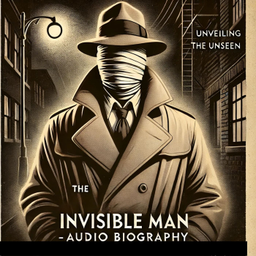
Podcast thumbnail for Invisible Man - Audio Biography

Invisible Man - Audio Biography

Claim This Podcast

by Inception Point AI

1 episodes
Updated Daily
Accepts GuestsHas Sponsors

Podcast Overview

Now You See Him, Now You Don't: An Unauthorized Biography of The Invisible Man In the distinguished pantheon of classic movie monsters, The Invisible Man holds a unique position - he's the only one you technically never see. While other monsters struggled with their visibility in society, Dr. Jack Griffin took a more direct approach to the problem by disappearing altogether. He's the ultimate proof that sometimes the best career move is to simply vanish from sight. First appearing (or rather, disappearing) in H.G. Wells' 1897 novel, and later making his invisible debut in Universal's 1933 film "The Invisible Man," this transparent terror has left an impression on popular culture that, ironically, remains highly visible to this day. In a genre filled with creatures sporting distinctive looks, he made his mark by having no look at all – a bold fashion choice that has influenced designers to this day (though mostly in the field of active camouflage research). Physical specifications for The Invisible Man are, understandably, a bit difficult to pin down. Height: present but unverifiable. Weight: depends on how many bandages he's wearing. Eye color: presumably still there somewhere. His most distinctive feature is, of course, his complete lack of distinctive features, though he did popularize the stylish ensemble of bandages, dark glasses, and smoking jacket that would become the unofficial uniform of invisible persons everywhere. The cause of his transparency – a chemical formula called "monocane" – stands as one of cinema's most effective weight loss solutions, though the side effects (complete invisibility, possible megalomania, and a tendency to maniacally laugh while disrobing) have prevented FDA approval. The formula itself combines albino blood with some other mysterious ingredients, proving that sometimes the best scientific breakthroughs happen when you're not entirely sure what you're doing. His signature look, when he bothers to maintain one, consists of medical bandages wrapped head-to-toe, dark sunglasses, and a series of increasingly dramatic overcoats. This ensemble inspired what fashion critics would later call the "mysterious stranger" look, though few could pull it off with quite the same panache as someone who literally wasn't there. The outfit says both "I'm hiding a scientific breakthrough" and "I've had a terrible accident at the pharmacy." Unlike other movie monsters who had to rely on makeup effects or practical costumes, The Invisible Man pioneered the art of not being there at all. His special effects were groundbreaking for the 1930s, featuring innovative techniques that made objects appear to move on their own and clothing walk without a visible wearer. This led to some interesting behind-the-scenes innovations, including what might be cinema's first use of black velvet body suits and wire work for scenes where invisible things needed to be visibly invisible. The Invisible Man's career trajectory is particularly noteworthy This content was created in partnership and with the help of Artificial Intelligence AI.

Language

🇺🇲

Publishing Since

10/22/2024

2 verified contact emails on file for Invisible Man - Audio Biography

Pitch yourself as a guest, propose sponsorships, or reach out directly to the host.

Recent Episodes

Episode thumbnail for Invisible Man - Audio Biography

October 22, 2024

Invisible Man - Audio Biography

Now You See Him, Now You Don't: An Unauthorized Biography of The Invisible Man In the distinguished pantheon of classic movie monsters, The Invisible Man holds a unique position - he's the only one you technically never see. While other monsters struggled with their visibility in society, Dr. Jack Griffin took a more direct approach to the problem by disappearing altogether. He's the ultimate proof that sometimes the best career move is to simply vanish from sight. First appearing (or rather, disappearing) in H.G. Wells' 1897 novel, and later making his invisible debut in Universal's 1933 film "The Invisible Man," this transparent terror has left an impression on popular culture that, ironically, remains highly visible to this day. In a genre filled with creatures sporting distinctive looks, he made his mark by having no look at all – a bold fashion choice that has influenced designers to this day (though mostly in the field of active camouflage research). Physical specifications for The Invisible Man are, understandably, a bit difficult to pin down. Height: present but unverifiable. Weight: depends on how many bandages he's wearing. Eye color: presumably still there somewhere. His most distinctive feature is, of course, his complete lack of distinctive features, though he did popularize the stylish ensemble of bandages, dark glasses, and smoking jacket that would become the unofficial uniform of invisible persons everywhere. The cause of his transparency – a chemical formula called "monocane" – stands as one of cinema's most effective weight loss solutions, though the side effects (complete invisibility, possible megalomania, and a tendency to maniacally laugh while disrobing) have prevented FDA approval. The formula itself combines albino blood with some other mysterious ingredients, proving that sometimes the best scientific breakthroughs happen when you're not entirely sure what you're doing. His signature look, when he bothers to maintain one, consists of medical bandages wrapped head-to-toe, dark sunglasses, and a series of increasingly dramatic overcoats. This ensemble inspired what fashion critics would later call the "mysterious stranger" look, though few could pull it off with quite the same panache as someone who literally wasn't there. The outfit says both "I'm hiding a scientific breakthrough" and "I've had a terrible accident at the pharmacy." Unlike other movie monsters who had to rely on makeup effects or practical costumes, The Invisible Man pioneered the art of not being there at all. His special effects were groundbreaking for the 1930s, featuring innovative techniques that made objects appear to move on their own and clothing walk without a visible wearer. This led to some interesting behind-the-scenes innovations, including what might be cinema's first use of black velvet body suits and wire work for scenes where invisible things needed to be visibly invisible. The Invisible Man's career trajectory is particularly noteworthy for someone you can't see. His film debut in 1933 was nothing short of spectacular, featuring some of the most innovative special effects of the era and Claude Rains' magnificent voice performance as Dr. Griffin. The fact that Rains became a major star after a role where his face is only seen for a few seconds at the end proves that in Hollywood, sometimes less really is more. His condition came with unique professional challenges. Job interviews were particularly tricky ("I'm right here, sir, no, your other left"), and workplace dress codes had to be strictly observed lest colleagues spend all day wondering if he was actually wearing pants. Conference calls, however, were a breeze, as no one could tell if he was actually paying attention. The Invisible Man's influence on scientific research cannot be overstated, though most funding requests for invisibility studies are still met with raised eyebrows and nervous laughter. Various military organizations have spent decades trying to...

1 total episodes available

Deep-dive analytics for Invisible Man - Audio Biography

Frequently asked questions

Have a different question and can't find the answer you're looking for? Reach out to our support team by sending us an email and we'll get back to you as soon as we can.

What is Invisible Man - Audio Biography?

Now You See Him, Now You Don't: An Unauthorized Biography of The Invisible Man In the distinguished pantheon of classic movie monsters, The Invisible Man holds a unique position - he's the only one you technically never see. While other monsters struggled with their visibility in society, Dr. Jack Griffin took a more direct approach to the problem by disappearing altogether. He's the ultimate proof that sometimes the best career move is to simply vanish from sight. First appearing (or rather, disappearing) in H.G. Wells' 1897 novel, and later making his invisible debut in Universal's 1933 film "The Invisible Man," this transparent terror has left an impression on popular culture that, ironically, remains highly visible to this day. In a genre filled with creatures sporting distinctive looks, he made his mark by having no look at all – a bold fashion choice that has influenced designers to this day (though mostly in the field of active camouflage research). Physical specifications for The Invisible Man are, understandably, a bit difficult to pin down. Height: present but unverifiable. Weight: depends on how many bandages he's wearing. Eye color: presumably still there somewhere. His most distinctive feature is, of course, his complete lack of distinctive features, though he did popularize the stylish ensemble of bandages, dark glasses, and smoking jacket that would become the unofficial uniform of invisible persons everywhere. The cause of his transparency – a chemical formula called "monocane" – stands as one of cinema's most effective weight loss solutions, though the side effects (complete invisibility, possible megalomania, and a tendency to maniacally laugh while disrobing) have prevented FDA approval. The formula itself combines albino blood with some other mysterious ingredients, proving that sometimes the best scientific breakthroughs happen when you're not entirely sure what you're doing. His signature look, when he bothers to maintain one, consists of medical bandages wrapped head-to-toe, dark sunglasses, and a series of increasingly dramatic overcoats. This ensemble inspired what fashion critics would later call the "mysterious stranger" look, though few could pull it off with quite the same panache as someone who literally wasn't there. The outfit says both "I'm hiding a scientific breakthrough" and "I've had a terrible accident at the pharmacy." Unlike other movie monsters who had to rely on makeup effects or practical costumes, The Invisible Man pioneered the art of not being there at all. His special effects were groundbreaking for the 1930s, featuring innovative techniques that made objects appear to move on their own and clothing walk without a visible wearer. This led to some interesting behind-the-scenes innovations, including what might be cinema's first use of black velvet body suits and wire work for scenes where invisible things needed to be visibly invisible. The Invisible Man's career trajectory is particularly noteworthy

This content was created in partnership and with the help of Artificial Intelligence AI.

How often does this podcast release new episodes?

This podcast updates daily.

Where can I listen to this podcast?

This podcast is available on 4 platforms including Apple Podcasts, Spotify, and more. You can also use the RSS feed directly.

Does this podcast accept guests?

Information about guest appearances is not available.

Legal Disclaimer

Pod Engine is not affiliated with, endorsed by, or officially connected with any of the podcasts displayed on this platform. We operate independently as a podcast discovery and analytics service.

All podcast artwork, thumbnails, and content displayed on this page are the property of their respective owners and are protected by applicable copyright laws. This includes, but is not limited to, podcast cover art, episode artwork, show descriptions, episode titles, transcripts, audio snippets, and any other content originating from the podcast creators or their licensors.

We display this content under fair use principles and/or implied license for the purpose of podcast discovery, information, and commentary. We make no claim of ownership over any podcast content, artwork, or related materials shown on this platform. All trademarks, service marks, and trade names are the property of their respective owners.

While we strive to ensure all content usage is properly authorized, if you are a rights holder and believe your content is being used inappropriately or without proper authorization, please contact us immediately at hey@podengine.ai for prompt review and appropriate action, which may include content removal or proper attribution.

By accessing and using this platform, you acknowledge and agree to respect all applicable copyright laws and intellectual property rights of content owners. Any unauthorized reproduction, distribution, or commercial use of the content displayed on this platform is strictly prohibited.