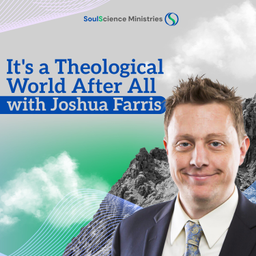
Podcast thumbnail for It's a Theological World After All

It's a Theological World After All

Claim This Podcast

by Joshua R. Farris

19 episodes
Updated Daily
Accepts GuestsHas Sponsors

Podcast Overview

<p><strong>It’s a Theological World After All</strong> explores how theology shapes everything—from science and technology to culture, politics, and human identity. Join Dr. Joshua Farris and guests from around the world for deep conversations at the crossroads of faith, reason, and the big questions of our time.</p>

Language

🇺🇲

Publishing Since

8/28/2025

1 verified contact email on file for It's a Theological World After All

Pitch yourself as a guest, propose sponsorships, or reach out directly to the host.

Recent Episodes

Episode thumbnail for EP19 | Why Chat GPT is Bullshit (partly) | AI and Human Deception

June 20, 2026

EP19 | Why Chat GPT is Bullshit (partly) | AI and Human Deception

<p>Are systems like ChatGPT really destroying the truth, or are they just reflecting our own deeply flawed human nature? In this episode of It&#39;s a Theological World After All, host Joshua Farris sits down with Professor Jimmy Alfonso Licon to explore his provocative paper, ChatGPT is bullshit partly because people are bullshitters. We dive into Harry Frankfurt’s famous concept of &#34;bullshit&#34; and ask a difficult question: is the problem with AI&#39;s lack of truth-telling a technological flaw, or does it stem from the fact that it’s trained on human language? From the utility of self-deception in our relationships to the philosophical pursuit of plausibility over truth, we unpack what AI reveals about the fragility of the human ego.</p><p><br></p><p>If you want to understand how artificial intelligence mirrors our deepest social and spiritual struggles, this conversation is for you. </p><p><br></p><p>SUBSCRIBE for more deep dives into theology, philosophy, and the soul.</p><p><br></p><p>IN THIS EPISODE:</p><p>The Definition of Bullshit: Unpacking Harry Frankfurt&#39;s philosophy and how it applies to predictive AI language models. Architecture vs. Data: Is ChatGPT a &#34;bullshitter&#34; because of its predictive design, or because it&#39;s trained on the internet? The Evolution of Deception: How social media has created an evolutionary competition for attention, accelerating our culture&#39;s &#34;bullshit.&#34; Self-Deception and Society: Why a little bit of &#34;bullshit&#34; might actually be necessary for human cooperation and healthy relationships. Plausibility as a Proxy: Do philosophers really seek the truth, or just the most plausible arguments? Theological Reflections: Connecting the human tendency to deceive with classical concepts of pride, humility, and our search for ultimate meaning.</p><p><br></p><p>CHAPTERS:</p><p>0:00 - Intro: Is AI producing truth or just &#34;bullshit&#34;?</p><p>2:24 - Introducing Jimmy Alfonso Licon and the philosophy of cooperation</p><p>4:13 - The core claim: ChatGPT as a bullshit generator</p><p>9:43 - Defining Frankfurt&#39;s concept of &#34;bullshit&#34;</p><p>13:44 - Architecture vs. Training Data: Why does AI bullshit?</p><p>22:19 - Are humans actually incentivized to tell the truth?</p><p>26:52 - Self-deception and the utility of bullshit in relationships</p><p>31:40 - Can bullshit serve a social purpose?</p><p>40:53 - Plausibility as a proxy for truth in philosophy</p><p>55:53 - The internet as an accelerator for bullshit (&#34;Bullshit Playoffs&#34;)</p><p>1:15:27 - Theological reflections: Pride, humility, and the human ego</p><p>1:31:02 - Finding ultimate meaning and grounding ourselves in reality</p><p>1:35:36 - Conclusion: AI as a mirror of human nature</p><p><br></p><p>RESOURCES MENTIONED:</p><p>ChatGPT is bullshit partly because people are bullshitters by Jimmy Alfonso Licon</p><p>ChatGPT is bullshit by Michael Townsen Hicks, James Humphreys, and Joe Slater</p><p>On Bullshit by Harry Frankfurt Better Not to Know: Why Knowing Less Is Sometimes Best by Jimmy Alfonso Licon</p><p>The works of Dan Sperber and Hugo Mercier on epistemic vigilance</p><p>Technopoly by Neil Postman</p><p><br></p><p>Take the Next Step in Your EducationIf this conversation has sparked a desire to go deeper into the intersection of theology, science, and the soul, I want to invite you to explore our advanced programs. Equip yourself to engage the modern world with intellectual rigour and spiritual depth. Explore Our Degree Programs Here: https://degrees.soulscienceministries.com/</p><p><br></p><p>#AI #Philosophy #ChatGPT #Theology #HumanNature #TechEthics</p>

Episode thumbnail for EP18 | The Rise of Neo-Paganism, Sacred Spaces, and the Unseen Realm

May 25, 2026

EP18 | The Rise of Neo-Paganism, Sacred Spaces, and the Unseen Realm

<p>Are we witnessing the rise of a neo-pagan culture? In this episode, Dr. Joshua R. Farris sits down with Carl and Anthony to explore how pantheism and ancient pagan worldviews are actively reshaping modern society and politics. From the intensely polarized rhetoric of Christian Nationalism to Dr. Michael Heiser&#39;s &#34;Deuteronomy 32 worldview,&#34; we unpack the unseen spiritual realities driving today&#39;s cultural shifts. We also dive deep into the theology of &#34;sacred space,&#34; highlighted by Carl&#39;s chilling firsthand account of witnessing a dark Luciferian ritual.</p><p><br></p><p>If you want to understand how to maintain a robust, biblical response to a world increasingly hungry for the supernatural, this conversation is for you.</p><p><br></p><p>SUBSCRIBE for more deep dives into theology, philosophy, and the soul.</p><p><br></p><p>IN THIS EPISODE:</p><p>- The Return of Paganism: How modern culture has moved past secularism and is embracing pantheistic and neo-pagan spiritualities.</p><p>- Politics as Spiritual Warfare: Why political rhetoric is shifting toward cosmic battles and what that reveals about our metaphysical decline.</p><p>- The Deuteronomy 32 Worldview: Understanding the biblical framework that the nations are ruled by lesser, created gods (elohim).</p><p>- Paul at the Areopagus: Unpacking the intense spiritual and political reality of Acts 17, where Paul stood before a pagan court.</p><p>- A Luciferian Ritual: Carl recounts a disturbing double ritual involving a Luciferian and a &#34;Christian&#34; mystic, and the spiritual lessons learned.</p><p>- The Theology of Sacred Space: Should Christians treat physical locations as spiritually neutral, or can spaces hold demonic presence and require consecration?.</p><p><br></p><p>CHAPTERS:</p><p>0:00 - Intro: Culture&#39;s openness to Paganism</p><p>2:43 - Are Christians equipped to respond today?</p><p>4:01 - The rise of explicit religious rhetoric in politics</p><p>10:31 - How entertainment and the attention economy led to moral decline</p><p>14:57 - Is the political right reacting to a pagan left?</p><p>22:04 - Michael Heiser and the Deuteronomy 32 Worldview</p><p>30:56 - Acts 17: Paul before the Pagan Court of the Areopagus</p><p>37:53 - Desacralization vs. the Sacramental view of nature</p><p>47:02 - Carl’s experience witnessing a Luciferian ritual</p><p>52:52 - Defining &#34;Sacred Space&#34; and spiritual intentionality</p><p>1:02:20 - Conclusion: The importance of a robust biblical response</p><p><br></p><p>RESOURCES MENTIONED:</p><p>Witchcraft Goes Mainstream by Brooks Alexander</p><p>Pagan America by John Daniel Davidson</p><p>God&#39;s Rivals by Gerald McDermott</p><p>The Unseen Realm (Deuteronomy 32 Worldview) by Michael Heiser</p><p>Clinton Arnold&#39;s work on spiritual powers and Ephesians</p><p><br></p><p>Take the Next Step in Your Education</p><p>If this conversation has sparked a desire to go deeper into the intersection of theology, science, and the soul, I want to invite you to explore our advanced programs. Equip yourself to engage the modern world with intellectual rigour and spiritual depth. Explore Our Degree Programs Here: https://degrees.soulscienceministries.com/</p><p><br></p><p>#Theology #NeoPaganism #SpiritualWarfare #Apologetics #ChristianPhilosophy #SacredSpace</p>

Episode thumbnail for EP17 | How the Trinity Shapes Human Reason and Science With Fr. Andrew Hollingsworth

April 30, 2026

EP17 | How the Trinity Shapes Human Reason and Science With Fr. Andrew Hollingsworth

<p>Can the doctrine of the Trinity explain the very structure of human consciousness and the natural world? In this episode, I sit down with Fr. Andrew Hollingsworth to explore why the Trinity isn&#39;t just an abstract theological puzzle—it’s the &#34;grammar&#34; of reality itself. From the &#34;triadic&#34; philosophy of Charles Sanders Peirce to a scathing critique of AI and materialism, we dive deep into how the Father, Son, and Holy Spirit shape how we know truth, experience science, and inhabit the world.</p><p><br></p><p>If you’ve ever wondered how ancient theology survives in the age of machines, this conversation is for you.</p><p><br></p><p>SUBSCRIBE for more deep dives into theology, philosophy, and the soul.</p><p><br></p><p>IN THIS EPISODE:</p><p>The Philosophy of Signs: How Charles Sanders Peirce’s &#34;Firstness, Secondness, and Thirdness&#34; mirrors the Triune God.</p><p>The Failure of AI: Why machines can process data but lack the &#34;phenomenology&#34; of a living soul.</p><p>A Defense of the Soul: Why physicalism (the idea that we are just brains) is inconsistent with the Christian faith.</p><p>Liturgy as Knowledge: How the Anglican Book of Common Prayer &#34;teaches&#34; us the Trinity through participation.</p><p><br></p><p>CHAPTERS:</p><p>0:00 - Intro: Dragon Ball Z &amp; Icons</p><p>1:45 - Does the Trinity shape how we think about Truth?</p><p>3:40 - Charles Sanders Peirce &amp; The &#34;Phaneron&#34;</p><p>6:00 - The Triadic Sign: Object, Representamen, Interpretant</p><p>11:45 - Substance Dualism vs. Materialism</p><p>16:30 - Can a machine actually &#34;know&#34; anything?</p><p>25:30 - Biosemiotics: The Trinity in Biology</p><p>36:00 - How Liturgy does the &#34;Heavy Lifting&#34; of Theology</p><p>41:00 - Why Anglicanism? (Suprema Scriptura)</p><p>44:30 - Conclusion: Doctrine is a Grammar to be Inhabited</p><p><br></p><p>RESOURCES MENTIONED:</p><p>God and the World of Signs by Andrew Robinson</p><p>The Doctrine of the Knowledge of God by John Frame</p><p>Spirit Word Community by Amos Yong</p><p><br></p><p>Take the Next Step in Your Education</p><p>If this conversation has sparked a desire to go deeper into the intersection of theology, science, and the soul, I want to invite you to explore our advanced programs. Equip yourself to engage the modern world with intellectual rigour and spiritual depth. Explore Our Degree Programs Here: https://degrees.soulscienceministries.com/</p><p><br></p><p>#Theology #Philosophy #Trinity #AI #Christianity #Apologetics #Anglicanism #Dualism #Peirce #StAugustine</p>

19 total episodes available

Deep-dive analytics for It's a Theological World After All

Frequently asked questions

Have a different question and can't find the answer you're looking for? Reach out to our support team by sending us an email and we'll get back to you as soon as we can.

What is It's a Theological World After All?
<p><strong>It’s a Theological World After All</strong> explores how theology shapes everything—from science and technology to culture, politics, and human identity. Join Dr. Joshua Farris and guests from around the world for deep conversations at the crossroads of faith, reason, and the big questions of our time.</p>
How often does this podcast release new episodes?

This podcast updates daily.

Where can I listen to this podcast?

This podcast is available on 4 platforms including Apple Podcasts, Spotify, and more. You can also use the RSS feed directly.

Does this podcast accept guests?

Yes, this podcast regularly features guests.

Legal Disclaimer

Pod Engine is not affiliated with, endorsed by, or officially connected with any of the podcasts displayed on this platform. We operate independently as a podcast discovery and analytics service.

All podcast artwork, thumbnails, and content displayed on this page are the property of their respective owners and are protected by applicable copyright laws. This includes, but is not limited to, podcast cover art, episode artwork, show descriptions, episode titles, transcripts, audio snippets, and any other content originating from the podcast creators or their licensors.

We display this content under fair use principles and/or implied license for the purpose of podcast discovery, information, and commentary. We make no claim of ownership over any podcast content, artwork, or related materials shown on this platform. All trademarks, service marks, and trade names are the property of their respective owners.

While we strive to ensure all content usage is properly authorized, if you are a rights holder and believe your content is being used inappropriately or without proper authorization, please contact us immediately at hey@podengine.ai for prompt review and appropriate action, which may include content removal or proper attribution.

By accessing and using this platform, you acknowledge and agree to respect all applicable copyright laws and intellectual property rights of content owners. Any unauthorized reproduction, distribution, or commercial use of the content displayed on this platform is strictly prohibited.