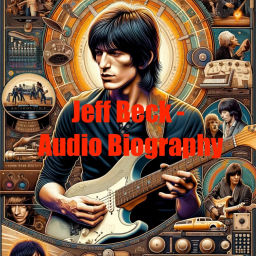
Podcast thumbnail for Jeff Beck - Audio Biography

Jeff Beck - Audio Biography

Claim This Podcast

by Inception Point AI

1 episodes
Updated Weekly
Accepts GuestsHas SponsorsLocation 🇬🇧

Podcast Overview

Jeff Beck: A Guitar Legend Jeff Beck, born Geoffrey Arnold Beck on June 24, 1944, in Wallington, Surrey, England, was a pioneering guitarist whose influence spanned multiple decades and genres. His innovative approach to the electric guitar and his mastery of various styles made him one of the most respected musicians in rock history. Beck passed away on January 10, 2023, leaving behind a legacy of unparalleled contributions to music. Early Life and Musical Beginnings Jeff Beck's fascination with the electric guitar began at a young age. Influenced by the pioneering sounds of Les Paul, Cliff Gallup, and B.B. King, Beck built his first guitar from a cigar box and fence wire. His formal education included attending Wimbledon College of Art, but his true passion lay in music. Beck's early career saw him performing with various bands in London. In 1963, he joined The Tridents, a group that allowed him to hone his craft in the burgeoning British rock scene. His big break came in 1965 when he replaced Eric Clapton in The Yardbirds, a band that significantly influenced rock music. The Yardbirds and Breakthrough With The Yardbirds, Beck's innovative playing on hits like "Heart Full of Soul" and "Shapes of Things" set new standards for rock guitar. His time with the band, though brief, was marked by his groundbreaking use of feedback and distortion, techniques that would become staples in rock music. Beck's tenure with The Yardbirds was instrumental in the development of psychedelic rock and heavy metal. His experimental style pushed the boundaries of what the electric guitar could achieve, influencing contemporaries and future generations of guitarists. Despite his success with The Yardbirds, Beck's time with the band was tumultuous, leading to his departure in 1966. The Jeff Beck Group and Solo Career In 1967, Beck formed The Jeff Beck Group, featuring future stars Rod Stewart and Ronnie Wood. The band's albums, "Truth" and "Beck-Ola," laid the groundwork for heavy metal and hard rock. Despite internal tensions leading to the group's disbandment, Beck continued to push musical boundaries. His solo career saw the release of instrumental albums like "Blow by Blow" (1975) and "Wired" (1976), which showcased his fusion of jazz, rock, and funk. Produced by George Martin, these albums were critical and commercial successes, solidifying Beck's status as a virtuoso guitarist. In the 1970s and 1980s, Beck experimented with various musical styles, including blues, funk, and jazz fusion. His collaborations with artists such as Jan Hammer and Narada Michael Walden expanded his musical palette and demonstrated his versatility. Beck's ability to adapt and innovate kept him relevant in an ever-changing music landscape. Collaborations and Later Career Throughout his career, Beck collaborated with numerous artists, including Stevie Wonder, Tina Turner, and Mick Jagger. His versatility allowed him to seamlessly transition between genres, from rock and jazz f This content was created in partnership and with the help of Artificial Intelligence AI.

Language

🇺🇲

Publishing Since

5/26/2024

2 verified contact emails on file for Jeff Beck - Audio Biography

Pitch yourself as a guest, propose sponsorships, or reach out directly to the host.

Recent Episodes

Episode thumbnail for Jeff Beck - Audio Biography

May 26, 2024

Jeff Beck - Audio Biography

Jeff Beck: A Guitar Legend <br />Jeff Beck, born Geoffrey Arnold Beck on June 24, 1944, in Wallington, Surrey, England, was a pioneering guitarist whose influence spanned multiple decades and genres. His innovative approach to the electric guitar and his mastery of various styles made him one of the most respected musicians in rock history. Beck passed away on January 10, 2023, leaving behind a legacy of unparalleled contributions to music. <br />Early Life and Musical Beginnings <br />Jeff Beck's fascination with the electric guitar began at a young age. Influenced by the pioneering sounds of Les Paul, Cliff Gallup, and B.B. King, Beck built his first guitar from a cigar box and fence wire. His formal education included attending Wimbledon College of Art, but his true passion lay in music. <br />Beck's early career saw him performing with various bands in London. In 1963, he joined The Tridents, a group that allowed him to hone his craft in the burgeoning British rock scene. His big break came in 1965 when he replaced Eric Clapton in The Yardbirds, a band that significantly influenced rock music. <br />The Yardbirds and Breakthrough <br />With The Yardbirds, Beck's innovative playing on hits like "Heart Full of Soul" and "Shapes of Things" set new standards for rock guitar. His time with the band, though brief, was marked by his groundbreaking use of feedback and distortion, techniques that would become staples in rock music. <br />Beck's tenure with The Yardbirds was instrumental in the development of psychedelic rock and heavy metal. His experimental style pushed the boundaries of what the electric guitar could achieve, influencing contemporaries and future generations of guitarists. Despite his success with The Yardbirds, Beck's time with the band was tumultuous, leading to his departure in 1966. <br />The Jeff Beck Group and Solo Career <br />In 1967, Beck formed The Jeff Beck Group, featuring future stars Rod Stewart and Ronnie Wood. The band's albums, "Truth" and "Beck-Ola," laid the groundwork for heavy metal and hard rock. Despite internal tensions leading to the group's disbandment, Beck continued to push musical boundaries. <br />His solo career saw the release of instrumental albums like "Blow by Blow" (1975) and "Wired" (1976), which showcased his fusion of jazz, rock, and funk. Produced by George Martin, these albums were critical and commercial successes, solidifying Beck's status as a virtuoso guitarist. <br />In the 1970s and 1980s, Beck experimented with various musical styles, including blues, funk, and jazz fusion. His collaborations with artists such as Jan Hammer and Narada Michael Walden expanded his musical palette and demonstrated his versatility. Beck's ability to adapt and innovate kept him relevant in an ever-changing music landscape. <br />Collaborations and Later Career <br />Throughout his career, Beck collaborated with numerous artists, including Stevie Wonder, Tina Turner, and Mick Jagger. His versatility allowed him to seamlessly transition between genres, from rock and jazz fusion to electronica. <br />In the 1980s and 1990s, Beck's work with other musicians, including a collaboration with Rod Stewart on the hit single "People Get Ready," kept him relevant in the ever-changing music landscape. He continued to innovate, experimenting with new sounds and technologies. <br />In the 2000s, Beck's career experienced a resurgence. His album "Emotion &amp; Commotion" (2010) received critical acclaim and won several Grammy Awards. Beck continued to tour extensively, delighting audiences with his electrifying performances and showcasing his enduring talent. <br />Style and Influence <br />Jeff Beck's guitar style was characterized by its fluidity, precision, and emotional depth. He eschewed the use of a pick, preferring to use his fingers to create a more expressive sound. His innovative techniques, such as the use of feedback, distortion, and the whammy bar, set him apart from his contemporaries. <br />Beck's influence can be heard in the work of countless guitarists across genres, making him a true "guitarist's guitarist." His ability to blend different musical styles and push the boundaries of the electric guitar inspired generations of musicians. <br />Awards and Recognition <br />Beck's contributions to music earned him numerous accolades, including eight Grammy Awards. He was inducted into the Rock and Roll Hall of Fame twice: once as a member of The Yardbirds in 1992 and again as a solo artist in 2009. In 2014, he received the Ivor Novello Award for Outstanding Contribution to British Music. <br />Personal Life and Legacy <br />Jeff Beck's personal life was relatively private. He resided in a 16th-century home in East Sussex, where he pursued his passions for classic cars and hot rodding. His marriage to Sandra Cash in 2005 marked a period of personal happiness. <br />Beck's death in January 2023 marked the end of an era for rock music. His innovative spirit and relentless pursuit of excellence left an indelible mark on the music industry. Beck's influence continues to inspire new generations of musicians, ensuring that his legacy endures. <br />In addition to his musical achievements, Beck was known for his philanthropic efforts. He supported various charities and was involved in initiatives to promote music education. Beck's commitment to giving back to the community further cemented his legacy as a beloved and respected figure in the music world. <br />Conclusion <br />Jeff Beck's life and career were marked by a relentless pursuit of innovation and excellence. From his early days with The Yardbirds to his groundbreaking solo work and collaborations, Beck's influence on rock music is immeasurable. His unique style, technical prowess, and ability to transcend genres set him apart as one of the greatest guitarists of all time. <br />Beck's legacy lives on through his extensive body of work, which continues to inspire and captivate audiences worldwide. His contributions to music will be remembered and celebrated for generations to come, solidifying his place as a true icon in the history of rock and roll.

1 total episodes available

Deep-dive analytics for Jeff Beck - Audio Biography

Frequently asked questions

Have a different question and can't find the answer you're looking for? Reach out to our support team by sending us an email and we'll get back to you as soon as we can.

What is Jeff Beck - Audio Biography?

Jeff Beck: A Guitar Legend Jeff Beck, born Geoffrey Arnold Beck on June 24, 1944, in Wallington, Surrey, England, was a pioneering guitarist whose influence spanned multiple decades and genres. His innovative approach to the electric guitar and his mastery of various styles made him one of the most respected musicians in rock history. Beck passed away on January 10, 2023, leaving behind a legacy of unparalleled contributions to music. Early Life and Musical Beginnings Jeff Beck's fascination with the electric guitar began at a young age. Influenced by the pioneering sounds of Les Paul, Cliff Gallup, and B.B. King, Beck built his first guitar from a cigar box and fence wire. His formal education included attending Wimbledon College of Art, but his true passion lay in music. Beck's early career saw him performing with various bands in London. In 1963, he joined The Tridents, a group that allowed him to hone his craft in the burgeoning British rock scene. His big break came in 1965 when he replaced Eric Clapton in The Yardbirds, a band that significantly influenced rock music. The Yardbirds and Breakthrough With The Yardbirds, Beck's innovative playing on hits like "Heart Full of Soul" and "Shapes of Things" set new standards for rock guitar. His time with the band, though brief, was marked by his groundbreaking use of feedback and distortion, techniques that would become staples in rock music. Beck's tenure with The Yardbirds was instrumental in the development of psychedelic rock and heavy metal. His experimental style pushed the boundaries of what the electric guitar could achieve, influencing contemporaries and future generations of guitarists. Despite his success with The Yardbirds, Beck's time with the band was tumultuous, leading to his departure in 1966. The Jeff Beck Group and Solo Career In 1967, Beck formed The Jeff Beck Group, featuring future stars Rod Stewart and Ronnie Wood. The band's albums, "Truth" and "Beck-Ola," laid the groundwork for heavy metal and hard rock. Despite internal tensions leading to the group's disbandment, Beck continued to push musical boundaries. His solo career saw the release of instrumental albums like "Blow by Blow" (1975) and "Wired" (1976), which showcased his fusion of jazz, rock, and funk. Produced by George Martin, these albums were critical and commercial successes, solidifying Beck's status as a virtuoso guitarist. In the 1970s and 1980s, Beck experimented with various musical styles, including blues, funk, and jazz fusion. His collaborations with artists such as Jan Hammer and Narada Michael Walden expanded his musical palette and demonstrated his versatility. Beck's ability to adapt and innovate kept him relevant in an ever-changing music landscape. Collaborations and Later Career Throughout his career, Beck collaborated with numerous artists, including Stevie Wonder, Tina Turner, and Mick Jagger. His versatility allowed him to seamlessly transition between genres, from rock and jazz f

This content was created in partnership and with the help of Artificial Intelligence AI.

How often does this podcast release new episodes?

This podcast updates weekly.

Where can I listen to this podcast?

This podcast is available on 8 platforms including Apple Podcasts, Spotify, and more. You can also use the RSS feed directly.

Does this podcast accept guests?

No, this podcast does not typically feature guests.

Legal Disclaimer

Pod Engine is not affiliated with, endorsed by, or officially connected with any of the podcasts displayed on this platform. We operate independently as a podcast discovery and analytics service.

All podcast artwork, thumbnails, and content displayed on this page are the property of their respective owners and are protected by applicable copyright laws. This includes, but is not limited to, podcast cover art, episode artwork, show descriptions, episode titles, transcripts, audio snippets, and any other content originating from the podcast creators or their licensors.

We display this content under fair use principles and/or implied license for the purpose of podcast discovery, information, and commentary. We make no claim of ownership over any podcast content, artwork, or related materials shown on this platform. All trademarks, service marks, and trade names are the property of their respective owners.

While we strive to ensure all content usage is properly authorized, if you are a rights holder and believe your content is being used inappropriately or without proper authorization, please contact us immediately at hey@podengine.ai for prompt review and appropriate action, which may include content removal or proper attribution.

By accessing and using this platform, you acknowledge and agree to respect all applicable copyright laws and intellectual property rights of content owners. Any unauthorized reproduction, distribution, or commercial use of the content displayed on this platform is strictly prohibited.