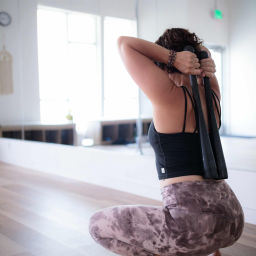
Discussions on mindfulness, movement, and exercise <br/><br/><a href="https://jennpilotti.substack.com?utm_medium=podcast">jennpilotti.substack.com</a>

Jenn’s Newsletter Podcast
Claim This Podcastby Jenn Pilotti
Podcast Authority
Beta
Podcast Overview
Discussions on mindfulness, movement, and exercise <br/><br/><a href="https://jennpilotti.substack.com?utm_medium=podcast">jennpilotti.substack.com</a>
Language
🇺🇲
Publishing Since
6/25/2023
Unlock The Full Podcast Authority Score Report
See how your podcast performs across key metrics
Podcast Authority
Beta
Recommendations available
Unlock the full report to see detailed tips
Recommendations available
Unlock the full report to see detailed tips
Unlock comprehensive insights including:
- • YouTube presence analysis
- • Social media reach metrics
- • RSS compliance scoring
- • Podcast 2.0 features
- • Technical standards
Detailed Analytics
- Complete breakdown of all 19 authority metrics
- Personalized recommendations for each metric
- Industry benchmarks and comparisons
- Technical RSS feed analysis and compliance scoring
Growth Strategies
- Step-by-step action plans for improvement
- Quick wins to boost your score immediately
- Pro tips from successful podcasters
See how your show performs across every key metric
High authority scores make your podcast more attractive to industry leaders and influencers who want to appear on credible shows.
Sponsors look for podcasts with proven authority and engagement. Your score demonstrates your podcast's value to potential partners.
Understanding your strengths and weaknesses helps you make data-driven decisions to expand your listener base effectively.
1 verified contact email on file for Jenn’s Newsletter Podcast
Pitch yourself as a guest, propose sponsorships, or reach out directly to the host.
Recent Episodes

June 3, 2026
Your spine already knows what to do
<p>The third and final exercise from Spinal Intelligence is deceptively simple: move from hands and knees to seated, and pay attention to what your spine is doing along the way.</p><p>That’s it. No special equipment, no particular shape to achieve.</p><p>What makes it interesting is the middle part — where you get to try rounding your back through the transition, then arching it, then finding what feels easiest. Not to judge which one is “correct,” but to notice. Is one more fluid? More awkward? Does one feel like it requires more effort?</p><p>This kind of exploration is at the heart of what Spinal Intelligence is about. Your spine isn’t a column that needs to be held in the right position. It’s a responsive system that’s constantly taking in information and adapting. When you give it variations to work with — instead of a single instruction to follow — you start to develop a more nuanced relationship with how it actually moves.</p><p>The seated moment at the end, where you simply sense where your spine is in relation to your pelvis, matters more than it might look. That’s the practice: move, then feel. Not just move and move and move.</p><p>If these three exercises have been useful, the book goes much deeper — both the exercises themselves and the reasoning behind why this approach to movement works. You can find <a target="_blank" href="https://www.jennpilotti.com/spinal-intelligence">Spinal Intelligence</a><a target="_blank" href="https://www.jennpilotti.com/spinal-intelligence"> at the link here.</a></p> <br/><br/>This is a public episode. If you'd like to discuss this with other subscribers or get access to bonus episodes, visit <a href="https://jennpilotti.substack.com/subscribe?utm_medium=podcast&utm_campaign=CTA_2">jennpilotti.substack.com/subscribe</a>

May 31, 2026
The Physics of the Deadlift (And Why Your Hands Matter More Than You Think)
<p>There’s a word that gets thrown around a lot in lifting: leverage. People say it constantly, but the way it’s used often doesn’t match what’s actually happening mechanically.</p><p>So let’s slow it down.</p><p>When you pick something heavy up off the floor, you have three variables in play: your load (the bar), your pivot point (your hips and knees), and your effort (the posterior chain doing the work). The lever arm — the thing that determines how hard or easy the lift feels — is your torso. Not your hands. Your hands aren’t where your leverage lives.</p><p>But here’s the part that doesn’t get talked about enough: grip still matters enormously, just not for the reason most people think.</p><p>The way you take hold of the bar determines how well you’re anchored — to the bar, and to yourself. A grip that pulls the bar in toward you does two things at once: it moves the load closer to your pivot point (making it mechanically lighter) and it creates a line of sensory feedback that travels all the way up through your arms and into your back. That feedback is what allows your posterior chain to actually engage in the movement rather than just endure it.</p><p>This is why I re-grip every single rep. Not for strength. For reset. Each time my hands meet the bar again, I get a fresh read on where I am — and that information changes how I move.</p><p>Physics is clarifying. Once you understand what’s actually creating leverage in a lift, you stop trying to solve the wrong problem. You stop white-knuckling the bar hoping that’ll help, and you start paying attention to your torso position and hip angle — which is where the movement actually lives.</p><p>If you want to go deeper into how the nervous system and biomechanics work together in movement — including why sensation matters as much as mechanics — that’s exactly what Spinal Intelligence is built around. Available now at <a target="_blank" href="https://www.jennpilotti.com/spinal-intelligence">jennpilotti.com.</a></p> <br/><br/>This is a public episode. If you'd like to discuss this with other subscribers or get access to bonus episodes, visit <a href="https://jennpilotti.substack.com/subscribe?utm_medium=podcast&utm_campaign=CTA_2">jennpilotti.substack.com/subscribe</a>

May 25, 2026
Your hands can only load what your spine allows
<p>Most people think of hand balancing — or even just pressing into a surface — as a hand and shoulder problem. It isn’t. It’s a spine problem.</p><p>This two-minute wall drill will show you what I mean. You’ll start with your pinky finger edges against the wall, ribs dropped toward the floor, and then slowly draw your ribs up toward the ceiling. As you do, notice when your hands start to take weight. That moment — when the load arrives in your palms — is entirely determined by what your spine is doing, not by how hard you’re gripping or how much you’re trying.</p><p>It’s a small thing to feel, and then you can’t unfeel it.</p><p>This is useful if you sit at a desk for long hours and have lost a sense of what your thoracic spine is actually doing. It’s equally useful if you do any kind of hand balancing, yoga, or pressing work, and you’ve been trying to solve a hand or wrist problem that keeps not getting solved.</p><p>The drill is in the video below. All you need is a wall.</p><p>This is one thread in a much larger idea I explore in Spinal Intelligence — the book is out now, and you can find it on Amazon or at jennpilotti.com.</p><p>Questions or observations after you try it? Drop them in the comments — I read everything.</p> <br/><br/>This is a public episode. If you'd like to discuss this with other subscribers or get access to bonus episodes, visit <a href="https://jennpilotti.substack.com/subscribe?utm_medium=podcast&utm_campaign=CTA_2">jennpilotti.substack.com/subscribe</a>
98 total episodes available
Deep-dive analytics for Jenn’s Newsletter Podcast
Frequently asked questions
Have a different question and can't find the answer you're looking for? Reach out to our support team by sending us an email and we'll get back to you as soon as we can.
- What is Jenn’s Newsletter Podcast?
- How often does this podcast release new episodes?
This podcast updates bi-weekly.
- Where can I listen to this podcast?
This podcast is available on 7 platforms including Apple Podcasts, Spotify, and more. You can also use the RSS feed directly.
- Does this podcast accept guests?
Yes, this podcast regularly features guests.
Legal Disclaimer
Pod Engine is not affiliated with, endorsed by, or officially connected with any of the podcasts displayed on this platform. We operate independently as a podcast discovery and analytics service.
All podcast artwork, thumbnails, and content displayed on this page are the property of their respective owners and are protected by applicable copyright laws. This includes, but is not limited to, podcast cover art, episode artwork, show descriptions, episode titles, transcripts, audio snippets, and any other content originating from the podcast creators or their licensors.
We display this content under fair use principles and/or implied license for the purpose of podcast discovery, information, and commentary. We make no claim of ownership over any podcast content, artwork, or related materials shown on this platform. All trademarks, service marks, and trade names are the property of their respective owners.
While we strive to ensure all content usage is properly authorized, if you are a rights holder and believe your content is being used inappropriately or without proper authorization, please contact us immediately at hey@podengine.ai for prompt review and appropriate action, which may include content removal or proper attribution.
By accessing and using this platform, you acknowledge and agree to respect all applicable copyright laws and intellectual property rights of content owners. Any unauthorized reproduction, distribution, or commercial use of the content displayed on this platform is strictly prohibited.