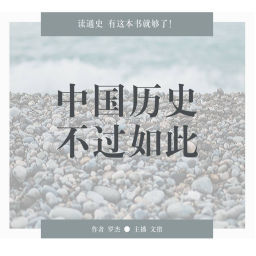
Podcast thumbnail for 简读中国史 | 中国历史 不过如此

简读中国史 | 中国历史 不过如此

Claim This Podcast
3.5(8 reviews)
113 episodes
Updated Inactive
Accepts GuestsHas SponsorsLocation 🇨🇳

Podcast Overview

<p style="color:#333333;font-weight:normal;font-size:16px;line-height:30px;font-family:Helvetica,Arial,sans-serif;hyphens:auto;text-align:justify;" data-flag="normal"><span>《中国历史不过如此》用通俗的语言,讲述了中国古代至晚清辛亥革命这一时期的历史故事。无论是盛世百年,歌舞升平,抑或是江山易主,改朝换代,都在作者弹指间一一轻松演绎出来,既不失历史的本来面貌,又避免了单纯读史的乏味枯燥。去粉饰的道貌岸然,现真性情的嬉笑怒骂,作者以现代人的眼光赋予了历史新的解读:从正史中还原历史,在八卦中拓宽历史。</span><br /></p>

Language

🇨🇳

Publishing Since

2/16/2020

1 verified contact email on file for 简读中国史 | 中国历史 不过如此

Pitch yourself as a guest, propose sponsorships, or reach out directly to the host.

Recent Episodes

Episode thumbnail for 欢迎订阅收听我的全新付费专辑《典故——跟着历史典故学汉语》,感谢您的支持!

January 15, 2022

欢迎订阅收听我的全新付费专辑《典故——跟着历史典故学汉语》,感谢您的支持!

Episode thumbnail for 后记 中国历史总览

April 13, 2020

后记 中国历史总览

<p style="color:#333333;font-weight:normal;font-size:16px;line-height:30px;font-family:Helvetica,Arial,sans-serif;hyphens:auto;text-align:justify;" data-flag="normal">后记:中国历史概况</p><span><br /></span><p style="color:#333333;font-weight:normal;font-size:16px;line-height:30px;font-family:Helvetica,Arial,sans-serif;hyphens:auto;text-align:justify;" data-flag="normal">远古时期与奴隶社会(170万年前-公元前476年)</p><span><br /></span><p style="color:#333333;font-weight:normal;font-size:16px;line-height:30px;font-family:Helvetica,Arial,sans-serif;hyphens:auto;text-align:justify;" data-flag="normal">&nbsp;&nbsp;&nbsp;中国是世界上文明发达最早的国家之一,有将近4000年有文字可考的历史。</p><span><br /></span><p style="color:#333333;font-weight:normal;font-size:16px;line-height:30px;font-family:Helvetica,Arial,sans-serif;hyphens:auto;text-align:justify;" data-flag="normal">&nbsp;&nbsp;&nbsp;发现于云南元谋的猿人化石表明,距今170万年前的“元谋人”是中国境内已知最早的原始人类。距今近60万年前居住在北京周口店一带的“北京人”,能直立行走,能制造、使用简单的工具,并知道了用火。距今一万年前后的新石器时代遗址,遍布中国各地。在距今六七千年的浙江余姚河姆渡和西安半坡遗址,发现了人工栽培的稻谷和粟粒及农耕工具。</p><span><br /></span><p style="color:#333333;font-weight:normal;font-size:16px;line-height:30px;font-family:Helvetica,Arial,sans-serif;hyphens:auto;text-align:justify;" data-flag="normal">&nbsp;&nbsp;&nbsp;最古老的王朝夏朝开始于公元前2070年。夏王朝的中心地区,在今河南省西部和山西南部一带,其势力和影响已达到黄河南北,并开始进入奴隶社会。继夏而兴起的商、西周进一步发展了奴隶制度。之后是王室势力衰微,诸侯争霸的春秋战国时期,这一时期被认为是由奴隶社会向封建社会过渡的阶段。&nbsp;</p><span><br /></span><p style="color:#333333;font-weight:normal;font-size:16px;line-height:30px;font-family:Helvetica,Arial,sans-serif;hyphens:auto;text-align:justify;" data-flag="normal">&nbsp;&nbsp;&nbsp;大约在5000年前,中国人已知道了冶炼铜的技术。3000多年前的商代,开始使用铁器;在制陶方面,有了白陶和彩陶;丝织生产也相当发达,产生了世界上最早的提花丝织技术。到了春秋时期,制钢技术已经出现。春秋战国时期思想学术空前活跃,涌现出对后世产生深远影响的著名的哲学家老子、孔子、孟子和军事学家孙武等人物。</p><span><br /></span><p style="color:#333333;font-weight:normal;font-size:16px;line-height:30px;font-family:Helvetica,Arial,sans-serif;hyphens:auto;text-align:justify;" data-flag="normal">&nbsp;&nbsp;&nbsp;&nbsp;秦始皇和他的帝国(公元前259-前210年)</p><span><br /></span><p style="color:#333333;font-weight:normal;font-size:16px;line-height:30px;font-family:Helvetica,Arial,sans-serif;hyphens:auto;text-align:justify;" data-flag="normal">&nbsp;&nbsp;&nbsp;公元前221年,秦始皇嬴政结束了长达250多年诸侯纷争的战国时期,建立了中国历史上第一个统一的、中央集权的多民族封建国家——秦。秦始皇统一了文字,统一了度量衡,统一了货币,建立了郡县制度。由他奠定的封建国家框架在以后的2000多年中一直被人们延用着。他在十几年的时间里组织30多万人在中国北部修建了绵延5000公里的长城,并生前就开始修筑庞大的坟墓。1974年发现的、守护秦始皇陵的秦兵马俑震惊了世界。8000个如真人大小的陶俑、陶马和战车栩栩如生,被誉为“世界第八大奇迹”。</p><span><br /></span><p style="color:#333333;font-weight:normal;font-size:16px;line-height:30px;font-family:Helvetica,Arial,sans-serif;hyphens:auto;text-align:justify;" data-flag="normal">&nbsp;&nbsp;&nbsp;&nbsp;汉代和“丝绸之路” (公元前206—公元220年)</p><span><br /></span><p style="color:#333333;font-weight:normal;font-size:16px;line-height:30px;font-family:Helvetica,Arial,sans-serif;hyphens:auto;text-align:justify;" data-flag="normal">&nbsp;&nbsp;&nbsp;公元前206年,刘邦建立了强大的汉王朝。汉代的农业、手工业、商业都有了极大发展,人口达到5000万。汉武帝刘彻在位期间(公元前140—前87年)是汉王朝最为强盛的时期,他使中央政权实际控制的地方从中原扩展到了西域(今新疆及中亚一带)。他派使臣张骞两次出使西域,打开了从长安(今陕西西安)经新疆、中亚直抵地中海东岸的道路,被称为“丝绸之路”,中国绚丽的丝织品经此源源西运。随着东西交往的密切,佛教也于公元一世纪时传入中国。公元105年,官员蔡伦总结了民间造纸的经验,发明了造纸术,使人类的书写材料发生了根本性变化。</p><span><br /></span><p style="color:#333333;font-weight:normal;font-size:16px;line-height:30px;font-family:Helvetica,Arial,sans-serif;hyphens:auto;text-align:justify;" data-flag="normal">&nbsp;&nbsp;&nbsp;&nbsp;唐代盛世(618-907年)</p><span><br /></span><p style="color:#333333;font-weight:normal;font-size:16px;line-height:30px;font-family:Helvetica,Arial,sans-serif;hyphens:auto;text-align:justify;" data-flag="normal">&nbsp;&nbsp;&nbsp;汉之后,经历了三国、晋、南北朝、隋等朝代,李渊于公元618年建立了唐朝。李渊的儿子唐太宗李世民(626—649年在位)实行一系列开明的政策,把中国封建时期的繁荣昌盛推向了顶峰:有发达的农业、手工业和商业,纺织、染色、陶瓷、冶炼、造船等技术也都有了进一步的发展,全国水陆交通纵横交错。七世纪六十年代,中国的力量不仅在塔里木盆地、准噶尔盆地、伊犁河流域牢牢扎根,甚至扩展到中亚的许多城邦。中国与日本、朝鲜、印度、波斯、阿拉伯等许多国家建立了广泛的经济和文化联系。</p><span><br /></span><p style="color:#333333;font-weight:normal;font-size:16px;line-height:30px;font-family:Helvetica,Arial,sans-serif;hyphens:auto;text-align:justify;" data-flag="normal">&nbsp;&nbsp;&nbsp;&nbsp;宋、元、明、清(960—1911年) &nbsp;&nbsp;&nbsp;&nbsp;&nbsp;&nbsp;&nbsp;&nbsp;&nbsp;&nbsp;&nbsp;&nbsp;&nbsp;&nbsp;&nbsp;&nbsp;&nbsp;&nbsp;&nbsp;&nbsp;&nbsp;&nbsp;&nbsp;&nbsp;&nbsp;&nbsp;&nbsp;</p><span><br /></span><p style="color:#333333;font-weight:normal;font-size:16px;line-height:30px;font-family:Helvetica,Arial,sans-serif;hyphens:auto;text-align:justify;" data-flag="normal">&nbsp;&nbsp;&nbsp;唐亡后,经历了五代十国战乱频繁的时期。公元960年,后周大将赵匡胤建立了宋朝(960—1279年)。宋朝曾先后有北宋、南宋,南宋时政权南迁,将北方先进的经济、文化推广到南方,促进了该区域的经济开发。宋代天文、科技以及印刷术均居世界前列,毕昇发明的活字印刷,堪称人类印刷史上的一大革命。</p><span><br /></span><p style="color:#333333;font-weight:normal;font-size:16px;line-height:30px;font-family:Helvetica,Arial,sans-serif;hyphens:auto;text-align:justify;" data-flag="normal">&nbsp;&nbsp;&nbsp;1206年,成吉思汗建立蒙古汗国。其孙子忽必烈1271年入主中原,建立元朝(1271—1368年),定都大都(今北京)。忽必烈结束了长达数百年的多政权并立的局面,实现了包括新疆、西藏及云南地区在内的全国大统一。造纸、印刷术、指南针、火药是中国古代科技的“四大发明”,至宋元时期相继传入世界各地,对世界文明作出了巨大贡献。</p><span><br /></span><p style="color:#333333;font-weight:normal;font-size:16px;line-height:30px;font-family:Helvetica,Arial,sans-serif;hyphens:auto;text-align:justify;" data-flag="normal">&nbsp;&nbsp;&nbsp;1368年,明太祖朱元璋在南京建立了明朝(1368—1644年)。其子朱棣(1360—1424年)即位后,开始大规模营建北京城池和宫殿,并于1421年正式迁都北京。1405年至1433年,他派太监郑和率领庞大的船队进行了七次规模巨大的海上远航,途经东南亚各国、印度洋、波斯湾、马尔代夫群岛,最远到达非洲东海岸的索马里和肯尼亚,是哥伦布时代以前世界上规模最大、航程最远的海上探险。&nbsp;&nbsp;&nbsp;&nbsp;&nbsp;&nbsp;&nbsp;&nbsp;&nbsp;&nbsp;&nbsp;&nbsp;&nbsp;&nbsp;&nbsp;</p><span><br /></span><p style="color:#333333;font-weight:normal;font-size:16px;line-height:30px;font-family:Helvetica,Arial,sans-serif;hyphens:auto;text-align:justify;" data-flag="normal">&nbsp;&nbsp;&nbsp;明朝后期,中国东北部的女真族迅速崛起,于1644年建立清朝(1644—1911年),定都北京。清朝最著名的皇帝康熙(1661—1722年在位)统一了台湾,遏止了沙俄的入侵。他还加强对西藏的管辖,制定了由中央政府最终决定西藏地方领袖的一整套规章制度。在其统治下,中国疆土面积超过1100万平方公里。</p><span><br /></span><p style="color:#333333;font-weight:normal;font-size:16px;line-height:30px;font-family:Helvetica,Arial,sans-serif;hyphens:auto;text-align:justify;" data-flag="normal">&nbsp;&nbsp;&nbsp;&nbsp;近代(1840--1919年)&nbsp;&nbsp;&nbsp;&nbsp;&nbsp;</p><span><br /></span><p style="color:#333333;font-weight:normal;font-size:16px;line-height:30px;font-family:Helvetica,Arial,sans-serif;hyphens:auto;text-align:justify;" data-flag="normal">&nbsp;&nbsp;&nbsp;十九世纪初,清王朝迅速衰败。英国在这一时期向中国大量输入鸦片,清政府力图查禁鸦片。英国为保护鸦片贸易,于1840年对中国发动侵略战争,清政府最后同英国政府签订了丧权辱国的《南京条约》。鸦片战争之后,英、美、法、俄、日等国家不断强迫清政府签订各种不平等条约。自此,中国逐渐沦为半殖民地半封建社会。</p><span><br /></span><p style="color:#333333;font-weight:normal;font-size:16px;line-height:30px;font-family:Helvetica,Arial,sans-serif;hyphens:auto;text-align:justify;" data-flag="normal">&nbsp;&nbsp;&nbsp;1911年孙中山领导的辛亥革命,推翻了清王朝200多年的统治,同时也结束了延续2000多年的封建君主制,建立了中华民国,这是中国近代史上最伟大的事件之一。</p><span><br /></span><p style="color:#333333;font-weight:normal;font-size:16px;line-height:30px;font-family:Helvetica,Arial,sans-serif;hyphens:auto;text-align:justify;" data-flag="normal">&nbsp;&nbsp;&nbsp;新民主主义革命(1919-1949年)</p><span><br /></span><p style="color:#333333;font-weight:normal;font-size:16px;line-height:30px;font-family:Helvetica,Arial,sans-serif;hyphens:auto;text-align:justify;" data-flag="normal">&nbsp;&nbsp;&nbsp;发生于1919年的五四运动被认为是中国现代历史上许多重大事件的思想源头。其直接起因是第一次世界大战后强加予中国的不平等条款。强烈的爱国主义导致了这场由学生发起进而发展到全国各阶层的抗议运动。它同时引发各种新思潮进入中国,其中最为引人注目的是马列主义在中国的传播。1921年,毛泽东等12人代表各地的共产主义小组在上海举行第一次全国代表大会,中国共产党诞生。</p><span><br /></span><p style="color:#333333;font-weight:normal;font-size:16px;line-height:30px;font-family:Helvetica,Arial,sans-serif;hyphens:auto;text-align:justify;" data-flag="normal">&nbsp;&nbsp;&nbsp;中国共产党在领导中国人民进行新民主主义革命过程中,经历了北伐战争(1924—1927年)、土地革命战争(1927—1937年)、抗日战争 (1937—1945年)和全国解放战争 (1945—1949年)四个历史阶段。抗日战争时期,中国共产党与国民党合作共同抗击侵略者,赢得了抗战胜利。1945年,国民党发动内战,中国共产党经过三年解放战争,于1949年推翻了国民党政府。&nbsp;</p><span><br /></span><p style="color:#333333;font-weight:normal;font-size:16px;line-height:30px;font-family:Helvetica,Arial,sans-serif;hyphens:auto;text-align:justify;" data-flag="normal">&nbsp;&nbsp;&nbsp;&nbsp;中华人民共和国(1949年至今 )</p><span><br /></span><p style="color:#333333;font-weight:normal;font-size:16px;line-height:30px;font-family:Helvetica,Arial,sans-serif;hyphens:auto;text-align:justify;" data-flag="normal">&nbsp;&nbsp;&nbsp;1949年10月1日,北京30万群众汇集天安门广场举行开国大典,中央人民政府主席毛泽东庄严宣告: 中华人民共和国,中央人民政府,今天正式成立。&nbsp;</p><span><br /></span><span><br /></span><br />

Episode thumbnail for 110 辛亥革命

April 13, 2020

110 辛亥革命

<p style="color:#333333;font-weight:normal;font-size:16px;line-height:30px;font-family:Helvetica,Arial,sans-serif;hyphens:auto;text-align:justify;" data-flag="normal">辛亥革命</p><span><br /></span><p style="color:#333333;font-weight:normal;font-size:16px;line-height:30px;font-family:Helvetica,Arial,sans-serif;hyphens:auto;text-align:justify;" data-flag="normal">就在光绪皇帝驾崩的前一天,慈禧太后在中南海召见军机大臣,商量立储人选,最后议定,立年仅3岁的爱新觉罗溥仪为帝,并让溥仪的生父醇亲王载沣摄政监国。</p><span><br /></span><p style="color:#333333;font-weight:normal;font-size:16px;line-height:30px;font-family:Helvetica,Arial,sans-serif;hyphens:auto;text-align:justify;" data-flag="normal">此时,清朝的政局可谓是岌岌可危,命悬一线。举国上下的爱国志士纷纷联合起来,成立革命组织。早在1905年,孙中山就成立了中国同盟会,他在《民报》的发刊词中说,同盟会的纲领可以概括为三民主义,即民族、民权和民生。所谓民族主义,就是要推翻满清王朝的统治;所谓民权主义,就是要废除封建的君主专制制度,建立民主共和国;而所谓民生主义,就是要解决社会问题,平均地权。</p><span><br /></span><p style="color:#333333;font-weight:normal;font-size:16px;line-height:30px;font-family:Helvetica,Arial,sans-serif;hyphens:auto;text-align:justify;" data-flag="normal">正是在中国同盟会的领导下,中国的资产阶级革命有了一个新的飞跃。湖北的革命党人在武昌成立文学社,他们拥护孙中山的革命主张。除了文学社外,湖北还成立了另一个革命组织,叫共进会。这两个组织在武昌举行会议。决定联合起来成立起义总指挥部,计划在1911年10月6日的中秋节,发动武装起义。文学社社长蒋翊武被推选为革命军临时总司令,并推选共进会的孙武为参谋长。</p><span><br /></span><p style="color:#333333;font-weight:normal;font-size:16px;line-height:30px;font-family:Helvetica,Arial,sans-serif;hyphens:auto;text-align:justify;" data-flag="normal">可就在起义工作的准备阶段,却发生了意外。南湖炮兵营的士兵汪锡九、梅青福等人在喝酒时与长官刘步云发生了冲突,刘步云因为训斥士兵,激怒了准备革命的进步士兵。这些士兵把刘步云痛打了一顿,并且从营房中拖出大炮,要炮轰军官的营地。这个事件引起了湖广总督瑞瀓ch&eacute;<span>ng</span>的警觉,于是他下令全城戒严,革命党人见形势危险,不得不推迟起义,把起义时间改为了10月11日。</p><span><br /></span><p style="color:#333333;font-weight:normal;font-size:16px;line-height:30px;font-family:Helvetica,Arial,sans-serif;hyphens:auto;text-align:justify;" data-flag="normal">可是,就在10月9日,又发生了一件让革命党人意外的事件,革命党人在汉口俄国租界,宝善里14号共进会制作炸弹时,由于疏忽大意,竟然引爆了炸弹,致使革命党参谋长孙武被炸伤。这次爆炸事件,很快引起了俄国巡捕的注意。此时,大部分革命党人虽然已经撤离,但还有一些人由于来不及撤离而被逮捕。更为严重的是,革命党人准备起义用的旗帜、钞票和宣传品由于无法及时转移,全部被抄。接着,俄国人把这些物品交给了清政府。湖广总督瑞瀓下令关闭四城,四处搜捕革命党人。情急之下,革命党决定立即于10月9日晚12时发动起义。但武昌城内戒备森严,各标营革命党人无法取得联络,当晚的计划落空。</p><span><br /></span><p style="color:#333333;font-weight:normal;font-size:16px;line-height:30px;font-family:Helvetica,Arial,sans-serif;hyphens:auto;text-align:justify;" data-flag="normal">于是,新军中的革命党人开始自行联络,约定以枪声为号于1911年10月10日晚发动起义。当晚,吴兆麟被推举为临时总指挥,新军工程第八营的革命党人打响了武昌起义的第一枪,夺取位于<span><a target="_blank" style="color:#4990E2;text-decoration:none;"><span>中和门</span></a></span>附近的<span><a target="_blank" style="color:#4990E2;text-decoration:none;"><span>楚望台</span></a></span>军械所,缴获步枪数万支,炮数十门,子弹数十万发,为起义的胜利奠定了基础。此时,驻守武昌城外的辎重队、炮兵营、工程队的革命党人以举火为号,发动了起义,并向楚望台齐集。武昌城内的29标的<span><a target="_blank" style="color:#4990E2;text-decoration:none;"><span>蔡济民</span></a></span>和30标的<span><a target="_blank" style="color:#4990E2;text-decoration:none;"><span>吴醒汉</span></a></span>亦率领部分起义士兵冲出营门,赶往楚望台,尔后,武昌城内外各标营的革命党人也纷纷率众起义,并赶向楚望台。起义人数多达3000多人。</p><span><br /></span><p style="color:#333333;font-weight:normal;font-size:16px;line-height:30px;font-family:Helvetica,Arial,sans-serif;hyphens:auto;text-align:justify;" data-flag="normal">1911年10月10日晚上10点30分,起义军分三路进攻总督署和旁边的第八镇司令部。并命已入城之炮在中和门及蛇山占领发射阵地,向督署进行轰炸。</p><span><br /></span><p style="color:#333333;font-weight:normal;font-size:16px;line-height:30px;font-family:Helvetica,Arial,sans-serif;hyphens:auto;text-align:justify;" data-flag="normal">起初,起义军没有一个强有力的指挥,加上兵力不够,进攻受挫。晚12点后,起义军再次发起进攻,并突破敌人防线,在督署附近放火,以火光为标志,蛇山与中和门附近的炮兵向火光处发炮轰击。起义军经过反复的进攻,终于在天亮前占领了督署和镇司令部,至此,整个武昌在起义军的掌控之中。</p><span><br /></span><p style="color:#333333;font-weight:normal;font-size:16px;line-height:30px;font-family:Helvetica,Arial,sans-serif;hyphens:auto;text-align:justify;" data-flag="normal">1911年10月10日深夜,正在<span><a target="_blank" style="color:#4990E2;text-decoration:none;"><span>保定军</span></a></span>咨府军官学校学习的同盟会员<span><a target="_blank" style="color:#4990E2;text-decoration:none;"><span>何贯中</span></a></span>第一时间得知起义发生的情况,立即将同寝室的<span><a target="_blank" style="color:#4990E2;text-decoration:none;"><span>李济深</span></a></span>等同学组织起来,潜出校外,将清军南下的唯一大动脉漕河铁桥炸毁。漕河铁桥被炸,清军南下镇压起义运动的行程被耽搁,这不仅极大地支援了湖北武昌起义军接下来的军事行动,其更大的意义在于,为革命党人在全国范围内的举事,赢得了宝贵的时间。</p><span><br /></span><p style="color:#333333;font-weight:normal;font-size:16px;line-height:30px;font-family:Helvetica,Arial,sans-serif;hyphens:auto;text-align:justify;" data-flag="normal">此时,汉阳、汉口的革命党人也闻风而动,分别于1911年10月11日、12日两天,光复汉阳和汉口。起义军掌控<span><a target="_blank" style="color:#4990E2;text-decoration:none;"><span>武汉三镇</span></a></span>后,湖北军政府成立,黎元洪被推举为都督,改国号为<span><a target="_blank" style="color:#4990E2;text-decoration:none;"><span>中华民国</span></a></span>,并号召各省民众起义响应。</p><span><br /></span><p style="color:#333333;font-weight:normal;font-size:16px;line-height:30px;font-family:Helvetica,Arial,sans-serif;hyphens:auto;text-align:justify;" data-flag="normal">武昌起义胜利后的短短两个月内,湖南、广东等十五个省纷纷脱离清政府宣布独立。武昌起义即狭义的辛亥革命,同时又是广义辛亥革命的重要组成部分。作为民主革命,辛亥革命成功推翻了清朝后期腐败的统治,开启了民主共和新纪元,使共和观念深入社会中上层人士思想中。前后的系列事件对中国的现代化进程具有重大影响。</p><span><br /></span><p style="color:#333333;font-weight:normal;font-size:16px;line-height:30px;font-family:Helvetica,Arial,sans-serif;hyphens:auto;text-align:justify;" data-flag="normal">公元1912年1月1日,<span><a target="_blank" style="color:#4990E2;text-decoration:none;"><span>中华民国临时政府</span></a></span>在南京成立,孙中山被推举为临时大总统。公元1912年2月12日,清宣统帝爱新觉罗溥仪退位,至此,统治中国268年大清王朝,连同绵延华夏二千多年的封建帝制就此结束。</p><br />

113 total episodes available

Deep-dive analytics for 简读中国史 | 中国历史 不过如此

Frequently asked questions

Have a different question and can't find the answer you're looking for? Reach out to our support team by sending us an email and we'll get back to you as soon as we can.

What is 简读中国史 | 中国历史 不过如此?
        <p style="color:#333333;font-weight:normal;font-size:16px;line-height:30px;font-family:Helvetica,Arial,sans-serif;hyphens:auto;text-align:justify;" data-flag="normal"><span>《中国历史不过如此》用通俗的语言,讲述了中国古代至晚清辛亥革命这一时期的历史故事。无论是盛世百年,歌舞升平,抑或是江山易主,改朝换代,都在作者弹指间一一轻松演绎出来,既不失历史的本来面貌,又避免了单纯读史的乏味枯燥。去粉饰的道貌岸然,现真性情的嬉笑怒骂,作者以现代人的眼光赋予了历史新的解读:从正史中还原历史,在八卦中拓宽历史。</span><br /></p>
    
How often does this podcast release new episodes?

This podcast updates inactive.

Where can I listen to this podcast?

This podcast is available on 2 platforms including Apple Podcasts, Spotify, and more. You can also use the RSS feed directly.

Does this podcast accept guests?

No, this podcast does not typically feature guests.

Legal Disclaimer

Pod Engine is not affiliated with, endorsed by, or officially connected with any of the podcasts displayed on this platform. We operate independently as a podcast discovery and analytics service.

All podcast artwork, thumbnails, and content displayed on this page are the property of their respective owners and are protected by applicable copyright laws. This includes, but is not limited to, podcast cover art, episode artwork, show descriptions, episode titles, transcripts, audio snippets, and any other content originating from the podcast creators or their licensors.

We display this content under fair use principles and/or implied license for the purpose of podcast discovery, information, and commentary. We make no claim of ownership over any podcast content, artwork, or related materials shown on this platform. All trademarks, service marks, and trade names are the property of their respective owners.

While we strive to ensure all content usage is properly authorized, if you are a rights holder and believe your content is being used inappropriately or without proper authorization, please contact us immediately at hey@podengine.ai for prompt review and appropriate action, which may include content removal or proper attribution.

By accessing and using this platform, you acknowledge and agree to respect all applicable copyright laws and intellectual property rights of content owners. Any unauthorized reproduction, distribution, or commercial use of the content displayed on this platform is strictly prohibited.