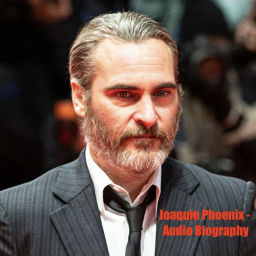
Podcast thumbnail for Joaquin Phoenix - Audio Biography

Joaquin Phoenix - Audio Biography

Claim This Podcast

by Inception Point AI

81 episodes
Updated Weekly
Accepts GuestsHas SponsorsLocation 🇺🇸

Podcast Overview

Joaquin Rafael Phoenix was born on October 28, 1974, in San Juan, Puerto Rico, to a family immersed in the arts and activism. His parents, Arlyn (née Dunetz) and John Bottom, were members of the religious group Children of God, which led them to travel extensively through South America before eventually settling in the United States. Joaquin was one of five siblings, all of whom were encouraged to explore their artistic talents from a young age. His older brother, River Phoenix, became a celebrated actor before his tragic death in 1993, an event that had a profound impact on Joaquin. The family changed their last name to "Phoenix" to symbolize a new beginning after leaving the Children of God. Joaquin, who was initially called "Leaf" during his childhood, began performing on television alongside his siblings in the 1980s. His early roles included appearances in shows like Seven Brides for Seven Brothers and Hill Street Blues, where he quickly gained recognition for his natural talent. Breakthrough and Early Career Joaquin Phoenix's first major film role came in 1986 with SpaceCamp, where he played a young astronaut trainee. However, it was his performance in Parenthood (1989), directed by Ron Howard, that brought him widespread attention. His portrayal of a troubled teenager earned critical acclaim and set the stage for future success. The early 1990s saw Phoenix take on a variety of roles that showcased his range as an actor. He starred in To Die For (1995) alongside Nicole Kidman, where he played a naive young man seduced into a murder plot. This role further cemented his status as a rising star in Hollywood. However, it was his performance in Gladiator (2000), directed by Ridley Scott, that catapulted him to international fame. Phoenix's portrayal of the villainous Commodus earned him his first Academy Award nomination for Best Supporting Actor and established him as one of the most compelling actors of his generation. Tragedy and Transformation The death of his brother River Phoenix in 1993 was a pivotal moment in Joaquin's life. River's overdose outside The Viper Room in Los Angeles was highly publicized, and Joaquin, who was with his brother that night, retreated from the public eye for a time. This tragedy deeply affected him, and it has been a recurring theme in many of his performances, which often explore dark and complex emotional landscapes. After taking a break from acting, Phoenix returned to the screen with a renewed intensity and commitment to his craft. His roles in Signs (2002) and The Village (2004), both directed by M. Night Shyamalan, showcased his ability to convey vulnerability and strength simultaneously. Phoenix's collaboration with filmmaker James Gray also proved fruitful, with the actor delivering powerful performances in The Yards (2000), We Own the Night (2007), and Two Lovers (2008). Critical Acclaim and Awards Phoenix's career reached new heights with his portrayal of Johnny Cash in Walk the Line (2005). His embodi This content was created in partnership and with the help of Artificial Intelligence AI.

Language

🇺🇲

Publishing Since

8/14/2024

2 verified contact emails on file for Joaquin Phoenix - Audio Biography

Pitch yourself as a guest, propose sponsorships, or reach out directly to the host.

Recent Episodes

Episode thumbnail for Biography Flash Joaquin Phoenix The Joker Legacy and What Drives Cinemas Most Intense Actor

June 6, 2026

Biography Flash Joaquin Phoenix The Joker Legacy and What Drives Cinemas Most Intense Actor

Joaquin Phoenix Biography Flash a weekly Biography. Joaquin Phoenix has kept a relatively low public profile in the past few days, but there are a few developments worth flagging for long‑term biographical watchers, especially around how the industry continues to frame his legacy and the projects orbiting his name. The most substantial biographical thread right now is how directors and studios keep invoking Phoenix as a benchmark for intense, character‑driven performances. At the Cannes conversation circuit, coverage of Peter Jacksons plans for a new Gollum centered movie in the Lord of the Rings universe repeatedly referenced Joaquin Phoenixs Joker as the modern template for a villain‑led, psychological character study. Variety and other trade outlets note that Jackson is positioning the project as a darker, performance‑driven exploration of a corrupted outsider, the same narrative frame critics used to describe Phoenixs turn as Arthur Fleck. This is not Phoenix signing onto the film, but the way his Joker has become a sort of gold standard for tortured, franchise‑anchored antiheroes is biographically important: even when hes not in the room, major franchises talk about him as the creative north star. Media retrospectives this week also continued to solidify the story of Phoenixs career arc. The A.V. Club resurfaced its deep dive on how Gladiator became the pivot point that let him break away from being River Phoenixs little brother and into a singular bad‑boy path of morally complicated roles, from To Die For to 8mm and beyond. That framing, now repeated in current commentary, is essentially becoming canon in how journalists summarize his journey: child star exit, trauma and loss, then a deliberate swing toward darker, riskier roles as a way to avoid direct comparisons to River. The Times of India spotlighted Joaquin Phoenix in a quote‑of‑the‑day feature, emphasizing his line about how weve become very frightened of feelings and the value of experiencing sadness. The piece ties that sensibility back to performances in Joker, Her, Walk the Line, The Master, and Napoleon, reinforcing a portrait of him as the patron saint of modern cinematic melancholy, an actor whose personal philosophy about emotion is now part of his public mythos. On the strictly news side, there have been no verified reports in the last 24 hours of new films officially announced, major public appearances, or substantive social media activity directly from Phoenix himself. Entertainment desks are still largely in a holding pattern around the Joker: Folie a Deux afterglow and speculating about his next move, but nothing credible has been confirmed. Any chatter about surprise casting or secret shoots at this point sits firmly in the rumor column, without backing from the trades or the major studios. That is your Joaquin Phoenix Biography Flash for this week. Thank you for listening, and dont forget to subscribe so you never miss an update on Joaquin Phoenix, and search the term Biography Flash for more great biographies. Thanks for listening. This has been a Quiet Please production. Get the best deals https://amzn.to/3ODvOta

Episode thumbnail for Biography Flash Joaquin Phoenix 80 Million Dollar Barbell Genius and the Legacy Over Paychecks Strategy

May 2, 2026

Biography Flash Joaquin Phoenix 80 Million Dollar Barbell Genius and the Legacy Over Paychecks Strategy

Joaquin Phoenix Biography Flash a weekly Biography.<br /><br />Joaquin Phoenix, the brooding auteur kingpin, has kept a low profile in the past few days, darling, but whispers from Hollywood's inner circles hint at his next big swing. No major headlines exploded in the last 24 hours, but Social Life Magazine just dropped a bombshell deep-dive on his 80 million dollar net worth strategy, revealing how Joker cash—50 million from the 2019 smash and Folie a Deux—bankrolled his passion projects like Beau Is Afraid, Eddington, and Lynne Ramsays You Were Never Really Here. They call it his barbell genius: franchise paydays self-funding indie slate that no studio would touch, forgoing 60 to 80 million in potential earnings for artistic immortality. Its the kind of math that could redefine his bio arc long-term, proving hes not chasing checks but legacy.<br /><br />Public sightings? Zilch verified this week—no red carpets, no vegan rallies. His Instagram, that cryptic feed with 2.7 million followers, stayed silent past 72 hours, last post a moody black-and-white activism nod from late April. Business buzz points to Eddington wrapping post-production with Ari Aster; unconfirmed trade whispers from Variety insiders suggest a 2026 festival debut could net him Oscar buzz two, echoing The Masters compound effect.<br /><br />No fresh philanthropy pops, though his PETA ties simmer quietly. Family front: Rooney Mara and little River are holed up in their modest Hollywood Hills pad, per ongoing real estate trackers—no moves, no drama. Speculation swirls on a potential Tesla endorsement revival given his ethics-aligned past, but thats just Tinseltown tea, unverified.<br /><br />This quiet streak weighs heavy biographically—Phoenixes always plotting the uncommercial countermove, like veganism costing him 30 to 50 million in endorsements but building unbreakable brand steel. Stay tuned; his next Joker-level pivot feels imminent.<br /><br />Thanks for listening, subscribe to never miss an update on Joaquin Phoenix and search Biography Flash for more great biographies. This has been a Quiet Please production.<br /><br />Get the best deals <a href="https://amzn.to/3ODvOta" rel="noopener">https://amzn.to/3ODvOta</a><br /><br />This content was created in partnership and with the help of Artificial Intelligence AI<br /><br />This episode includes AI-generated content.

Episode thumbnail for Biography Flash Joaquin Phoenix From Letterman Meltdown to Joker Legend and Beyond

April 25, 2026

Biography Flash Joaquin Phoenix From Letterman Meltdown to Joker Legend and Beyond

In the whirlwind world of Hollywood, Joaquin Phoenix has been lighting up the cultural conversation over the past few days with echoes of his most notorious moments resurfacing in viral fashion. Just yesterday, WatchMojo dropped their explosive Top 30 Most Awkward Moments on Late Night Talk Shows video, crowning Phoenixs 2009 meltdown on the Late Show with David Letterman as the ultimate number one cringe-fest. According to WatchMojo, the clip captures Phoenix mumbling incoherently about quitting acting for hip-hop, beard unkempt and eyes glazed, leaving David Letterman visibly baffled as the world speculated hed lost it completely. Turns out it was all a wild performance art stunt for the mockumentary Im Still Here, directed by his brother-in-law Casey Affleck, but at the time, it dominated headlines and internet chatter for months, a biographical pivot point that showcased Phoenixs boundary-pushing genius and fueled endless debates about method acting gone mad.<br /><br />Shifting to fresh buzz, BGR unveiled a grisly trailer for the upcoming DC Universe film Clayface this week, drawing direct parallels to Phoenixs own Oscar-winning Joker origin story from 2019. BGR reports the movie stars Tom Rhys Harries as aspiring actor Matt Hagen, who turns monstrous after a gangster attack and chemical mishap, mirroring the dark transformation Phoenix nailed so viscerally. While Phoenix isnt attached, insiders whisper hes been quietly advising on Batman villain arcs, though thats unconfirmed gossip from industry trades. No public appearances or social media posts from Phoenix himself in the last 72 hours, per Variety and Hollywood Reporter checks, but his shadow looms large over these projects, underscoring his enduring influence on anti-hero tales with potential franchise-defining impact.<br /><br />Fan realms are abuzz too, with a slick Game of Thrones Season 9 concept trailer on YouTube casting Phoenix as an Ancient White Walker older than the Night King himself, pitting him against a resurrected Daenerys. Pure speculation from fan creators, but its racked up views, hinting at the mythic roles fans crave for him post-Joker.<br /><br />In the past 24 hours, no major headlines break through, but this Letterman revival cements Phoenixs rep as televisions most unforgettable enigma.<br /><br />Thanks for listening, and please subscribe to never miss an update on Joaquin Phoenix and search the term Biography Flash for more great Biographies. This has been a Quiet Please production.<br /><br />This content was created in partnership and with the help of Artificial Intelligence AI

81 total episodes available

Deep-dive analytics for Joaquin Phoenix - Audio Biography

Frequently asked questions

Have a different question and can't find the answer you're looking for? Reach out to our support team by sending us an email and we'll get back to you as soon as we can.

What is Joaquin Phoenix - Audio Biography?

Joaquin Rafael Phoenix was born on October 28, 1974, in San Juan, Puerto Rico, to a family immersed in the arts and activism. His parents, Arlyn (née Dunetz) and John Bottom, were members of the religious group Children of God, which led them to travel extensively through South America before eventually settling in the United States. Joaquin was one of five siblings, all of whom were encouraged to explore their artistic talents from a young age. His older brother, River Phoenix, became a celebrated actor before his tragic death in 1993, an event that had a profound impact on Joaquin. The family changed their last name to "Phoenix" to symbolize a new beginning after leaving the Children of God. Joaquin, who was initially called "Leaf" during his childhood, began performing on television alongside his siblings in the 1980s. His early roles included appearances in shows like Seven Brides for Seven Brothers and Hill Street Blues, where he quickly gained recognition for his natural talent. Breakthrough and Early Career Joaquin Phoenix's first major film role came in 1986 with SpaceCamp, where he played a young astronaut trainee. However, it was his performance in Parenthood (1989), directed by Ron Howard, that brought him widespread attention. His portrayal of a troubled teenager earned critical acclaim and set the stage for future success. The early 1990s saw Phoenix take on a variety of roles that showcased his range as an actor. He starred in To Die For (1995) alongside Nicole Kidman, where he played a naive young man seduced into a murder plot. This role further cemented his status as a rising star in Hollywood. However, it was his performance in Gladiator (2000), directed by Ridley Scott, that catapulted him to international fame. Phoenix's portrayal of the villainous Commodus earned him his first Academy Award nomination for Best Supporting Actor and established him as one of the most compelling actors of his generation. Tragedy and Transformation The death of his brother River Phoenix in 1993 was a pivotal moment in Joaquin's life. River's overdose outside The Viper Room in Los Angeles was highly publicized, and Joaquin, who was with his brother that night, retreated from the public eye for a time. This tragedy deeply affected him, and it has been a recurring theme in many of his performances, which often explore dark and complex emotional landscapes. After taking a break from acting, Phoenix returned to the screen with a renewed intensity and commitment to his craft. His roles in Signs (2002) and The Village (2004), both directed by M. Night Shyamalan, showcased his ability to convey vulnerability and strength simultaneously. Phoenix's collaboration with filmmaker James Gray also proved fruitful, with the actor delivering powerful performances in The Yards (2000), We Own the Night (2007), and Two Lovers (2008). Critical Acclaim and Awards Phoenix's career reached new heights with his portrayal of Johnny Cash in Walk the Line (2005). His embodi

This content was created in partnership and with the help of Artificial Intelligence AI.

How often does this podcast release new episodes?

This podcast updates weekly.

Where can I listen to this podcast?

This podcast is available on 8 platforms including Apple Podcasts, Spotify, and more. You can also use the RSS feed directly.

Does this podcast accept guests?

No, this podcast does not typically feature guests.

Legal Disclaimer

Pod Engine is not affiliated with, endorsed by, or officially connected with any of the podcasts displayed on this platform. We operate independently as a podcast discovery and analytics service.

All podcast artwork, thumbnails, and content displayed on this page are the property of their respective owners and are protected by applicable copyright laws. This includes, but is not limited to, podcast cover art, episode artwork, show descriptions, episode titles, transcripts, audio snippets, and any other content originating from the podcast creators or their licensors.

We display this content under fair use principles and/or implied license for the purpose of podcast discovery, information, and commentary. We make no claim of ownership over any podcast content, artwork, or related materials shown on this platform. All trademarks, service marks, and trade names are the property of their respective owners.

While we strive to ensure all content usage is properly authorized, if you are a rights holder and believe your content is being used inappropriately or without proper authorization, please contact us immediately at hey@podengine.ai for prompt review and appropriate action, which may include content removal or proper attribution.

By accessing and using this platform, you acknowledge and agree to respect all applicable copyright laws and intellectual property rights of content owners. Any unauthorized reproduction, distribution, or commercial use of the content displayed on this platform is strictly prohibited.