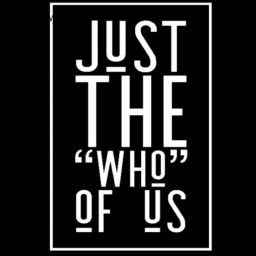
Just the WHO of us
Claim This Podcastby Reah H
Podcast Authority
Beta
Podcast Overview
<p>Reah, along with various guests; talks health, wellness, life experience, and more! Her social media links include Facebook-www.facebook.com/falolity, Instagram #justthewhopodcast, Reah Hagues on LinkedIn, and her website at www.Falolity.net.<br />You can also watch her on YouTube (as well as catch special reels and short videos not seen here) at https://www/YouTube.com/@reahhagues.</p>
Language
🇺🇲
Publishing Since
1/18/2024
Unlock The Full Podcast Authority Score Report
See how your podcast performs across key metrics
Podcast Authority
Beta
Recommendations available
Unlock the full report to see detailed tips
Recommendations available
Unlock the full report to see detailed tips
Unlock comprehensive insights including:
- • YouTube presence analysis
- • Social media reach metrics
- • RSS compliance scoring
- • Podcast 2.0 features
- • Technical standards
Detailed Analytics
- Complete breakdown of all 19 authority metrics
- Personalized recommendations for each metric
- Industry benchmarks and comparisons
- Technical RSS feed analysis and compliance scoring
Growth Strategies
- Step-by-step action plans for improvement
- Quick wins to boost your score immediately
- Pro tips from successful podcasters
See how your show performs across every key metric
High authority scores make your podcast more attractive to industry leaders and influencers who want to appear on credible shows.
Sponsors look for podcasts with proven authority and engagement. Your score demonstrates your podcast's value to potential partners.
Understanding your strengths and weaknesses helps you make data-driven decisions to expand your listener base effectively.
Reach the team behind Just the WHO of us
Verified contact details for this show aren't on file yet — sign up to get notified when they land.
Recent Episodes

June 18, 2026
Power in Obstacles (with Shannon Donohoe-Simpson)
This week, we introduce Shannon Donohoe-Simpson: an amazing survivor who has spent her life learning how to overcome obstacles, persist through struggles, and empower others through her own strength and triumphs. Overcoming Adversity and Personal Growth In today's episode Shannon shares deeply personal stories of overcoming significant life challenges, including childhood trauma, breast cancer, divorce, and parenting. Shannon describes surviving childhood abuse, breast cancer, and supporting her family through autism diagnosis. She emphasizes that these experiences shaped her rather than defined her as a failure. Reah discusses early motherhood at 14, divorce, being neurodivergent, and raising five children partly as a single mother. Both women highlight the importance of embracing discomfort and failure as catalysts for growth, resilience, and confidence. They agree that reflecting on past hardships provides perspective and strength to face future challenges, and that self-compassion and grace are essential during difficult times. Healing from Trauma and the Power of Storytelling A major theme this week is the healing power of sharing personal stories, especially regarding trauma such as sexual abuse and illness. Shannon recounts her first cancer retreat in 2009, where she realized the importance of addressing underlying emotional wounds. She openly discusses her own childhood sexual abuse and the cultural pressure to remain silent. Reah echoes this, sharing her own experience of childhood assault and the generational silence around such topics. Parenting, Neurodiversity, and Family Dynamics The conversation delves into parenting children with autism and ADHD, the impact of neurodiversity on family life, and the importance of emotional intelligence. Shannon shares her experience homeschooling her twins, including her son Nolan, who was diagnosed with autism at age two and was initially nonverbal and unable to walk; graduating high school two years early and now being in college despite dire predictions. Both women stress that speaking out is essential for healing and societal change, noting that podcasts and public platforms are vital for breaking stigmas around issues like sexual assault and autism. They agree that sharing stories fosters connection, reduces isolation, and can be transformative for both the storyteller and listeners. Mind-Body Connection and Emotional Release Shannon shares a compelling story about developing severe foot pain before a major hike, which was resolved after releasing pent-up resentment and emotions during a therapy session. She references Gabor Maté’s work on the mind-body connection, explaining that unexpressed emotions can manifest as physical ailments. Her daily practice of dancing is described as a form of emotional release and self-care, which she likens to medicine. Reah refers this to her own parenting, using the "I See You letter" to help her son process anger and emotional pain. Both agree that moving emotions out of the body—whether through dance, conversation, or other practices—is crucial for well-being, and that many adults and children unknowingly store unresolved emotions physically. Authenticity, Boundaries, and Self-Reflection Shannon outlines her three pillars: authenticity, boundaries, and the concept that everyone is a mirror. She argues that true authenticity is impossible without clear boundaries, and that others often reflect back what we need to address within ourselves. Both women discuss the difficulty and necessity of setting boundaries, especially for women conditioned to people-please. They share personal experiences of learning to say no, dealing with guilt, and the transformative effect of prioritizing self-care. The conversation also covers the importance of self-reflection, recognizing triggers, and taking responsibility for one’s own emotional state rather than projecting onto others. This self-work is seen as essential for personal growth

June 11, 2026
Dr. Eleanor Haspel-Portner
Dr. Eleanor Haspel-Portner's Background and Early Influences Dr. Haspel-Portner describes her early experiences with seeing auras and being sensitive to how people treated each other. She grew up as the youngest of five siblings, with significant age gaps, and faced challenges such as a difficult relationship with her brother and the loss of her father at age 15. Her mother was supportive in some ways, advocating for her in school, but less so in others. Her older sister Sandra was a major influence, introducing her to Jung and psychology. Dr. Haspel-Portner pursued higher education at the University of Chicago, influenced by her sister, and was drawn to psychology, feeling it was her calling. She emphasized the importance of credibility, aiming for a PhD to be taken seriously, especially given her interest in topics often dismissed as 'woo.' Academic and Professional Journey Dr. Haspel-Portner attended the University of Chicago, joining an integrated social science department that included psychology, biology, sociology, and anthropology. She studied under renowned figures such as Larry Kohlberg and Elisabeth Kübler-Ross. She married at 20, divorced during graduate school, and balanced her studies with teaching and raising two children. She found teaching unfulfilling and realized that academic psychology did not equip her with practical skills for parenting. This led her to study Parent Effectiveness Training and other practical communication methods. She later became a clinician, refusing to use the DSM for labeling, and focused on empowering clients rather than pathologizing them. Her clinical work included group sessions using music and meditation, and she authored several books, including 'Marriage in Trouble: A Time of Decision.' Development and Critique of Human Design and Noble Energy Maps Dr. Haspel-Portner discusses her work with Human Design, which she critiqued as incomplete and disempowering because it focuses only on the mental world. She developed the Noble Energy Maps, based on statistical analysis of 45,000 cases, integrating astrology, the Tree of Life, developmental psychology, and esoteric theory. She emphasizes that humans live in four worlds: mental, emotional/angelic, spiritual, and physical. She argues that traditional psychology addresses only 25% of human experience (the mental world), neglecting the other dimensions. Her Noble Energy Maps aim to empower individuals by recognizing their multi-dimensional consciousness and unique energy sensitivities, starting from infancy. Energy Sensitivity and Communication in Relationships and Parenting Both speakers discuss the importance of recognizing and adapting to energy sensitivity in themselves and others, especially in family and therapeutic contexts. Dr. Haspel-Portner shares how she encouraged her children and grandchildren to acknowledge and discuss their perceptions of energy and auras, fostering a language of spirit at home. She emphasizes the need for parents and clinicians to adapt communication styles to the individual, especially for sensitive children. Reah shares her own experiences with sensitive children and the importance of treating each child as an individual. Both agree that recognizing and validating a child's or client's unique sensitivities and communication needs is crucial for self-esteem and empowerment. Dr. Haspel-Portner also notes that energy sensitivity can be inherited and that many people are unaware of their own sensitivities. Individuality and Uniqueness in Development and Education Dr. Haspel-Portner stresses that every individual is unique, as evidenced by her experience with thousands of Noble Energy Maps—no two charts are the same. She advocates for treating each child or client as an individual, adapting communication and educational approaches accordingly. She shares personal examples of moving her children between schools until they found the right fit, prioritizing their feedback over convenience

June 4, 2026
Wild Adventures with Ingrid
Transitioning Life Stages and Identity Beyond Parenting Writing, Creativity, and the Value of Sharing Personal Stories Women’s Visibility, Wisdom, and Intergenerational Dialogue Podcasting, Marketing, and Creative Commitment
109 total episodes available
Recent guests on Just the WHO of us
Guests from recent episodes — sign up to see every guest that has ever appeared on this show.
Reah Hagues
Guest
Juakerra
Guest
Montavious
Guest
Natia
Guest
Montavius
Guest
Deep-dive analytics for Just the WHO of us
Frequently asked questions
Have a different question and can't find the answer you're looking for? Reach out to our support team by sending us an email and we'll get back to you as soon as we can.
- What is Just the WHO of us?
<p>Reah, along with various guests; talks health, wellness, life experience, and more! Her social media links include Facebook-www.facebook.com/falolity, Instagram #justthewhopodcast, Reah Hagues on LinkedIn, and her website at www.Falolity.net.<br />You can also watch her on YouTube (as well as catch special reels and short videos not seen here) at https://www/YouTube.com/@reahhagues.</p> - How often does this podcast release new episodes?
This podcast updates daily.
- Where can I listen to this podcast?
This podcast is available on 10 platforms including Apple Podcasts, Spotify, and more. You can also use the RSS feed directly.
- Does this podcast accept guests?
Yes, this podcast regularly features guests.
Legal Disclaimer
Pod Engine is not affiliated with, endorsed by, or officially connected with any of the podcasts displayed on this platform. We operate independently as a podcast discovery and analytics service.
All podcast artwork, thumbnails, and content displayed on this page are the property of their respective owners and are protected by applicable copyright laws. This includes, but is not limited to, podcast cover art, episode artwork, show descriptions, episode titles, transcripts, audio snippets, and any other content originating from the podcast creators or their licensors.
We display this content under fair use principles and/or implied license for the purpose of podcast discovery, information, and commentary. We make no claim of ownership over any podcast content, artwork, or related materials shown on this platform. All trademarks, service marks, and trade names are the property of their respective owners.
While we strive to ensure all content usage is properly authorized, if you are a rights holder and believe your content is being used inappropriately or without proper authorization, please contact us immediately at hey@podengine.ai for prompt review and appropriate action, which may include content removal or proper attribution.
By accessing and using this platform, you acknowledge and agree to respect all applicable copyright laws and intellectual property rights of content owners. Any unauthorized reproduction, distribution, or commercial use of the content displayed on this platform is strictly prohibited.