
If you want to learn Italian and are looking to receive Italian lessons with professional native Italian tutors, this podcast is the perfect solution for you.
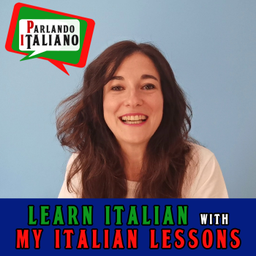
Learn Italian with My Italian Lessons
Claim This Podcastby Parlando Italiano
3.0(3 reviews)
10 episodes
Updated Daily
Accepts GuestsHas SponsorsLocation 🇬🇧
Podcast Overview
If you want to learn Italian and are looking to receive Italian lessons with professional native Italian tutors, this podcast is the perfect solution for you.
Language
🇺🇲
Publishing Since
8/19/2016
2 verified contact emails on file for Learn Italian with My Italian Lessons
Pitch yourself as a guest, propose sponsorships, or reach out directly to the host.
Recent Episodes
December 20, 2021
Italian clothing vocabulary you can easily learn with exercises
<br /> You want to be able to dress in Italian, then you have to learn Italian clothing vocabulary. Italy is known as one of the best fashion destinations in the world. Your shopping experience could be more fun if you took a step to learn the Italian language.<br /> <br /> Learn about the different Italian clothing brands, the famous Italian fashion designers like Giorgio Armani known for his luxury fashion empire that boasts of Apparel lines in conjunction with accessories, footwear, cosmetics and home-based décor.<br /> To be familiar with the Italian clothing vocabulary, you have to be willing to learn the Italian language. It will dawn on you that this is a wide topic and it includes a lot. Obviously, there are men’s and women’s clothes in Italian and we shall look at the two groups first.<br /> ABBIGLIAMENTO DA UOMO (MEN’S CLOTHING)<br /> <br /> Papillon (Bow tie)<br /> Camicia (Shirt)<br /> Giacca sportiva (Sport jacket)<br /> Abito da uomo (Suit)<br /> Gilet (Waistcoat)<br /> Cravatta (Tie)<br /> Smoking (Dinner suit, Tuxedo)<br /> Boxer (Boxer shorts)<br /> Canottiera (Undershirt)<br /> Mutande (Underwear)<br /> Maglietta (T-shirt)<br /> Giacca a vento (Windbreaker)<br /> Sciarpa (Scarf)<br /> Jeans (Jeans)<br /> Felpa (Sweatshirt)<br /> Tuta da ginnastica (Sweat suit)<br /> Maglione (Sweater)<br /> Impermeabile (Raincoat)<br /> <br /> ABBIGLIAMENTO DONNA (WOMEN’S CLOTHING)<br /> <br /> Bikini (Bikini)<br /> Camicia (Blouse)<br /> Vestito (Dress)<br /> Gonna (Skirt)<br /> Minigonna (Miniskirt)<br /> Completo da donna (Suit)<br /> Reggiseno (Bra)<br /> Camicia da notte (Nightgown)<br /> Mutandine (Panties)<br /> Collant (Pantyhose/tights)<br /> Sottoveste (Slip)<br /> Calze (Stockings)<br /> Pantaloncini (Shorts)<br /> Canotta (Tank top)<br /> Pantaloni di lino (Linen trouser)<br /> Tuta sportiva (Tracksuit)<br /> Abito lungo (Maxi dress)<br /> Accappatoio (Bathrobe)<br /> Biancheria intima (Lingerie)<br /> Canottiera di cotone (Cotton vest)<br /> <br /> ACCESSORI (ACCESSORIES)<br /> <br /> Cintura (Belt)<br /> Berretto (Cap)<br /> Guanti (Gloves)<br /> Cappello (Hat)<br /> Borsa (Purse)<br /> Calzini (Socks)<br /> Occhiali da sole (Sunglasses)<br /> Orologio (Watch)<br /> Cravatta (Tie)<br /> Bretelle (Suspenders)<br /> <br /> <br /> SCARPE (SHOES)<br /> <br /> Le scarpe alte/col tacco (High-heeled shoes)<br /> Le scarpe a tacco medio (Medium-heeled shoes)<br /> Le scarpe basse (Flats)<br /> Gli stivali (Boots)<br /> I sandali (Sandals)<br /> Le infradito (Flip-flops)<br /> Le scarpe da trekking (Hiking boots)<br /> Le scarpe da ginnastica (Tennis shoes)<br /> Le scarpe da corsa (Running shoes)<br /> Gli stivali di gomma (Rain boots)<br /> <br /> ITALIAN CLOTHING VOCABULARY, DESCRIBING MATERIALS <br /> <br /> Il cotone (Cotton)<br /> La pelle (Leather)<br /> Pelle scamosciata (Suede)<br /> Pelle lucida (Patent leather)<br /> Pelle vegana (Vegan leather)<br /> La lana (Wool)<br /> Il lino (Linen)<br /> La seta (Silk)<br /> A maniche lunghe (Long-sleeved)<br /> A maniche corte (Short-sleeved)<br /> Elegante (Elegant)<br /> Attillato (Tight-fitting)<br /> Lungo (Long)<br /> Corto (Short)<br /> Scollato (Low-cut)<br /> Col collo a V (V-necked)<br /> Col collo rotondo (Round-necked)<br /> Casual (Casual)<br /> Un vestito importante (A serious/important dress)<br /> A strisce (Striped)<br /> <br /> It is interesting to note that Italy is known for high profile Italian fashion designers like Giorgio Armani, Gianni Versace but know very little about them. People know so much about what they have created but not about the designers. There are famous Italian clothing brands which are very well known. They are the likes of Bottega Veneta, Versace, Moschino, Gucci, Valentino, Fendi, Giorgio Armani, Prada, Miu Miu among others.<br /> Bottega Veneta is well known for specializing in premium leather goods and accessories. Versace is known for its expensive and glamorous pieces.
November 20, 2021
Italian passato prossimo. Learn the past tense in Italian
<br /> In this post, we will show you how to use the Italian Passato Prossimo. As we already stated in our previous articles about grammar, many non-Italian speakers struggle with verbs because every single verb has to be conjugated for person and number. In addition, there are so many forms and pronunciations that it’s almost impossible not to get at least one verb wrong.<br /> <br /> Don’t feel embarrassed if you can’t remember a verb or say “faciuto” instead of “fatto” – done in English – so many Italian people still struggle with the passato prossimo and the participio passato. It’s normal to make mistakes! <br /> Bear in mind that every language can be frustrating to learn and the best thing you can do is KEEP LEARNING! Find an entertaining way to learn and stick to it; grammar is not fun, but instead of using a textbook, try watching a video and taking notes. <br /> To help you out we have provided you with a video made by our fantastic tutor Francesca, click the link down below to learn the Italian passato prossimo. Francesca will also test your skills at the end, so make sure you watch the entire video. <br /> <br /> Keep reading to learn how to create the passato prossimo or past tense in Italian, commonly called present perfect as well. Get ready to learn Italian online! The passato prossimo Italian conjugation might be difficult, but you’re smarter!<br /> Learn Italian passato prossimo with us.<br /> LEARN THE PAST TENSE IN ITALIAN – HOW TO CREATE THE ITALIAN PASSATO PROSSIMO<br /> In Italian, the passato prossimo is used to express past events and actions that are already over. In English, you can choose between the present perfect tense (I have gone) and the simple past tense (I went), while in Italian we use the passato prossimo most of the time. The other past tense (passato remoto) is only used in narratives or when we talk about something that happened a long time ago. <br /> The passato prossimo is composed of the auxiliary verb (to have or to be) and the past participle of the main verb.<br /> Present tense of AVERE or ESSERE + PAST PARTICIPLE of the main verb<br /> To form the past participle (participio passato), you need to follow these rules: <br /> <br /> If a verb ends in -ARE in the infinitive tense, take off -ARE and add -ATO: giocare (to play) — giocato (played);<br /> If a verb ends in -ERE in the infinitive tense, take off -ERE and add -UTO: <a href="https://www.thinkinitalian.com/know-italian-sapere-conoscere-italian-grammar/">sapere</a> (to know) — saputo (known)<br /> If a verb ends in -IRE in the infinitive tense, take off -IRE and add -ITO: sentire (to hear) — sentito (heard)<br /> <br /> IRREGULAR PAST PARTICIPLES<br /> In Italian, there are many irregular verbs that don’t follow the rules mentioned above to form the past participle. <br /> Here is a list of the most used irregular verbs:<br /> <br /> * Accendere (to switch, light up) – Acceso<br /> * Aggiungere (to add) – Aggiunto<br /> * Ammettere (to admit) – Ammesso<br /> * Apparire (to appear) – Apparso<br /> * Apprendere (to learn) – Appreso<br /> * Aprire (to open) – Aperto<br /> * Assistere (to assist) – Assistito<br /> * Assolvere (to acquit) – Assolto<br /> * Assumere (to hire) – Assunto<br /> * Attendere (to wait for) – Atteso<br /> * Attrarre (to attract) – Attratto<br /> * Avvolgere (to wrap) – Avvolto<br /> * Bere (to drink) – Bevuto<br /> * Chiedere (to ask) – Chiesto<br /> * Chiudere (to close) – Chiuso<br /> * Commettere (to commit) – Commesso<br /> * Comparire (to appear) – Comparso<br /> * Comprendere (to comprehend, to understand) – Compreso<br /> * Condividere (to share) – Condiviso<br /> * Confondere (to confuse) – Confuso<br /> * Connettere (to connect) – Connesso<br /> * Conoscere (to know) – Conosciuto<br /> * Correggere (to correct) – Corretto<br /> * Correre (to run) – Corso<br /> * Crescere (to grow) – Cresciuto<br /> * Cuocere (to cook) – Cotto<br />
November 6, 2021
Cooking and Kitchen vocabulary in Italian with English translation
<br /> It is important to learn cooking and kitchen vocabulary in Italian if you love the Italian way of life. Italians are known for their famous recipes which have had a great impact worldwide. They say that if you are not a fan of any of the delicious Italian food, then your life is missing something. Well-made, rich in taste and texture are guaranteed to leave you asking for more. <br /> <br /> There is a fascinating history, customs and trends for what you eat in Italian homes. As a result, food plays a big part in the everyday Italian lifestyle. It goes beyond nourishment. It is serious business thinking of which sauce is acceptable with a certain pasta and the details like what shape is to be used when considering to make a certain pasta. This is never taken lightly. Italians have a proud relationship with their cuisine and nothing or anyone can come in between them.<br /> ITALIAN COOKING TRADITIONS<br /> Italians have many traditional holidays which generally revolve around food. Large extended families’ groups come together to eat as often as possible during these days when particular foods must be eaten. The cooking and kitchen vocabulary in Italian is easily grasped since the meal preparation lasts for several hours. Whatever meal being prepared is so deep-rooted in the family that it’s unlikely to change anything. <br /> Italians enjoy traditional food with family and dishes are tried and tested uncountable times before it qualifies to the dinner table. One of the most important things in Italy is cooking. It plays the important role of bringing family together. Therefore, a variety of delicious and enjoyable meals are prepared with family in mind. <br /> A traditional Italian family lunch may last up to two good hours because it is made of six courses. Appetizers (gli antipasti), First course, mainly a pasta dish (Primo piato), the second course which is either fish or a meat dish, a vegetable dish (il contorno), fruit dish (frutta) and desserts (i dolci). <br /> Let us look at some of the Italian cooking vocabulary.<br /> ITALIAN COOKING TECHNIQUES<br /> <br /> Mescolare – To blend, to mix, to stir<br /> Tritare – To chop up<br /> Impastare – To knead<br /> Versare – To pour<br /> Utilizzare – To use<br /> Scegliere – To choose<br /> Trasferire – To transfer<br /> Coprire – To cover<br /> Friggere – To fry<br /> Cuocere al forno – To bake in the oven<br /> Saltare – To sauté<br /> Trasferire in una seconda pentola -To transfer into a second pot<br /> <br /> <br /> ITALIAN COOKING INGREDIENTS<br /> <br /> Pomodori Pachino – Cherry tomatoes<br /> Cozze – Mussels<br /> Vongole – Clams<br /> Calamari – Squid<br /> Scampi – Shrimp<br /> Olio extraverergine di oliva – Extra-virgin olive oil<br /> Vino bianco – White wine<br /> Vino rosso – Red wine<br /> Sale – Salt<br /> Pepe nero – Black pepper<br /> Zucchero – Sugar<br /> Farina – Flour<br /> Acqua – Water<br /> Lievito – Yeast<br /> Mozzarella – Buffalo milk cheese<br /> Cacao amaro in polvere – Unsweetened chocolate powder<br /> Uova – Eggs<br /> <br /> MEASURING ITALIAN FOOD<br /> <br /> Grammi – Grams<br /> Spicchio – Slide, Wedge, Clove, Small bunch<br /> Cucchiaio – Spoonful<br /> <br /> ITALIAN KITCHEN VOCABULARY<br /> <br /> La cucina – Kitchen<br /> Le bacchette – Chopsticks<br /> Il coltello – Knife<br /> La forchetta – Fork<br /> Il cucchiaio – Spoon<br /> La spatula – spatula<br /> Le pinze – Tongs<br /> Il frullatore – Blender<br /> La bilancia – Scales<br /> Lo strofinaccio – Tea towel<br /> Il recipiente – Container<br /> Il tagliere – Cutting board<br /> Il bicchiere – Glass<br /> La lavastoviglie – Dishwasher<br /> Il congelatore – Freezer<br />
10 total episodes available
Similar Podcasts
Discover related shows you might enjoy

Italian for Beginners
Linguistica 360

Easy Italian: Learn Italian with real conversations | Imparare l'italiano con conversazioni reali
Matteo, Raffaele and the Easy Italian team

Learn Italian with Joy of Languages
Joy of Languages

Stories in Slow Italian - Learn Italian through stories
Daily Italian with Elena

Italian Grammar Made Easy
Italian Matters

Coffee Break Italian
Coffee Break Languages
Beginner Italian Podcast | Italiano per principianti con Teacher Stefano
Teacher Stefano

Italiano con Amore
Eleonora Silanus
Italiano Bello
Italiano Bello - Learn Italian in Italian!
Learn Italian Vocabulary
Learn Italian Vocabulary

The Teacher Stefano Show
Teacher Stefano

Learn Italian | ItalianPod101.com
ItalianPod101.com

The Daily
The New York Times

Learn Italian 🇮🇹 While You Sleep 😴 1000 Phrases for Beginners | with 1000-words.com
1000-words.com
Deep-dive analytics for Learn Italian with My Italian Lessons
Frequently asked questions
Have a different question and can't find the answer you're looking for? Reach out to our support team by sending us an email and we'll get back to you as soon as we can.
- What is Learn Italian with My Italian Lessons?
- How often does this podcast release new episodes?
This podcast updates daily.
- Where can I listen to this podcast?
This podcast is available on 4 platforms including Apple Podcasts, Spotify, and more. You can also use the RSS feed directly.
- Does this podcast accept guests?
No, this podcast does not typically feature guests.
Legal Disclaimer
Pod Engine is not affiliated with, endorsed by, or officially connected with any of the podcasts displayed on this platform. We operate independently as a podcast discovery and analytics service.
All podcast artwork, thumbnails, and content displayed on this page are the property of their respective owners and are protected by applicable copyright laws. This includes, but is not limited to, podcast cover art, episode artwork, show descriptions, episode titles, transcripts, audio snippets, and any other content originating from the podcast creators or their licensors.
We display this content under fair use principles and/or implied license for the purpose of podcast discovery, information, and commentary. We make no claim of ownership over any podcast content, artwork, or related materials shown on this platform. All trademarks, service marks, and trade names are the property of their respective owners.
While we strive to ensure all content usage is properly authorized, if you are a rights holder and believe your content is being used inappropriately or without proper authorization, please contact us immediately at hey@podengine.ai for prompt review and appropriate action, which may include content removal or proper attribution.
By accessing and using this platform, you acknowledge and agree to respect all applicable copyright laws and intellectual property rights of content owners. Any unauthorized reproduction, distribution, or commercial use of the content displayed on this platform is strictly prohibited.