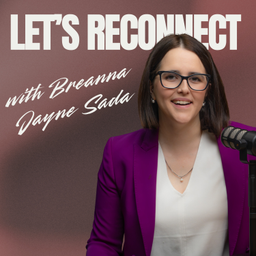
Let's Reconnect with Breanna Jayne Sada
Breanna Jayne Sada
- 37
- Episodes
- Weekly
- Cadence
- 2025
- First episode
About Let's Reconnect with Breanna Jayne Sada
Hosted by Psychologist Breanna Jayne Sada, connect with us weekly for insightful and practical conversations to support parents to reconnect with their children and teens. Hear from kids themselves, experts and parents about hot topics impacting children and teens and their relationships with their parents. Because so often what’s missing from parenting discussions and conversations about kids... is the kids. From how the social media ban is playing out in homes to supporting your child with anxiety and other mental health issues. What age should you give your child a smart phone and how do you discuss porn and drugs? No topic is off limits. Hosted on Acast. See acast.com/privacy (https://acast.com/privacy) for more information.
- Publisher
- Breanna Jayne Sada
- Category
- education · health & fitness · kids & family
- Language
- en
- Explicit
- No
- First episode
- 8 Dec 2025
- Latest episode
- 6 Sept 2026
Latest episodes
37 episodes in the feed.
6 Sept 2026
Friendship Smart with Michelle Mitchell
Friendships can be one of the greatest sources of joy and belonging for our kids, but they can also cause some of their biggest heartbreaks. So when your tween or teen is struggling with friendship drama, exclusion or bullying, when should you step in and when should you step back? In this episode of Let’s Reconnect, Breanna is joined in the studio by bestselling parenting author, speaker and friend of the show Michelle Mitchell to discuss her new book, Friendship Smart: A Parent’s Guide. Michelle shares her Friendship Smart framework and explains why today’s tweens and teens need us to intentionally teach relationship skills rather than simply expecting them to work friendships out for themselves. Together, Breanna and Michelle explore the three elements Michelle believes underpin strong friendships: safety, chemistry and effort. They discuss how these elements can shift over time and why a healthy friendship doesn’t need to be perfect. They also explore: • The difference between balanced, “stretch” and situational friendships • Why situational friendships can be particularly valuable for neurodivergent young people • How to help kids recognise whether a friendship actually feels safe • Reciprocity and learning how to both give and receive in relationships • Why friendship conflict isn’t always a bad thing • The difference between normal conflict, friendship drama and bullying • When parents should step in and when kids need space to problem-solve • Why repair and a genuine apology are essential friendship skills • Teaching tweens and teens to say “no” and, importantly, how to receive someone else’s “no” • Group chats, online friendships, ghosting and how technology has changed the friendship landscape • Why friendship problems can feel relentless when they follow kids home on their phones • How parents can create opportunities for connection outside of school • What to say when your child tells you, “They don’t want to be my friend anymore” • Why kids need different layers of friendship rather than relying on one best friend Michelle also shares a simple but powerful paper-chain activity that can help kids visually track how a friendship feels over time, creating a starting point for conversations without parents immediately jumping in to fix the problem. This episode is packed with practical language and tools parents can use to help tweens and teens develop friendship skills that will extend far beyond the school playground and into their adult relationships. Connect with Michelle Mitchell: Website: Michelle Mitchell (https://michellemitchell.org/?utm_source=chatgpt.com) Book: Friendship Smart: A Parent’s Guide Instagram: @michellemitchell.author (https://www.instagram.com/michellemitchell.author/?utm_source=chatgpt.com) Facebook: Michelle Mitchell (https://www.facebook.com/michellemitchell.author/?utm_source=chatgpt.com) keywords: tween friendships, teen friendships, friendship drama, teenage friendship problems, bullying, cyberbullying, group chats, toxic friendships, healthy friendships, friendship boundaries, helping teens make friends, neurodivergent friendships, parenting teenagers, parenting tweens, Michelle Mitchell, Friendship Smart, Let’s Reconnect podcast Let's Reconnect next episode. In the meantime, subscribe and follow our podcast and socials @breanna.jayne_psych @letsreconnect_pod. If you or your child would like to write in with a question or story, or you’d like to be a guest advocating for the needs of children and young people, please reach out. Disclaimer: The information in this podcast is general and not a substitute for individual clinical advice or treatment. While I am a registered psychologist, I am not providing personalised guidance here. Every child and family is different, and what’s discussed may not suit your situation. If you have concerns, please seek support from a qualified mental health professional. For immediate help, contact Lifeline on 13 11 14, Kids Helpline on 1800 55 1800, or call 000 in an emergency. Views expressed are my own and not those of any organisations I am associated with. Hosted on Acast. See acast.com/privacy (https://acast.com/privacy) for more information.
16 Aug 2026
Diagnosis helped me understand my child better
When a Diagnosis Changes Understanding, Not Your Child What if the behaviour you’ve been worried about isn’t laziness, defiance, rudeness or a child simply being “difficult”? What if there’s something more going on underneath? In this episode of Let’s Reconnect, psychologist Breanna Jayne Sada shares the stories of four families navigating diagnosis with their children and teenagers, including autism spectrum disorder (ASD), ADHD, developmental delay and depression. Each family’s journey is different. One noticed developmental differences in their toddler. Another watched their daughter struggle socially when she entered high school. One initially mistook their teenager’s depression for laziness, while another resisted an ADHD assessment for years because they feared their son being “labelled”. Yet a common theme runs through all four stories: the diagnosis didn’t change their child. It changed their understanding of their child. Breanna explores why parents can understandably feel frightened or hesitant about assessment and diagnosis, including concerns about labels, medication, stigma, blame and what a diagnosis might mean for their child’s future. She also discusses the relief and grief that can exist alongside one another when families finally receive answers. In this episode: Why parents often sense something is going on before they have a name for it Autism and developmental differences in young children Why autism and ADHD may become more noticeable when children reach high school How depression in teenagers can be mistaken for laziness or lack of motivation How ADHD symptoms can be misinterpreted as defiance or “naughty” behaviour Why anxiety can sometimes look like avoidance The fear that a diagnosis will “label” your child Why being treated differently isn't necessarily a negative Parental guilt, grief and relief following a diagnosis Why assessment does not automatically mean medication How diagnosis can help families access therapy, school adjustments and other supports The importance of early intervention How going without appropriate support can affect a young person’s self-esteem and self-concept Why parents and the wider family may need support too Moving from “What’s wrong with my child?” to “What’s happening for my child?” A diagnosis is not the end of a child’s story. For many families, it can be the beginning of greater understanding, compassion and access to the support their child needs to thrive. If you have a quiet feeling that your child is struggling or developing differently, you don’t have to work out the answer yourself. Speaking with your GP, paediatrician, psychologist or another appropriately qualified health professional can be a helpful place to begin. Support: Lifeline: 13 11 14 Kids Helpline: 1800 55 1800 Emergency: Triple Zero (000) The information discussed in Let’s Reconnect is general in nature and does not replace personalised mental health or medical advice. SEO keywords: child diagnosis, autism diagnosis children, ADHD diagnosis children, teenage depression, signs of ADHD in children, autism in teenagers, child mental health, developmental assessment, early intervention, neurodivergent children, parenting ADHD, parenting autistic children, school adjustments, teen mental health, parenting podcast Australia Let's Reconnect next episode. In the meantime, subscribe and follow our podcast and socials @breanna.jayne_psych @letsreconnect_pod. If you or your child would like to write in with a question or story, or you’d like to be a guest advocating for the needs of children and young people, please reach out. Disclaimer: The information in this podcast is general and not a substitute for individual clinical advice or treatment. While I am a registered psychologist, I am not providing personalised guidance here. Every child and family is different, and what’s discussed may not suit your situation. If you have concerns, please seek support from a qualified mental health professional. For immediate help, contact Lifeline on 13 11 14, Kids Helpline on 1800 55 1800, or call 000 in an emergency. Views expressed are my own and not those of any organisations I am associated with. Hosted on Acast. See acast.com/privacy (https://acast.com/privacy) for more information.
9 Aug 2026
Why Ariana Grande is trending, how to talk to your kids safely about weight loss
How to Talk to Your Child About Ariana Grande, Celebrity Body Image & Eating Disorders | Let's Reconnect Podcast Recent media coverage surrounding Ariana Grande's appearance has sparked important conversations for parents of tweens and teens. But how do you talk about celebrity body image without causing harm? In this episode of Let's Reconnect, registered psychologist Breanna Jayne Sada discusses how parents can use celebrity conversations to promote healthy body image, critical thinking and open communication, while following Australia's Mindframe guidelines for discussing eating disorders safely. Rather than focusing on one celebrity, this episode explores the bigger picture: unrealistic beauty standards, the influence of social media algorithms, and how parents can help children navigate appearance-based pressures without shame or judgement. In this episode we discuss: Why the recent discussion about Ariana Grande's appearance concerned me as a psychologist. How media reporting can unintentionally increase harm when discussing eating disorders. What Australia's Mindframe guidelines recommend when talking about body image. Why every generation has faced changing beauty ideals, from the 1990s "heroin chic" era to today's social media trends. Practical ways to talk with your tween or teen about celebrity body image. What to say (and what to avoid saying) if your child says they want to look like a celebrity. Why curiosity and connection are more effective than lectures or banning celebrities. How social media algorithms can quickly expose young people to harmful body image content. Why family conversations should focus on health, wellbeing and self-worth rather than weight or appearance. Warning signs that may indicate a young person needs additional support. How teens can support a friend they're worried about while encouraging professional help. This episode is designed to help parents create a safe environment where children feel comfortable discussing body image, appearance and social media pressures without fear of judgement. Resources mentioned Butterfly Foundation (Eating disorders support) https://butterfly.org.au (https://butterfly.org.au) Mindframe – Reporting and communicating safely about eating disorders https://mindframe.org.au (https://mindframe.org.au) Conversations Matter https://www.conversationsmatter.com.au (https://www.conversationsmatter.com.au) Headspace https://headspace.org.au (https://headspace.org.au) Emerging Minds https://emergingminds.com.au (https://emergingminds.com.au) Raising Children Network https://raisingchildren.net.au (https://raisingchildren.net.au) If you're concerned about your child, speak with your GP, school wellbeing team or a psychologist experienced in supporting young people. Need immediate support? Lifeline Australia https://www.lifeline.org.au (https://www.lifeline.org.au) Phone: 13 11 14 Kids Helpline https://kidshelpline.com.au (https://kidshelpline.com.au) Phone: 1800 55 1800 If you or someone else is in immediate danger, call 000. Disclaimer: This podcast provides general psychological education only and is not a substitute for personalised medical or mental health advice. If you are concerned about yourself or someone you care about, please seek support from a qualified health professional. If you found this episode helpful, please follow Let's Reconnect, leave a review, and share it with another parent. These conversations help more families build connection, confidence and healthier relationships with their children. Let's Reconnect next episode. In the meantime, subscribe and follow our podcast and socials @breanna.jayne_psych @letsreconnect_pod. If you or your child would like to write in with a question or story, or you’d like to be a guest advocating for the needs of children and young people, please reach out. Disclaimer: The information in this podcast is general and not a substitute for individual clinical advice or treatment. While I am a registered psychologist, I am not providing personalised guidance here. Every child and family is different, and what’s discussed may not suit your situation. If you have concerns, please seek support from a qualified mental health professional. For immediate help, contact Lifeline on 13 11 14, Kids Helpline on 1800 55 1800, or call 000 in an emergency. Views expressed are my own and not those of any organisations I am associated with. Hosted on Acast. See acast.com/privacy (https://acast.com/privacy) for more information.
Contact Let's Reconnect with Breanna Jayne Sada
- Guest appearances
- Books guests
Based on episode analysis; this does not confirm that the show is currently accepting guests.
Shows with a similar audience



Host of Let's Reconnect with Breanna Jayne Sada?
Claim your podcast to manage its listing and keep your show details accurate.
Pod Engine is an independent podcast discovery and analytics service and is not affiliated with or endorsed by this podcast. Artwork and show content belong to their owners. Full legal notice.
Explore this show
Podcast research with Pod Engine