


A podcast about the the lost prophets of solidarity — the voices we need to hear again. <br/><br/><a href="https://www.lostprophets.org?utm_medium=podcast">www.lostprophets.org</a>
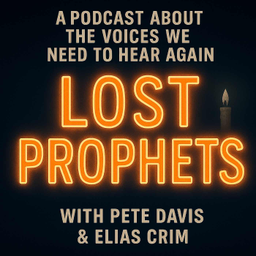
Lost Prophets
Claim This Podcastby Elias Crim & Pete Davis
5.0(25 reviews)
23 episodes
Updated Daily
Accepts GuestsHas SponsorsLocation 🇺🇸
46
Podcast Authority
BetaFairBased on show quality, social media presence, reviews, charts, and more

Quality72
Social0
YouTube0
Engagement51
Podcast Overview
A podcast about the the lost prophets of solidarity — the voices we need to hear again. <br/><br/><a href="https://www.lostprophets.org?utm_medium=podcast">www.lostprophets.org</a>
Language
🇺🇲
Publishing Since
8/31/2024
Unlock The Full Podcast Authority Score Report
See how your podcast performs across key metrics
46
Podcast Authority
BetaFairBased on show quality, social media presence, reviews, charts, and more
Quality72
Social0
YouTube0
Engagement51
7
Excellent Areas
1
Good Performance
11
Growth Opportunities
excellent
Episode Length
1h 19m
Performing excellently!
good
iTunes Tags
6.5/10
Recommendations available
Unlock the full report to see detailed tips
needs improvement
Publishing Consistency
Every 19 days
Recommendations available
Unlock the full report to see detailed tips
+16 More Metrics
Unlock comprehensive insights including:
- • YouTube presence analysis
- • Social media reach metrics
- • RSS compliance scoring
- • Podcast 2.0 features
- • Technical standards
What's Included in Your Full Report
Detailed Analytics
- Complete breakdown of all 19 authority metrics
- Personalized recommendations for each metric
- Industry benchmarks and comparisons
- Technical RSS feed analysis and compliance scoring
Growth Strategies
- Step-by-step action plans for improvement
- Quick wins to boost your score immediately
- Pro tips from successful podcasters
Get your free podcast insights report
See how your show performs across every key metric
Instant delivery
No spam
Attract Better Guests
High authority scores make your podcast more attractive to industry leaders and influencers who want to appear on credible shows.
Secure Sponsorships
Sponsors look for podcasts with proven authority and engagement. Your score demonstrates your podcast's value to potential partners.
Grow Your Audience
Understanding your strengths and weaknesses helps you make data-driven decisions to expand your listener base effectively.
1 verified contact email on file for Lost Prophets
Pitch yourself as a guest, propose sponsorships, or reach out directly to the host.
Recent Episodes
July 10, 2026
#22. Fourth of July with the Lost Prophets
Co-hosts explore reflections on America's 250th birthday by examining thinkers like James Baldwin and Hannah Arendt, offering insights into national identity and potential re-founding.
April 26, 2026
#21. Thomas Merton (ft. Nick Scrimenti)
<p><strong>[ First, some exciting podcast news. We now have a LOST PROPHETS voicemail line. If you call the number (703) 662-3046, you can leave us a short question, a reflection, an idea — and we may play it on the show!]</strong></p><p>Do not depend on the hope of results. You may have to face the fact that your work will be apparently worthless and even achieve no result at all, if not perhaps results opposite to what you expect. As you get used to this idea, you start more and more to concentrate not on the results, but on the value, the rightness, the truth of the work itself. You gradually struggle less and less for an idea and more and more for specific people. In the end, it is the reality of personal relationship that saves everything.</p><p>These sentences are from a <a target="_blank" href="https://jimandnancyforest.com/2014/10/mertons-letter-to-a-young-activist/">three-page personal letter</a> written in 1966 by Thomas Merton to peace activist and Catholic Worker Jim Forest. Merton is responding to Forest’s despair at the mounting toll of deaths in the Vietnam War.</p><p>Near the end of the letter, Merton writes, “The real hope, then, is not in something we think we can do, but in God who is making something good out of it in some way we cannot see. If we can do His will, we will be helping in the process. But we will not necessarily know all about it beforehand…”</p><p>Thomas Merton (1915-1968), the Trappist monk, theologian, mystic poet and social activist, “teaches us how to live a life of conscience in difficult times,” as critic Robert Inchausti once put it. As popular with readers today as in his own lifetime, Merton is considered by many the most important Catholic writer in English of the 20th century.</p><p>Merton also possessed a sparkling intellect which combined the rigor of the New York intellectuals with the probity of the Desert Fathers. He speaks directly to our solitude through a rigorous examination of his own.</p><p>He was a professed member of the Abbey of Our Lady of Gethsemani, near Bardstown, Kentucky, living there from 1941 until his death. Somehow he managed to write more than 50 books in a period of 27 years, along with many essays and reviews.</p><p>Merton was a keen proponent of interfaith understanding, both within the tradition of Christianity and also between Eastern and Western faiths.</p><p><strong>Some key takeaways from our conversation</strong><strong>:</strong></p><p>* Born in France, orphaned at 15, and educated in England, Merton was a quintessential “outsider” in American mid-century culture and the harbinger of a still-to-be-realized contemplative counterculture.</p><p>* We must grasp the distinction between our true and false selves, between the pseudo-identities we possess as conditioned members of society and the person we truly are, known only by God. (A key theme of his <a target="_blank" href="https://www.amazon.com/New-Seeds-Contemplation-Thomas-Merton/dp/0811217248/ref=pd_sbs_d_sccl_1_1/140-3732719-5327905?pd_rd_w=2zCRj&content-id=amzn1.sym.aa738fbd-ad05-4d11-aae2-04b598db6305&pf_rd_p=aa738fbd-ad05-4d11-aae2-04b598db6305&pf_rd_r=XWVBQKYAQJS44JMAYRP0&pd_rd_wg=n9nDr&pd_rd_r=46f945da-f071-4ffa-bd9c-925bec80170c&pd_rd_i=0811217248&psc=1">New Seeds of Contemplation</a>.)</p><p>* In 1948, Merton published the book for which he is most famous: <a target="_blank" href="https://www.amazon.com/Seven-Storey-Mountain-Thomas-Merton/dp/0156010860/ref=sr_1_1?crid=G6EE0N1PRCG&dib=eyJ2IjoiMSJ9.EwYRu3ube3sNIoLLSQe0aKrkxcoB-4VyLjqgDwIxRJ8nvPA1dWoX2KdhSmNYEF8H4qT5abdyAQLGNuabqsaq319_7n6dr0s4BgY0Rs1b6XqxZBzCL1EBw7zAEi8_rf8WnGEWBcdJRijke2P8YMQy8ZP5NErSKxTOPORCIjoFC_Ilrdd8FCvNgVUwwGLOyYZqXJCSV2kSlS7INRRklJWPWZaqHFWnnH8wSGw88oT_Ouc.3rtLxj44sPAmavkYcEM4bm9lSoY9ZZn7IELStWcJoPY&dib_tag=se&keywords=seven+story+mountain+merton&qid=1775414554&sprefix=seven+story+moun%2Caps%2C136&sr=8-1">The Seven Storey Mountain</a>, a memoir of his path to entering Gethsemani monastery at age 26. The book remained at the top of nonfiction bestseller lists for two years and made Merton the most famous monk in the world. Although he expressed misgivings in later years over the book’s zealous tone, it was (and still is) responsible for many conversions to Catholicism, the religious life, and faiths of all kinds.</p><p>* Connections to others of our Lost Prophets: His interest in what is now called eco-spirituality is seen in his correspondence with Rachel Carson. He was also a close collaborator with and friend to Daniel and Phil Berrigan, although they sometimes differed on the limits of radical witness.</p><p>* His association with Catholic Workers and his pacifism got Merton silenced for a time in the 1960s. He began privately publishing what came to be known as the <a target="_blank" href="https://www.amazon.com/Cold-War-Letters-Thomas-Merton/dp/1570756627">Cold War Letters</a>.</p><p>* His interest in Asian religions began in his teenage reading about Gandhi. He met Zen writer D.T. Suzuki in New York in 1964 which sparked his interest in the ancient Chinese philosopher Chuang Tzu, whose <a target="_blank" href="https://www.amazon.com/Way-Chuang-Tzu-Second-ebook/dp/B00EEW2ZUS?ref_=ast_author_dp_rw&th=1&psc=1&dib=eyJ2IjoiMSJ9.yf11Xv9vUg7oirL8vHJ2QaeMk8wqA_W70LUKoIUnw_VRVYLvSPYyFlzzf6HfFKOdr71rCCf0KZluZvmO2o9XY6HhssLUGHKKRh2BDlR8O1oDpz40RqGM2SHuH_XwIvo9TkQvf_p8Ngdy402A7AVTjoDd1nDNwR4Xjl5HW1SMCgHM-u1uWX8NmUetanDOdhCfghpDiWs0xOKL5Lb2sYykCJLzZ-K7BcaJxH7V69aHHkc.f3nAWOg0RjYY0vASgJorAfk334_PzIJf70PrqiyZyHc&dib_tag=AUTHOR">classic sayings</a> he translated in 1965.</p><p>* He did not seek to convert to Buddhism nor did he wish for a syncretistic blend of world religions—only a deepening of true ecumenism.</p><p>Our guest, Nick Scrimenti, is a dialogue facilitator, spiritual director and educator. He studied theology at Georgetown and Harvard Divinity School — and lived and worked at the Bonnevaux Centre for Peace, a lay-monastic retreat center in rural France. He wrote the introduction to the Merton Annual’s publication of a 1976 letter written at Gethsemani by Fr. John Main, who with Merton helped revive the Christian contemplative tradition in the twentieth century.</p><p><strong>Timestamps:</strong></p><p><strong>[00:03:30]</strong> — Pete & Elias on Merton’s place in the “web” of Lost Prophets and his counterculture contemporaries</p><p><strong>[00:06:45]</strong> — Merton’s origins: born in wartime France, artist parents, orphaned young, perpetual wanderer across Europe and America</p><p><strong>[00:17:00]</strong> — Columbia University, Mark Van Doren, the Great Books scene, Robert Lax, and the seeds of conversion</p><p><strong>[00:37:00]</strong> — The conversion arc: Cambridge disgrace, a night on the floor in Rappahannock, the Cuba epiphany, Friendship House vs. Gethsemane, and choosing the Trappists</p><p><strong>[00:48:00]</strong> — Entering Gethsemane; The Seven Storey Mountain, the monastic counterculture it sparked, and why it became the surprise bestseller of 1948</p><p><strong>[01:22:00]</strong> — The false self vs. the true self; solitude as new birth; the Fourth & Walnut revelation; monasticism as counterculture</p><p><strong>[01:36:00]</strong> — Engagement with the world: the peace movement, civil rights, Cold War Letters, correspondence with hundreds of people</p><p><strong>[01:59:00]</strong> — The final years: a nurse named M, the Asia pilgrimage, Buddhist dialogue, meeting the Dalai Lama, and Merton’s mysterious death</p><p><strong>[02:19:00]</strong> — Interview with Nick Scrimenti on Merton’s legacy, Fr. John Main, contemplation vs. the attention economy, and monasticism for today</p><p><strong>Recommended</strong>:</p><p>* <a target="_blank" href="https://www.amazon.com/Seven-Storey-Mountain-Thomas-Merton/dp/0156010860/ref=sr_1_1?crid=G6EE0N1PRCG&dib=eyJ2IjoiMSJ9.EwYRu3ube3sNIoLLSQe0aKrkxcoB-4VyLjqgDwIxRJ8nvPA1dWoX2KdhSmNYEF8H4qT5abdyAQLGNuabqsaq319_7n6dr0s4BgY0Rs1b6XqxZBzCL1EBw7zAEi8_rf8WnGEWBcdJRijke2P8YMQy8ZP5NErSKxTOPORCIjoFC_Ilrdd8FCvNgVUwwGLOyYZqXJCSV2kSlS7INRRklJWPWZaqHFWnnH8wSGw88oT_Ouc.3rtLxj44sPAmavkYcEM4bm9lSoY9ZZn7IELStWcJoPY&dib_tag=se&keywords=seven+story+mountain+merton&qid=1775414554&sprefix=seven+story+moun%2Caps%2C136&sr=8-1">The Seven Storey Mountain</a> (1948)—an autobiography of a mind which has encountered writers like William Blake, Etienne Gilson, and Aldous Huxley amidst world war and cultural upheaval.</p><p>* <a target="_blank" href="https://www.amazon.com/Wisdom-Desert-New-Directions/dp/0811201023/ref=tmm_pap_swatch_0">Wisdom of the Desert</a> (1960)—Reflections on the lives and spirituality of ancient Christianity’s Desert Fathers of Egypt, Arabia, and Palestine.</p><p>* <a target="_blank" href="https://www.amazon.com/New-Seeds-Contemplation-Thomas-Merton/dp/0811217248/ref=tmm_pap_swatch_0">New Seeds of Contemplation</a> (1961)—Considered a classic text on Christian practices of meditation and contemplation.</p><p>* <a target="_blank" href="https://www.amazon.com/Way-Chuang-Tzu-Second/dp/0811218511/ref=tmm_pap_swatch_0">Way of Chuang Tzu</a> (1965)—Merton’s translation and interpretation of this sage of early Taoism.</p><p>* <a target="_blank" href="https://www.amazon.com/Conjectures-Guilty-Bystander-Image-Classic/dp/0385010184/ref=pd_sbs_d_sccl_1_21/140-3732719-5327905?pd_rd_w=w7hDO&content-id=amzn1.sym.aa738fbd-ad05-4d11-aae2-04b598db6305&pf_rd_p=aa738fbd-ad05-4d11-aae2-04b598db6305&pf_rd_r=MQEKFR9EKHJ6CKR85F2K&pd_rd_wg=fu8Cb&pd_rd_r=59d62145-fc49-432d-a5fc-8933fa631ade&pd_rd_i=0385010184&psc=1">Conjectures of a Guilty Bystander</a> (1966)—Notes, opinions, experiences, and reflections on political, social, racial and culture topics of all kinds.</p><p>* <a target="_blank" href="https://www.amazon.com/Mystics-Zen-Masters-Thomas-Merton/dp/0374520011/ref=pd_sbs_d_sccl_1_26/140-3732719-5327905?pd_rd_w=bdoNo&content-id=amzn1.sym.aa738fbd-ad05-4d11-aae2-04b598db6305&pf_rd_p=aa738fbd-ad05-4d11-aae2-04b598db6305&pf_rd_r=NXMQ4TEQQB21JTVVK02J&pd_rd_wg=JfYwc&pd_rd_r=0d261aca-b923-4faf-881c-f5f7665d1714&pd_rd_i=0374520011&psc=1">Mystics and Zen Masters</a><a target="_blank" href="https://www.amazon.com/Mystics-Zen-Masters-Thomas-Merton/dp/0374520011/ref=pd_sbs_d_sccl_1_26/140-3732719-5327905?pd_rd_w=bdoNo&content-id=amzn1.sym.aa738fbd-ad05-4d11-aae2-04b598db6305&pf_rd_p=aa738fbd-ad05-4d11-aae2-04b598db6305&pf_rd_r=NXMQ4TEQQB21JTVVK02J&pd_rd_wg=JfYwc&pd_rd_r=0d261aca-b923-4faf-881c-f5f7665d1714&pd_rd_i=0374520011&psc=1"> </a>(1967)—Reflections on early monasticism, Russian Orthodox spirituality, the Shakers, and Zen Buddhism seen as different ways of pursuing The Way.</p><p>* <a target="_blank" href="https://www.amazon.com/Zen-Birds-Appetite-Thomas-Merton/dp/081120104X/ref=sr_1_1?crid=1VPD4F1639L95&dib=eyJ2IjoiMSJ9.fOYRLXozJItbSNADMT3I1ByRvm5NLr8n8YJFZNXi6IdJa1aDJqSnC8WjXM5LjCKouiNAkM6P71ojNNCWYKS-0H6uOe_QrJoxgmOp8L9actxF5FGbBjiOYtY8QJYGCDMTOJRr-wI4dDIAcpoYD-0zVQ.47KnGfHVjn6akTPVu9LJXS_jH_K61SeMZTllQLnSPzA&dib_tag=se&keywords=zen+and+the+birds+of+appetite&qid=1775418842&s=books&sprefix=zen+and+the+birds+of+appetite%2Cstripbooks%2C124&sr=1-1">Zen and the Birds of Appetite</a> (1968)—Essays exploring the relationship between Christianity and Zen.</p><p>* <a target="_blank" href="https://www.amazon.com/Asian-Journal-Thomas-Merton-Directions/dp/0811205703/ref=sr_1_1?crid=2B9N7MEIHTABL&dib=eyJ2IjoiMSJ9.zIyUygajihXfhgFYo4lO9c8nvRn5PIRm052Fm1sBd0VLva8ycjNKcwnYgnxCk9muYR5aIemm0wkeTaGpcP4Pif8fmiWSskZiJLtV3C-N9JELP2hEbiuNG8l4l7vvL6cW.gG4h8U2KIhiQtJbIKVOouhBvEuKH0x37wy4aCBxfT2U&dib_tag=se&keywords=merton+asian+journal&qid=1775418921&s=books&sprefix=merton+asian+journal%2Cstripbooks%2C127&sr=1-1">Asian Journal</a> (1968)—Notes on his travels across Bangkok, India and Ceylon in the last year of his life, including the address he gave only hours before his untimely death.</p><p>* <a target="_blank" href="https://plumvillage.org/thomas-mertons-words-on-thich-nhat-hanh">“Nhat Hanh Is My Brother”</a>—Merton’s short 1966 essay, originally published in Jubilee magazine, declaring his solidarity with the Vietnamese Buddhist monk and making the case for a brotherhood that transcends nationality, religion, and politics.</p><p>* <a target="_blank" href="https://www.amazon.com/Raids-Unspeakable-New-Directions-Paperbook/dp/0811201015">Raids on the Unspeakable</a> (1966)—A collection of essays, meditations, and prose poems, including “Rain and the Rhinoceros,” Merton’s celebrated reflection on solitude, nature, and resistance to the consuming logic of modern life.</p><p>* <a target="_blank" href="https://www.amazon.com/When-Prophecy-Still-Had-Voice/dp/081312168X">When Prophecy Still Had a Voice: The Letters of Thomas Merton and Robert Lax</a> (2001)—All 346 known letters between Merton and his closest friend, spanning thirty years from Columbia to Bangkok.</p><p>* <a target="_blank" href="https://www.amazon.com/Seven-Mountains-Thomas-Merton/dp/0156806819">The Seven Mountains of Thomas Merton</a> (1984)—Michael Mott’s biography of Merton, drawing on private journals and interviews to tell the full story of his life.</p><p>* <a target="_blank" href="https://www.newyorker.com/books/under-review/thomas-merton-the-monk-who-became-a-prophet">“Thomas Merton: The Monk Who Became a Prophet”</a>—Alan Jacobs’s essay in The New Yorker, written on the 50th anniversary of Merton’s death, tracing his spiritual and artistic development from turbulent youth to contemplative prophet.</p><p>* <a target="_blank" href="https://tricycle.org/magazine/meditation-en-masse/">Meditation en Masse</a>—an article by Erik Braun on the colonial roots of the mindfulness boom.</p><p>* <a target="_blank" href="https://dimmid.org/?SEC=13027933-71E4-4000-BE4A-819D692E2857">From Deus in Adiutorium to Maranatha: Colonialism and Reform in John Main’s Hindu Encounter</a> (2021)—an article by our guest Nick Scrimenti on John Main’s hybrid method of Christian contemplation, drawing on meditation techniques of Swami Satyananda and the “prayer formula” of 4th century Christian theologian John Cassian.</p><p>* <a target="_blank" href="https://www.commonwealmagazine.org/no-man-island">No Man Is an Island </a>— an essay by Nick Scrimenti in Commonweal about the relationship between therapy, spirituality, and asceticism</p><p>* Fr. Matthew Kelty has a homily on “Desolation Row” in <a target="_blank" href="https://www.amazon.com/Sermons-Monastery-Chapter-Cistercian-Studies/dp/0879079584">this collection</a></p> <br/><br/>Get full access to The Lost Prophets Podcast at <a href="https://www.lostprophets.org/subscribe?utm_medium=podcast&utm_campaign=CTA_4">www.lostprophets.org/subscribe</a>
January 19, 2026
#20. bell hooks (ft. Nadra Nittle)
<p>“If I were really asked to define myself, I wouldn’t start with race; I wouldn’t start with blackness; I wouldn’t start with gender; I wouldn’t start with feminism. I would start with stripping down to what fundamentally informs my life which is that I’m a seeker on the path. I think of feminism, and I think of anti-racist struggles as part of it. But where I stand spiritually is, steadfastly, on a path about love.”</p><p>Gloria Jean Watkins, born in Hopkinsville, Kentucky in 1952, once said she chose her public name—bell hooks—as a way of honoring a woman who had gone before her: her maternal great-grandmother, who was known for her sharp tongue. She also wanted to step away from her parents’ choice of Gloria Jean, which she thought “a southern belle’s name.” Her preference for using the lower case may derive from the 1960s fashion of making your own ego secondary to the cause.</p><p>The author of over 40 books of essays, poetry, children’s literature, and scholarly articles, hooks’ subjects were love, race, class, gender, art, mass media, sexuality, and feminism. </p><p><strong>Some key takeaways from our conversation</strong>:</p><p>* Born a half century after civil rights pioneer Ella Baker, her feminism picks up the struggle for Black women to be heard. </p><p>* She saw the creeping nihilism damaging much of Black life (and American life generally) as stemming from her four-headed ideological enemy: "imperialist white supremacist capitalist patriarchy"</p><p>* Her intersectionality is about the interconnectedness of issues, similar to the way King realized at one point that the Vietnam War was not a separate issue from civil rights.</p><p>* She liked to say her goal was not to become an elite intellectual but “to produce theory people could use.”</p><p>* Her small town Kentucky origins strongly shaped her later life as she explored both her unhappiness as a child and the warmth of her agrarian community. She also developed a warm friendship with fellow Kentuckian Wendell Berry.</p><p>* She identified with (and embodied) Cornel West’s idea of an “organic intellectual” who never forgot her roots. </p><p>* She used the reach of popular culture—especially film—as a way of connecting more directly with her students.</p><p>* Her spirituality, which began in her Stanford years in an encounter with Gary Snyder’s Buddhism, grew as she aged and became a driving passion of her life.</p><p><strong>Timestamps</strong>:</p><p><strong>[00:10:00] Spiritual Influences</strong>: Discussion of how the dialogues between Thich Nhat Hanh and Daniel Berrigan helped hooks unite spiritual quest with radical activism.</p><p><strong>[00:14:00] </strong><strong>Ain’t I a Woman?</strong>: Background on hooks’ 1982 foundational third-wave feminist text that addressed the unique oppression of black women.</p><p><strong>[00:31:30] Intellectual Discipline</strong>: A look at hooks’ daily routine, which included waking early to read one non-fiction book a day and limiting internet and cell phone use.</p><p><strong>[00:42:30] “Homeplace” as Resistance</strong>: Analysis of hooks’ argument that the private home serves as a radical site of resistance and a sanctuary from public oppression.</p><p><strong>[00:51:30] The Love Trilogy</strong>: Exploration of hooks’ best-selling books on love, where she defines love as a “verb” and an active practice within community.</p><p><strong>[01:05:30] Connection to Wendell Berry</strong>: Discussion of hooks’ 2009 book Belonging and her shared vision with Berry regarding land, rural life, and Kentucky roots.</p><p><strong>[01:20:30] Interview with Nadra Nittle</strong>: A conversation with the author of bell hooks’ Spiritual Vision.</p><p><strong>Recommended</strong>:</p><p>* <a target="_blank" href="https://www.amazon.com/Aint-Woman-Black-Women-Feminism/dp/1138821519/ref=tmm_pap_swatch_0?_encoding=UTF8&dib_tag=se&dib=eyJ2IjoiMSJ9.GY_SwcK15iIYdvOkZlQaChFbw4pRiw8Xo_v2XrwtRu0KABtx2BSBtX9T0dojJisylwrQP6EGj4JrDZk03LDQvKNLtG668AdYFamxdfxL6x7Y61IDtkfA5T-CEhKb8qWk63lEoPUEcSiaN2Ux5RuKvpwhATcJxcjJUYdTKCx7YzmmSheDLPjyHMgNyju3QVxfIMrUd_Ey4ivcWrLk5rj27DlsQsArsnDxMjjUjqC6zUU.4eO8Su_3PjrP15gUjVsHi4DMrlt4AHL-kW0GjpjS_BY&qid=1762311997&sr=8-1">Ain’t I A Woman</a> (1982)—her breakout first book, looking at the condition of Black women from the time of slavery through 1980</p><p>* <a target="_blank" href="https://www.amazon.com/Feminist-Theory-Margin-bell-hooks/dp/1138821667/ref=books_amazonstores_desktop_mfs_aufs_ap_sc_dsk_2?_encoding=UTF8&pd_rd_w=T50hu&pd_rd_wg=PveP2&pd_rd_r=f94acec6-4aa8-4328-8994-643bfc3c439f&content-id=amzn1.sym.299f645c-0a78-440a-94a2-fb482e7cb326">Feminist Theory: From Margin to Center</a> (1984)</p><p>* <a target="_blank" href="https://www.amazon.com/Breaking-Bread-Insurgent-Black-Intellectual-ebook/dp/B01MXF9337?ref_=ast_author_dp_rw&th=1&psc=1&dib=eyJ2IjoiMSJ9.2T-8t_zno1z_Cth_aZYGUAa7j9DUlgpcJvVpEjOx7AXBLoh9fNG9MPOX9phJbLYDqVUVSWQiovxU5cTG3N-AwGXEr9PXIS7xbCcWNTrHzPzR2v7kEF-RpE42-z5Aye9iftYmC2cmN-Oa_sstfR_a9cB9zagIImWLWmm2mJqvU2W0pmxP3LPxp8Sb4pGZdUa7ApG5DPnRGrYqxGdzqiidKxhfTXtqmQJZcnobdGWd7kk.0103XLeBcdN1Lz-O1w25_MPFdrOj_1X92Bu_7Ji6ORs&dib_tag=AUTHOR">Breaking Bread: Insurgent Black Intellectual Life</a> (1991)—conversations with her friend Cornel West</p><p>* <a target="_blank" href="https://www.amazon.com/Teaching-Transgress-Bell-Hooks-ebook/dp/B0B36N68RL?ref_=ast_author_dp_rw&th=1&psc=1&dib=eyJ2IjoiMSJ9.2T-8t_zno1z_Cth_aZYGUAa7j9DUlgpcJvVpEjOx7AXBLoh9fNG9MPOX9phJbLYDqVUVSWQiovxU5cTG3N-AwGXEr9PXIS7xbCcWNTrHzPzR2v7kEF-RpE42-z5Aye9iftYmC2cmN-Oa_sstfR_a9cB9zagIImWLWmm2mJqvU2W0pmxP3LPxp8Sb4pGZdUa7ApG5DPnRGrYqxGdzqiidKxhfTXtqmQJZcnobdGWd7kk.0103XLeBcdN1Lz-O1w25_MPFdrOj_1X92Bu_7Ji6ORs&dib_tag=AUTHOR">Teaching to Transgress</a> (1994)—strongly influenced by Paulo Freire</p><p>* <a target="_blank" href="https://www.amazon.com/Outlaw-Culture-Resisting-Representations-Routledge-ebook/dp/B009E1NH7Y?ref_=ast_author_dp_rw&th=1&psc=1&dib=eyJ2IjoiMSJ9.2T-8t_zno1z_Cth_aZYGUAa7j9DUlgpcJvVpEjOx7AXBLoh9fNG9MPOX9phJbLYDqVUVSWQiovxU5cTG3N-AwGXEr9PXIS7xbCcWNTrHzPzR2v7kEF-RpE42-z5Aye9iftYmC2cmN-Oa_sstfR_a9cB9zagIImWLWmm2mJqvU2W0pmxP3LPxp8Sb4pGZdUa7ApG5DPnRGrYqxGdzqiidKxhfTXtqmQJZcnobdGWd7kk.0103XLeBcdN1Lz-O1w25_MPFdrOj_1X92Bu_7Ji6ORs&dib_tag=AUTHOR">Outlaw Culture</a> (1994)—essays on culture, including pop star Madonna, the Clarence Thomas/Anita Hill controversy, and Spike Lee’s Malcolm X</p><p>* <a target="_blank" href="https://www.amazon.com/Bone-Black-Memories-bell-hooks/dp/0805055126/ref=sr_1_1?crid=1T84SB4Q681SX&dib=eyJ2IjoiMSJ9.7s3ESv9KBOP3TSV76d3zf3yBRTd5RWCOhwtYiY0rZTbJUxCluZUEyThYy1WlMPYedlYLaL8xi_ylRpdz_-F61o3XkJ4G41RIeBvcZA1e9B4.VLApIlmZBbzQzxUsmc0VY5IP_v31bHyvIefijCnoLXE&dib_tag=se&keywords=bell+hooks+bone+black&qid=1762312451&s=books&sprefix=bell+hooks+bone+black%2Cstripbooks%2C119&sr=1-1">Bone Black</a> (1996)—hooks’ luminous memoir of her girlhood in rural Kentucky</p><p>* <a target="_blank" href="https://www.amazon.com/All-About-Love-New-Visions/dp/0060959479/ref=tmm_pap_swatch_0?_encoding=UTF8&dib_tag=se&dib=eyJ2IjoiMSJ9.RsDNEDUNLuZpZpdpCmUy7ktwVaPH05LSZg7kZpeN3ncbDOey7x7j7JdwKlBngo-zRWvYipHgdLaEDeRjDkGDFFKaNmHNVvwue2jkPL5LT1Kq9Oflzx-OiD28E2XiQt0tEedl63c290llQgLZJxlKgPEJdvxBMgO8PveiIzZUk0HDSyUjJYjgDLlhBts3iZZ8AgEuLM0rj7BzSKWv9T3HhZIKjJPZBAxcM-9JG2HSoZU.95DU1bba4EZxYpqM4bK5k00wO0RWb-hAWVw2i8Wzwio&qid=1762312480&sr=1-1">All About Love: New Visions</a> (1999)—the first of three books on love</p><p>* <a target="_blank" href="https://www.amazon.com/Salvation-Black-People-bell-hooks/dp/0060959495/ref=tmm_pap_swatch_0?_encoding=UTF8&dib_tag=se&dib=eyJ2IjoiMSJ9.RnRlv-BBdE20zSOIywC-kwFhfP64NoI8kLZtZ8Qb2KAYyOo7AUmuqoeVySJYy33XPglkOaTSYwMFQYkyT5c0BdT7-yUpvbLnYXVTjTFLlOGhJitAL6OSAQr5murfEfmYWJ9dlnf0baMpSOcsr0yvhzglR_W9z4rEHs3gA_Glc_SHYWL-tQJEOFuYjI6QTHB-aur-kK4ZG6_0hhU2kQ7B7VBDUvv7tRpcWNGnend7TSg.85nHFxwDPCVFPYecDeZADenWf9O_Vbelywfjr6zA9NI&qid=1762312534&sr=1-1">Salvation: Black People and Love</a> (2001)</p><p>* <a target="_blank" href="https://www.amazon.com/Communion-Female-Search-bell-hooks/dp/0060938293/ref=tmm_pap_swatch_0?_encoding=UTF8&dib_tag=se&dib=eyJ2IjoiMSJ9.qCqaku_IrifWxRT9ywHf2-2WiONrxRALK3WMmio2xlM9EFUIjT3CixfRxJq93Yb2cqNC83LmnLipBWU27HTTek_BcGs6-LsoeaLRnFEA7Vki2LJNzJzZyKg6ggFCZxnOnXT3YRUOjCGZs1gz8LZcb5b9P2kI60JE1Gpr1jRHKyJb1SGqt_ZG0Ec65q-fkYNiNJGU9BwqHMlLXFF9Bma7aZwVnVgxWr7PLdIbRtjgsHU.NtPQSnNDOT4uvmr8rHZJRWqVcHuMIdBUOnoLN1b5jU8&qid=1762312580&sr=1-1">Communion: The Female Search for Love</a> (2002)</p><p>* <a target="_blank" href="https://www.amazon.com/Homegrown-Cultural-Criticism-bell-hooks-ebook/dp/B075LT49JP?ref_=ast_author_dp_rw&th=1&psc=1&dib=eyJ2IjoiMSJ9.2T-8t_zno1z_Cth_aZYGUAa7j9DUlgpcJvVpEjOx7AXBLoh9fNG9MPOX9phJbLYDqVUVSWQiovxU5cTG3N-AwGXEr9PXIS7xbCcWNTrHzPzR2v7kEF-RpE42-z5Aye9iftYmC2cmN-Oa_sstfR_a9cB9zagIImWLWmm2mJqvU2W0pmxP3LPxp8Sb4pGZdUa7ApG5DPnRGrYqxGdzqiidKxhfTXtqmQJZcnobdGWd7kk.0103XLeBcdN1Lz-O1w25_MPFdrOj_1X92Bu_7Ji6ORs&dib_tag=AUTHOR">Homegrown: Engaged Cultural Criticism</a> (2006)—conversations with the Latina artist and scholar Amalia Mesa-Bains</p><p>* <a target="_blank" href="https://www.amazon.com/Belonging-Culture-Place-bell-hooks/dp/041596816X/ref=tmm_pap_swatch_0?_encoding=UTF8&dib_tag=se&dib=eyJ2IjoiMSJ9.NjswonhBu5gXuRjgtniJK1CGrfj0EtSVoVkCtchdweH7QpWbWt7ZUQog7JGXj0S7MT5ArYJjYnQknCjhWTRsAo7YBQrxS_G_nU0Vd74iCcNl3AjIyHb_2dFiW6XN7yx23LVQPMbQ5F2np0uFSrzR3f8-I-jPe4KKbf--k-q0TzWGBEok00NTFEq1b7Ff5lQXyunxw4Y7OoZPiFJkKwmN6bgHv8TnHcOBtON6D2c3cDM.9D9X_GoSHjVS0uo-3rHc6etEoPl-3pcIWpPeEp-qo0c&qid=1762312615&sr=1-1">Belonging: A Culture of Place</a> (2008)—reflections on her rediscovery of her native region, including an interview with her friend Wendell Berry</p><p>* <a target="_blank" href="https://www.fortresspress.com/store/product/9781506488363/bell-hooks-Spiritual-Vision">bell hooks’ Spiritual Vision: Buddhist, Christian, and Feminist</a> by Nadra Nittle (2023)</p> <br/><br/>Get full access to The Lost Prophets Podcast at <a href="https://www.lostprophets.org/subscribe?utm_medium=podcast&utm_campaign=CTA_4">www.lostprophets.org/subscribe</a>
23 total episodes available with 1 transcripts
Similar Podcasts
Discover related shows you might enjoy
Deep-dive analytics for Lost Prophets
Frequently asked questions
Have a different question and can't find the answer you're looking for? Reach out to our support team by sending us an email and we'll get back to you as soon as we can.
- What is Lost Prophets?
- How often does this podcast release new episodes?
This podcast updates daily.
- Where can I listen to this podcast?
This podcast is available on 4 platforms including Apple Podcasts, Spotify, and more. You can also use the RSS feed directly.
- Does this podcast accept guests?
Yes, this podcast regularly features guests.
Legal Disclaimer
Pod Engine is not affiliated with, endorsed by, or officially connected with any of the podcasts displayed on this platform. We operate independently as a podcast discovery and analytics service.
All podcast artwork, thumbnails, and content displayed on this page are the property of their respective owners and are protected by applicable copyright laws. This includes, but is not limited to, podcast cover art, episode artwork, show descriptions, episode titles, transcripts, audio snippets, and any other content originating from the podcast creators or their licensors.
We display this content under fair use principles and/or implied license for the purpose of podcast discovery, information, and commentary. We make no claim of ownership over any podcast content, artwork, or related materials shown on this platform. All trademarks, service marks, and trade names are the property of their respective owners.
While we strive to ensure all content usage is properly authorized, if you are a rights holder and believe your content is being used inappropriately or without proper authorization, please contact us immediately at hey@podengine.ai for prompt review and appropriate action, which may include content removal or proper attribution.
By accessing and using this platform, you acknowledge and agree to respect all applicable copyright laws and intellectual property rights of content owners. Any unauthorized reproduction, distribution, or commercial use of the content displayed on this platform is strictly prohibited.