
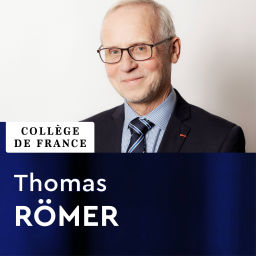
Milieux Bibliques - Thomas Römer
Claim This Podcastby Collège de France
Podcast Overview
<p>Le titre de la chaire Milieux bibliques souligne le fait que la Bible hébraïque peut et doit être étudiée avec les mêmes méthodes et les mêmes approches que les autres corpus textuels du Proche-Orient ancien. Les études bibliques en France ne sont malheureusement pas très développées à cause d'une certaine compréhension de la laïcité. Durant les recherches des dernières années la nécessité d'une collaboration étroite entre les études philologiques, historiques et archéologiques s'est fait de plus en plus sentir, et l'équipe a renforcé les contacts avec le département d'archéologie de l'université de Tel-Aviv.</p><p></p><p>La plupart des cours du titulaire de la chaire ont porté sur différents ensembles littéraires qui sont à l'origine de la Torah (du Pentateuque), et donc de la Bible hébraïque : les traditions sur Abraham, le livre de l'Exode, l'histoire de Joseph (Gn 37-50) et le livre des Nombres. Contrairement au modèle traditionnel dit documentaire (toujours en vogue dans de nombreuses universités nord-américaines), il paraît désormais plus que plausible que l'origine du Pentateuque se trouve dans la narration de l'Exode, qui à l'origine a été une tradition du Nord, et qui a été mis par écrit pour la première fois au VIIe siècle avant l'ère chrétienne, dans le royaume de Juda. Des cours récents sur l'histoire de l'Arche ont confirmé cette hypothèse qui est actuellement soumise à vérification dans un cours de synthèse s'étendant sur trois ans : Naissance de la Bible.</p>
Language
🇫🇷
Publishing Since
2/5/2009
1 verified contact email on file for Milieux Bibliques - Thomas Römer
Pitch yourself as a guest, propose sponsorships, or reach out directly to the host.
Recent Episodes
June 1, 2026
Conférence - Louis Jonker : Reforming History: The Book of Chronicles and Its Reception in Post-Apartheid South Africa
<p>Thomas Römer</p><p>Milieux bibliques</p><p>Collège de France</p><p>Année 2025-2026</p><p></p><p>Changing Biblical Interpretation?</p><p>Conférence - Louis Jonker : Reforming History: The Book of Chronicles and Its Reception in Post-Apartheid South Africa</p><p></p><p>Louis Jonker</p><p>Faculté de théologie de l'université de Stellenbosch, Afrique du Sud</p><p></p><p>Résumé</p><p></p><p>The second lecture will focus on the book Chronicles as a rewriting of older historical traditions in changed and changing imperial-political environments. It will be shown that Chronicles was (and is) "reforming history" that contributed immensely to the identity negotiation processes of the communities in the Persian province of Yehud where returnees from the Babylonian exile lived together with remainees who have never gone into exile. It will be shown how this book responded to the new political dispensation on different levels: on the overarching imperial level, on provincial level, on the level of tribal memories of old, on cultic level at the temple in Jerusalem, and on the level with diasporic Jews who never returned to the land after the exile.</p>
May 26, 2026
Conférence - Louis Jonker : Socio-Political Transformation and Biblical Interpretation: The Case of Post-Apartheid South Africa
<p>Thomas Römer</p><p>Milieux bibliques</p><p>Collège de France</p><p>Année 2025-2026</p><p></p><p>Changing Biblical Interpretation?</p><p>Conférence - Louis Jonker : Socio-Political Transformation and Biblical Interpretation: The Case of Post-Apartheid South Africa</p><p></p><p>Louis Jonker</p><p>Faculté de théologie de l'université de Stellenbosch, Afrique du Sud</p><p></p><p>Résumé</p><p></p><p>In the first lecture the issue of changing biblical interpretation in the South African context since the 1990s when Nelson Mandela was released and the ANC party unbanned, and since 1994 when the first democratic post-apartheid elections were held, will be scrutinised. The starting point will be how the Bible was interpreted by South Africans from different political persuasions in the apartheid era. It will further expound the question that came up since the 1990s in particularly white Afrikaans environments (such as in the Dutch Reformed Church): "Why did pastors tell us a few decades ago, with the Bible in their hands, that apartheid was the will of God? And why do they tell us now, with the same Bible in their hands, that apartheid is a sin?"</p>
April 16, 2026
Séminaire - Sophie Ramond : David dans le livre des Chroniques
<p>Thomas Römer</p><p>Chaire Chaire Milieux bibliques</p><p>Collège de France</p><p>Année 2025-2026</p><p></p><p>Sophie Ramond</p><p>Institut catholique de Paris</p><p></p><p>Séminaire - Sophie Ramond : David dans le livre des Chroniques</p>
182 total episodes available
Similar Podcasts
Discover related shows you might enjoy

Concordance des temps
France Culture

L'Entretien archéologique
France Culture

Storiavoce, un podcast d'Histoire & Civilisations
Storiavoce

Répliques
France Culture

Le Cours de l'histoire
France Culture

La Conversation scientifique
France Culture

La science, CQFD
France Culture

Quand les Dieux rôdaient sur la Terre
France Inter

Les Grandes Traversées
France Culture

Autant en emporte l'histoire
France Inter

Affaires étrangères
France Culture

Avec philosophie
France Culture

Nota Bene
Benjamin Brillaud

Les Nuits de France Culture
France Culture

Passion Médiévistes
Fanny Cohen Moreau
Deep-dive analytics for Milieux Bibliques - Thomas Römer
Frequently asked questions
Have a different question and can't find the answer you're looking for? Reach out to our support team by sending us an email and we'll get back to you as soon as we can.
- What is Milieux Bibliques - Thomas Römer?
<p>Le titre de la chaire Milieux bibliques souligne le fait que la Bible hébraïque peut et doit être étudiée avec les mêmes méthodes et les mêmes approches que les autres corpus textuels du Proche-Orient ancien. Les études bibliques en France ne sont malheureusement pas très développées à cause d'une certaine compréhension de la laïcité. Durant les recherches des dernières années la nécessité d'une collaboration étroite entre les études philologiques, historiques et archéologiques s'est fait de plus en plus sentir, et l'équipe a renforcé les contacts avec le département d'archéologie de l'université de Tel-Aviv.</p><p></p><p>La plupart des cours du titulaire de la chaire ont porté sur différents ensembles littéraires qui sont à l'origine de la Torah (du Pentateuque), et donc de la Bible hébraïque : les traditions sur Abraham, le livre de l'Exode, l'histoire de Joseph (Gn 37-50) et le livre des Nombres. Contrairement au modèle traditionnel dit documentaire (toujours en vogue dans de nombreuses universités nord-américaines), il paraît désormais plus que plausible que l'origine du Pentateuque se trouve dans la narration de l'Exode, qui à l'origine a été une tradition du Nord, et qui a été mis par écrit pour la première fois au VIIe siècle avant l'ère chrétienne, dans le royaume de Juda. Des cours récents sur l'histoire de l'Arche ont confirmé cette hypothèse qui est actuellement soumise à vérification dans un cours de synthèse s'étendant sur trois ans : Naissance de la Bible.</p> - How often does this podcast release new episodes?
This podcast updates daily.
- Where can I listen to this podcast?
This podcast is available on 9 platforms including Apple Podcasts, Spotify, and more. You can also use the RSS feed directly.
- Does this podcast accept guests?
Yes, this podcast regularly features guests.
Legal Disclaimer
Pod Engine is not affiliated with, endorsed by, or officially connected with any of the podcasts displayed on this platform. We operate independently as a podcast discovery and analytics service.
All podcast artwork, thumbnails, and content displayed on this page are the property of their respective owners and are protected by applicable copyright laws. This includes, but is not limited to, podcast cover art, episode artwork, show descriptions, episode titles, transcripts, audio snippets, and any other content originating from the podcast creators or their licensors.
We display this content under fair use principles and/or implied license for the purpose of podcast discovery, information, and commentary. We make no claim of ownership over any podcast content, artwork, or related materials shown on this platform. All trademarks, service marks, and trade names are the property of their respective owners.
While we strive to ensure all content usage is properly authorized, if you are a rights holder and believe your content is being used inappropriately or without proper authorization, please contact us immediately at hey@podengine.ai for prompt review and appropriate action, which may include content removal or proper attribution.
By accessing and using this platform, you acknowledge and agree to respect all applicable copyright laws and intellectual property rights of content owners. Any unauthorized reproduction, distribution, or commercial use of the content displayed on this platform is strictly prohibited.