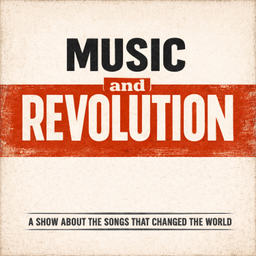

Podcast thumbnail for Music and Revolution: Songs That Changed the World

Music and Revolution: Songs That Changed the World

Claim This Podcast

by Rolf Straubhaar

15 episodes
Updated Daily
Accepts GuestsHas SponsorsLocation 🇺🇸

Podcast Overview

Some songs entertain. Some songs endure. And some songs…change everything. Music and Revolution explores the tracks that didn’t just climb the charts — they were the soundtracks to movements that reshaped society. Each week, we take one track and unpack the moment it was born into: the strikes, the marches, the wars, the uprisings, and the cultural shifts that artists captured on tape. From civil rights and labor movement hymns to anti-war rock songs, hip-hop protest tracks, and global anti-imperialist anthems, every episode traces the story behind a song that helped people see the world differently. From Nina Simone to Woody Guthrie, Joe Hill to Lauryn Hill, Bob Marley to Public Enemy, James Brown to Dolly Parton, Paul Robeson to Bruce Springsteen, Creedence Clearwater Revival to Janet Jackson, Billie Holiday to Kendrick Lamar, you’ll hear about the political and social movements behind iconic songs, the artists who risked their careers to speak up, the lyrics that became rallying cries, and the legacy those songs still carry today. This is a show about protest songs, political music, and the power of culture to shape society. If you’ve ever wondered how three minutes of music can alter the course of history, you’re in the right place. New episodes every Wednesday.

Language

🇺🇲

Publishing Since

4/2/2026

Reach the team behind Music and Revolution: Songs That Changed the World

Verified contact details for this show aren't on file yet — sign up to get notified when they land.

Recent Episodes

Episode thumbnail for Nina Simone, Mississippi Goddam

July 8, 2026

Nina Simone, Mississippi Goddam

<p>Some protest songs hide their anger behind metaphor. This one forces you to laugh at a show tune, right before it breaks your heart with the truth. </p><p>In this episode of Music and Revolution, Rolf Straubhaar breaks down Nina Simone’s ferocious 1964 civil rights masterpiece, “Mississippi Goddam”. What sounds at first like a bouncy, quick-stepping Broadway tune is actually an uncompromised act of artistic retaliation, written in under an hour following the assassination of Medgar Evers and the white supremacist terrorist bombing of four young girls at Birmingham’s 16th Street Baptist Church. We follow Nina’s trajectory from an impoverished classical piano prodigy facing deep institutional racism to a roaring voice of the movement who refused to let America "go slow" on basic human equality. </p><p>We trace the song's immediate, controversial fallout—including Southern radio stations literally snapping promotional copies in half—and dissect the brilliant, modular architecture of the track. Rolf explores how Simone intentionally built the song as a living archive designed to hold updated names of systemic injustice over the decades, a legacy carried forward by modern artists like Janelle Monáe and AhSa-Ti Nu. Finally, Rolf shares a personal memory of sitting in an Austin, Texas classroom where this exact song completely reframed how he understood the power of music as historical testimony. </p><p>If you’ve ever tapped your foot to that show-tune intro without feeling the raw fury behind the lyrics, this episode is for you. </p><p><strong>In this episode you’ll find:</strong></p><ul><li>A harrowing look into the dark reality of 1963 America, from the murder of Medgar Evers to the 16th Street Baptist Church bombing in "Bombingham". </li><li>Nina Simone's origin story as a classical prodigy in the Jim Crow South, her sting of rejection from the Curtis Institute, and her eventual transformation in an Atlantic City nightclub. </li><li>The garage origin story of "Mississippi Goddam," written as the musical equivalent of firing ten bullets back at systemic terrorism. </li><li>A lyrical close reading of the "Go Slow" verse, unpacking how Simone masterfully mocked the paralyzing rhetoric of moderate white leaders and politicians. </li><li>An exploration of the song's structural afterlives, tracing how Nina updated the lyrics live in 1991 and how it laid the groundwork for Janelle Monáe’s "Hell You Talmbout". </li><li>Modern musical reinterpretations and generic transformations of the track spanning the work of Kelsey Waldon, Dee Dee Bridgewater, and AhSa-Ti Nu's "Carolina Goddam". </li></ul><br/><p><strong>Keywords</strong> </p><ul><li>Nina Simone</li><li>Mississippi Goddam</li><li>Civil Rights Movement</li><li>Medgar Evers</li><li>Birmingham Church Bombing</li><li>1963 history</li><li>Protest music</li><li>Curtis Institute of Music</li><li>Janelle Monáe</li><li>AhSa-Ti Nu</li><li>Black Lives Matter</li><li>Political songwriting</li><li>Public humanities</li><li>Music and Revolution</li></ul><br/>

Episode thumbnail for Bruce Springsteen, Born in the U.S.A.

July 1, 2026

Bruce Springsteen, Born in the U.S.A.

<p>When you hear the explosive snare hit and driving synth line of Bruce Springsteen’s 1984 masterpiece “Born in the U.S.A.,” it’s easy to understand why it became a stadium-packing anthem. But underneath the celebratory, red-white-and-blue image constructed by mainstream culture lies a devastatingly bleak critique of American foreign policy and the abandonment of the working class.</p><p>In this episode of Music and Revolution, Rolf Straubhaar treats “Born in the U.S.A.” as a vital primary source for understanding the complex reality of post-Vietnam America. We look past the hyper-patriotic misinterpretations, most famously weaponized during Ronald Reagan’s 1984 reelection campaign, to unpack the song's true narrative: a story of a working-class kid shipped off to a foreign war, only to return home to closed factories, systemic economic neglect, and a government that considered his life disposable.</p><p>Rolf breaks down the musical tension Springsteen built into the track, contrasting a grim, desperate lyrical narrative with a triumphant, major-key stadium melody. Finally, we examine the song's complex political afterlives, tracing how a deeply critical protest anthem was aggressively co-opted, commercialized, and flattened into uncomplicated patriotism, raising profound questions about cultural memory and how we remember the costs of war.</p><p>If you’ve ever pumped your fist to that chorus without knowing the profound tragedy behind it, this episode is for you.</p><p><strong>In this episode you’ll find:</strong></p><ul><li>A deep dive into the socio-economic landscape of 1980s working-class America, deindustrialization, and the reality of the Rust Belt.</li><li>The landscape of post-Vietnam veteran experiences, exploring the social isolation, unemployment, and institutional abandonment faced by those returning from the war.</li><li>A close reading of the political weaponization of pop culture, detailing Ronald Reagan's 1984 campaign co-optation of the track and Springsteen’s pushback.</li><li>A lyrical and structural breakdown of "Born in the U.S.A.", analyzing the sharp juxtaposition between its tragic lyrics and its triumphant, major-key stadium production.</li><li>A personal reflection connecting the "small-town trap" narrative to the broader historical reality of class inequality and military enlistment.</li><li>The multi-decade evolution of the song through its various re-recordings, including Springsteen’s haunting acoustic versions and modern roots-rock reinterpretations.</li></ul><br/><p><strong>Keywords</strong></p><ul><li>Bruce Springsteen</li><li>Born in the U.S.A.</li><li>Vietnam War veterans</li><li>Reagan Era politics</li><li>1980s music history</li><li>Deindustrialization</li><li>Rust Belt history</li><li>Political co-optation</li><li>Protest music</li><li>Stadium rock</li><li>American cultural memory</li><li>Working-class history</li><li>Media literacy</li><li>Max Weinberg</li><li>E Street Band</li><li>Music and Revolution</li></ul><br/>

Episode thumbnail for Bronski Beat, Smalltown Boy

June 24, 2026

Bronski Beat, Smalltown Boy

<p>Some songs top the charts. And some songs change the world. </p><p>In this final Pride Month episode of Music and Revolution, Rolf Straubhaar dives into Bronski Beat’s groundbreaking 1984 debut masterpiece, "Smalltown Boy." At a time when queer narratives in pop music were largely masked by theatrical camp or hidden behind closed closet doors , three openly gay working-class runaways did something completely revolutionary: they told a literal, autobiographical story of a young gay man fleeing provincial violence for the sanctuary of the big city. </p><p>We travel back to the hostile legal and social climate of 1980s Britain, from the discriminatory age of consent laws and Margaret Thatcher’s looming Section 28 legislation, to the moral panic stoked around the emerging AIDS epidemic. Yet, out of this oppressive atmosphere, Bronski Beat infused raw punk defiance into a lean, minimalist electronic dance pulse, creating an unfiltered map for survival that gave thousands of isolated kids their first time ever hearing their own lives validated on the radio. </p><p>We break down the track’s masterclass in emotional counterpoint, from its quiet small-town tragedies and the siren call of Jimmy Somerville’s falsetto, to the band’s explicitly political debut album, The Age of Consent, which printed gay crisis hotlines right inside the vinyl sleeve. Finally, we follow the song's incredibly diverse afterlives, exploring how its story of queer exile remains a timeless anthem through radical reinterpretations by Orville Peck, Dido, José González, and beyond. </p><p>If you’ve ever danced to that pulsing arpeggio without knowing the profound political courage behind it, this episode is for you.</p><p><strong>In this episode you’ll find:</strong></p><ul><li>A deep dive into the hostile 1980s British cultural climate, Section 28, and state-sanctioned institutional shame. </li><li>The landscape of 80s queer pop, exploring the visual subversions of Frankie Goes to Hollywood, Culture Club, and Divine alongside the coded realities of the closet. </li><li>The radical origins of Bronski Beat, emerging from London’s leftist political spaces and a synth-pop style built out of a Sex Pistols chord progression. </li><li>A lyrical close reading of "Smalltown Boy," analyzing its emotional armor, its depiction of family misunderstanding, and the falsetto as a channel for survival. </li><li>The legacy of The Age of Consent album as a physical protest tool that weaponized gatefold liner notes to connect isolated youth to chosen families. </li><li>A personal radio station reflection on how small-town migration stories are, in hindsight, frequently queer stories of survival. </li><li>The multi-decade evolution of the song through Jimmy Somerville's modern reflections and generic boundary-pushing covers spanning country, metal, and indie-folk. </li></ul><br/><p><strong>Keywords</strong></p><ul><li>Bronski Beat</li><li>Smalltown Boy</li><li>Jimmy Somerville</li><li>Synth-pop history</li><li>1980s Britain</li><li>Section 28</li><li>Margaret Thatcher</li><li>Age of Consent</li><li>Queer exile</li><li>Frankie Goes to Hollywood</li><li>Divine</li><li>Dusty Springfield</li><li>Orville Peck</li><li>Queer survival</li><li>Pride Month</li><li>Music and Revolution</li></ul><br/>

15 total episodes available

Deep-dive analytics for Music and Revolution: Songs That Changed the World

Frequently asked questions

Have a different question and can't find the answer you're looking for? Reach out to our support team by sending us an email and we'll get back to you as soon as we can.

What is Music and Revolution: Songs That Changed the World?

Some songs entertain. Some songs endure. And some songs…change everything.

Music and Revolution explores the tracks that didn’t just climb the charts — they were the soundtracks to movements that reshaped society. Each week, we take one track and unpack the moment it was born into: the strikes, the marches, the wars, the uprisings, and the cultural shifts that artists captured on tape.

From civil rights and labor movement hymns to anti-war rock songs, hip-hop protest tracks, and global anti-imperialist anthems, every episode traces the story behind a song that helped people see the world differently.

From Nina Simone to Woody Guthrie, Joe Hill to Lauryn Hill, Bob Marley to Public Enemy, James Brown to Dolly Parton, Paul Robeson to Bruce Springsteen, Creedence Clearwater Revival to Janet Jackson, Billie Holiday to Kendrick Lamar, you’ll hear about the political and social movements behind iconic songs, the artists who risked their careers to speak up, the lyrics that became rallying cries, and the legacy those songs still carry today.

This is a show about protest songs, political music, and the power of culture to shape society. If you’ve ever wondered how three minutes of music can alter the course of history, you’re in the right place.

New episodes every Wednesday.

How often does this podcast release new episodes?

This podcast updates daily.

Where can I listen to this podcast?

This podcast is available on 4 platforms including Apple Podcasts, Spotify, and more. You can also use the RSS feed directly.

Does this podcast accept guests?

No, this podcast does not typically feature guests.

Legal Disclaimer

Pod Engine is not affiliated with, endorsed by, or officially connected with any of the podcasts displayed on this platform. We operate independently as a podcast discovery and analytics service.

All podcast artwork, thumbnails, and content displayed on this page are the property of their respective owners and are protected by applicable copyright laws. This includes, but is not limited to, podcast cover art, episode artwork, show descriptions, episode titles, transcripts, audio snippets, and any other content originating from the podcast creators or their licensors.

We display this content under fair use principles and/or implied license for the purpose of podcast discovery, information, and commentary. We make no claim of ownership over any podcast content, artwork, or related materials shown on this platform. All trademarks, service marks, and trade names are the property of their respective owners.

While we strive to ensure all content usage is properly authorized, if you are a rights holder and believe your content is being used inappropriately or without proper authorization, please contact us immediately at hey@podengine.ai for prompt review and appropriate action, which may include content removal or proper attribution.

By accessing and using this platform, you acknowledge and agree to respect all applicable copyright laws and intellectual property rights of content owners. Any unauthorized reproduction, distribution, or commercial use of the content displayed on this platform is strictly prohibited.