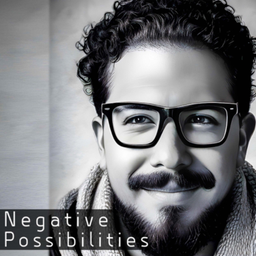
Podcast thumbnail for Negative Possibilities

Negative Possibilities

Claim This Podcast

by Isaac J. Medina

5.0(4 reviews)
43 episodes
Updated Bi-weekly
Accepts GuestsHas SponsorsLocation 🇺🇸
47

Podcast Authority

Beta
FairBased on show quality, social media presence, reviews, charts, and more
Pod Engine
Quality82
Social0
YouTube0
Engagement32

Podcast Overview

Being a teacher is basically group therapy… if group therapy included standardized testing, last-minute meetings, and kids who treat your profession like a suggestion. Therapy is Expensive, So Here We Are is the unfiltered, slightly sarcastic, but ultimately real podcast where we break down mental health, education, and parenting—without the hefty co-pay. Hosted Isaac J. Medina, this is your weekly dose of insight, humor, and just enough cynicism to keep you sane.

Language

🇺🇲

Publishing Since

6/18/2024

Unlock The Full Podcast Authority Score Report

See how your podcast performs across key metrics

47

Podcast Authority

Beta
FairBased on show quality, social media presence, reviews, charts, and more
Pod Engine
Quality82
Social0
YouTube0
Engagement32
7
Excellent Areas
2
Good Performance
10
Growth Opportunities
excellent
Episode Length
38 minutes
Performing excellently!
good
Publishing Consistency
Every 13 days

Recommendations available

Unlock the full report to see detailed tips

poor
Episode Thumbnails

Recommendations available

Unlock the full report to see detailed tips

+16 More Metrics

Unlock comprehensive insights including:

  • • YouTube presence analysis
  • • Social media reach metrics
  • • RSS compliance scoring
  • • Podcast 2.0 features
  • • Technical standards
What's Included in Your Full Report

Detailed Analytics

  • Complete breakdown of all 19 authority metrics
  • Personalized recommendations for each metric
  • Industry benchmarks and comparisons
  • Technical RSS feed analysis and compliance scoring

Growth Strategies

  • Step-by-step action plans for improvement
  • Quick wins to boost your score immediately
  • Pro tips from successful podcasters
Get your free podcast insights report

See how your show performs across every key metric

Instant delivery
No spam
Attract Better Guests

High authority scores make your podcast more attractive to industry leaders and influencers who want to appear on credible shows.

Secure Sponsorships

Sponsors look for podcasts with proven authority and engagement. Your score demonstrates your podcast's value to potential partners.

Grow Your Audience

Understanding your strengths and weaknesses helps you make data-driven decisions to expand your listener base effectively.

2 verified contact emails on file for Negative Possibilities

Pitch yourself as a guest, propose sponsorships, or reach out directly to the host.

Recent Episodes

Episode thumbnail for Episode 18: When Forever Ends: Finding Yourself After Divorce

July 1, 2026

Episode 18: When Forever Ends: Finding Yourself After Divorce

<p>Who are you when the life you built your identity around no longer exists?</p><p><br></p><p>For many people, divorce isn’t just the end of a relationship, it’s the beginning of an identity crisis. Long after the paperwork is signed and the logistics are settled, another question remains: Who am I now?</p><p><br></p><p>In this episode of Therapy Is Expensive So Here We Are, we continue our series on divorce, grief, and healing by exploring one of the most overlooked consequences of relational loss: the loss of self. Marriage often becomes intertwined with our identity in ways we don’t recognize until it’s gone. We become spouses, providers, protectors, caretakers, peacemakers, or the person who always holds everything together. When those roles disappear, it can feel as though we’ve disappeared with them.</p><p><br></p><p>This conversation isn’t about blaming an ex-spouse or reliving the details of a failed relationship. Instead, it’s an invitation to examine the identities we’ve built, the masks we’ve worn, and the unhealthy narratives we’ve accepted about our worth.</p><p><br></p><p>Together, we’ll explore why so many people unknowingly attach their value to the roles they play and how divorce can expose not only the end of a relationship but also the parts of ourselves we’ve neglected, abandoned, or hidden. We’ll talk about the psychological concept of role-based identity, the danger of defining yourself by what you do for others, and why losing a relationship can feel like losing your entire sense of purpose.</p><p><br></p><p>We’ll also step into the deeper work of shadow work and self-reflection. Were you trying to be the hero? The fixer? The person who never caused conflict? The “perfect” spouse? Sometimes what hurts the most isn’t simply losing someone we loved, it’s losing the version of ourselves we believed we had to become in order to deserve love.</p><p><br></p><p>From a faith perspective, we’ll wrestle with a powerful truth: our identity was never meant to begin with marriage, career, success, or even failure. Long before we carried titles or responsibilities, we were known by God. When life strips away the labels we’ve relied on, perhaps it’s not punishment, perhaps it’s an invitation to rediscover who we were always created to be.</p><p><br></p><p>Healing isn’t about becoming the person you were before the relationship. It’s about becoming the person you’ve been growing toward all along.</p><p><br></p><p>Whether you’ve experienced divorce, the end of a long-term relationship, the loss of a friendship, or any life transition that has left you wondering who you are, this episode offers a compassionate space to ask difficult questions without rushing toward easy answers.</p><p><br></p><p>Because sometimes the most courageous thing we can do isn’t rebuild our old life.</p><p><br></p><p>It’s allowing ourselves to become someone new.</p><p><br></p><p>⸻</p><p><br></p><p>In this episode, we discuss:</p><p><br></p><ul><li>Identity after divorce and major life transitions</li><li>Grief beyond the loss of a relationship</li><li>Role-based identity and emotional health</li><li>Shadow work and self-awareness</li><li>Codependency, people-pleasing, and the rescuer mindset</li><li>Faith, purpose, and finding your identity in God</li><li>Emotional healing and personal growth</li><li>Mental health, resilience, and rediscovering yourself</li></ul><p><br></p><p>If this episode resonated with you, consider sharing it with someone who may be struggling to rediscover themselves after loss. Don’t forget to follow Therapy Is Expensive So Here We Are, leave a rating or review, and join the conversation as we continue exploring the intersection of mental health, faith, relationships, and the stories that shape who we become.</p><p><br></p><p>Because healing doesn’t start with having all the answers.</p><p><br></p><p>It starts with asking the right questions.</p>

Episode thumbnail for Episode 17: The Death of a Marriage Happens Before the Divorce

June 30, 2026

Episode 17: The Death of a Marriage Happens Before the Divorce

<p>We often think divorce begins with paperwork.</p><p><br></p><p>With lawyers.</p><p>With court dates.</p><p>With moving boxes.</p><p>With someone finally saying, “I’m done.”</p><p><br></p><p>But the truth is, most marriages don’t end in a courtroom.</p><p><br></p><p>They end in silence.</p><p><br></p><p>In this deeply reflective episode of Therapy Is Expensive So Here We Are, we explore a difficult but necessary reality: the death of a marriage almost always happens long before the divorce itself. Relationships rarely collapse overnight. More often, they erode through unresolved pain, unmet needs, emotional distance, broken trust, and the slow accumulation of moments where two people stop reaching for one another.</p><p><br></p><p>This episode isn’t about assigning blame or debating the legal, moral, or theological complexities of divorce. Instead, it’s an invitation to acknowledge the grief that accompanies the loss of a relationship—and to recognize that divorce is not simply a legal event but an emotional, psychological, and spiritual death.</p><p><br></p><p>Together, we’ll examine what it means to grieve someone who is still alive. We’ll discuss why society has rituals for physical death but almost none for the loss of a marriage, and why so many people feel isolated in a grief that others cannot see. If you’ve ever mourned the future you thought you were building with someone, this conversation is for you.</p><p><br></p><p>We’ll also confront the uncomfortable truth that sometimes you can do everything “right” and still lose the relationship. In a culture that often promises formulas for saving marriages, we’ll wrestle with the reality that healing, repentance, forgiveness, and reconciliation cannot be forced by one person alone.</p><p><br></p><p>From a faith perspective, we’ll consider the difference between believing God will save every relationship and believing God remains faithful even when relationships fail. Scripture does not promise that every marriage will survive, but it consistently points us toward a God who walks with people through suffering, loss, and ultimately, redemption. Before there is resurrection, there is burial. Before there is new life, there is honest grief.</p><p><br></p><p>We’ll also spend time exploring the shadow side of divorce: the identities we lose along with the relationship. Who are we when the roles we’ve carried for years disappear? What happens when we can no longer define ourselves as spouse, rescuer, peacemaker, or fixer? Sometimes the end of a marriage exposes not only what happened between two people but also the parts of ourselves we’ve hidden behind those roles.</p><p><br></p><p>Whether you’ve experienced divorce personally, are walking alongside someone who has, are watching your marriage struggle, or are simply navigating another kind of significant loss, this episode offers a compassionate space to acknowledge what has died without rushing toward easy answers.</p><p><br></p><p>Because healing doesn’t begin by pretending it didn’t hurt.</p><p><br></p><p>It begins by telling the truth.</p><p><br></p><p>If this conversation resonates with you, consider sharing it with someone who may be quietly carrying the grief of a relationship that ended—or one that is slowly slipping away. You never know who needs permission to mourn what the world can’t see.</p><p><br></p><p>Topics Covered:</p><ul><li>Divorce and emotional grief</li><li>The slow death of relationships</li><li>Faith after relational loss</li><li>Identity after divorce</li><li>Emotional and spiritual healing</li><li>Shadow work and self-reflection</li><li>Grief, Hope, and Redemption</li><li>Mental health and relationships</li></ul><p><br></p><p>If this episode encouraged you, be sure to follow Therapy Is Expensive So Here We Are, leave a rating or review, and share it with someone who needs the reminder that even when life falls apart, honesty can become the first step toward healing.</p>

Episode thumbnail for Episode #16 When Peacekeeping Becomes Self-Abandonment

May 26, 2026

Episode #16 When Peacekeeping Becomes Self-Abandonment

<p>(Blended Families × Boundaries × Spiritual Maturity)</p><p><br></p><p>There’s a difference between creating peace and constantly avoiding conflict.</p><p><br></p><p>But for many people, especially inside blended families, that line slowly becomes harder to recognize.</p><p><br></p><p>In this episode, we explore the emotional cost of becoming the person who is always trying to keep everything stable. The one who absorbs tension quietly. The one who chooses patience over reaction, silence over confrontation, and emotional restraint over honesty in order to keep the household functioning.</p><p><br></p><p>At first, peacekeeping can look like maturity.</p><p>Like wisdom.</p><p>Like love.</p><p><br></p><p>You tell yourself you’re being understanding. You avoid unnecessary arguments. You stay calm for the sake of the children, the relationship, or the emotional atmosphere of the home.</p><p><br></p><p>And sometimes, those instincts truly are healthy.</p><p><br></p><p>But over time, constantly suppressing your own emotions to maintain stability can slowly turn into something else: self-abandonment.</p><p><br></p><p>This episode unpacks how emotionally responsible people, especially parents and stepparents, can unintentionally lose touch with themselves while trying to protect everyone else from discomfort. We talk about what happens when emotional regulation becomes emotional suppression, and how years of “choosing your battles” can eventually leave someone disconnected from their own needs, voice, and identity.</p><p><br></p><p>Blended families often create unique emotional pressures. Many people become hyper-aware of tone, timing, reactions, and underlying tension. They learn how to carefully manage emotional environments because conflict can feel especially disruptive in already complicated family systems.</p><p><br></p><p>The problem is that constantly managing tension can slowly teach people that their own honesty is dangerous.</p><p><br></p><p>So they stay quiet.</p><p>They over-accommodate.</p><p>They minimize their needs.</p><p>They carry frustration privately.</p><p><br></p><p>And eventually, they begin disappearing emotionally inside the very relationships they’re trying to protect.</p><p><br></p><p>This conversation also explores the role faith can play in reinforcing these patterns. Many people are taught that being spiritually mature means always keeping harmony, staying quiet, endlessly sacrificing, and avoiding conflict whenever possible.</p><p><br></p><p>But healthy peace and unhealthy peacekeeping are not the same thing.</p><p><br></p><p>Real peace often requires truth.</p><p>Boundaries.</p><p>Difficult conversations.</p><p>Honesty without cruelty.</p><p><br></p><p>Peacekeeping, on the other hand, often depends on suppression, and suppression can look holy for a very long time, especially when everyone around you benefits from your silence.</p><p><br></p><p>We also talk about the resentment and emotional numbness that can quietly build underneath chronic self-erasure. Not because someone is selfish or unloving, but because carrying emotional responsibility without space for your own humanity eventually takes a toll.</p><p><br></p><p>At its core, this episode is about learning the difference between emotional maturity and emotional disappearance.</p><p><br></p><p>Because being patient should not require losing your voice.</p><p>Being loving should not require abandoning your needs.</p><p>And keeping peace should not come at the cost of your identity.</p><p><br></p><p>If you’ve spent years trying to stabilize relationships while quietly feeling disconnected from yourself…</p><p>If your version of “being mature” has started feeling emotionally exhausting…</p><p>If you’ve confused silence with wisdom because honesty felt too risky…</p><p><br></p><p>This episode is for you.</p><p><br></p><p>Because peace that requires your silence is not peace.</p><p><br></p><p>And sometimes the healthiest thing emotionally responsible people can do is finally allow themselves to exist fully inside the relationships they’ve been trying so hard to protect.</p>

43 total episodes available

Deep-dive analytics for Negative Possibilities

Frequently asked questions

Have a different question and can't find the answer you're looking for? Reach out to our support team by sending us an email and we'll get back to you as soon as we can.

What is Negative Possibilities ?

Being a teacher is basically group therapy… if group therapy included standardized testing, last-minute meetings, and kids who treat your profession like a suggestion. Therapy is Expensive, So Here We Are is the unfiltered, slightly sarcastic, but ultimately real podcast where we break down mental health, education, and parenting—without the hefty co-pay. Hosted Isaac J. Medina, this is your weekly dose of insight, humor, and just enough cynicism to keep you sane.

How often does this podcast release new episodes?

This podcast updates bi-weekly.

Where can I listen to this podcast?

This podcast is available on 10 platforms including Apple Podcasts, Spotify, and more. You can also use the RSS feed directly.

Does this podcast accept guests?

Yes, this podcast regularly features guests.

Legal Disclaimer

Pod Engine is not affiliated with, endorsed by, or officially connected with any of the podcasts displayed on this platform. We operate independently as a podcast discovery and analytics service.

All podcast artwork, thumbnails, and content displayed on this page are the property of their respective owners and are protected by applicable copyright laws. This includes, but is not limited to, podcast cover art, episode artwork, show descriptions, episode titles, transcripts, audio snippets, and any other content originating from the podcast creators or their licensors.

We display this content under fair use principles and/or implied license for the purpose of podcast discovery, information, and commentary. We make no claim of ownership over any podcast content, artwork, or related materials shown on this platform. All trademarks, service marks, and trade names are the property of their respective owners.

While we strive to ensure all content usage is properly authorized, if you are a rights holder and believe your content is being used inappropriately or without proper authorization, please contact us immediately at hey@podengine.ai for prompt review and appropriate action, which may include content removal or proper attribution.

By accessing and using this platform, you acknowledge and agree to respect all applicable copyright laws and intellectual property rights of content owners. Any unauthorized reproduction, distribution, or commercial use of the content displayed on this platform is strictly prohibited.