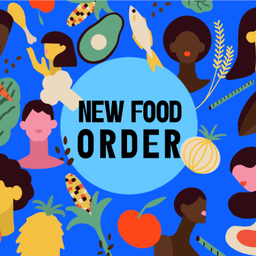
New Food Order is a podcast exploring the business of tackling our climate and social crises through food & agriculture
Through nuanced conversation and debate, we’re embarking on a learning and unlearning journey to unearth how we might design business and finance to have maximum positive impact for people and our planet.
We speak with leading farmers, entrepreneurs, execs, investors, and other stewards on key topics like:
Will plant-based, lab-grown meat, and regenerative agriculture save the world?
Is carbon neutral enough?
What are the most people and planet friendly business and finance models?
How might we best honor and learn from indigenous communities?
How might we avoid the unintended consequences of new innovation?
New Food Order is hosted is brought to you by AgFunder (https://agfunder.com/) and Food+Tech Connect (https://foodtechconnect.com/). The hosts are Danielle Gould and Louisa Burwood-Taylor.
Publisher
AgFunder & Food+Tech Connect
Category
arts · business · business · business · science · science · science
What is the Future of Plant-Based Alternatives in a New Food Order?
Plant-based meat and dairy alternatives may have exploded onto the food scene in recent years but the hype is catching up, consumer sales have been lackluster and investors are turning away. Questions have emerged about whether plant-based alternatives are the climate solution they claim to be, or an ethical choice throughout their supply chains. Are they even taking the right approach by aiming for replicas, or do we need new protein formats altogether?
To tackle these questions and more we hosted a very special live show at New Hope Network’s Natural Products Expo West, with a panel including Miyoko’s Creamery founder Miyoko Schinner, Rainfed Foods founder Sujala Balaji, and Danone’s VP of Marketing Plant-Based Beverages Olivia Sanchez. Our first-ever live show features some serious debate about the future of plant-based food.
Today we cover:
Why the success of plant-based products has slowed down in the US
Is it important for those working in the plant-based food industry have a plant-based diet?
Is there room for flexibility in our diets? Should plant-based foods be complemented with animal products?
The potential unintended consequences of plant-based food
What should the role of big conglomerates be in the plant-based sector?
The rising demand for meat around the world and how emerging markets are responding
The role of regenerative agriculture in the plant-based trend.
This episode marks the end of Season 1! We’ve really enjoyed ourselves and hope you have too. Let us know what you’d like to see us cover in future by leaving a comment or contacting us via newfoodorder.org (http://newfoodorder.org).
Show Notes
The Vegan Good Life with Miyoko (https://www.youtube.com/watch?v=Rs75EZkxFIU&ab_channel=MiyokoSchinner)
Rainfed Foods (https://www.rainfedfoods.com/)
Danone (https://www.danone.com/)
Expo West (https://www.expowest.com/en/home.html)
WWF Future 50 Foods report (https://www.wwf.org.uk/sites/default/files/2019-02/Knorr_Future_50_Report_FINAL_Online.pdf)
Subscribe to our newsletters that track all of the business, tech, and investment trends in food: https://tinyurl.com/nfonewsletters (https://tinyurl.com/nfonewsletters)
Follow us on Instagram: @newfoodorderpod (https://www.instagram.com/newfoodorderpod/)
Follow us on Linkedin: @agfunder & @foodtechconnect
Thank you to Foodshot Global (https://www.foodshot.org/) & New Hope Network (https://www.newhope.com/) for sponsoring the series.
And a huge thank you to everyone who helped us bring this podcast to life:
Production: Patrick Carter, Cofruition (https://www.cofruition.com/)
Audio Editing: Tevin Sudi
Original Music: Rodrigo Barbera
Art: Lola Nankin
Project Management: Patrick Carter
21 Mar 2023
Moving Beyond Carbon Neutrality in Food & Ag
Hardly a month has gone by in the past two years without a large food or agriculture corporate announcing a pledge to go carbon neutral by some future date. Given the food and agriculture industries contribute over a third of the world’s greenhouse gas emissions, these commitments are certainly welcome. But as we increasingly learn about the industry’s potential to be a solution to reversing climate change through carbon sequestering farming practices, the question quickly became: is carbon neutrality enough? Shouldn’t these corporates have higher goals and be targeting carbon removal from the atmosphere?
Furthermore, is carbon even the right focus when you consider other important measures of sustainable and ecological farming?
To discuss this complex topic, we brought a diverse guest roster onto the podcast in another roundtable format episode, including: Ivo Degn, Climate Farmers (https://www.climatefarmers.org/) CEO; Dani Nierenberg, president of Food Tank (https://foodtank.com/); Kathleen Merrigan, Executive Director for the Swette Center for Sustainable Food Systems (https://sustainability-innovation.asu.edu/food/); Julie Kunen, Director of Sustainability for Oatly North America (https://www.oatly.com/); and Debbie Reed, Executive Director for Ecosystem Service Market Consortium (https://ecosystemservicesmarket.org/).
We discuss:
Is carbon neutrality enough, or do we need to look beyond it?
Is it detrimental to have such a strong focus on carbon neutrality? Does the focus detract from other important areas of regeneration and supporting all ecosystem services?
Are carbon credits and overall certification of processes misleading and potentially damaging to the regenerative process?
How corporations and startups might work better in the sector
How are farmers and production workers affected by the carbon neutrality push?
How might we design these systems to ensure farmers benefit
How to ensure we don’t just end up “greenwishing” while searching for a solution
Show Notes
Climate Farmers (https://www.climatefarmers.org/)
Food Tank (https://foodtank.com/)
Swette Center (https://sustainability-innovation.asu.edu/food/)
Oatly (https://www.oatly.com/)
ESMC (https://ecosystemservicesmarket.org/)
Subscribe to our newsletters that track all of the business, tech, and investment trends in food: https://tinyurl.com/nfonewsletters (https://tinyurl.com/nfonewsletters)
Follow us on Instagram: @newfoodorderpod (https://www.instagram.com/newfoodorderpod/)
Follow us on Linkedin: @agfunder (https://www.linkedin.com/company/agfunder/) & @foodtechconnect (https://www.linkedin.com/company/food-tech-connect/)
Thank you to Foodshot Global (https://www.foodshot.org/) & New Hope Network (https://www.newhope.com/) for sponsoring the series.
And a huge thank you to everyone who helped us bring this podcast to life:
Production: Cam Gray, Cofruition (https://www.cofruition.com/)
Audio Editing: Tevin Sudi
Original Music: Rodrigo Barbera
Art: Lola Nankin
Project Management: Patrick Carter
14 Mar 2023
How Might We Better Support Farmers in their Transition to Regenerative Agriculture?
There’s enormous potential for agriculture to help reverse climate change through its potential to sequester carbon from the atmosphere. But are we asking farmers too much? Already laden with debt and the pressure to produce more with less, how might we support already cash-strapped and stressed farmers in their transition to regenerative agriculture? Should it be their responsibility alone?
In this episode, we continue our exploration of regenerative agriculture, its potential, and its challenges with Benedikt Bösel, Germany’s first regen ag Farmer of the Year and owner of Gut&Bösel (https://www.gutundboesel.org/); Jennifer O’Connor, Executive Director of Funders for Regenerative Agriculture (https://forainitiative.org/); Felipe Villela, founder of reNature; (https://www.renature.co/) and Kelsey Scott, Director of Programs at the Intertribal Agriculture Council (https://www.indianag.org/)and owner of DX Beef. (https://www.dxbeef.com/)
We discuss:
What needs to change to support farmers throughout the transition to farming regeneratively
Who should bear responsibility for driving this transition? Farmers, corporates, governments?
What regenerative producers actually need from corporates, governments, and investors
The language of regeneration and how to have productive conversations with producers
What collaboration models and other resources exist or should exist to help them
Funding sources for farmers, where they can access it, and the challenges involved
The mindset shift needed among corporations and policymakers to help producers manage their lands regeneratively and profitably
Indigenous producers and the generational damage that is being done on existing farms
Show Notes:
Gut&Bösel (https://www.gutundboesel.org/)
Funders for Regenerative Agriculture (https://forainitiative.org/)
reNature (https://www.renature.co/)
Intertribal Agriculture Council (https://www.indianag.org/)
DX Beef (https://www.dxbeef.com/)
Subscribe to our newsletters that track all of the business, tech, and investment trends in food: https://tinyurl.com/nfonewsletters (https://tinyurl.com/nfonewsletters)
Follow us on Instagram: @newfoodorderpod (https://www.instagram.com/newfoodorderpod/)
Follow us on Linkedin: @agfunder (https://www.linkedin.com/company/agfunder/) & @foodtechconnect (https://www.linkedin.com/company/food-tech-connect/)
Thank you to Foodshot Global (https://www.foodshot.org/) & New Hope Network (https://www.newhope.com/) for sponsoring the series.
And a huge thank you to everyone who helped us bring this podcast to life:
Production: Cam Gray, Cofruition (https://www.cofruition.com/)
Audio Editing: Tevin Sudi
Original Music: Rodrigo Barbera
Art: Lola Nankin
Project Management: Patrick Carter
Reach and audience
Public platform figures. Ratings count people who left a rating, not total listeners.
Apple Podcasts (US)
5.0 / 5
62 ratings
Host of New Food Order?
Claim your podcast to manage its listing and keep your show details accurate.
Pod Engine is an independent podcast discovery and analytics service and is not affiliated with or endorsed by this podcast. Artwork and show content belong to their owners. Full legal notice.
Explore this show Podcast research with Pod Engine