May 18, 2024
Non-Citizen Voting
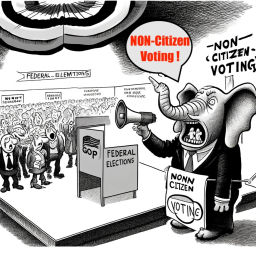
Noncitizen Voting: A Contentious Strategy in the 2024 GOP Messaging Strategy <br />As the 2024 election cycle approaches, the Republican Party (GOP) has made noncitizen voting a centerpiece of its messaging strategy, despite the fact that it is already illegal in federal elections. This article explores the context, legality, and political implications of this issue, delving into the historical background, current controversies, and potential consequences for the democratic process. <br />The Legality of Noncitizen Voting <br />Under federal law, it is illegal for noncitizens to vote in national elections, including presidential, Senate, and House races. The U.S. Constitution grants states the authority to set voter qualifications for federal elections, but they must comply with certain constitutional restrictions, such as the Equal Protection Clause of the 14th Amendment. <br />The prohibition on noncitizen voting in federal elections has a long history in the United States. The Illegal Immigration Reform and Immigrant Responsibility Act of 1996 made it a criminal offense for noncitizens to vote in federal elections, punishable by fines, imprisonment, and deportation. This law reinforced existing provisions in the National Voter Registration Act of 1993 and the Help America Vote Act of 2002, which required states to maintain accurate voter registration lists and verify the citizenship status of voters. <br />Most states have explicit provisions in their constitutions or statutes that prohibit noncitizens from voting in state or local elections. These laws often date back to the late 19th and early 20th centuries, when concerns about immigrant influence on elections led to the adoption of citizenship requirements for voting. <br />However, some municipalities, such as San Francisco and New York City, have allowed noncitizens to vote in certain local elections, like school board races. These policies have been controversial and have faced legal challenges, with opponents arguing that they violate state constitutions and dilute the voting power of citizens. <br />The GOP's Focus on Noncitizen Voting <br />Despite the existing legal prohibitions, the GOP has made noncitizen voting a key issue in its 2024 messaging. Many Republican leaders and candidates have expressed concerns about the integrity of elections and the potential for fraud, often linking these issues to illegal immigration. <br />The GOP's focus on noncitizen voting can be traced back to the 2016 presidential election, when then-candidate Donald Trump claimed, without evidence, that millions of noncitizens had voted illegally, costing him the popular vote. Although these claims were widely debunked by election officials and experts, they resonated with many Republican voters and helped to galvanize support for stricter voting laws. <br />In recent years, several GOP-led states have passed laws or implemented measures to tighten voter identification requirements, purge voter rolls, and limit access to mail-in ballots. These efforts have been justified as necessary to prevent noncitizen voting and other forms of fraud, but they have also been criticized by Democrats and voting rights advocates, who argue that they disproportionately affect minority, low-income, and elderly voters. <br />For example, in 2021, Texas passed Senate Bill 1, which imposed new restrictions on mail-in voting, increased penalties for election-related crimes, and empowered partisan poll watchers to observe election procedures. Proponents of the law argued that it was needed to safeguard against fraud and restore public confidence in elections, while opponents claimed that it would suppress voter turnout and disenfranchise vulnerable populations . <br />Similar battles have played out in other states, such as Georgia, Arizona, and Florida, where Republican lawmakers have pushed for stricter voting laws in the name of election integrity. These efforts have often been accompanied by rhetoric linking noncitizen voting to broader concerns about illegal immigration and the erosion of American sovereignty. <br />Political Implications and Controversy <br />The GOP's emphasis on noncitizen voting has sparked controversy and debate, with supporters and opponents offering divergent perspectives on its necessity and potential consequences. <br />Supporters argue that even isolated instances of noncitizen voting can undermine public confidence in the democratic process and that strict measures are needed to prevent fraud and ensure the integrity of elections. They point to cases like the 2008 Minnesota Senate race, where Democrat Al Franken won by just 312 votes, and the 2000 presidential election in Florida, where George W. Bush prevailed by a margin of 537 votes, as evidence that even small numbers of illegal votes can have significant consequences . <br />Advocates of stricter voting laws also argue that noncitizen voting is a growing problem, citing studies that estimate that millions of noncitizens are registered to vote in the United States. However, these studies have been widely criticized for their methodological flaws and have been contradicted by other research showing that noncitizen voting is extremely rare. <br />Opponents of the GOP's focus on noncitizen voting view it as a political tactic designed to stoke fears about immigration and suppress voter turnout among certain demographics. They argue that the rhetoric surrounding this issue is often exaggerated and disconnected from the facts and that it serves to distract from other pressing issues facing the country. <br />Critics also point to the long history of voter suppression in the United States, particularly against racial and ethnic minorities, and argue that the GOP's efforts to tighten voting laws are a continuation of this troubling legacy. They worry that these measures will disproportionately burden low-income, elderly, and minority voters, who may face greater difficulties obtaining the necessary identification or navigating the bureaucratic hurdles associated with voting. <br />Furthermore, opponents argue that the GOP's messaging on noncitizen voting is part of a broader strategy to delegitimize democratic institutions and sow doubts about the fairness of elections. They point to the aftermath of the 2020 presidential election when President Trump and his allies made baseless claims of widespread fraud and sought to overturn the results, as evidence of the destabilizing effects of this rhetoric. <br />The controversy surrounding noncitizen voting has also raised questions about the role of disinformation and misinformation in American politics. Some experts argue that the spread of false or misleading claims about election fraud, often amplified by social media and partisan news outlets, has contributed to the erosion of trust in democratic institutions. <br />Others worry that the focus on noncitizen voting and other alleged threats to election integrity may lead to a self-fulfilling prophecy, in which public confidence in the democratic process is undermined by the very efforts purporting to protect it. They argue that the best way to ensure the integrity of elections is to promote transparency, accountability, and public engagement, rather than erecting barriers to participation. <br />The Historical Context of Noncitizen Voting <br />The debate over noncitizen voting in the United States is not new, and has been shaped by the country's complex history of immigration, citizenship, and political inclusion. In the early years of the republic, many states allowed noncitizens to vote in local and state elections, reflecting the idea that voting was a privilege tied to property ownership and community membership, rather than national citizenship. <br />However, as immigration from Europe and Asia increased in the late 19th and early 20th centuries, nativist fears about the influence of foreign-born voters led to the adoption of citizenship requirements for voting at the state and federal levels. These laws were often motivated by racist and xenophobic attitudes, and were used to exclude not only noncitizens but also racial and ethnic minorities who were deemed unfit for political participation. <br />The question of noncitizen voting resurfaced in the late 20th century, as the immigrant population in the United States grew and became more diverse. Some advocates argued that noncitizens, particularly those who had lived in the country for many years and paid taxes, deserved a say in the policies that affected their lives. They pointed to examples of noncitizen voting in other democracies, such as New Zealand and Chile, as evidence that it could be implemented successfully. <br />However, these arguments faced strong opposition from those who viewed noncitizen voting as a threat to national sovereignty and the integrity of the democratic process. In 1996, Congress passed the Illegal Immigration Reform and Immigrant Responsibility Act, which made it a criminal offense for noncitizens to vote in federal elections. This law, along with the National Voter Registration Act of 1993 and the Help America Vote Act of 2002, established clear prohibitions on noncitizen voting in federal elections and required states to maintain accurate voter registration lists . <br />Despite these legal restrictions, the issue of noncitizen voting has continued to be a source of controversy and political mobilization. In recent years, some cities and towns have adopted laws allowing noncitizens to vote in local elections, such as school board or city council races. These policies have been met with legal challenges and political backlash, reflecting the deep divisions in American society over questions of citizenship, political inclusion, and the meaning of democracy. <br />Conclusion <br />As the 2024 election cycle unfolds, the issue of noncitizen voting is likely to remain a contentious topic in the GOP's messaging strategy. While it