
The Nonprofit Executive Podcast with Joel Kessel and Mary Valloni is the podcast for growth-minded nonprofit executives looking to take their nonprofit to the next level through strategic planning and fundraising.
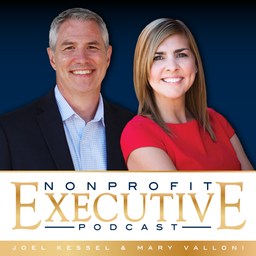
Nonprofit Executive Podcast with Joel Kessel and Mary Valloni
Claim This Podcastby Joel Kessel & Mary Valloni
5.0(2 reviews)
18 episodes
Updated Daily
Accepts GuestsHas SponsorsLocation 🇺🇸
Podcast Overview
The Nonprofit Executive Podcast with Joel Kessel and Mary Valloni is the podcast for growth-minded nonprofit executives looking to take their nonprofit to the next level through strategic planning and fundraising.
Language
🇺🇲
Publishing Since
11/14/2019
1 verified contact email on file for Nonprofit Executive Podcast with Joel Kessel and Mary Valloni
Pitch yourself as a guest, propose sponsorships, or reach out directly to the host.
Recent Episodes
March 5, 2020
Episode 18 | Fundraising FREEDOM Step 7: Make Your Difference
<p>This step is what all of your hard work has been leading up to. You’re raising funds, asking people to be part of your team, building out your branding and the reason is that you’re trying to make a difference in the world. Once you get here, this is the time to celebrate! You’re seeing lives changed and now you get to tell people all about it and thanking everyone who took part. This is a really fun step and one that too many people miss.</p> <p> </p> <p><strong>How do we celebrate with the team?</strong></p> <p>If you haven’t read the book The 5 Love Languages: The Secret to Love that Lasts by Gary Chapman, you should check it out. In the book, the author outlines 5 different love languages which are, Words of Affirmation, Acts of Service, Gifts, Quality Time, and Physical Touch. Everyone has a primary love language. You need to find ways to incorporate all these love languages with your team as well as donors. Thank you notes, awards or plaques, or even hugs and handshakes are ways to show appreciation to your people.</p> <p> </p> <p><strong>How do we know a donor’s love language?</strong></p> <p>People will typically tell you. It comes back to running your research and drawing broad observations from minute details. If they give you a gift, they like gifts. If they give you words of affirmation, they like words of affirmation. All you’re doing is watching how they communicate with you and that will tell you how to communicate with them. I had a donor tell me once that we should have given warm cookies at Christmas time – more than likely his love language is gifts. </p> <p> </p> <p><strong>What can we do to make sure we are thanking people the right way?</strong></p> <p>As much as I’m trying to pay attention to everyone, it is very challenging when you have hundreds of donors. It’s just not practical. So, I make sure at Christmas I do something special for the top sponsors like maybe a gift certificate and a bottle of wine as an example. And I hand-delivered them. After every fundraiser each year, I hosted a thank-you banquet. I had a chairperson for the thank-you party and they were responsible for printing out all the plaques, every sponsor got their recognition, anyone who gave over $10,000 got a special award, we incorporated all of that. </p> <p> </p> <p><strong>Do you have any other takeaways for success?</strong></p> <p>Freedom means to act, think, and speak without holding back. All 7 of my steps are leading to that. We talked last week about the power money has and I know how easy it is to go down a path because you had a donor who wanted to go down a path. I don’t ever want money to control your organization. I want your strategic plan to control your organization and you just happen to need money to fulfill that plan. My steps all come back to what freedom looks like for you and your cause. And then put your head down and go to work toward that. When it comes down to it, it’s about building relationships with the right people and inviting them to feel like this is their thing too.</p> <p> </p> <p><strong>Resources from this episode:</strong></p> <p><a href= "https://www.nonprofitexecutiveclub.com/pl/120832">Strategic Plan Toolkit</a></p> <p><a href="http://www.maryvalloni.com/roadmap">Fundraising Freedom Roadmap</a></p> <p><a href= "https://www.amazon.com/Love-Languages-Secret-that-Lasts/dp/080241270X/ref=sr_1_3?crid=3K7FRA61415AJ&keywords=5+love+languages&qid=1583177872&sprefix=5+love%2Caps%2C167&sr=8-3"> The 5 Love Languages book</a></p> <p> </p> <p><strong>Connect with Mary:</strong></p> <p><a href="http://maryvalloni.com/" target="_blank" rel= "noopener">Mary Valloni</a></p> <p>Mary’s book: <a href= "https://www.amazon.com/Fundraising-Freedom-Steps-Sustain-Campaign/dp/1943526893/ref=sr_1_1?keywords=Fundraising+Freedom&qid=1571933080&sr=8-1"> Fundraising Freedom</a></p> <p> </p> <p><strong>Connect with Joel:</strong></p> <p><a href="http://www.kesselstrategies.com/">Joel Kessel</a></p> <p> </p>
February 27, 2020
Episode 17 | Fundraising FREEDOM Step 6: Organize the Ask
<p><strong>What do you need to organize to make sure you’re in the best position to make the ask?</strong></p> <p>Depending on how you’re raising funds, everyone has a demographic they serve and tend to raise funds from. There is a process for every group of people, and you need to think it through before you just go in and ask for money. You should never do a blanket approach to fundraising because you want to be well-received by every group you get in front of.</p> <p><strong>Tell us more about dating and fundraising.</strong></p> <p>When you talk to someone about how they met their spouse it usually goes something like this, “we were in the same place at the same time and started talking.” And it was a slow, progressive process. We as fundraisers and nonprofit executives tend to jump in and immediately “go for the kill” and you’re pushing those donors and potential donors away because you reek of desperation. No one wants to date someone who is desperate. You have to get to know your donors by asking questions about what they are interested in, what do they like, etc. and you start to figure out if you like the same things or if you are compatible. Now, I’m not saying they have to be your best friend, but I want you to make sure that you care about the same thing aka, your cause. </p> <p><strong>What do you say to that organization that needs a specific amount of funds in the next six months?</strong></p> <p>You need money and you needed it yesterday. This is a very common concern and why it is vital that you have a strategic plan in place so that you never put yourself in this frantic place ever again. You should not be asking for the dollars you needed last month. When you’re putting on a fundraiser of any sort, it’s easy to say you want to get it done in the next three months. You glue it together, slap a coat of paint on it and call it good. But what would happen if you planned that fundraiser 12 months out? You can start accepting donations today for a fundraiser that’s in a year. The urgency is whatever you place on it, which is why I like to use the calendar to create urgency. If you plan out farther in advance, you can get the sponsorship dollars and then you aren’t frantically trying to do things last minute like picking up auction items and selling tickets. </p> <p><strong>Can you talk about the mindset around money?</strong></p> <p>This is probably the biggest issue when people say they don’t want to ask for money. Somewhere along the way, they gave money more power than it actually deserves. I’m a big Dave Ramsey fan and I used his plan to pay off all my student loan debt. He has a seven-step process which is what ultimately led to my seven steps. One thing Dave shares is how money is amoral – it’s not good, it’s not bad, it just is. You have to remove the emotion from money. </p> <p>If you’re building a building, you don’t actually need cash, you need bricks and people to put those bricks together. Remember, you don’t actually have to go after cash with each ask, you can go for goods and services too. Back in the day, people didn’t exchange cash for services and they rarely exchanged cash at all. But in today’s age, we’ve given so much power to cash and it’s not necessary. </p> <p><strong>When you’re ready to go in for the ask, who should you go to?</strong></p> <p>Roughly 70% of donations come from individuals, but I always tell people that 100% of donations come from individuals. You’re asking humans to give money and it all comes back to relationships. You have to build relationships with people so when you ask for money, I tell people you have to send in the person who has the best relationship with the person sitting across the table. That does not matter what kind of money you’re asking for, it’s all the same philosophy. This once again goes back to step 3, enlist your team. You will be able to raise WAY more money if you have the right team members. If you have someone on your team who has built relationships with people in the community for the past 60 years (or more). Statistics show that people will give to a cause when they have someone they know and trust who asks them to give. </p> <p> </p> <p><strong>Resources from this episode:</strong></p> <p><a href= "https://www.nonprofitexecutiveclub.com/pl/120832">Strategic Plan Toolkit</a></p> <p><a href="http://www.maryvalloni.com/roadmap">Fundraising Freedom Roadmap</a></p> <p><strong> </strong></p> <p><strong>Connect with Mary:</strong></p> <p><a href="http://maryvalloni.com/" target="_blank" rel= "noopener">Mary Valloni</a></p> <p>Mary’s book: <a href= "https://www.amazon.com/Fundraising-Freedom-Steps-Sustain-Campaign/dp/1943526893/ref=sr_1_1?keywords=Fundraising+Freedom&qid=1571933080&sr=8-1"> Fundraising Freedom</a></p> <p><strong> </strong></p> <p><strong>Connect with Joel:</strong></p> <p><a href="http://www.kesselstrategies.com/">Joel Kessel</a></p>
February 20, 2020
Episode 16 | Fundraising FREEDOM Step 5: Deploy Your Team
<p>In today’s episode we are talking about how to Deploy Your Team. This is where the momentum really picks up. Often, when you’ve been fundraising for a while, you’ve done the first two steps where you knew your vision and then went straight to asking for money. You jumped from steps 1 to 6 to 7 which gets you a little way, but then you run out of contacts, you run out of resources, and then your fundraiser dies. This FREEDOM process we are talking about here is to help you never run out of resources or contacts.</p> <p><strong>How do you know your team is ready?</strong></p> <p>It is important to walk through some training with your volunteers. You must sit down with your key volunteers and discuss what each of them is going to do versus what you, as the staff member, are going to do. We call this the volunteer-staff partnership. This allows for you to be that much more effective because you aren’t stepping all over each other’s stories and you’re presenting a united front. If you have a full staff, typically the executive director and development staff are responsible for fundraising efforts. When I’m talking about staff, I’m talking about paid positions. If you have a board member who is playing that staff role, I want to caution you to keep in mind that board members are volunteers.</p> <p>Staff is responsible for knowing the statistics, the details of the organization – where does the money go, how are you going to spend the money, what impact are you actually making, the patient stories, the constituent stories-- any results-driven stories come from staff. The volunteer story is all about their personal experience and why they give their time to the cause. This is the story they should share with the donor. The volunteer should schedule the appointment, has a relationship with the person across the table, and if possible, make the ask.</p> <p><strong>Should your key volunteer “run the meeting"?</strong></p> <p>You have to sit down ahead of time and talk about the person with whom you’re meeting. Are they going to be a sponsor? Are their staff members going to work at the event? You need to understand the intention of the meeting in the first place, but I always want the volunteer to “go first.” Walls come down immediately and the environment becomes more comfortable. Plus, they were involved with the development of all the materials so they know all the details and can walk a potential donor through it all. When your volunteers are empowered, there’s a chance you are going to say very little during this meeting. You are there as "information" because you know the organization, you know how to collect the money, you know how they (the donor) will get the recognition, etc. </p> <p><strong>In your book you mention that titles are important, what do you mean by that?</strong></p> <p>I love titles because it gives people language. As a volunteer, you will feel so much more empowered when you can say, “I’m the chairperson of this event.” Instead of just telling people they volunteer with an organization, they are actually given a title that puts them in charge of their area. This is why I like making up titles because it makes someone feel like they have ownership, and no one is going to step in my space. I even had a “thank you chair” and that person was in charge of writing thank you cards. I had a print chair who actually worked for a printing company. Since she knew paper, she knew colors and understood stock so she could make decisions on what to print the invitations on. She thought about the logo being embossed, the kind of envelope the invitation was put in – she was able to think about all the details in a much different way than someone without the knowledge. </p> <p>One other thing I want you to think about is the bio for your volunteers. If you go to a board member’s website and look at their bio, you want them to talk about your cause and if they don’t have a title, how do they tell people they volunteer for your cause? When you give your volunteers titles, they become spokespeople for your cause.</p> <p><strong>How are volunteers like donors?</strong></p> <p>Statistics show that you are twice as likely to give to your cause if you’re a volunteer. If you are volunteering for your cause, you are going to think about giving. You’re asking everyone else to give, so why wouldn’t you give too? You want your volunteers to first and foremost decide how they want to give. They may not have the financial means to give, which is why they are volunteering in the first place, and that’s ok. But I want you as the leader of your organization to have those conversations about what you want your volunteers to do. </p> <p><strong>Once the team is running, now what?</strong></p> <p>One of the major things I encourage is ongoing communication. I want to make sure people are continuously communicating with each other – have meetings, whether it’s once a month or once a week to keep everything churning. Each person on the team has a chance to report in on what’s been happening since they can’t always do it in real-time. This keeps everyone on the same page. </p> <p>I think it’s so important for us to understand that people need direction. If we don’t tell them we need them to go out and schedule meetings or to help open up doors, they won’t do it. They are waiting for you as the staff lead to empower them and to say, we need you to step up. And if they can’t do it, find someone else. But at least the expectations are clear on what the role means. Your volunteers want to be a part of your cause. People want to be a part of your cause. They will do as much as you ask of them. If the role means they are going to have to invest several hours a week or month, be very clear about the expectation of that role entails. Don’t sugarcoat it – get someone who is willing and able to invest the time needed to ensure your signature fundraiser is a success.</p> <p>We know being a nonprofit executive is a lonely job and we want you to know that you are not alone as you work toward your mission. If you like the content of the podcast, as well as the work we do, we invite you to join the Nonprofit Executive Club. The Executive Club is a monthly training program that gives you the ability to increase your influence through strategic planning and fundraising support. For more information and to join the Club, go to <a href= "https://www.nonprofitexecutiveclub.com/">nonprofitexecutiveclub.com</a>.</p> <p> </p> <p><strong>Resources from this episode:</strong></p> <p><a href= "https://www.nonprofitexecutiveclub.com/pl/120832">Strategic Plan Toolkit</a></p> <p><a href="http://www.maryvalloni.com/roadmap">Fundraising Freedom Roadmap</a></p> <p> </p> <p><strong>Connect with Mary:</strong></p> <p><a href="http://maryvalloni.com/" target="_blank" rel= "noopener">Mary Valloni</a></p> <p>Mary’s book: <a href= "https://www.amazon.com/Fundraising-Freedom-Steps-Sustain-Campaign/dp/1943526893/ref=sr_1_1?keywords=Fundraising+Freedom&qid=1571933080&sr=8-1"> Fundraising Freedom</a></p> <p> </p> <p><strong>Connect with Joel:</strong></p> <p><a href="http://www.kesselstrategies.com/">Joel Kessel</a></p> <p> </p> <p><strong> </strong></p>
18 total episodes available
Deep-dive analytics for Nonprofit Executive Podcast with Joel Kessel and Mary Valloni
Frequently asked questions
Have a different question and can't find the answer you're looking for? Reach out to our support team by sending us an email and we'll get back to you as soon as we can.
- What is Nonprofit Executive Podcast with Joel Kessel and Mary Valloni?
- How often does this podcast release new episodes?
This podcast updates daily.
- Where can I listen to this podcast?
This podcast is available on 4 platforms including Apple Podcasts, Spotify, and more. You can also use the RSS feed directly.
- Does this podcast accept guests?
No, this podcast does not typically feature guests.
Legal Disclaimer
Pod Engine is not affiliated with, endorsed by, or officially connected with any of the podcasts displayed on this platform. We operate independently as a podcast discovery and analytics service.
All podcast artwork, thumbnails, and content displayed on this page are the property of their respective owners and are protected by applicable copyright laws. This includes, but is not limited to, podcast cover art, episode artwork, show descriptions, episode titles, transcripts, audio snippets, and any other content originating from the podcast creators or their licensors.
We display this content under fair use principles and/or implied license for the purpose of podcast discovery, information, and commentary. We make no claim of ownership over any podcast content, artwork, or related materials shown on this platform. All trademarks, service marks, and trade names are the property of their respective owners.
While we strive to ensure all content usage is properly authorized, if you are a rights holder and believe your content is being used inappropriately or without proper authorization, please contact us immediately at hey@podengine.ai for prompt review and appropriate action, which may include content removal or proper attribution.
By accessing and using this platform, you acknowledge and agree to respect all applicable copyright laws and intellectual property rights of content owners. Any unauthorized reproduction, distribution, or commercial use of the content displayed on this platform is strictly prohibited.