- 18
- Episodes
- 13
- Ratings
- Weekly
- Cadence
- 2026
- First episode
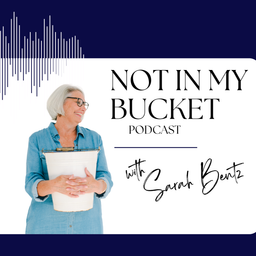
About Not in My Bucket Podcast
Balance and boundaries are hard to establish in all areas of our life. Sarah Bentz uses Buckets to help make sense of what a good boundary and no boundaries look like. If you are looking for ways to make better sense of your life and how to protect your Bucket by setting limits and boundaries, this Podcast may be what you are looking for.
- Publisher
- Sarah Bentz
- Category
- education · health & fitness
- Language
- en
- Explicit
- No
- First episode
- 18 May 2026
- Latest episode
- 15 Oct 2026
Latest episodes
18 episodes in the feed.
15 Oct 2026
Buckets with Friends Part 2
You can't set a boundary with someone else until you know who you are — and most of us skip that step. Sarah picks up the buckets-with-friends series by sending you back to your target. Last time you drew it and placed the people closest to you. This time, redraw it and put people where they actually belong. But before you can decide where anyone belongs, she says, you have to do the harder work first: figure out your own values, personality, and needs. Along the way she shares what changed for her when she read Dare to Lead and explored the Enneagram, how she protects the environment at her counseling center, and a story about the time she unknowingly started imitating a friend she admired. WHAT BELONGS IN YOUR BUCKET (THE THINGS YOU CAN CONTROL) • Your environment. Where you spend your time and what you allow around you. If you don't drink, a bar may not be the place to meet people; a library might be. • What you are and aren't willing to do. Know your values and where you'll compromise (and where it's a no-go) before you're in the relationship. • What you have to give. Your schedule, your energy, your season of life. It's okay to say "Let me check my calendar" instead of a reflexive yes. • Your responsibility. Owning your part: showing up hungry and exhausted next to the person who grates on you is on you, and so is wearing a mask instead of being authentic. WHAT DOESN'T BELONG IN YOUR BUCKET • Someone else's expectations • Someone else's opinions • Someone else's responsibility • Someone else's personality Sarah explains that we often enter relationships a little empty, subconsciously hoping the other person will fill in the blanks. It works at first, but it isn't their job, and it leads to absorbing their expectations, opinions, and even their personality. "They're just the cherry on the top. You are the substance." — Sarah Bentz, on relationships of every kind WHERE TO BEGIN: 3 STEPS 1.Identify where you've lost control of your bucket. Go back to your target. With each person near the center, ask: am I my true self with them, or walking on eggshells? Those you enjoy but can't relax around can move further out. 2.Own only what belongs to you. In every relationship, even ones that went sour, there's something to own. It might be as simple as having a hard conversation while jet-lagged and exhausted, then blaming the other person. 3.Listen to your body. Your body is always signaling whether a situation feels safe. It only betrays you when you ignore it. MOMENTS WORTH REWINDING FOR • Sarah's story about the cable technician who emailed to say how peaceful her new office felt, proof that you can control your environment even if you can't control who walks in • The season she went back to school while working full time and consciously chose to give nothing to new relationships • How she spent years imitating a respected friend's personality, and the people who loved her enough to nudge her back to herself • Why she is skeptical of "ten ways to be a better friend" lists, and what she says to start with instead RESOURCES MENTIONED • Dare to Lead by Brené Brown. Includes values inventories; Sarah's group read it together and she calls it a pivotal moment. • The Enneagram. The nine-personality model Sarah found most helpful for understanding herself. She also mentions Myers-Briggs and other assessments, and encourages you to find whichever works for you. REFLECTION PROMPTS FROM THIS EPISODE • Do you know your values, your personality, and what you need in a typical week? • Whose personality, opinions, or expectations have you been carrying in your bucket? • With which people on your target are you not your authentic 🧢 Wear Your Boundaries on Your Sleeve! Stop making excuses and start defining your bucket! Grab official podcast gear—including hats, tumblers, and our signature ""Stop Shoulding on yourself" t-shirt 👉 Shop the Official Not In My Bucket Merchandise Here Email: notinmybucket@hopeandgrowthcenter.com Not In My Bucket is hosted by Sarah Bentz, licensed counselor and owner of the Hope & Growth Center in Keller, Texas, exploring emotional boundaries, family patterns, and how we "fill" and "empty" each other's emotional buckets. This episode touches on trust, past relationship patterns, and self-worth. If any of this feels heavy for you personally, it may be worth talking it through with a counselor or therapist. Mixing, editing, and show notes provided by NEXT DAY PODCAST
2 Oct 2026
Buckets with Friends Part 1
Most of us are still making friends the way we did in first grade — we just don't realize it. Sarah kicks off a new stretch of episodes focused on boundaries in specific relationships, starting with friendships. She traces how we pick friends at every age — siblings and family friends when we're little, whoever sits next to us in elementary school, shared values in middle and high school — and how college throws that whole system out the window, leaving most people with no real method for deciding who belongs in their life and how close. The core message: boundaries in friendship protect both people, keep you in control of your own decisions, and only work if you actually know who you are first. 7 SIGNS OF UNHEALTHY BOUNDARIES IN NEW RELATIONSHIPS 1.Telling all. Sharing your full life story with someone before you know whether they're safe to hold it. 2.Falling in love with a new acquaintance. Not romantic love — a platonic infatuation that skips past actually getting to know someone. 3.Acting on first sexual impulse. Letting physical intimacy come before the relationship has any real foundation. 4.Going against personal values to please others. Compromising what you actually believe just to keep someone around. 5.Not noticing when someone displays inappropriate boundaries. Making excuses for behavior you'd never accept from yourself. 6.Letting others define your reality. Morphing into who someone else wants you to be so they'll like you. 7.Spending more time meeting someone else's needs than your own. A pattern that shows up fast when infatuation is driving the relationship. "The reality is, you belong in the center circle. And you've got to protect you with everything you've got." — Sarah Bentz THE TARGET EXERCISE Sarah shares a tool she uses often in her counseling practice: draw a target, like an archery target, with a small, high-value center circle and larger, lower-value rings around it. List every important person in your life, then place them on the target based on how close they actually are — not how close you think they should be. The pattern she sees almost every time: the center and the ring right around it are packed with names, there's barely room on the outer rings, and the person doing the exercise usually forgets to put themselves on the target at all. The center circle belongs to you. Everyone else earns their way closer over time — new people start on the outer edge, and only move inward as they prove themselves trustworthy. • New acquaintances start on the outer rings, not the center, no matter how much you like them • A close family member isn't automatically entitled to the center circle if the relationship isn't safe • Daily contact (like a coworker) doesn't equal closeness — frequency and depth are different things • The closer someone sits to the center, the more expectations come with that placement, so start slow REFLECTION PROMPTS FROM THIS EPISODE • If you drew your own target right now, is your center circle overcrowded? • Did you remember to put yourself on the target at all? • Is there someone close to your center who doesn't actually make you feel safe? • Which of the 7 unhealthy patterns above sounds like how you've made friends in the past? Sarah ties this back to the glass bucket from the last episode: when your center circle is full of other people and there's no room for you, that's the sign you're standing outside your own bucket looking in. COMING UP NEXT This is the first of several episodes on friendship boundaries — Sarah continues the topic next time. 🧢 Wear Your Boundaries on Your Sleeve! Stop making excuses and start defining your bucket! Grab official podcast gear—including hats, tumblers, and our signature ""Stop Shoulding on yourself" t-shirt 👉 Shop the Official Not In My Bucket Merchandise Here Email: notinmybucket@hopeandgrowthcenter.com Not In My Bucket is hosted by Sarah Bentz, licensed counselor and owner of the Hope & Growth Center in Keller, Texas, exploring emotional boundaries, family patterns, and how we "fill" and "empty" each other's emotional buckets. This episode touches on trust, past relationship patterns, and self-worth. If any of this feels heavy for you personally, it may be worth talking it through with a counselor or therapist. Mixing, editing, and show notes provided by NEXT DAY PODCAST
18 Sept 2026
The Glass Bucket: Are You Living on the Outside of Your Own Boundaries?
There's one more bucket, and it might be the one you're standing outside of right now, looking in. After walking through the rescue bucket, the overloaded bucket, the collector's bucket, the trauma bucket, the minnow bucket, and the sand bucket, Sarah introduces the final piece of the series: the glass bucket. It's a real object on her shelf — a thick, slightly distorted antique glass ice bucket — and it becomes the metaphor for what it looks like when you're carrying a bucket full of things that were never yours to begin with. This episode is less about a new violation and more about a gut check: which bucket do you actually see when you look inside your own? Sarah walks back through each one to help you find it. WHICH BUCKET DO YOU SEE WHEN YOU LOOK IN? • The rescue bucket. You're carrying other people's responsibilities instead of your own, and you're exhausted from it. • The overloaded bucket. A pile of small yeses that added up to no room left for what actually matters to you. • The collector's bucket. Years of other people's opinions, expectations, and cares dumped in without a lid, and you're barely keeping your head above it. • The (very serious business) trauma bucket. What you see first when you look in is someone else's actions toward you that were out of your control. • The minnow bucket. Secret expectations you've never actually said out loud, so no one else has had the chance to meet them. • The sand bucket. The playful, light version Sarah says is the goal — a bucket that's actually yours to enjoy. SO WHAT IS THE GLASS BUCKET? The glass bucket is what happens when you're standing outside your own boundaries, looking in at a bucket full of stuff that isn't yours — and trying to protect all of it anyway. It's fragile by nature. Sarah describes wrapping the real glass bucket in a towel before every presentation because it could shatter if it's mishandled, and says our own boundaries work the same way when we're stretched thin protecting things that were never ours to carry. The glass is also slightly distorted — clear enough to see what's inside, but not crystal clear. Some of what doesn't belong to you is obvious the moment you look. Other pieces take longer to recognize, and Sarah notes those will keep coming into focus as the series moves into relationships, parenting, and the workplace. "As long as we have other people's stuff in our bucket, we cannot protect our bucket. It's glass." — Sarah Bentz REFLECTION PROMPTS FROM THIS EPISODE • When you look into your own bucket right now, which one do you see first? • What is the one thing in your bucket that, when you look at it, feels like a neon sign saying it has to go? • Whose responsibility have you been carrying, and how will you hand it back? • What secret expectation have you been holding onto without ever saying it out loud? Sarah's suggestion if this episode stirred something up: go back and re-listen to the earlier bucket episodes, and consider bringing what you find to a counselor to work through. BOOKS SARAH MENTIONS IN THIS EPISODE Facing Codependence by Pia Mellody Boundaries: When to Say Yes, How to Say No to Take Control of Your Life by Dr. Henry Cloud & Dr. John Townsend Sarah calls the Cloud and Townsend book part of the beginning of her own journey with boundaries, having not grown up in a family where they were discussed or respected. Both titles are available in updated editions with companion workbooks. 🧢 Wear Your Boundaries on Your Sleeve! Stop making excuses and start defining your bucket! Grab official podcast gear—including hats, tumblers, and our signature ""Stop Shoulding on yourself" t-shirt 👉 Shop the Official Not In My Bucket Merchandise Here Email: notinmybucket@hopeandgrowthcenter.com Not In My Bucket is hosted by Sarah Bentz, exploring emotional boundaries, family patterns, and how we "fill" and "empty" each other's emotional buckets. This episode touches on exposure to rage and violence and other difficult family dynamics. If any of this feels heavy for you personally, it may be worth talking it through with a counselor or therapist. Mixing, editing, and show notes provided by NEXT DAY PODCAST
4 Sept 2026
Bucket Violations, Part 2: 7 More Ways We Break Each Other's Boundaries
Not every violation looks dramatic. Some look like a tickle you never asked for, or a decision about your own life that someone else made for you. Sarah is back with the second half of her bucket violations series, and this batch gets into territory that's easy to miss because it hides in plain sight: being told not to cry, being touched without permission, being cast as your spouse's parent instead of their partner, and having decisions about your own religion, career, or relationships made for you long after you were old enough to make them yourself. Before diving in, Sarah takes a moment to thank the community — the show has now crossed 1,200 followers — and reminds listeners that these episodes aren't about keeping score or calling people out. They're about noticing what belongs in your bucket, what doesn't, and where healing needs to start. THE 7 BUCKET VIOLATIONS COVERED IN THIS EPISODE 1.Not being allowed to cry. Tears are the body's natural release — being told to stop only teaches people to hide them. 2.Being tickled or touched without permission. From forced hugs to strangers touching a pregnant belly, consent applies to touch of every kind. 3.Being forced into a role as parent to your spouse. When a partner leans on you the way a child leans on a parent instead of showing up as an equal. 4.Being exposed to constant whining or pouting. Adult silent treatment and sulking used as a manipulation tactic to get your way. 5.Being forced to stuff your feelings out of fear of violence, ridicule, or shame. Silencing yourself because expressing an emotion has felt dangerous before. 6.Not being allowed to come and go at will. An adult being controlled — told who they can see, where they can go, or when they're allowed to leave. 7.Having your life decided for you. Religion, career, marriage, or beliefs chosen on your behalf well past the age you were capable of choosing yourself. "Their feelings, their bucket. Your feelings, your bucket. It's your basic right to have your own."— Sarah Bentz MOMENTS WORTH REWINDING FOR • The "fruit snacks" test Sarah ran on her 3-year-old grandson — and what happened when she acknowledged his disappointment instead of demanding he stop crying • Why asking permission before a hug, tickle, or touch is about respect, not formality — including the pregnant-belly example every mom-to-be will recognize • The line between healthy concern and control when it comes to an adult partner coming and going • How Sarah navigates the nuance of raising kids with your own beliefs while still letting them choose their own path as adults REFLECTION PROMPTS FROM THIS EPISODE For each of the seven violations, Sarah suggests asking yourself: • Have I experienced this — growing up, in a past relationship, or right now? • Have I ever done this to someone else, even without realizing it? And if you recognize yourself as the one doing the violating, Sarah's encouragement is the same throughout: take a step back, own your own behavior, and consider working through it with a counselor rather than carrying it forward. A NOTE FROM SARAH This wraps the full bucket violations series. Sarah's hope isn't for anyone to walk away pointing fingers, but to start noticing which parts of their own bucket still need healing — and to let their boundaries protect and empower them going forward. 🧢 Wear Your Boundaries on Your Sleeve! Stop making excuses and start defining your bucket! Grab official podcast gear—including hats, tumblers, and our signature ""Stop Shoulding on yourself" t-shirt 👉 Shop the Official Not In My Bucket Merchandise Here Email: notinmybucket@hopeandgrowthcenter.com Not In My Bucket is hosted by Sarah Bentz, exploring emotional boundaries, family patterns, and how we "fill" and "empty" each other's emotional buckets. This episode touches on exposure to rage and violence and other difficult family dynamics. If any of this feels heavy for you personally, it may be worth talking it through with a counselor or therapist. Mixing, editing, and show notes provided by NEXT DAY PODCAST
28 Aug 2026
Bucket Violations, Part 1: 7 Ways We Break Each Other's Boundaries
You've probably done at least one of these without meaning to — and you've definitely had at least one done to you. In the last episode, Sarah talked about setting limits and how boundaries help define who we are. This week she goes a layer deeper into the emotional side of that work: the specific, everyday ways our emotional "buckets" get violated, often by people who love us and don't realize what they're doing. Some of these will feel like your childhood. Some might feel like your marriage, your parenting, or your last hard conversation. Sarah walks through the first seven of fifteen total bucket violations, using stories from her own family, her own marriage, and her counseling background to show how each one shows up and how to start catching yourself before you pass it on. THE 7 BUCKET VIOLATIONS COVERED IN THIS EPISODE 1."You shouldn't feel that way." Dismissing or shaming someone's feelings instead of simply acknowledging them. 2.Having your feelings ignored. Being brushed off, talked over, or shut down when you finally work up the courage to share how you feel. 3.Being threatened with abandonment. Using the fear of being left, kicked out, or divorced as leverage in an argument. 4.Being called names. Labels that get thrown into someone's bucket and quietly become part of their identity. 5.Having affection withheld. Using silence or coldness as punishment, which teaches love has to be earned. 6.Being exposed to uncontrolled rage or violence. Witnessing outbursts that rewire your sense of safety, even when you're not the target. 7.Being told you're responsible for someone else's feelings. "You made me angry" versus owning your own emotional reactions. "Your feelings, your bucket. Their behavior, their bucket. Own your feelings first." — Sarah Bentz MOMENTS WORTH REWINDING FOR • Why a counselor never hands a crying client a tissue — and what that teaches about sitting with someone's emotions instead of stopping them • Sarah's "Goombas" story: how she caught herself about to reach for name-calling as a parent and swapped in something harmless instead • The difference between an "I statement" and a "you statement," and why swapping one for the other changes an entire conversation • Why security and affection are basic human needs, not things anyone should have to earn back REFLECTION PROMPTS FROM THIS EPISODE As you listen, Sarah suggests sitting with two questions for each of the seven violations: • Have I experienced this — in childhood, in a past relationship, or right now? • Have I ever done this to someone else, even without meaning to? Her suggestion: keep a literal or mental "bucket" labeled with the name of the person whose feelings, behavior, or issues you've been carrying that were never yours to hold — and start putting things back where they belong. COMING UP NEXT Part 2 continues with eight more bucket violations. Subscribe so it lands in your feed as soon as it's out. 🧢 Wear Your Boundaries on Your Sleeve! Stop making excuses and start defining your bucket! Grab official podcast gear—including hats, tumblers, and our signature ""Stop Shoulding on yourself" t-shirt 👉 Shop the Official Not In My Bucket Merchandise Here Email: notinmybucket@hopeandgrowthcenter.com Not In My Bucket is hosted by Sarah Bentz, exploring emotional boundaries, family patterns, and how we "fill" and "empty" each other's emotional buckets. This episode touches on exposure to rage and violence and other difficult family dynamics. If any of this feels heavy for you personally, it may be worth talking it through with a counselor or therapist. Mixing, editing, and show notes provided by NEXT DAY PODCAST
14 Aug 2026
Defining Your Bucket
In this episode, Sarah Bentz takes a deep dive into the practical mechanics of limit setting. Building on the previous conversation about the Minnow Bucket—and why secret expectations always backfire—Sarah shifts the focus toward personal identity: setting limits isn't just about saying "no," it is about clearly defining who you are and teaching others how to respect your individual space. Sarah unpacks the core mechanics of personal limits, explaining how our time, energy, and emotional bandwidth differ from everyone around us. She walks through the three universal truths of boundaries and breaks down the five common pitfalls that cause people to falter when trying to enforce their needs. Key Takeaways & Discussion Highlights Defining Your Unique DNA: Why every single bucket is specially designed for its owner—from marathon runners to quiet morning dwellers. The Core Elements of Limit Setting: Deciding for yourself how you wish to spend your time, devote your energy (your daily "spoons"), and protect your privacy independent of outside demands. The Three Universal Truths of Limits: Limits are Individual: Yours will never look identical to someone else's. Limits are Fluid and Contextual: Why answering a client call at 1:00 AM differs from answering a child's emergency call. Limits are Grounded in Feelings: You cannot set or keep a boundary without doing the internal dive first. The "Boundary Muscle" Analogy: Why setting a limit often hurts at first—just like working out unused muscles after a long break. The 5 Boundary Pitfalls to Avoid Reinforcing What Bothers You: Accidentally rewarding people for imposing on you because you're trying to be polite. Attempting to "Out-Reason" Others: Giving endless reasons that invite people to negotiate or debate your boundaries. Relying on Excuses Instead of Honesty: Buying Tupperware or agreeing to plans simply because you couldn't manufacture a "good enough" excuse. Responding by Reacting: Waiting until an intrusion happens again to explode, rather than initiating a clear limit proactively. Engaging in a Rescue Operation: Setting limits out of a desire to control or fix someone else's bucket rather than protecting your own. Memorable Quotes "When we set limits, we're teaching somebody else how we want to be treated. We're saying, 'This is our bucket. This is how our bucket functions.'" "When we use muscle in setting a limit, it hurts us because we're used to saying yes... But no pain, no gain. The more you use it, the less it hurts." "Excuses allow us to avoid expressing our honest feelings... Honesty should always be the best policy." Resources & Links Mentioned The Spoon Theory & Energy Management: Evaluating your daily bandwidth before taking on new tasks. Explore Counseling Services: Connect with trauma-informed resources and limit-setting workshops at the Hope & Growth Center. 🧢 Wear Your Boundaries on Your Sleeve! Stop making excuses and start defining your bucket! Grab official podcast gear—including hats, tumblers, and our signature "Stop shoulding on yourself" t-shirt 👉 Shop the Official Not In My Bucket Merchandise Here Email: notinmybucket@hopeandgrowthcenter.com Connect & Subscribe If you caught a "nugget" of truth from today's episode, take a quick moment to like, subscribe, and share this episode with a friend or family member! Let your boundaries protect and empower you until next time. Mixing, editing, and show notes provided by NEXT DAY PODCAST (https://www.nextdaypodcast.com/)
31 Jul 2026
The Minnow Bucket-Why Clear is Kind & Secret Expectations Fail
We hit a massive milestone on the show this week—over 900 followers! I can't thank you enough for trusting us, sharing these episodes with your friends and family, and spreading the word about why setting healthy limits actually works. In this episode, Sarah introduces one of the most clever metaphors in her entire collection: The Minnow Bucket. Drawing from an antiquing adventure with her husband, Sarah breaks down what happens when we try to operate with "missing pieces" or rely on secret, unvoiced expectations in our relationships. Channeling wisdom from Brené Brown and child development expert Gary Landreth, this conversation is a masterclass in why clear communication isn't just helpful—it's the highest form of kindness. Key Takeaways & Discussion Highlights The $15 Antique Mystery: Sarah shares the backstory of finding a cute, vintage galvanized bucket—only to realize later it was an incomplete minnow bucket missing its outer shell. The Secret Mechanics of a Minnow Bucket: How the inner strainer bucket is designed to lift minnows out of the water so you aren't wildly chasing slimy bait. The Danger of "Secret Expectations": Why holding unvoiced deadlines or rules in your head guarantees frustration for both you and the people around you. "Clear is Kind": Leaning into Brené Brown's famous quote from Dare to Lead to reframe boundaries not as "mean" or aggressive, but as deeply compassionate. The Dishonesty of Vague Phrases: Why saying "Oh, anytime is fine, no rush!" when you secretly need an answer by Thursday night is actually dishonest. The "When You Choose..." Framework: Adapting play therapist Gary Landreth's "Cookie Theory" to give kids—and adults—clear choices paired directly with predictable consequences. Follow-Through Over Fluff: Why your words mean absolutely nothing if you don't back them up with consistent, repeatable action. Memorable Quotes "Clear is kind. What's not kind is to not be clear... Making it always the same response to the same behavior is kind." — Sarah Bentz "When we say 'it doesn't matter' when it really does, that's being dishonest. Let's be honest. Let's be clear. Let's be kind." — Sarah Bentz "Your words mean nothing without action. And it can't be one day you do one action and the next day you do a different action. It's always the same action." — Sarah Bentz Resources & Links Mentioned Readings Referenced: Dare to Lead by Brené Brown Therapy Concepts: Gary Landreth's Play Therapy & Choice Language Framework Explore the Practice: Learn more about counseling services, workshops, and boundary resources at the Hope & Growth Center. 🧢 Wear Your Boundaries on Your Sleeve! Stop holding secret expectations and start stating your limits clearly! Check out our official podcast store for hats, mugs, travel tumblers, and the fan-favorite ""Stop shoulding on yourself" " t-shirt 👉 Shop the Official Not In My Bucket Merchandise Here Email: notinmybucket@hopeandgrowthcenter.com Connect & Subscribe If this episode helped you spot a hidden or vague expectation in your life, please take a second to like, subscribe, and leave us a review! Share this link with someone who needs a gentle reminder that being clear is the kindest thing they can do today. Mixing, editing, and show notes provided by NEXT DAY PODCAST (https://www.nextdaypodcast.com/)
17 Jul 2026
The Very Serious Business Bucket-Part 2
In this episode, Sarah Bentz concludes her deep dive into The Very Serious Business Bucket. While the first part explored the rigid external armor and warning signs we construct to hide our internal struggles, Part 2 goes straight to the core of what truly drives this profile: unresolved trauma. Sarah openly rebrands this industrial mop bucket as the "Trauma Bucket," explaining how our past pain constructs false safety nets that ultimately keep us isolated. Sarah breaks down the deep-seated, fear-based motives that keep the box of dirty water camouflaged—ranging from the crippling fear of abandonment to the heavy burden of giving back before doing your own internal work. Ultimately, this episode offers a compassionate roadmap out of rigid legalism and toward the liberating, playful freedom of a simple sand bucket. What You Will Learn: Welcome back: Transitioning into the conclusion of the Trauma Bucket series. The False Protection Recap: How rigid rules fail to protect us when someone inevitably "plows down the hall". Motive #1: The Fear of Loss & Abandonment. How past loss trains our trauma brains to say, "I'll be whatever you need me to be, just don't get close." Wounds of the Past: How our brains interpret the death of a loved one as a personal abandonment trigger. Motive #2: The Fear of Others' Anger. How walking on eggshells drives a hyper-reactive "fawning" response to protect the self. The Irrational Love Equation: Deconstructing the fragile trauma belief that love always requires a "Yes". Motive #3: Deep-Seated Guilt. The somatic betrayal of the body during trauma and why young brains assume personal ownership of a perpetrator's actions. Motive #4: The Helping Profession Burden. The dangerous urge to run out and rescue others with shared experiences before processing your own pain. The 4-Week Shutdown: Sarah shares her early-career experience leading a sexual abuse support group and hitting her own unhealed wall. Motive #5: The Middle School Approval Trap. How we use clothes, cars, and blending in to camouflage our inner emptiness from being exposed. The Danger of Shallow Water: Why living entirely on a polished exterior leaves you without true lifelines or substance. Kicking the Camouflaged Box: What happens when someone gets too close, the box tips over, and an explosive trauma response occurs. Modalities of Healing: Sarah discusses her background as a certified EMDR therapist and consultant. The Lifelong Journey: Normalizing complex trauma, returning to therapy, and embracing the non-linear process of healing. Standout Quotes: "It's the bucket that you're going to need more help than what you can do on your own to walk through your past." "Loving someone means we're going to have some boundaries, and boundaries mean we're going to maybe say no." "You can camouflage, but someone's going to kick that box open and it's going to be all over the place... and every time that box gets kicked, it becomes more fragile." "You can't make dirty water look good. It's not possible. But man, our motive is to try." "We don't have to protect dirty water. The very serious business bucket, as serious as it is, it's kind of silly. It's just a mop bucket. We take it more serious than it deserves." Resources Mentioned: Trauma Modality Exploration: Learn more about EMDR (Eye Movement Desensitization and Reprocessing) and find a trauma-informed practitioner. Grab Your Merchandise! Official Podcast Merch: Keep your recovery concepts close at hand! Snag the exclusive line of t-shirts, mugs, and hats (featuring the popular Stop Shoulding on Yourself design) with absolute free shipping in the US! Shop the store directly Let's Connect with Sarah Bentz Email: notinmybucket@hopeandgrowthcenter.com Website: www.hopeandgrowthcenter.com Be sure to like and subscribe and share this vital, healing conclusion with a friend who is ready to put down their industrial armor and trade it for a sand bucket! Mixing, editing, and show notes provided by NEXT DAY PODCAST
10 Jul 2026
The Very Serious Business Bucket-Part 1
In this episode, Sarah Bentz introduces a highly guarded and complex profile: The Very Serious Business Bucket. Visualized as an industrial, industrial-strength yellow mop bucket found in a janitor's closet, this bucket is built on wheels, heavily reinforced, and wrapped in strict rules and explicit warnings like Caution: Wet Floor. Sarah reveals the poignant reality behind of the exterior: the rigid guardrails and warnings are actually a form of deep protection to keep people away from the "dirty water" hidden inside. Whether it is early childhood trauma or the paralyzing fear of being blindsided, carrying this heavy burden colors how we view the entire world. Sarah bravely shares her own internal narrative as a recovering survivor, highlighting how unresolved trauma impacts our bodies, blocks deep relationships, and creates false systems of safety. Ultimately, this multi-part series maps out how to abandon industrial armor and rediscover the light, joyful freedom of a simple sand bucket. What You Will Learn: Welcome back: Transitioning into the heavy reality of a brand-new bucket type. The Yellow Mop Bucket Metaphor: The industrial parts, handles, wheels, and dual water compartments. The Warning Signs: Decoding the external Caution signs we post to keep others at a safe distance. Unpacking the "Dirty Water": Defining childhood trauma and how its developmental timing shapes identity. Guarding against the blindside: How unpredictable past pain forces us to build rigid relationship defenses. Fragile Self-Awareness: Why investing entirely in your outer armor leaves the inner self unexamined. The Rule Book Trap: Embracing legalism and a hyper-rigid worldview under the illusion of safety. The Cost of Intimacy: Overcoming the core shame and fear that if people truly knew you, they would leave. Automatic Triggers: Deconstructing irrational trauma responses like Fight, Flight, Freeze, and Fawn. Somatic Memory: Tracking how trauma gets physically stored in your face and jaw , neck, shoulders, and pelvic floor. The Illusion of Trauma Bonding: The comfort—and hidden hazards—of connecting through shared wounds. "I Am Responsible": Sarah opens up about her personal childhood trauma belief and how it manifests as neck pain. The Grad School Sofa Story: Recognizing the moment Sarah tried to make her own history look like a badge of strength. Finding Help: The critical importance of working exclusively with a trauma-informed, trauma-trained counselor. Reclaiming the Sand Bucket: Shedding rigid structures for a bright, cheerful bucket built for play and zero rules. Standout Quotes: "This bucket is full of things that you just don't know what to do with, and you've just been protecting it for your whole entire life." "The younger you are that a trauma happened, the more impact it has on your life, your identity, because you were not capable of sifting through that." "There is no cognition in trauma... Your response to protecting dirty water doesn't make sense." "Every experience goes through the same bucket... and everything that happens, everything we do gets sifted through that trauma." "We don't need this very serious business bucket to just protect our dirty water anymore. It's time that we move forward so we can carry that sand bucket." Grab Your Merchandise! Official Podcast Merch: Keep your boundary reminders front and center! Grab the official shirt line (including the fan-favorite Stop Shoulding on Yourself tee) with free shipping in the US! Shop the collection here: Not In My Bucket Merchandise Collection. Let's Connect with Sarah Bentz Email: notinmybucket@hopeandgrowthcenter.com Website: www.hopeandgrowthcenter.com Be sure to like and subscribe and share this deeply honest episode with someone who is ready to unpack their very serious business bucket! Mixing, editing, and show notes provided by NEXT DAY PODCAST
3 Jul 2026
The Collector's Bucket: Part 3
In this episode, Sarah Bentz celebrates a massive milestone: reaching over 500 followers in just five weeks. She expresses deep gratitude to the listeners before wrapping up the final installment of her three-part series on The Collector's Bucket. While the collector's profile represents the painful reality of living without an understanding of boundaries, Sarah reveals that it also holds the greatest potential for beautiful redemption once you learn to clear out the emotional clutter and secure your protective lid. Sarah unpacks the final set of foundational "Boundary Rights," shifting the focus toward real action and accountability. She challenges listeners to stop making life choices based on the heavy, unvetted opinions of others and to embrace the freedom of making mistakes, delaying big decisions, and utilizing "No" as a complete sentence. What You Will Learn: Episode milestone: Thanking the community for reaching 500 followers. The Journey of Redemption: Shifting from the messy Collector's Bucket to the secure Shaker Sugar Bucket. Series Recap: A quick walkthrough of the first eight boundary rights discussed in Parts 1 and 2. Boundary Right #9: The right to make choices and mistakes—and take responsibility for them. How making choices based on other people's emotional baggage leads to a culture of blame. Unpacking Peer Pressure: Why filtering your life through 20 different worldviews and traumas results in poor decisions. Boundary Right #10: The right to delay decisions, consider the true cost, and ask for more information. Considering the Cost: Paraphrasing the architectural wisdom of analyzing your physical and mental capacities before building. Boundary Right #11: The right to state "I don't know" and "I don't understand" without shame. Counseling 101: Swapping out judgmental "Why" questions for the empowering phrase, "Help me understand." Boundary Right #12: The right to say "Yes" and the right to say "No". No is a full sentence: Overcoming the urge to over-explain or defend your limits against external opinions. Admitting you are a "recovering people-pleaser" and managing the daily battle of boundary protection. Final Series Call to Action: Slicing through your collection of guilt, breathing out, and honoring your inner value. Standout Quotes: "The collector's bucket is that sad bucket... but it has the most redemption when a collector can clean out their bucket and put that lid on that sugar bucket." "We have a right to make choices, but we need to make those choices based on what belongs to us." "No is a full sentence. You don't owe anybody an explanation of why you say no." "We don't give ourselves enough opportunities to say yes in the purest way—in a way that says, 'I've got everything taken care of and a yes is going to work.'" "Protect that bucket with everything you have, because what belongs inside is precious. Treat it like it's precious." Grab Your Merchandise! Official Podcast Merch: Support the show and wear your boundaries proudly! Shop the exclusive collection here: Not In My Bucket Merchandise Collection. Let's Connect with Sarah Bentz Email: notinmybucket@hopeandgrowthcenter.com Website: www.hopeandgrowthcenter.com Be sure to like and subscribe and share this three-part series finale with someone ready to put a lid on their bucket! Mixing, editing, and show notes provided by NEXT DAY PODCAST
26 Jun 2026
The Collector's Bucket Part 2
In this episode, Sarah Bentz brings us the second installment on The Collector's Bucket, continuing the vital breakdown of our core human boundary rights. In the previous episode, we learned how collectors act like open garage buckets, accidentally accumulating the emotional trash, unvetted opinions, and expectations of everyone around them. Today, Sarah introduces four additional "Boundary Rights" designed to help you build a protective lid for your life. From demanding basic respect to overcoming the fear of acknowledging your own competence, this episode dives deep into how we value ourselves. Sarah shares practical strategies on balancing your own sanity against the urge to make others happy, reminding us that you get to choose exactly when, how, and if you step in to help someone else. What You Will Learn: [00:00] Welcome back: Recapping the first four boundary rights from Episode 06. [01:10] The Collector's Reality Check: Reviewing how open buckets continuously absorb external emotional weight. [01:45] Boundary Right #5: The right to be taken seriously and respected. Shifting away from letting people minimize your voice. [02:30] Systemic Disrespect: Recognizing when long-standing relationships are built on dismissing your boundaries. [03:15] Boundary Right #6: The right to have your needs be as important as the needs of others. Overcoming the habit of constantly putting yourself last. [04:40] Boundary Right #7: The right to be competent and proud of your accomplishments. Overcoming the "Polished Bucket" trap and letting yourself celebrate your wins without downplaying them. [05:45] Boundary Right #8: The right to make a decision about when and how to help others. Reclaiming your agency instead of jumping in on default. [06:30] The Grace of Changing Your Mind: How to backtrack gracefully when you realize you accidentally agreed to something that costs your sanity. [07:11] Putting the Lid On: How finalizing your boundary rights gives you the ultimate tool to protect your bucket. Standout Quotes: "Their stuff cannot be more important than our own stuff, our own sanity, mainly." "Once we recognize that we have these rights, let's put that lid on the bucket." "We all fall short of doing that because we want to make somebody happy. We want to be there for them. But we have to protect our bucket." "You have the right to decide when and how you help, or if you even help at all." Let's Connect with Sarah Bentz Email: notinmybucket@hopeandgrowthcenter.com Website: www.hopeandgrowthcenter.com Be sure to like and subscribe and share this episode with someone who needs a reminder that their needs matter just as much as everyone else's! Mixing, editing, and show notes provided by NEXT DAY PODCAST
19 Jun 2026
The Collector's Bucket Part 1
In this episode, Sarah Bentz introduces what she considers the saddest profile in her series: The Collector's Bucket. Unlike other buckets, this profile represents individuals who don't even realize they have the right to establish limits. Visualizing it as a large, five-gallon home improvement bucket left out in a garage, Sarah explains how a collector's life becomes a catch-all for random debris—other people's unvetted opinions, emotions, and unresolved issues. To help collectors stop acting as dumping grounds, Sarah unpacks the first four foundational "Boundary Rights". She challenges the common misconception that prioritizing yourself is selfish, reframing boundaries as a selfless practice that allows you to show up more effectively for others. To conclude, Sarah introduces the beautiful imagery of a vintage 1940s Shaker "Sugar Bucket" to demonstrate how we can finally put a lid on our lives and selectively choose what we allow inside. What You Will Learn: [00:00] Welcome back: Moving into the multi-part series on the Collector's Bucket. [01:14] The Home Depot Bucket Metaphor: How an unprotected bucket accidentally collects everyone else's trash. [02:05] The Filing Cabinet Discovery: The origin story of the "Basic Human Rights" handout. [02:09] Selfish vs. Selfless: Why getting your own bucket together is the ultimate way to help others. [02:13] Boundary Right #1: The right to have and express your own feelings and opinions. [02:22] The Coconut Analogy: How failing to share small preferences loops you into endless compliance. [02:40] Dating and Marriage: Narrowing down your choices instead of defaulting to "I don't care". [02:49] Boundary Right #2: The right to refuse requests without feeling guilty or selfish. [04:15] Boundary Right #3: The right to change and disrupt a legacy dysfunctional family system. [04:45] The Flat Tire Theory: What happens when you step away from a system that relies on your dysfunction. [05:34] Boundary Right #4: The right to consider your own needs, priorities, and decisions. [05:58] Lessons from Kindergarten: Why identifying your feelings is the prerequisite to making good adult decisions. [06:36] The Ideal Standard: Introducing the Shaker "Sugar Bucket" and the power of a protective lid. Standout Quotes: "Making priorities for yourself is not selfish, it's actually selfless, because if I got my stuff together, I can help you better." "When people have a collector's bucket, they have other people's opinions, other people's feelings, and they're just there because they haven't learned how to protect their bucket." "The rest of dysfunction will eventually follow... when you maintain those boundaries, because if they want to be part of your life, they're going to have to make some changes." "You're probably exhausted from carrying it all because none of it belongs to you, and so it's heavier than if it belonged to you." "We get to clean out our bucket and put a lid on it and we only have to open that bucket to what actually we're going to allow in." Let's Connect with Sarah Bentz Email: notinmybucket@hopeandgrowthcenter.com Website: www.hopeandgrowthcenter.com Be sure to like and subscribe and share this episode with your family and friends to help them step out of the collector trap! Mixing, editing, and show notes provided by NEXT DAY PODCAST
12 Jun 2026
The Overloaded Bucket
In this episode, Sarah introduces a profile that many kind-hearted individuals struggle with: The Overloaded Bucket (also known as the "Yes Bucket"). Unlike the rescue bucket—where people actively go out looking to fix or steal someone else's problems—the overloaded bucket belongs to those who simply cannot say no when asked for help. Driven by a massive heart, people-pleasers continuously accumulate simple, "five-minute" tasks until their personal space is completely buried under everyone else's cares, concerns, and schedules. Sarah explores the critical warning signs of an overloaded life, explaining how unchecked commitments deteriorate our mental health and manifest as irritability, brain fog, and severe compassion fatigue. To counteract this, she introduces the beautiful visual metaphor of the "Olive Bucket" to teach listeners how to step back, establish clear boundaries, and actively strain out the daily grime that doesn't belong to them. What You Will Learn: [00:00] Welcome back: Moving from the Rescue Bucket to a new profile. [00:09] Defining the Overloaded Bucket (The "Yes Bucket") and how it quietly fills up. [01:14] The baseline emotional symptoms: Anxiety, anger, self-doubt, and an up-and-down emotional roller coaster. [01:16] Overloaded vs. Rescuing: The key difference between actively stealing a problem and passively agreeing to one. [02:24] Warning Sign #1: Believing you have the power to console or fix everyone and everything. [03:37] Warning Sign #2: Finding yourself consistently annoyed, agitated, and irritable with the people around you. [04:11] Warning Sign #3: Resorting to sarcasm and passive-aggressive behavior because you secretly resent being asked. [04:49] Warning Sign #4: Mental blockages—when your brain goes completely blank because it's too full to recall your own needs. [05:34] Warning Sign #5: Racing, agonizing thoughts. Sarah shares her personal early-career experience with client stories. [06:36] Warning Sign #6: Experiencing sleep disruptions and the dangerous realities of "Compassion Fatigue". [07:44] Warning Sign #7: Pretending to have fun and masking your exhaustion just to keep the peace for others. [08:10] Warning Sign #8: Overreacting and getting overly passionate about small, minor details (The Filing Drawer Story). [09:36] The temptation to think, feel, and answer for the people we love. [10:05] The "Should-ing" Bucket: Shifting from obligation to intentional choices. [12:00] The Olive Bucket Analogy: Learning to use a natural "strainer" to filter out dirt and bugs from your day. [13:33] Shifting to a weekly check-in strategy to protect your schedule and audit your current commitments. [15:58] Practical boundary remedies: Utilizing quick documentation, journaling, and professional counseling. Standout Quotes: "We say yes, yes, yes, yes, yes, and that makes our bucket overloaded with everybody else's stuff." "Everybody's allowed to ask. It's our job to protect our bucket and not take on more than we were supposed to." "The overloaded bucket is really incredible people that want incredible things for others. It's just learning what needs to stay in their bucket and what doesn't." "I don't have room for the best thing because I've said yes to so many good things that really don't belong to me anyways." Resources Mentioned: The Olive Bucket Audit: Implement a weekly check-in to trace your symptoms and clear your space. Let's Connect with Sarah Bentz Email: notinmybucket@hopeandgrowthcenter.com The Bucket Handout: Download the visual worksheet to map out your own bucket list items. Website: www.hopeandgrowthcenter.com (Navigate to the "Not In My Bucket" tab for journaling exercises) Not In My Bucket Podcast Be sure to like and subscribe and share this episode with a loved one who needs help saying "no" to the good things so they can say "yes" to the best things! Mixing, editing, and show notes provided by NEXT DAY PODCAST
5 Jun 2026
The Rescue Bucket
In this episode, Sarah Bentz introduces the first individual bucket profile: The Rescue Bucket. Inspired by a vintage 1940s firehouse bucket from eBay, Sarah uses the imagery of first responders to examine our own tendencies to rush in and save others. While rescuing is vital in real emergencies, acting as a constant relationship rescuer often crosses the line from genuine help into unhealthy enabling. Sarah breaks down the exact moments where rescuers go wrong—such as stepping in for irresponsible people and working harder than the person they are trying to assist. Through relatable examples spanning parenting, workplace dynamics, and addiction, this episode challenges us to stop dipping into other people's buckets and to start letting them face the consequences that promote true personal growth. What You Will Learn: Welcome back: Moving from general boundary overviews to specific bucket types. The 1940s Firehouse Bucket: The vintage inspiration behind the "Rescue Bucket." The Mountain Rescuer Analogy: Why true responders don't follow you home to check your equipment. Rescuer Trap #1: Stepping in for irresponsible people and cosigning their poor choices. The Parenting Pitfall: Why checking your child's school grading app constantly stunts their growth. Problem-solving vs. Problem-taking: How to offer systems without overtaking the responsibility. Unsolicited Advice & Interceding: Treating other people's emotional battles as your own rescue mission. Rescuer Trap #2: Working harder than the person you are helping. Defining the Line: Helping (doing what they cannot do) vs. Enabling (doing what they can do). Lessons from the Classroom: How 3-year-olds are capable of cleaning up after themselves. The Fear Trap: Why watching loved ones hit rock bottom in addiction leads to enabling. Workplace Rescuing: Why you are still at your desk at 5 PM while the people you "helped" went home. The Speeding Ticket Story: How setting clear driving rules ahead of time kept Sarah out of her son's bucket. Reclaiming the Galvanized Bucket: Shifting back to a standard bucket that doesn't expand for others. Shifting your language: Why choosing "I won't" is far more empowering than saying "I can't." Standout Quotes: "It's not the rescuer's job to finish out making sure this person does it right going forward." "When you dip into someone else's bucket—when you take what belongs to them and you put it in your bucket—they don't learn anything." "Helping is doing something for someone that they can't do. Enabling is doing something for someone that they can do." "Boundaries do help the irresponsible person. It doesn't hurt them... it sometimes forces them into consequences that belong to them." "Respect yourself by allowing others to keep what belongs to them." "When we fail to set boundaries and hold people accountable, we feel used and mistreated." — Brené Brown Resources Mentioned: The Workshop Metaphor: The classic visual breakdown of standard galvanized buckets vs. specialty rescue buckets. Let's Connect with Sarah Bentz Email: notinmybucket@hopeandgrowthcenter.com The Bucket Handout: Download the visual worksheet to map out your own bucket list items. Website: www.hopeandgrowthcenter.com (Check out the "Not In My Bucket" tab for worksheets and tools) Not In My Bucket Podcast Be sure to like and subscribe and share this episode with the natural-born helpers and rescuers in your life! Mixing, editing, and show notes provided by NEXT DAY PODCAST
29 May 2026
The Bucket Not List Part 2
In this episode, Sarah concludes her breakdown of the "Boundary Not List"—the top ten behaviors that signal your bucket is overflowing with things that don't belong to you. Following up on the first five signs discussed in Episode 02, Sarah unpacks five more patterns that drive us to overextend ourselves, ignore our own well-being, and sacrifice our peace to manage other people's expectations. From the exhausting reality of masking our pain with a happy face to the art of saying "no" without actually using the word, this episode offers practical strategies to reclaim your limits. Sarah challenges listeners to stop carrying around hypothetical reactions and remember a fundamental truth: protecting your bucket is your responsibility, because no one else will do it for you. What You Will Learn: [00:00] Welcome back: Recapping the first five items from the Boundary Not List. [01:41] Sign #6: Putting on a happy face. The emotional exhaustion of masking your true feelings to hide a "hot mess" bucket. [03:31] Sign #7: Ignoring physical exhaustion. How people-pleasing physically manifests in your body as tension, headaches, and pain. [05:27] The 2-Minute Mindfulness Exercise: A simple body scan to identify where you are holding stress and tension. [06:18] Sign #8: Fearing you are bothering people. Why carrying hypothetical responses in your bucket stops you from asking for help. [08:31] Sign #9: Going beyond your limits. How saying yes to too many "little things" leaves zero space for the things that actually matter. [12:06] Sign #10: Saying yes out of fear of "No." Reclaiming your choices and understanding that someone else's reaction belongs to them, not you. [13:33] The Schedule Trick: Creative ways to deliver a boundary and decline requests politely without giving endless excuses. [18:31] The wrong reasons to say yes: Spotting the traps of guilt, impression-making, and fear. [21:56] The Toddler Metaphor: Why establishing boundaries protects you, even if others throw a tantrum. [23:46] Teaser for Episode 04: An introduction to "The Rescue Bucket" and basic boundary ideas. Standout Quotes: "When we mask so that other people don't know, then nobody knows that we're carrying around our dirty water." "Our bodies belong in our bucket. The exhaustion of putting everybody else's bodies in our bucket is why our bodies are physically exhausted." "If you ask for someone else's help and you fear we bother them, that is putting someone else's response in our bucket. That doesn't belong to us." "Protecting your bucket is your responsibility. Someone else is not going to protect it. They're going to ask all they want. Your no is what protects your bucket." "If you're doing it because you don't want to hurt somebody, you don't want them to get mad, or you're trying to impress somebody... it needs to be a no." Let's Connect with Sarah Bentz Email: notinmybucket@hopeandgrowthcenter.com The Bucket Handout: Download the visual worksheet to map out your own bucket list items. Website: Hope & Growth Center Not In My Bucket Podcast Be sure to like and subscribe and share this episode with someone who needs help protecting their bucket this week! Mixing, editing, and show notes provided by NEXT DAY PODCAST (https://www.nextdaypodcast.com/)
22 May 2026
The Bucket Not List Part 1
In the second episode of the series, Sarah Bentz digs deeper into the invisible nature of boundaries and how we often don't realize they are broken until our lives feel like a "hot mess." Sarah explains that just as a piece of land needs a surveyor to mark its limits, we need to identify the specific behaviors that signal when our buckets are overflowing with things that don't belong to us. This episode serves as a diagnostic guide to identifying the symptoms of poor boundaries. From sacrificing your own desires for others to the exhausting pursuit of perfection, Sarah provides a roadmap for listeners to begin cleaning out their buckets and reclaiming their personal space. What You Will Learn: [00:00] Welcome back: Continuing the journey toward a clean bucket. [01:05] The Surveyor Metaphor: Why we need external markers to see our internal limits. [01:40] Knowing yourself: Why you can't set a limit if you don't know who you are. [02:15] Sign #1: Prioritizing others' desires while discounting your own. [03:22] Sign #2: The "Outside the Bucket" trap—expecting others to read your mind and know your needs. [04:45] Sign #3: Minimizing success—why you must acknowledge your own hard work. [05:40] Sign #4: The weight of the burden—how overindulging, overspending, and overeating mask a messy bucket. [06:55] Sign #5: The "Polished Bucket"—the pressure to look perfect when you feel overwhelmed inside. [08:10] Homework: How to use the "Bucket Handout" to start your personal exploration. [09:30] The critical question: Where did this start and how did it get in your bucket? [10:45] A message of hope: It's never too late to turn the bucket over and start again. Standout Quotes: "Until we actually see something, we don't know that it exists, and that's kind of what that bucket is." "How can you set a limit with anyone if you don't even know what your own desires are?" "We cover up that bucket because the bucket's a hot mess... and so we tend to overeat, overspend, and overindulge because we can't deal with the bucket." "We shine that bucket up nice... so that nobody recognizes and sees what's inside." "Every day you have to ask yourself: What belongs in my bucket? Does this belong to me or does it not?" Resources Mentioned: The Bucket Handout: Download the exploration worksheet to identify what's in your bucket. Website: https://hopeandgrowthcenter.com/pages/not-in-my-bucket Let's Connect: Sarah Bentz Email: notinmybucket@hopeandgrowthcenter.com Not In My Bucket Podcast Be sure to like and subscribe and share this episode with those who might be carrying a heavy bucket! Mixing, editing, and show notes provided by NEXT DAY PODCAST (https://www.nextdaypodcast.com/)
18 May 2026
Bucket Basics
In this debut episode, we sit down with Sarah Bentz, a Licensed Professional Counselor and owner of the Hope & Growth Center, to explore a unique and powerful metaphor for mental health: the bucket. Sarah breaks down the complex world of boundaries by visualizing every person as a bucket, specially designed for what truly belongs to them. We dive into how life experiences, trauma, and even our desire to be helpful can lead to us carrying things in our buckets that don't belong to us. Sarah explains why "boundaries" shouldn't be a scary word and how understanding your personal limits is the first step toward protecting your peace and empowering your relationships. What You Will Learn: [00:00] Intro to Sarah Bentz and the Hope & Growth Center. [01:11] Why Sarah uses the "bucket" metaphor to explain boundaries. [01:58] How trauma and external influences dump unwanted things in our buckets. [02:24] The trap of enabling: Why taking from others' buckets isn't always helpful. [03:36] What happens when your bucket is too full to fit what actually belongs to you. [05:58] The difference between stifling "walls" and breathable "moats". [07:11] How boundaries protect both you and your relationships. [07:55] Using the "House Metaphor" to visualize locks, doors, and peepholes. [09:55] The importance of "marking your land" through surveys and clear limits. [10:40] Knowing your limits: Why Sarah doesn't have important talks at 10 PM. [12:25] Teaser for Episode 02: Signs you have the wrong stuff in your bucket. Standout Quotes: "Your bucket, my bucket, is specially designed just for who we are so what belongs in it fits in perfectly." "When we put other people's stress in our bucket, that's when we don't handle it very well." "A boundary is always to protect. It isn't to hurt." "We can't know our limits until we know ourselves." "By respecting our own boundary, our own bucket, we respect other people's buckets." Let's Connect: Sarah Bentz Email: notinmybucket@hopeandgrowthcenter.com Website: Hope & Growth Center Not In My Bucket Podcast Be sure to like and subscribe so your boundaries can continue to protect and empower you! Mixing, editing, and show notes provided by NEXT DAY PODCAST (https://www.nextdaypodcast.com/)
18 May 2026
Not in my Bucket Podcast Trailer
Not in My Bucket is a practical, encouraging podcast I created to help you live with greater balance, purpose, and fulfillment. I'm Sarah Bentz, a licensed professional counselor, and I've seen how easily our "bucket" of time, emotions, and identity gets filled with things that don't belong— trauma, expectations, and other people's "stuff." In each episode, I share simple truths and real stories to help you recognize what's yours, what isn't, and how to create healthy boundaries that protect and empower you. Whether you feel overwhelmed or running on empty, these brief conversations are designed to meet you where you are—and help you move forward, keeping your bucket better balanced. Let's Connect: Sarah Bentz Website: https://hopeandgrowthcenter.com/pages/not-in-my-bucket Email: notinmybucket@hopeandgrowthcenter.com Not In My Bucket Podcast Produced by NEXT DAY PODCAST (https://www.nextdaypodcast.com)
Reach and audience
Public platform figures. Ratings count people who left a rating, not total listeners.
- Apple Podcasts (US)
- 5.0 / 5
- 9 ratings
- Spotify
- 5.0 / 5
- 4 ratings
Host of Not in My Bucket Podcast?
Claim your podcast to manage its listing and keep your show details accurate.
Pod Engine is an independent podcast discovery and analytics service and is not affiliated with or endorsed by this podcast. Artwork and show content belong to their owners. Full legal notice.
Explore this show
Podcast research with Pod Engine