- 100
- Episodes
- 19
- Ratings
- Weekly
- Cadence
- 2022
- First episode
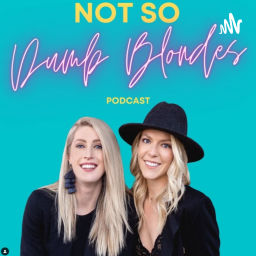
About Not So Dumb Blondes Podcast
Not So Dumb Blonde is a women’s mental health podcast hosted by Kaytlyn, an MSW student and mental health advocate passionate about trauma healing, emotional regulation, DBT, relationships, attachment styles, and women’s empowerment. This podcast explores the real psychology behind anxiety, BPD, people pleasing, trauma responses, emotional dysregulation, self-worth, boundaries, family systems, and modern relationships — in a relatable, honest, and easy-to-understand way. Episodes include conversations with therapists, mental health professionals, trauma survivors, authors, and experts, along
- Publisher
- Kaytlyn Gilner
- Category
- health & fitness
- Language
- en
- Explicit
- No
- First episode
- 26 May 2022
- Latest episode
- 15 Oct 2026
Latest episodes
100 episodes in the feed.
15 Oct 2026
How to Love Someone with Borderline Personality Disorder (BPD)
How to Love Someone with Borderline Personality Disorder (BPD) Can you have a healthy relationship with someone who has borderline personality disorder (BPD)? Absolutely. But understanding emotional sensitivity, validation, and effective communication can make all the difference. In this episode of Not So Dumb Blonde, host Kaytlyn Gilner explores how to love someone with borderline personality disorder, why BPD can affect romantic relationships, and how emotional validation can help build healthier communication, trust, and emotional safety. Drawing from Dr. Marsha Linehan's biosocial theory of borderline personality disorder and Dialectical Behavior Therapy (DBT), Kaytlyn explains how emotional sensitivity and invalidating environments can contribute to emotional dysregulation, fear of abandonment, and relationship challenges. Inspired by the book I Hate You—Don't Leave Me, this episode explores the SET-UP communication framework, which emphasizes Support, Empathy, Truth, Understanding, and Perseverance when navigating difficult conversations. You'll discover how to validate someone's feelings without agreeing with harmful behaviors, communicate effectively during emotionally intense situations, and establish healthy boundaries while maintaining empathy and compassion. Kaytlyn also shares her personal experience with mental health burnout, the importance of self-care, and why even mental health professionals sometimes struggle to prioritize their emotional well-being. 💡 WHAT YOU'LL LEARN • Can someone with BPD have a healthy romantic relationship? • How borderline personality disorder affects emotional intimacy and communication • Why people with BPD may experience heightened emotional sensitivity • Marsha Linehan's biosocial theory of BPD explained • Why emotional validation matters in BPD relationships • How to communicate with someone with BPD using the SET-UP method • The difference between emotional validation and agreement • How to support someone experiencing emotional dysregulation • Setting healthy boundaries when dating or loving someone with BPD • How DBT skills can improve emotional regulation and relationship communication ⏱️ EPISODE CHAPTERS 00:00 Can You Have a Healthy Relationship with Someone with BPD? 02:15 Mental Health Burnout: Why Self-Care Matters 04:30 Why Relationships with BPD Can Feel Emotionally Intense 06:05 What Is Emotional Validation in BPD Relationships? 08:00 Marsha Linehan's Biosocial Theory of BPD Explained 10:00 Validation vs. Agreement: Understanding the Difference 11:51 How to Communicate with Someone with BPD: The SET-UP Method 14:30 Support, Empathy & Truth: Responding to Emotional Dysregulation 17:56 Loving Someone with BPD: Healthy Boundaries & Emotional Safety 19:30 Building Healthy Relationships with BPD: Compassion & Accountability Is it anxiety or a real relationship red flag? Download my FREE Anxiety or Red Flag? guide to better understand relationship anxiety, recognize unhealthy relationship patterns, and strengthen your ability to trust yourself. 👉www.therapykay.com/freebie 💙 CONNECT WITH KAYTLYN Instagram: @itstherapykay Podcast Instagram: @notsodumbblonde_pod Subscribe to Not So Dumb Blonde for weekly conversations about borderline personality disorder, trauma, attachment styles, dating, emotional regulation, Dialectical Behavior Therapy (DBT), and women's mental health. If this episode helped you better understand BPD or emotional validation in relationships, share it with someone who might benefit and leave a comment about your biggest takeaway. DISCLAIMER: This podcast is for educational purposes only and is not a substitute for professional mental health treatment, diagnosis, or individualized therapeutic advice. #BorderlinePersonalityDisorder #BPDRelationships #DialecticalBehaviorTherapy #MentalHealth #RelationshipAdvice
1 Oct 2026
Why Women of Color Don’t Always Feel Safe in Therapy
What does intersectionality mean, and how do race, gender, identity, socioeconomic status, and privilege shape women’s mental health? In this episode of the Not So Dumb Blonde Podcast, Kaytlyn Gilner sits down with bestselling author, speaker, and podcast host Laura Cathcart Robbins for an honest conversation about intersectionality, women’s mental health, racial identity, belonging, addiction and recovery, privilege, representation, and access to mental health support. Laura shares her experience of being the only Black woman in predominantly white spaces and discusses how race, gender, socioeconomic status, and other aspects of identity can intersect to influence mental health, belonging, education, healthcare, and the support people receive. Kaytlyn and Laura explore mental health stigma in the Black community, barriers women of color may experience when seeking therapy, and why lived experience and cultural understanding matter in mental healthcare. They also discuss how to create safer spaces for conversations about race, mental health, diversity, and inclusion. The conversation also covers socioeconomic inequality in education, representation in school curriculum, acknowledging privilege, becoming more comfortable with difficult conversations, systemic bias, neutrality, advocacy, and the responsibility to speak up when witnessing discrimination or injustice. Laura shares her perspective on why women of color may feel cautious about seeking mental health treatment and discusses the importance of asking potential therapists and mental health professionals about their backgrounds, perspectives, and beliefs when deciding whether a provider feels like the right fit. This episode looks at mental health beyond the individual—exploring how identity, culture, community, socioeconomic circumstances, representation, access to care, and larger social systems can shape our experiences and our sense of belonging. ✨ IN THIS EPISODE: • What intersectionality means and why it matters in mental health • Race, gender, identity, and women’s mental health • Laura Cathcart Robbins’ experience as the only Black woman in the room • Mental health stigma and the Black community • Barriers to mental healthcare for women of color • Addiction, recovery, identity, and belonging • Finding a therapist who understands your identity and experiences • Why representation in education and curriculum matters • Socioeconomic inequality and access to resources • Privilege and difficult conversations about race • Diversity, inclusion, systemic bias, and advocacy • Creating safer spaces for conversations about mental health ⏱️ CHAPTERS: 00:00 Laura Cathcart Robbins on Women’s Mental Health & Identity 01:26 Laura Cathcart Robbins: Author, Addiction & Recovery Journey 04:49 What Is Intersectionality? Race, Gender & Identity Explained 10:58 Being the Only Black Woman in Predominantly White Spaces 15:09 Intersectionality, Race & Women’s Mental Health 18:53 Mental Health Support & Barriers for Women of Color 23:43 Race & Mental Health: Creating Safe Spaces for Conversation 27:34 Socioeconomic Inequality, Education & Mental Health 30:10 Why Representation in Education & Curriculum Matters 33:51 Race, Diversity & Having Uncomfortable Conversations 37:11 Understanding Privilege, Identity & Connection 40:09 Neutrality, Systemic Bias & Speaking Up Against Injustice 44:56 Black Women, Mental Health & Finding the Right Therapist 🎙️ ABOUT LAURA CATHCART ROBBINS Laura Cathcart Robbins is a bestselling author, speaker, and podcast host whose work explores addiction, recovery, race, identity, belonging, and her experiences navigating spaces where she has often been the only Black woman in the room. #Intersectionality #WomensMentalHealth #BlackMentalHealth #WomenOfColor #MentalHealth
17 Sept 2026
Love is Blind's Madison Maidenberg on Therapy, Boundaries, and Relationships
Love Is Blind Season 9’s Madison Maidenberg joins the Not So Dumb Blonde Podcast for an honest conversation about mental health, therapy, dating, relationships, body image, and living with retinitis pigmentosa. Madison opens up about her experience on Love Is Blind Season 9 and what happened emotionally after suddenly having thousands of people commenting on her appearance, relationships, and life. She shares how public criticism affected her body image and contributed to disordered eating, as well as what she has learned about protecting her mental health and setting boundaries on social media. Madison also talks about her journey in therapy and the self-discovery that came with identifying her core values. She explains how understanding her values and boundaries has changed the way she approaches dating, vulnerability, self-love, and her current relationship. Later in the episode, Madison shares her experience living with retinitis pigmentosa (RP), a rare inherited retinal condition that causes progressive vision loss. She discusses representation, advocacy, finding community, and what she wishes more people understood about living with vision loss. In this episode: • Madison Maidenberg’s experience on Love Is Blind Season 9 • Dating and relationships after Love Is Blind • Mental health and therapy after reality TV • Body image, public criticism, and disordered eating • Setting boundaries on social media • Discovering your core values through therapy • Emotional regulation and self-awareness • How personal growth can change your relationships • Living with retinitis pigmentosa and progressive vision loss • Disability representation and advocacy • Vulnerability, self-love, and finding community CHAPTERS 00:00 Madison Maidenberg Interview | Love Is Blind Season 9 02:54 Madison Maidenberg’s Life Before Love Is Blind 04:13 Dating After Love Is Blind & Madison’s Current Relationship 07:06 Mental Health, Therapy & Madison’s Healing Journey 11:08 Body Image, Disordered Eating & Reality TV Comments 16:29 Social Media Boundaries, Mental Health & Self-Discovery 17:39 How Therapy Helped Madison Discover Her Core Values 19:45 Life After Love Is Blind: Personal Growth & Self-Reflection 22:40 How Therapy & Personal Growth Changed Her Relationships 27:59 Living With Retinitis Pigmentosa: Vision Loss & Advocacy 30:25 Retinitis Pigmentosa, Representation & Finding Community If you’ve ever struggled with other people’s perceptions of you, setting boundaries, dating while working on yourself, or learning to trust who you are, this conversation is for you. Follow the Not So Dumb Blonde Podcast for conversations about mental health, relationships, trauma, therapy, dating, and personal growth.
Reach and audience
Public platform figures. Ratings count people who left a rating, not total listeners.
- Apple Podcasts (US)
- 5.0 / 5
- 5 ratings
- Spotify
- 5.0 / 5
- 14 ratings
Host of Not So Dumb Blondes Podcast?
Claim your podcast to manage its listing and keep your show details accurate.
Pod Engine is an independent podcast discovery and analytics service and is not affiliated with or endorsed by this podcast. Artwork and show content belong to their owners. Full legal notice.
Explore this show
Podcast research with Pod Engine