
Certified thought daughters Miranda Park and Scarlette Do bring their training in feminist advocacy and humanities research to unpack everyday Asian Australian experiences.
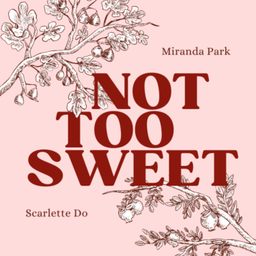
Not Too Sweet
Claim This Podcastby Not Too Sweet
19 episodes
Updated Daily
Accepts GuestsHas SponsorsLocation 🇦🇺
Podcast Overview
Certified thought daughters Miranda Park and Scarlette Do bring their training in feminist advocacy and humanities research to unpack everyday Asian Australian experiences.
Language
🇺🇲
Publishing Since
1/31/2025
1 verified contact email on file for Not Too Sweet
Pitch yourself as a guest, propose sponsorships, or reach out directly to the host.
Recent Episodes
March 5, 2026
Coda: Bridgerton reactions and the politics of beauty
<p>We conclude this jam-packed season of Not Too Sweet by reviewing the latest season of Bridgerton ft. Korean-Australian queen Yerin Ha!!! We love seeing fellow Asian women on screen, especially in the notoriously white period romance genre. But does Bridgerton’s depiction of a race-less society and the show’s choice of colourblind casting signal a promising future for racial diversity and inclusion on screen? Or does it unfairly gloss over the socioeconomic and political issues that defined the Regency era and ignore the implicit biases we bring as viewers who live in a racialised world? And how does this all feed into the broader politics of beauty that we’ve been unpacking across NTS season 2? Tune in to hear our hot takes on the Bridgerton universe, our fave moments from this season and more!</p><p><br /></p><p>Support the podcast by following, rating, and reviewing us on Spotify, Apple Podcasts, and Amazon Music. Sources consulted in the production of this episode:</p><ul><li><p>Stephanie L. Hanus, ‘Interracial romances and colourblindness in Shondaland’s Bridgerton’ (2024)</p></li><li><p>Emma Lynn, ‘Quasi-color consciousness: Casting, race, and sexual violence in Netflix's Bridgerton’ (2024)</p></li><li><p>Piia K. Posti, ‘I Get to Exist as a Black Person in the World: Bridgerton as Speculative Romance and Alternate History on Screen’ (2024)</p></li><li><p>William Joseph Sipe, ‘Post-racial politics and the mandate to desire: interracial love as liberation in Bridgerton’ (2023)</p></li><li><p>Patrick Michael Teed, Marcelle-Anne Fletcher & Joshua Falek, ‘The Ruse of Love: Intimacy, Captivity, and Racial Slavery in Netflix's Bridgerton’ (2023)</p></li><li><p>Tre Ventour-Griffiths, ‘The “Whites” Who Loved Me: How Bridgerton Facilitates Digital Lynching’ (2025) </p><p><br /></p></li></ul><p>This podcast was produced by Miranda Park and Scarlette Do on the unceded lands of the Wurundjeri People of the Kulin Nations.</p><p><br /></p>
February 26, 2026
Bittersweet: beauty and wellbeing with Meg and Alex Lee
<p>To help expand our understanding of beauty and wellbeing beyond aesthetics standards and practices, we are joined by early career researchers Meg and Alex Lee. In this episode, we discuss issues of access, mobility and belonging shaping the experiences of migrant youth in rural communities and Asian Australian young adults. We explore what wellbeing feels and looks like for those living on the margins and how we can find beauty in everyday life. </p><p><br></p><p>Check out Meg’s awesome publications: </p><ul><li><p><a href="https://www.tandfonline.com/doi/full/10.1080/17450101.2025.2549691"><u>Not settlement but movement: Exploring mobility as central to the wellbeing of young people from migrant backgrounds building lives from rural Australia. </u></a></p></li><li><p><a href="https://journals.sagepub.com/doi/10.1177/16094069241296192"><u>Being human and 'hanging out': Mutuality, trust, and 'voice' in youth participatory research. </u></a></p></li><li><p><a href="https://link.springer.com/article/10.1007/s43151-024-00150-1"><u>‘The little things’: The temporality of young people’s strategies for existential, grounded, and expansive wellbeing in rural Australia. </u></a></p></li><li><p>Meg’s research took place on Wadawurrung and Dja Dja Wurrung Country (Ballarat) and Wotjobaluk,<strong> </strong>Jaadwa, Jadawadjali, Wergaia, and Jupagalk Country (the Wimmera region). </p></li></ul><p>Support the podcast by following, rating, and reviewing us on Spotify, Apple Podcasts, and Amazon Music. Sources consulted in the production of this episode:</p><ul><li><p>Sara Ahmed, ‘A phenomenology of whiteness’ (2007)</p></li><li><p>Rose Butler, ‘Migration, class and intra-distinctions of whiteness in the making of inland rural Victoria’ (2022) </p></li><li><p>Kathryn Edgeworth, ‘Black bodies, White rural spaces: Disturbing practices of unbelonging for ‘refugee’ students’ (2015) </p></li><li><p>DV. Stead, L. Taula and M. Silaga, ‘Making place in a place that doesn't recognise you: Racialised labour and intergenerational belonging in an Australian horticultural region’ (2022)</p></li><li><p>R. Wilding and C. Nunn, ‘Non-metropolitan productions of multiculturalism: Refugee settlement in rural Australia’ (2018)</p></li><li><p>D. Bargallie, N. Fernando, & A. Lentin, ‘Breaking the racial silence: Putting racial literacy to work in Australia’ (2004)</p></li><li><p>Ghassan Hage, White Nation (1998)</p></li><li><p>Aileen Moreton-Robinson, The white possessive: Property, power, and indigenous sovereignty (2015)</p></li><li><p>Helen Ngo, The Habits of Racism: A Phenomenology of Racism and Racialized Embodiment (2017) </p></li><li><p>J. Wyn, S. Lantz, & A. Harris, ‘Beyond the ‘transitions’ metaphor: Family relations and young people in late modernity’ (2012)</p><p><br></p></li></ul><p>This podcast was produced by Miranda Park and Scarlette Do on the unceded lands of the Wurundjeri People of the Kulin Nations.</p><p><br></p>
February 12, 2026
The personal is instructional: beauty vloggers with Tisha Dejmanee
<p>‘HIGH MAINTENANCE beauty habits that will make you look LOW MAINTENANCE’. ‘The 6 PROVEN ways the heal your gut health’. ‘POV: A week in the life of a Victoria’s Secret model’. Beauty vlogs play an important role in how young women see themselves and practice their femininity. This episode, with the help of Dr Tisha Dejmanee from the University of Technology Sydney, we unpack vlogs’ role in the neoliberal postfeminist and postrace era. Amongst the deep dive:</p><p>🌮 How Tisha’s PhD journey in the United States inspired her research on food blogs</p><p>🥐 Fleshing out postrace and postfeminist thinking</p><p>🍕 Digital media and how influencers balance being relatable and aspirational</p><p>🍝 Vloggers’ display of credibility and why this expertise is so appealing in the age of neoliberalism</p><p>🧋 Beauty vlogosphere and Asian Australian racial politics</p><p>🍮 Tisha’s advice on mindfully consuming beauty vlogs</p><p>🥞 Trad wives in the era of food and time precarity</p><p>🍫 Taking long walks in nature, a certain problematic podcast that might or might not have a name synonymous to Journal of an Executive, and traditional Chinese medicine</p><p>Dr Dejmanee is a Senior Lecturer in Digital and Social Media at the University of Technology Sydney and Co-Chair of the Asian Australian Studies Research Network. Check out Tisha’s awesome publications. </p><ul><li><p>‘<a href="https://dx.doi.org/10.4324/9781003396727-32"><u>Everyday multiculturalism on Asian Australian food blogs</u></a>’</p></li><li><p>‘<a href="https://dx.doi.org/10.1080/14680777.2024.2392109"><u>Fantasies of food work and digital entrepreneurialism: postfeminist time panic on food blogs</u></a>’</p></li><li><p>‘<a href="https://dx.doi.org/10.1093/ccc/tcae009"><u>"An Australian beauty-lover based in Singapore": negotiating Asian Australian identity in the beauty vlogosphere</u></a>’</p></li><li><p><a href="https://dx.doi.org/10.4324/9781003302278">Postfeminism, postrace and digital politics in Asian American food blogs</a></p></li><li><p>Her email address if you are a young Asian Australian wanting to discuss your relationship to social media: <a href="mailto:Tisha.Dejmanee@uts.edu.au"><u>Tisha.Dejmanee@uts.edu.au</u></a> </p></li><li><p><a href="https://aasrn.wordpress.com/"><u>The Asian Australian Research Network</u></a> and <a href="https://aasrn.wordpress.com/2026/01/23/2026-aasrn-conference-sticking-points/"><u>conference call for paper</u></a></p></li></ul><p>Support the podcast by following, rating, and reviewing us on Spotify, Apple Podcasts, and Amazon Music. Sources consulted in the production of this episode:</p><ul><li><p>Margaret Henderson and Anthea Taylor, Postfeminism in Context: Women, Australian popular culture, and the unsettling of postfeminism (2019)</p></li><li><p>Kim Dasol, ‘Racialized Beauty, Visibility, and Empowerment: Asian American Women Influencers on YouTube’ (2023)</p></li><li><p>James Palmer, ‘Traditional Chinese medicine needs its own revolution,’ (2013) <a href="https://aeon.co/essays/traditional-chinese-medicine-needs-its-own-revolution"><u>https://aeon.co/essays/traditional-chinese-medicine-needs-its-own-revolution</u></a> </p></li></ul><p>This podcast was produced by Scarlette Do and Miranda Park on the unceded lands of the Wurundjeri People of the Kulin Nations.<br></p>
19 total episodes available
Deep-dive analytics for Not Too Sweet
Frequently asked questions
Have a different question and can't find the answer you're looking for? Reach out to our support team by sending us an email and we'll get back to you as soon as we can.
- What is Not Too Sweet?
- How often does this podcast release new episodes?
This podcast updates daily.
- Where can I listen to this podcast?
This podcast is available on 4 platforms including Apple Podcasts, Spotify, and more. You can also use the RSS feed directly.
- Does this podcast accept guests?
Yes, this podcast regularly features guests.
Legal Disclaimer
Pod Engine is not affiliated with, endorsed by, or officially connected with any of the podcasts displayed on this platform. We operate independently as a podcast discovery and analytics service.
All podcast artwork, thumbnails, and content displayed on this page are the property of their respective owners and are protected by applicable copyright laws. This includes, but is not limited to, podcast cover art, episode artwork, show descriptions, episode titles, transcripts, audio snippets, and any other content originating from the podcast creators or their licensors.
We display this content under fair use principles and/or implied license for the purpose of podcast discovery, information, and commentary. We make no claim of ownership over any podcast content, artwork, or related materials shown on this platform. All trademarks, service marks, and trade names are the property of their respective owners.
While we strive to ensure all content usage is properly authorized, if you are a rights holder and believe your content is being used inappropriately or without proper authorization, please contact us immediately at hey@podengine.ai for prompt review and appropriate action, which may include content removal or proper attribution.
By accessing and using this platform, you acknowledge and agree to respect all applicable copyright laws and intellectual property rights of content owners. Any unauthorized reproduction, distribution, or commercial use of the content displayed on this platform is strictly prohibited.