My name is Natalie and today I am here to tell you the story about the search for my identity. When people who are close or not so close to me, find out that I am adopted and that a documentary has been filmed since I actively began to search for my roots, what always follows is a series of questions. I have been answering these questions for years. Now that we finished filming the documentary I decided to make this podcast answering each one of them. Each episode is an answer to a question.
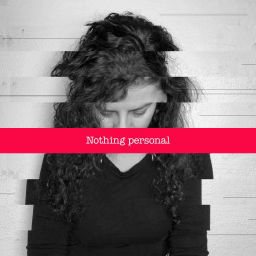
Nothing personal
Claim This Podcastby Natalie K
21 episodes
Updated Bi-weekly
Accepts GuestsHas Sponsors
21
Podcast Authority
BetaPoorBased on show quality, social media presence, reviews, charts, and more

Quality42
Social0
YouTube0
Engagement0
Podcast Overview
My name is Natalie and today I am here to tell you the story about the search for my identity. When people who are close or not so close to me, find out that I am adopted and that a documentary has been filmed since I actively began to search for my roots, what always follows is a series of questions. I have been answering these questions for years. Now that we finished filming the documentary I decided to make this podcast answering each one of them. Each episode is an answer to a question.
Language
🇺🇲
Publishing Since
5/13/2023
Unlock The Full Podcast Authority Score Report
See how your podcast performs across key metrics
21
Podcast Authority
BetaPoorBased on show quality, social media presence, reviews, charts, and more
Quality42
Social0
YouTube0
Engagement0
5
Excellent Areas
4
Good Performance
10
Growth Opportunities
excellent
Episode Length
7 minutes
Performing excellently!
good
Show Notes Quality
3.0/5
Recommendations available
Unlock the full report to see detailed tips
poor
Publishing Consistency
Every 40 days
Recommendations available
Unlock the full report to see detailed tips
+16 More Metrics
Unlock comprehensive insights including:
- • YouTube presence analysis
- • Social media reach metrics
- • RSS compliance scoring
- • Podcast 2.0 features
- • Technical standards
What's Included in Your Full Report
Detailed Analytics
- Complete breakdown of all 19 authority metrics
- Personalized recommendations for each metric
- Industry benchmarks and comparisons
- Technical RSS feed analysis and compliance scoring
Growth Strategies
- Step-by-step action plans for improvement
- Quick wins to boost your score immediately
- Pro tips from successful podcasters
Get your free podcast insights report
See how your show performs across every key metric
Instant delivery
No spam
Attract Better Guests
High authority scores make your podcast more attractive to industry leaders and influencers who want to appear on credible shows.
Secure Sponsorships
Sponsors look for podcasts with proven authority and engagement. Your score demonstrates your podcast's value to potential partners.
Grow Your Audience
Understanding your strengths and weaknesses helps you make data-driven decisions to expand your listener base effectively.
1 verified contact email on file for Nothing personal
Pitch yourself as a guest, propose sponsorships, or reach out directly to the host.
Recent Episodes
November 22, 2025
Chapter 21-How was it to knock on those doors?
<p>In May 2018, thanks to Paola Klechman and Lorena Quiroga — who, like me, had their identities substituted and sold by Doctor Bartucca — I arrived at the doors of the Human Rights Office inside the Civil Registry of Buenos Aires. As I mentioned before, by that time Lorena and Paola had been searching for years, so it was thanks to their earlier efforts that I eventually met Mercedes Yañez.</p><p>The Human Rights Office, at least back then, was quite small. At one desk sat Mercedes; at another, Cecilia, who would later take her place after Mercedes retired.</p><p>That office was dedicated to the restoration of biological identity. In other words, a person could go there with their birth certificate, and from that — along with the story they had been told about their adoption — an investigation would begin to identify possible biological mothers, who would then need to be visited in person. Based on the doctor’s name and the address appearing on the certificate, they could usually deduce in which hospital one might have been born (if the certificate didn’t already specify it). From there, the search continued in the Civil Registry archives, examining birth records around the listed date — which was often false.</p><p>Among those records, the ones that drew attention were those belonging to young, single mothers, or to babies recorded as having died shortly after birth under suspicious circumstances. They also took note of the birth records of babies who later disappeared completely from the system — children who simply vanished from all official traces. It was like finding a needle in a haystack. But Mercedes, and later Cecilia, using their knowledge and intuition, searched through data that to the rest of us would be indecipherable, trying to locate mothers who, many years ago, had given birth in a municipal hospital in Buenos Aires.</p><p>In May 2018, Mercedes handed me a list of fifteen women I needed to visit, along with very specific instructions on how to approach each one — the result of years of experience knocking on the doors of possible biological mothers. She emphasized how crucial it was to follow the procedure to the letter, since the success of any encounter would depend on it.</p><p>The process went as follows: once you had the mother’s address, you had to go there in person, and alone. If someone other than the mother opened the door, you had to invent a pretext to ask to speak with her. It was essential not to tell anyone except the mother why you were there. You might say something like, “I have a personal message from my late mother, who was a schoolmate of Mrs. [so-and-so].”</p><p>You had to remember that the mother might never have told anyone about the existence of the child she had over forty years earlier. The daughter might be the result of a rape she never spoke about, or of an affair she still feels ashamed of. Most likely, the mother had rebuilt her life, and that baby belonged to a very distant past. One had to proceed with great sensitivity — hence the small, protective lie.</p><p>Once the mother appeared, you first looked for any physical resemblance. Then you would explain that you were searching for your biological identity, and that this was how you had come to her door. You could also describe how you’d reached her name (through Mercedes, Cecilia, the Human Rights Office, the Civil Registry, etc.), and reassure her that her information was strictly confidential. With luck, one might agree to a DNA test — though most would not.</p><p>And finally, one last rule: never call by phone. When people tried that, the mothers would deny everything and never answer again, losing any chance, even, to see whether there was a resemblance.</p><p>Fifteen women. Fifteen addresses. Fifteen doors. Fifteen stories. Fifteen encounters.</p><p>During that trip in 2018, we never managed to begin such a journey. With Simon and my partner at the time, we decided to return to Sweden, regroup, and plan to come back in September. But when September came, my partner and I had already begun our separation. Then February arrived, and I didn’t have a cent. By May 2019, I still hadn’t managed to get back on my feet. Later that year, Simon and I decided to launch a crowdfunding campaign to raise the money to return as soon as possible. We aimed for May 2020. By February, thanks to our friends’ generosity, we had gathered enough to pay for tickets and accommodation — we were ready.</p><p>Then, in March 2020, the world shut down — and remained closed until March 2022. We tried several times to make the trip, but the Covid restrictions in Argentina were so strict that we couldn’t risk a fifteen-day quarantine when we only had funds to stay for three weeks. So we waited — until finally, in June 2022, we were able to travel.</p><p>By then Mercedes had retired, so we reconnected with Cecilia. She reviewed our file and concluded that, of the fifteen cases, only five were truly plausible. Of those five, we managed to contact four, and I was able to visit three.</p><p>Whenever I tell this part of the story, the next question is always: “What was it like?”<br> I fall silent, searching for words. “What was it like?” I echo, and I see everything unfold before me — as if it were a film, as if it hadn’t happened to me. Until my body begins to feel the pain I don’t really want to remember. But it’s all still there, waiting to emerge.</p><p>Life, in all its richness — its light and shadow, love and rage, helplessness and longing, hope and emptiness; the irretrievable years and the timeless flow of the universe moving intuitively behind every gesture of reality — and, at the same time, the Argentine reality: fierce, relentless. An unbreakable will, an unyielding resilience, and yet a deep wish for everything to simply end. A silent scream caught in my throat, a heart refusing to harden, humility before fate and protest against what lay before me. A deep yearning for someone to hold me and offer comfort, and at the same time the understanding that this path was mine alone to walk. The doors — only I could knock on them. Everything was to be found within me. All of it, at once. In this soul, in this body.</p><p>I thought, at some point, that I would break — but I didn’t.<br> Inside me, it seems, there was far more strength than I ever imagined I could have.</p><p><br> </p>
July 22, 2025
Chapter 20-Why can't you feel all the love around you?
<p>“What happened was a long time ago, Natalie. You’re the one who won’t let go of the past.”</p><p>How I wish I could. Just let the past go. Be free, live in the here and now. My whole life—what now amounts to thirty years of therapy, thirty years of meditating, and seventeen in the twelve-step program—has been about trying to accept and let go. I can’t control the world, but I can take responsibility for my actions, for seeking help. The message has always been the same: Accept, feel, let go, and be grateful. Accept, feel, let go, be grateful. Become aware, act accordingly, give myself love, value myself, ignore the voices in my head that keep repeating the message of worthlessness. That message that breathes through every pore of my being. Before I even realize it, it’s there, whispering in my ear, offering explanations for why people around me behave the way they do. Always confirming the underlying belief. Blinding me to the complex, nuanced reality.</p><p>Of course I know all this, so even feeling pain or anger makes me ashamed.<br> How do I know if what I feel and perceive is real, or if it’s trauma?<br> Where is my truth?<br> What is real?<br> And again: Why can’t I let go of this identity?</p><p>Very recently, thankfully, I was finally able to attend a group therapy session for adoptees, organized by the same institution that provides free therapy to all adopted people, in Swedish:<a target="_blank" rel="noopener noreferrer nofollow" classname="text-underline" href="https://adopterad.com"> </a><a target="_blank" rel="noopener noreferrer nofollow" classname="text-underline" href="http://adopterad.com"><strong>adopterad.com</strong></a>.</p><p>For many years, I had been trying to find other adoptees and talk about the issues that affect only us. In fact, back in 2017, during one of my lowest points in depression, I decided to seek psychiatric help—even though I was already seeing a psychologist. I felt like I couldn’t go on anymore, so I had an interview with a psychiatrist who was supposed to refer me to another psychiatrist, where I assume I would get medication.</p><p>This psychiatrist interviewed me for an hour. He asked me all kinds of questions, including what kind of help I was looking for. I told him directly: I would love to go to group therapy with other adoptees. He looked at me, puzzled:<br> “Why?” he asked.<br> “Well,” I said, “I have a lot of experience with twelve-step groups, and I know how helpful it is to hear other people’s stories.”<br> “But why?” he asked again, “that will only make you identify even more as a victim. In fact, people with trauma like you become very egocentric because of the pain trauma causes.”<br> “Yes, I know that,” I replied. “That’s why I already go to twelve-step meetings for adult children of dysfunctional families, precisely to break out of that egocentrism and listen to others’ experiences.”</p><p>The psychiatrist looked frustrated, irritated. I was calm, not backing down.<br> “And what do you think is going to change by finding your biological identity? Nothing will change!” he insisted.<br> Then I, again very patiently, said: “I understand that for someone who isn’t adopted, it’s hard to understand.”<br> To which he replied: “I am adopted, and I have no need to find my biological identity.”</p><p>I looked at him, paused for a moment, and said:<br> “Well, if you don’t feel that need, I understand why you can’t empathize with mine.”<br> That answer, of course, irritated him even more. He tried to convince me that all I needed was therapy to repair my attachment pattern and said that the psychologist I was seeing wasn’t doing a good job.</p><p>I’d like to add a small detail here: that psychologist was <strong>Martha Cullberg</strong>, one of the most prominent psychologists in Sweden, who has written multiple books. It became painfully clear how ignorant society is about this topic—and this person in particular. Not even this psychiatrist, who was adopted himself, could understand the level of trauma he was dealing with.</p><p>Of course, not everyone needs to know their biological origin—but let’s just say it’s not that hard to understand that someone who doesn’t know might want to know.</p><p>So, in the spring of this year, 2025, when I was finally able to join a group and meet other adoptees, I thanked the heavens and every saint from every religion and belief system, because at last, I could begin to understand myself a little more—through the stories of others. And just as I had imagined, reflected in each person’s story, I could see an immeasurable pain. And not only that—I could hear the same questions I carry within me:<br> <strong>Why does this hurt so much? What has been happening to me? How can I change it?<br> </strong> No one reacts like I do, no one feels the way I feel...</p><p>I cried through the entire first session. And not from pain—but from gratitude.<br> We were a group of strangers, adoptees from different countries, of different ages—but so alike.</p><p><strong>Accept, feel, let go, be grateful.</strong></p><p>In this search to accept myself, to understand what’s happening to me, to forgive myself—in 2018, the last time I went to the Grandmothers of Plaza de Mayo with Simón—I asked for an interview with someone who could explain more to me about Argentina’s adoption laws. Because let’s not forget: we are never detached from the history that precedes us.</p><p>This person explained the history of adoption law in Argentina. The law was officially enacted in <strong>1948</strong>, granting adoptive children the same rights as biological heirs. So then, before legal adoption existed—what was there?</p><p>From what I understood, there were “child circulation practices”, referring to those transactions in which the responsibility for a child was transferred from one adult to another. In Argentina, such practices have a long tradition, and various sources indicate that despite the lack of legal regulation, throughout the 19th century and much of the 20th, adoptions were carried out either by charitable organizations or informally between private individuals. These children weren’t “real” children—not biological ones—but at least they were given the right to inherit just like biological heirs.</p><p>But what does that really mean?<br> What is the <strong>stigma</strong> carried by being adopted? Or more precisely—<strong>what did I feel</strong>, when the people around me found out that I was adopted?<br> What did my little girl mind perceive?</p><p>The first word that comes to mind is: <strong>illegitimacy</strong>.<br> Not truly being.<br> Not truly belonging.<br> Not truly deserving.</p><p><strong>In June 2002, I moved to Sweden.<br> </strong> Far from Argentina—and although it could have been even farther or more different from Argentina—it truly felt like arriving on another planet. Not long after arriving, I realized the hardest part was finding myself. In Argentina, I had my role, my identity, my place. I was playing a character that expressed itself in a society which, in turn, reflected back what it saw in me. I saw myself in a certain way, and society reflected back the image I projected to the world around me.</p><p>Now, in this new world, the reflection I received of myself was completely different. I became another character—one I didn’t identify with. I couldn’t find myself. I didn’t recognize myself. And I didn’t understand what this new society was telling me about who I was.</p><p>Now, twenty-three years later, I’ve developed a character and an identity rooted in the reality that surrounds me. Basically, I’ve become Swedish. I’m still a fish out of water—but for different reasons than I was in Argentina. I’m a fish out of water because, quite literally, I come from a different stream.</p><p>What I mean with all of this is that we, as people, are never separate from the reality around us, nor are we immune to the message society reflects back to us about who we are. I always say it:<br> We are fish in the current, birds in the wind, trying to find our path, our story, which lives within a historical context shaped by invisible forces beyond our conscious efforts to break free from them.</p><p>As I mentioned before, adoptees—or people with substituted identities—are surrounded by messages about why we didn’t grow up with our biological parents, from the very day we are born. Daily messages, from early on, like mantras repeated consciously or unconsciously everywhere we look. Mantras we hear and repeat to ourselves endlessly—about illegitimacy, unworthiness, and more. Silent mantras, etched into the retinas of our eyes, filtering everything through that lens and echoing the same message into eternity. Without even realizing it.</p><p><strong>“Do you think you would have been different if you’d grown up with your biological family?”</strong> people have asked me many times.<br> <strong>“I don’t know. I’ve never not been adopted. This is all I know.”</strong></p><p>The number one cliché I always heard—and denied for most of my life—was that my low self-esteem came from the fact that my biological mother abandoned me. That meant I identified as abandonable. According to this cliché, I felt like I didn’t have the same value as a baby who grew up with their biological family. Defective from the start.</p><p><strong>“That can’t be,”</strong> I’d think. <strong>“It can’t be that simple.”<br> </strong> Because if it were, why didn’t I instead identify as a deeply wanted baby? A baby so desired that my adoptive parents even broke the law to get me?<br> The mantra of “abandonment” was much louder than the mantra of “deeply wanted child.”<br> I internalized rejection and abandonment far more than the love and longing of my adoptive parents to have a daughter.</p><p><strong>How unfair.<br> </strong>How different things could’ve been if I had internalized the love instead!<br> <strong>What strength I would have now!</strong></p><p>But I’m just a fish swimming in the current of a given fate.</p><p>The voices I internalized were those of my adoptive family, when they spoke about my genes; my schoolmates, who reminded me of the color of my skin; the teachers who treated me differently for not being blonde and white; my little first-grade boyfriend, also adopted, who told me we belonged together because we had the same skin tone. The voice of my mom’s friend who, referring to someone else planning to adopt, said: “How horrible! Who knows where those genes come from?”<br> Other voices—of people who, upon hearing that I was adopted—would practically say “Poor thing...”<br> The stares of the girls at the German sports camp who didn’t want to play with me because I looked different from them.</p><p>The reflection society gave back—saying I was damaged from the start—spoke loud and clear, again and again.</p><p>And me? Running, endlessly trying to disprove that message.<br> Desperately trying to get away from the internal radio broadcasting it all.</p><p>But I know that deep inside me, when I manage to be still and quiet my mind, there are other voices.<br> Voices independent of external reality—voices that patiently and lovingly rebuild me into a more real, fair, and kind identity. Voices that come from a force beyond myself. Voices that want good for me.</p><p>Sometimes I can’t sleep, thinking of what a waste all these years have been—how I haven’t been able to free myself from that internal prison.<br> If I had just fought harder, tried a bit more, pushed myself further…<br> And then I remind myself:</p><p><strong>“Naty, you’re just a fish in the current.<br> You’ve always done what you could.<br> You’re exactly where you’re meant to be.<br> And you are exactly who you’re meant to be.”</strong></p><p>Everything is perfect as it is.</p><p><strong>Accept, feel, let go, be grateful.</strong></p><p>And sometimes, I can even fall back asleep.</p>
March 2, 2025
Chapter 19-Did you ever reach out to the adoption contacts?
<p>Reaching out directly to the source of information about my illegal adoption would have probably been the most logical and sensible thing to do in this entire search. After all, I knew who they were—or at least who the person was that informed my mother of my existence. In fact, one of my best friends in Sweden, an Argentine son of exiles from the military dictatorship, gave me the idea, but I never dared to do it until May 2018. I’ll explain why.</p><p>My mom and my dad, as I’ve mentioned before, were opposed to my search. The fact that I would go and ask their friend if she knew anything more about my adoption filled them with terror and shame. “Don’t you dare bother her!” they told me. And to be honest, I felt the same way. As ridiculous as it sounds, even though I had the right to my own history, the idea of knocking on someone’s door and asking what they knew about my past terrified me. Especially because everyone—absolutely everyone—since 2003 had assumed that I was the child of desaparecidos, of a disappeared person. That meant that my search would imply that this person was somehow involved in a crime against humanity. And I know—a crime is a crime, and the guilty are guilty, period—but for me, it wasn’t that simple.</p><p>Maybe it was my constant Stockholm syndrome, my codependency, my denial, my fear of rejection, my fear of people being angry with me, my fear of conflict, my shame, my low self-esteem, or a combination of all of that, but I couldn’t find the strength within me to take that step. Until the DNA result from The Grandmothers of Plaza de Mayo came back negative, and that path was closed.</p><p>If I was the daughter of desaparecidos, we would never find out.</p><p>After Simón and my partner at the time convinced me to continue despite the negative result, the search had to take a new path. On one hand, it meant approaching the Human Rights Office and Mercedes Yañez, and on the other, going directly to the source—to the witnesses who truly knew what had happened in August 1977 when my family went to pick me up from Dr. Bartucca’s place.</p><p>It took me a lot—an incredible amount—of courage to first contact the daughter of the woman I will call Marta for anonymity. Marta’s daughter had been my brother’s schoolmate, and every time I had met her, she had been so kind to me. I wrote to her, asking if she thought it would be okay for me to contact her mother and ask her about my adoption. She said yes and gave me her mother’s contact information.</p><p>So, in May 2018, during one of our trips to continue my search, I gathered all the courage I had and went to visit Marta and her husband in their apartment in Palermo, Buenos Aires. I was terrified, not knowing what to expect.</p><p>After so much time, so much anticipation, after having lived with a narrative of how everything had happened at the beginning of my life—what truth would emerge?</p><p>They received me, of course, with all the warmth and kindness in the world. They hadn’t seen me in so long! After all, the couple had always kept me in their thoughts. Our destinies had crossed in the strangest way, creating an undeniable bond.</p><p>First, we talked about my life in Sweden—how I handled the cold and the darkness, whether I actually could make a living making music, if I was married and had children… the usual things. I truly felt like they had been waiting for me.</p><p>After a while, as we drank coffee and ate sándwiches de miga—those sandwiches I love so much and miss dearly since moving to Stockholm—Marta told her husband that she and I would go to the living room to talk. He wasn’t included in the conversation.</p><p>“Interesting,” I thought, because for all those years, I had been sure that the husband—the man I had seen in uniform at their daughter’s wedding, the event that triggered this entire search—was the main figure in this story. But apparently, that wasn’t the case. At least, he wasn’t the protagonist of the story that Marta had protected in her memory for so many years, waiting for the day I would come knocking at her door.</p><p>She, more than anyone else—far more than my own family—made it clear to me how important truth and memory are. Perhaps that’s why she had preserved it so carefully.</p><p>This is the story she told me the day I visited her:</p><p>In August 1977, Marta’s brother—who was a truck driver at the time—was on his route from Buenos Aires to Ushuaia (a stretch of just over 3,000 kilometers) when he received news that his six-months-pregnant wife had been hospitalized. Marta’s brother, whom I’ll call Ralf for anonymity, took the first flight back to Buenos Aires to be with his wife, who had to undergo an emergency C-section. Unfortunately, the baby didn’t survive.</p><p>It turned out that she had been in severe pain for three days due to a perforated intestine, which the doctors had failed to detect. In that time, the baby had become intoxicated and did not survive. The family, understandably, was devastated.</p><p>At that moment, Marta’s aunt—her mother’s sister-in-law and Ralf’s godmother—contacted him, telling him that there was a baby girl available for adoption. Since he had just lost one, she asked if he wanted to go pick her up.</p><p>Ralf, who had just lost his daughter and whose wife was now in intensive care, fighting for her life with a gangrenous intestine, reacted with horror and refused the offer.</p><p>Marta, meanwhile, wanting to help her brother and sister-in-law, who was in critical condition, went to my parents’ house to ask if someone could donate blood for her. She knew them not only from the kindergarten where her daughter and my brother went but also because her brother Ralf played handball in the same German sports club as my father and my uncle.</p><p>That’s when she told my mother the whole story—including the part about her aunt Anita suggesting they adopt the baby—and Ralf’s reaction.</p><p>That same day or the next, Marta received a call from my mother, who expressed interest in the baby girl up for adoption—me.</p><p>My mother told her that she had been on the adoption waiting list for three years and had still not been assigned a baby girl. She asked for the contact of the doctor who had the baby waiting for adoption. Marta gave her the phone number and thought nothing more of it—until the next day, when she stopped by my parents’ house and, to her great surprise, found me there, wrapped up like a package.</p><p>My mother told her that the night before, she, my father, and my brother had gone to pick me up. Apparently, they had spoken with the doctor in the evening and, around midnight, had driven to his address—a private clinic—to get me. They returned home as quickly as possible, knowing they were doing something illegal and aware that they had violated the military curfew. My mother recalled being terrified that someone would follow them and take the baby away.</p><p>The next day, she took me to the pediatrician and had to go out and buy baby clothes. Everything had happened so fast that they weren’t prepared for my arrival.</p><p>Marta didn’t know anything beyond that.</p><p>She had waited 41 years to tell me everything she remembered.</p><p>She even asked me several times if my parents had ever told me how it all happened, and when I told her that neither of them wanted to share anything, she was horrified.</p><p>“And how are you supposed to heal if you don’t know your truth?” she exclaimed, in pain.</p><p>Marta understood everything. She had preserved a piece of my story and waited for me—consciously or unconsciously—knowing that one day I would ask, and she would fulfill her role: to pass the information to its rightful owner.</p><p>To ensure the truth didn’t disappear.</p><p>To help me heal.</p><p>Something so clear to her, yet denied to me by my family all along.</p><p>A question that comes up from time to time—often with the best intentions—from people who grew up knowing their biological origins is: Why do I need to know? If I already am who I am, why does it matter what happened at the moment of my birth? Why does it matter why my biological family couldn't raise me? What does it have to do with me that my biological mother gave me away to strangers? What matters is the here and now, the love that surrounds me, the life I have built.</p><p>I'll try to explain it, to bring some clarity to the matter.</p><p>Surely, at some point in life, you've been in love. You felt your heart wide open, expanded, fragile, vulnerable, and surrendered. And it was impossible not to love. That person became the center of your universe, just like in love songs. You felt at home with them, safe, seen, as if their presence confirmed your existence.</p><p>But one day, out of nowhere, in the midst of that vulnerability, the person holding your heart in their hands suddenly rejects you. They say or do something that makes it clear that the love isn't reciprocated. They leave. They disappear, without really explaining anything.</p><p>At that moment, it's very likely that your mind, trying to understand what happened—so it doesn't happen again, so you’re not abandoned or rejected again, to avoid the feeling of betrayal, the helplessness and lack of control, maybe even the shame of having believed you were loved—starts to create theories or stories about what happened and why. Something to explain the other person’s behavior, something that could predict it in someone else in the future.</p><p>Now, let’s translate that heartbreak story—something that hurt so much—into something as profound as the reality that those who were supposed to protect and love us more than anyone in the world, instead, gave us away to strangers. And we never know why, or what really happened.</p><p>The mind starts crafting a narrative with the information it has to make sense of it. A narrative that, over time, becomes our identity.<br> "This happened to me because of who I am."<br> "I was abandoned, sold, mistreated because I am worthless. I have no value; that’s why I was abandoned and mistreated."</p><p>Reality stops existing outside of us and becomes only a story we tell ourselves, a story we recreate. A reality that confirms what we believe, that hurts us, that abandons us. And within that reality, in that bubble we live in, we do the best we can, unable to break free from that first message. We protect ourselves from the pain, from a wound that never stops bleeding, and we develop different, intelligent survival mechanisms.</p><p>We leave before we are left.<br> We don’t let anyone get too close, so no one can see the truth we’re running from.<br> We find people who love us—just a little bit—but not enough to give us the security we need to truly relax and trust, because we’ve already learned that to relax is to be vulnerable.</p><p>The fact that we were given up for reasons beyond us has no place in this narrative. The mind tells us:<br> "How is it possible to give up your own child?"<br> "How is it possible to mistreat a child?"<br> "That child must have done something terrible."<br> "She must be the product of something so awful, so unspeakable, that the mother gave her up and never wanted to know anything about her again—so much so that she wanted to forget her entirely."</p><p>But the truth of reality is far deeper and more complex than that. And that’s why it is so necessary.</p><p>Yes, in most cases, mothers couldn’t keep their children, and that’s why they gave them up. But within those unique stories, there is much more—context, the reality they lived in, social injustices, even the political situation of the time.</p><p>What we seek, when we search for the full, complex story of how everything happened, is redemption. It’s understanding why.</p><p>It’s realizing that this was never personal.<br> Even though it happened to us, even though it completely changed the course of our lives, it wasn’t about something we did.</p><p>This was not our fault.<br> We didn’t cause it.<br> We couldn’t control it.<br> And we couldn’t change it.</p><p>As painful as it was, the era we were born into, the reality and the context we entered the world in—none of it was about us.</p><p>We seek understanding, to finally free ourselves from a burden that was never ours to carry.</p><p>And then, yes—cry, scream, or find some way to release that pain. Because what hurt, hurt. That little girl, that little boy—like all children in the world—only wanted to be loved and couldn’t understand what they did to deserve such treatment.</p><p>Once we are free, we can truly begin to heal, to let go, even to forgive—each in our own time.</p><p>So, thank you, Marta, for your bravery, for your humanity, for your patience, and for your care for my soul. Thank you for at least preserving a small piece of my story.</p><p>I always say that the most beautiful heroes are those who don’t even know they are heroes.</p><p>Marta, you are one of them.</p><p><br> </p>
21 total episodes available
Deep-dive analytics for Nothing personal
Frequently asked questions
Have a different question and can't find the answer you're looking for? Reach out to our support team by sending us an email and we'll get back to you as soon as we can.
- What is Nothing personal?
- How often does this podcast release new episodes?
This podcast updates bi-weekly.
- Where can I listen to this podcast?
This podcast is available on 7 platforms including Apple Podcasts, Spotify, and more. You can also use the RSS feed directly.
- Does this podcast accept guests?
Yes, this podcast regularly features guests.
Legal Disclaimer
Pod Engine is not affiliated with, endorsed by, or officially connected with any of the podcasts displayed on this platform. We operate independently as a podcast discovery and analytics service.
All podcast artwork, thumbnails, and content displayed on this page are the property of their respective owners and are protected by applicable copyright laws. This includes, but is not limited to, podcast cover art, episode artwork, show descriptions, episode titles, transcripts, audio snippets, and any other content originating from the podcast creators or their licensors.
We display this content under fair use principles and/or implied license for the purpose of podcast discovery, information, and commentary. We make no claim of ownership over any podcast content, artwork, or related materials shown on this platform. All trademarks, service marks, and trade names are the property of their respective owners.
While we strive to ensure all content usage is properly authorized, if you are a rights holder and believe your content is being used inappropriately or without proper authorization, please contact us immediately at hey@podengine.ai for prompt review and appropriate action, which may include content removal or proper attribution.
By accessing and using this platform, you acknowledge and agree to respect all applicable copyright laws and intellectual property rights of content owners. Any unauthorized reproduction, distribution, or commercial use of the content displayed on this platform is strictly prohibited.