


The idea of progress — that humanity advances through time toward something better — has been a contested assumption throughout history. The question of whether we as a species, a nation, or as individuals are progressing is being interrogated with a renewed urgency that the present moment demands. Whether that advancement is real, illusory, unevenly distributed, or simply beside the point depends on who is asking, from where, and by what measure. Notions of Progress is a podcast that takes those questions seriously, tracing how the idea of progress has been understood, contested, and reimagined from antiquity to the age of artificial intelligence. The series moves from the ancient Greeks’ ambivalence about technological change, through the Enlightenment’s confidence in cumulative human reason, to the contemporary moment in which artificial intelligence has made the question of progress newly urgent. When machines appear to learn, create, and reason, the assumptions buried inside the word “progress” — about agency, direction, and human advancement — are no longer abstract. Tracing how those assumptions formed, and how they have been challenged across centuries, is the work of this podcast. Rather than prescribing a position, it surfaces the debates — examining how thinkers from Hesiod to Hayek, from Plato to Peter Haff, have understood what it means for humanity to move forward, at what cost, for whom, and by whose definition. The thread connecting Plato’s Academy to the age of artificial intelligence is not a straight line of accumulation — it is a recurring argument about whether progress is something driven by human agency, providence, or an artificial consciousness we project onto history rather than find in it. Host Marshall Madow brings an unusual dual formation to these questions. His MA in History from Cambridge University — where his thesis examined Georges Sorel’s epistemology of myth and the role of ideas in animating collective action — gave him a grounding in how belief systems about progress can function in place of rational thinking as historical forces. His MSc from Oxford University’s Saïd Business School, specializing in Complexity Science and Leadership, introduced him to the question from the other direction: how systems evolve, how change propagates through institutions, and why linear models of advancement are often insufficient in explaining complex phenomena. The two areas of study point toward the same problem from opposite ends. Notions of Progress is the inquiry that connects them. Marshall approaches the podcast as a scholar, researcher, and curator — seeking to surface a pluralistic and wide-ranging spectrum of ideas rather than prescribing or advocating one position over another. Contact: marshall@notionsofprogress.com Social: @notionsofprogress on Instagram · @NotionsProgress on X/Twitter Web: notionsofprogress.com
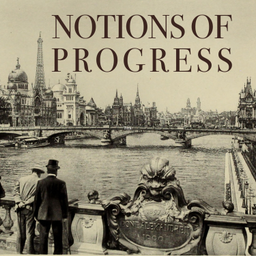
Notions of Progress
Claim This Podcastby Marshall Madow
Podcast Overview
The idea of progress — that humanity advances through time toward something better — has been a contested assumption throughout history. The question of whether we as a species, a nation, or as individuals are progressing is being interrogated with a renewed urgency that the present moment demands. Whether that advancement is real, illusory, unevenly distributed, or simply beside the point depends on who is asking, from where, and by what measure. Notions of Progress is a podcast that takes those questions seriously, tracing how the idea of progress has been understood, contested, and reimagined from antiquity to the age of artificial intelligence. The series moves from the ancient Greeks’ ambivalence about technological change, through the Enlightenment’s confidence in cumulative human reason, to the contemporary moment in which artificial intelligence has made the question of progress newly urgent. When machines appear to learn, create, and reason, the assumptions buried inside the word “progress” — about agency, direction, and human advancement — are no longer abstract. Tracing how those assumptions formed, and how they have been challenged across centuries, is the work of this podcast. Rather than prescribing a position, it surfaces the debates — examining how thinkers from Hesiod to Hayek, from Plato to Peter Haff, have understood what it means for humanity to move forward, at what cost, for whom, and by whose definition. The thread connecting Plato’s Academy to the age of artificial intelligence is not a straight line of accumulation — it is a recurring argument about whether progress is something driven by human agency, providence, or an artificial consciousness we project onto history rather than find in it. Host Marshall Madow brings an unusual dual formation to these questions. His MA in History from Cambridge University — where his thesis examined Georges Sorel’s epistemology of myth and the role of ideas in animating collective action — gave him a grounding in how belief systems about progress can function in place of rational thinking as historical forces. His MSc from Oxford University’s Saïd Business School, specializing in Complexity Science and Leadership, introduced him to the question from the other direction: how systems evolve, how change propagates through institutions, and why linear models of advancement are often insufficient in explaining complex phenomena. The two areas of study point toward the same problem from opposite ends. Notions of Progress is the inquiry that connects them. Marshall approaches the podcast as a scholar, researcher, and curator — seeking to surface a pluralistic and wide-ranging spectrum of ideas rather than prescribing or advocating one position over another. Contact: marshall@notionsofprogress.com Social: @notionsofprogress on Instagram · @NotionsProgress on X/Twitter Web: notionsofprogress.com
Language
🇺🇲
Publishing Since
12/18/2025
1 verified contact email on file for Notions of Progress
Pitch yourself as a guest, propose sponsorships, or reach out directly to the host.
Recent Episodes
June 29, 2026
Aristotle, Telos, and the Good Life: What Human Flourishing Actually Means pt. 1
<p>In the last three episodes, Matt Ehret argued that the history of progress is a contest between two competing visions of civilization: one that develops its internal capacities, and one that manages and depletes them. At the center of that argument was a framework introduced in Episode 11 — the open system and the closed system. That framework raised a question we deliberately set aside: what exactly is being opened or closed? What is the standard by which we judge whether a civilization is developing or declining?</p><p>Aristotle has an answer. And it begins with a question most modern philosophy has stopped asking: what is a human being for?</p><p>This episode works through three ideas. First: how Aristotle understands the relationship between activity and the good. Second: what he means by telos — the end or purpose internal to a form of life — and why it is grounded in nature rather than assigned from outside. Third: a challenge posed by Karl Popper that Part 2 must answer — whether any fixed account of human ends is compatible with an open society.</p><p>Drawing on Alasdair MacIntyre’s reading in After Virtue and Philippa Foot’s Natural Goodness, the episode traces what telos means, why it is grounded in nature, and why a critical distinction — between how we come to know things and what we fundamentally are — is essential before the argument can proceed. A key editorial note: Aristotle holds that the intellect begins without innate content (the tabula rasa of the De Anima). But that is a claim about how we come to know things — not a claim about what we are. MacIntyre’s entire defense of Aristotle turns on keeping those two levels separate.</p><p>The episode closes with Popper’s charge: that Aristotle’s account of fixed ends generates the intellectual architecture of the closed society. That charge is not answered here. It is posed as the question Part 2 must address.</p>Show Notes & Timestamps<p>• Open vs Closed Systems — 0:00</p><p>• Telos and Flourishing — 1:26</p><p>• Three Key Terms — 1:57</p><p>• Every Action Aims at a Good — 4:08</p><p>• MacIntyre on Virtue — 4:59</p><p>• Eudaimonia and the Virtues — 6:42</p><p>• Suspicion of Fixed Ends — 8:28</p><p>• Foot’s Natural Goodness — 9:38</p><p>• Tabula Rasa Clarified — 11:21</p><p>• Popper’s Closed Society Critique — 13:54</p><p>• Can Telos Stay Open? — 17:23</p><p>• Wrap Up and Part 2 Preview — 18:39</p>Key Concepts & Terms<p>Telos (TEL-os)</p><p>From the Greek, meaning end or purpose. According to MacIntyre’s reading of Aristotle, the telos of a thing is the end that is internal to its form of life — what it means for a thing of that kind to be functioning well. A telos is not a goal you choose. It is what you are oriented toward by virtue of what you are.</p><p>Eudaimonia (yoo-die-MOH-nee-ah)</p><p>Often translated as happiness, but more precisely: flourishing. For Aristotle, eudaimonia is the full realization of what human beings are capable of. MacIntyre argues that the virtues — courage, justice, temperance, practical wisdom — are not merely instrumental to eudaimonia but partly constitutive of it. Eudaimonia is a form of life you inhabit, not a feeling to be produced.</p><p>Phronesis (froh-NEE-sis)</p><p>Practical wisdom — the capacity to judge well in particular situations. Named and seeded in this episode; developed in depth in Part 2 and in the upcoming episode with Professor Atif Ansar, where it will do real analytical work.</p><p>Tabula rasa (TAB-yoo-lah RAH-sah)</p><p>Blank slate. Aristotle holds in the De Anima that the intellect begins without innate content. This episode draws a critical distinction: tabula rasa describes how we come to know things, not what we are. A blank slate in terms of knowledge is entirely compatible with a determinate natural form.</p>Fascinating Historical Insights<p>Aristotle’s opening move</p><p>Aristotle opens the Nicomachean Ethics not with a principle or a commandment but with an observation: every activity, every inquiry, every pursuit aims at some good. MacIntyre frames this as the foundational move of the Aristotelian tradition. Where Enlightenment moral philosophy begins from rules — what should I do, and why should I obey? — Aristotle begins from character: what kind of person should I become, and what does it mean for a human being to be living well?</p><p>MacIntyre’s diagnostic</p><p>MacIntyre argues in After Virtue that the shift from virtue to rule-following is the defining mark of what went wrong in modern ethics. Rules without a prior account of what human beings are for cannot carry the moral weight we ask of them. The virtues — on his reading of Aristotle — are not just means to a separate end. They are partly constitutive of what living well actually is.</p><p>Foot’s wolf</p><p>Philippa Foot’s Natural Goodness begins with a simple example: a wolf that cannot run is, in a perfectly straightforward sense, a bad wolf — not because we disapprove of it, but because it is failing to be what a wolf characteristically is and does. Foot extends this logic to human beings, grounding the evaluation in the natural form of life of the species. No theological premises required. No medieval framework. The claim that a living thing can fail to flourish is, on her account, a kind of factual claim.</p><p>Popper’s structural charge</p><p>Karl Popper’s argument in The Open Society and Its Enemies (1945) is not that Aristotle had authoritarian intentions. It is structural. Popper identifies three ideas he traces from Aristotle through Hegel: that we can only know a thing’s inner nature through its historical development; that development reveals a destiny present from the beginning; and that the drive to realize one’s essential nature becomes the fundamental category of political life. Together, on Popper’s reading, these generate the intellectual architecture of the closed society — a form of political authority that insulates itself from criticism by appealing to what history requires.</p>Resources & Further ReadingPrimary Sources<p>• Aristotle. Nicomachean Ethics. Trans. Roger Crisp. Cambridge University Press, 2000. The accessible reading copy used throughout this episode. Crisp’s translation is widely recommended for listeners new to Aristotle.</p><p>• Aristotle. Nicomachean Ethics. Trans. Robert C. Bartlett and Susan D. Collins. University of Chicago Press, 2011. The working scholarly reference. Bartlett and Collins hold closer to the Greek and supply detailed interpretive notes.</p>Works Discussed<p>• MacIntyre, Alasdair. After Virtue: A Study in Moral Theory. 3rd ed. University of Notre Dame Press, 2007. MacIntyre’s reading of Aristotle provides the central interpretive frame for this episode and Part 2. The Prologue and Chapters 1, 4, 5, 9, and 12 are the most directly relevant.</p><p>• Foot, Philippa. Natural Goodness. Oxford University Press, 2001. Foot’s argument that evaluations of living things are grounded in natural facts — without theological premises — gives Aristotle’s telos a contemporary philosophical foundation.</p><p>• Popper, Karl. The Open Society and Its Enemies, Vol. 2. Princeton University Press, 1971. Chapter 11 (“The Aristotelian Roots of Hegelianism”) contains the charge this episode poses and Part 2 must answer.</p>Further Context<p>The Aristotle episodes draw on two translation traditions for different purposes. The Crisp translation (Cambridge) is the accessible reading copy; the Bartlett and Collins translation (Chicago) is the scholarly reference, with a Straussian interpretive lineage that will become relevant as the series advances into the Academy Arc. Bekker numbers — the standard citation system for Aristotle — are used throughout and are edition-independent.</p>Related Episodes<p>• Episodes 11–13 — Interview with Matt Ehret (Parts 1–3): The open/closed systems framework established across these episodes is the direct intellectual bridge into E14. Aristotle’s telos is introduced here as the standard by which open and closed can be measured.</p><p>• Episode 7 — Plato vs. the Sophists: Rhetoric, Power, and Callicles: The most immediate precursor to the Academy Arc. Callicles’ argument that nature vindicates the strong is the counter-position Plato’s Academy was built to answer — and which Aristotle inherits and transforms.</p><p>• Episode 6 — Plato vs. the Sophists: The Allegory of the Cave: Plato’s argument that knowledge cannot be socially accumulated — only recollected — is the backdrop against which Aristotle’s very different account of learning and natural form becomes significant.</p>Coming Up Next<p>Episode 15 — Aristotle, Part 2 — publishes Monday, July 13.</p><p>Part 2 takes up the question Part 1 leaves open: can a fixed account of human ends be compatible with an open society? MacIntyre’s defense of Aristotle against Popper moves to the center, and phronesis — practical wisdom, the capacity to judge well in particular situations — gets the full treatment it was held back from here. The question the series keeps returning to is whether progress requires a prior account of what we are progressing toward. Aristotle thinks it does.</p>Listen & Subscribe<p>???? Apple Podcasts: <a href="https://podcasts.apple.com/us/podcast/notions-of-progress/id1837506445">https://podcasts.apple.com/us/podcast/notions-of-progress/id1837506445</a></p><p>???? Spotify: <a href="https://open.spotify.com/show/5WgTlVMBfFzrIQwqkqhiD9">https://open.spotify.com/show/5WgTlVMBfFzrIQwqkqhiD9</a></p><p>???? Website: <a href="https://www.notionsofprogress.com/">https://www.notionsofprogress.com</a></p><p>???? Substack: <a href="https://notionsofprogress.substack.com/">https://notionsofprogress.substack.com</a></p><p>???? Instagram: @notionsofprogress</p><p>✉️ Email: marshall@notionsofprogress.com</p><p>???? YouTube: <a href="https://www.youtube.com/@NotionsofProgress">https://www.youtube.com/@Notion...
June 15, 2026
Interview with Matt Ehret Pt. 3: Plato vs. Aristotle: The Divide That Still Shapes How We Think
<p>What if the divide between Plato and Aristotle is not a chapter in the history of philosophy — but a structural fault line that still determines how civilizations think about knowledge, progress, and discovery? In the final part of his three-part conversation, Matt Ehret presents his argument that this ancient divide carries forward as a kind of civilizational operating system — one whose consequences extend from the classical world to the present, and whose terms determine whether a culture tends toward genuine intellectual advance or toward increasingly sophisticated forms of stagnation.</p><p>In this concluding episode, Ehret examines what he sees as the core methodological difference between Plato and Aristotle: a verb-driven, process-oriented universe oriented toward discovery, versus a noun-driven, classification-based framework built on closed axioms that cannot be questioned. He develops the open versus closed systems distinction — with entropy and anti-entropy as the evaluative frame — arguing that the Platonic tradition keeps inquiry alive while the Aristotelian method, however elegant, forecloses the kind of creative discovery that genuine progress requires. The conversation closes with Plato’s Republic Book II, the question of poetry and the arts, and the image of Plato as a thinker conducting an open dialogue across twenty-five centuries. This episode closes the Ehret arc and opens directly onto the Aristotle episodes ahead.</p><p></p><p>Show Notes & Timestamps</p><p>1. Introduction — 0:40</p><p>2. Aristotle vs. Plato — The Core Difference — 1:32</p><p>3. The Aristotelian Method and Loss of Free Will — 2:02</p><p>4. Human Agency and the Two Wolves — 5:58</p><p>5. Open vs. Closed Systems — Entropy and Anti-Entropy — 9:02</p><p>6. Plato's Republic and the Consequences of Closed Thinking — 13:57</p><p>7. Plato in Today's Media World — 17:48</p><p>8. Closing and Outro — 20:16</p><p> </p><p> </p><p>Key Concepts & Terms</p><p>Noun-driven vs. verb-driven universe (nown-driv-en / verb-driv-en) — Two orientations toward reality</p><p>Ehret’s foundational contrast distinguishes how the Platonic and Aristotelian traditions approach the nature of reality. A verb-driven, process-oriented framework treats the world as dynamic, discoverable, and open to creative inquiry. A noun-driven, classification-based framework treats reality as something to be mapped, labeled, and described within fixed categories. For Ehret, everything follows from this distinction: the method shapes the questions a culture can ask, the discoveries it can make, and ultimately the direction of its progress.</p><p>A priori method (AH-pree-OR-ee) — Reasoning from closed, unquestionable starting points</p><p>Ehret describes the Aristotelian a priori method as beginning with a set of core axioms, postulates, and definitions that are accepted as perfect and closed before inquiry begins. Upon these fixed building blocks, the thinker then attempts to make sense of the discoverable world. Ehret’s argument is that this approach is not neutral: the axioms themselves determine what can be found, and because they are placed beyond question, what lies outside them cannot enter the system. The result, in his reading, is a kind of organized blindness — increasingly sophisticated in its internal logic, but increasingly detached from genuine discovery.</p><p>Entropy and anti-entropy (EN-troh-pee / an-tee-EN-troh-pee) — Closed systems running down versus open systems generating new potential</p><p>Ehret draws on the physical concept of entropy — the tendency of a closed system to exhaust its energy and move toward stagnation — as a frame for evaluating philosophical traditions. A closed-system framework, on this reading, is entropic: its potential for discovery decreases over time as the fixed axioms progressively constrain what can be thought. An anti-entropic framework, by contrast, remains open to creative inputs and new discoveries, increasing its potential rather than exhausting it. Ehret applies this distinction not only to philosophy but to civilizations as a whole, arguing that cultures organized around closed-system thinking tend toward Malthusian constraints, while those oriented toward open inquiry tend toward genuine advance.</p><p>Civilizational operating system — The underlying framework through which a culture organizes knowledge and inquiry</p><p>This is Ehret’s central thesis for the episode: that the Plato—Aristotle divide is not a historical debate between two ancient thinkers, but a structural feature of how civilizations organize their relationship to knowledge. The operating system metaphor captures the idea that the framework runs beneath the surface of any particular cultural, political, or scientific development — shaping what questions get asked, what counts as an answer, and what kind of progress is possible. Ehret argues that identifying which operating system a culture is running is the prerequisite for understanding whether it is genuinely advancing or producing increasingly elaborate illusions of advancement.</p><p>Fascinating Historical Insights</p><p>Plato’s preference for craftsmen over scholars</p><p>One of the more unexpected moments in Ehret’s account is his discussion of Plato’s documented preference for speaking with shoemakers, woodworkers, and craftsmen rather than with lawyers, politicians, and scholars. Ehret’s reading is that Plato valued these conversations precisely because the craftsmen’s knowledge was grounded in something real — earned through direct engagement with materials, problems, and outcomes. The scholar or politician trained in the Aristotelian manner might deploy impressive language and elaborate argument, but the knowledge, having been built on unexamined axioms, was not anchored to anything verifiable. For Plato, the craftsman’s humility was epistemologically sounder than the scholar’s confidence. Ehret connects this to Socrates’ fate: the arrogance of those who had been exposed as not knowing what they thought they knew, and who responded with lethal force.</p><p>The two wolves — A cross-cultural parallel to Plato’s soul/flesh distinction</p><p>In explaining Plato’s account of human agency, Ehret draws a parallel to a piece of Native American wisdom: the story of the two wolves within every person, one representing ego and appetite, the other representing spirit and the better part of the self, with the answer to which prevails being “whichever one you feed.” Ehret maps this directly onto Plato’s argument in the Gorgias — that the soul should lead the flesh, not be dragged by it — and notes similar formulations in Confucius and in later Platonic thinkers including Origen and Philo of Alexandria. The point Ehret is making is structural: the Platonic tradition across cultures identifies a bifurcation within the human agent, and the quality of a person’s development — and by extension, of civilization itself — depends on which tendency is cultivated.</p><p>Plato’s “Republic”, Book II: from simple community to territorial war</p><p>Ehret highlights a remarkable sequence in Book II of the Republic in which Plato traces, step by step, how a simple human community moves from basic needs to luxury, from luxury to territorial expansion, from expansion to conflict, and from conflict to the need for guardians. At each step, Plato has Glaucon accept the next premise — and at each step, Plato is, in Ehret’s reading, provoking the reader to find a better answer. The trajectory ends with Plato suggesting that this society might need to exterminate children born into the “wrong” social class — a conclusion designed not as a recommendation, but as an indictment of the entire trajectory the community has chosen. Ehret’s reading is that Plato is conducting a reductio ad absurdum: follow these premises and this is where you end up. The text is a challenge to the reader to find a better path.</p><p>The ban on poets: provocation, not prescription</p><p>Few passages in Plato are more frequently cited as evidence of authoritarian thinking than his proposal, in the Republic, to ban poets from the city. Ehret’s reading inverts the standard interpretation. Plato is writing against the backdrop of an Athenian culture saturated with theatrical performances depicting gods behaving badly, and concludes that if the population accepts these as models of the divine, the social consequences are corrupting. The ban on poets is Plato’s logical endpoint of one set of premises. But Ehret draws attention to what Plato says in the same breath: that anyone who can offer a better argument for letting the poets back into the republic should make it. The text, in this reading, is not a decree — it is an open invitation. Plato is conducting a dialogue with readers across twenty-five centuries, and the question he is posing remains genuinely open.</p><p>Resources & Further Reading</p><p>Primary Sources</p><p>• Plato, Republic (esp. Book II). Multiple translations available. Book II contains the community-building argument Ehret discusses, tracing the trajectory from simple need to territorial conflict to the guardian class. Stephanus reference: 357a—383c (Book II). Recommended translation: G.M.A. Grube, revised C.D.C. Reeve (Hackett).</p><p>• Plato, Gorgias. The dialogue Ehret references for Plato’s soul/flesh distinction and the argument that the soul should lead the flesh, not be dragged by appetite. Stephanus reference: 447a—527e. Recommended translation: Donald Zeyl (Hackett).</p><p>• Plato, Meno. Introduced in Episodes 11 and 12 as the dialogue establishing Plato’s account of learning as recollection rather than transmission. Stephanus reference: 70a—100b. Recommended translation: G.M.A. Grube (Hackett).</p><p>Works Discussed</p><p>• Matt Ehret. Available via the Canadian Patriot Review and the Rising Tide Foundation. Ehret’s published work includes the Untold History of Canada series and The Cl...
June 1, 2026
Interview with Matt Ehret Pt. 2: The Allegory of the Cave
<p>What if the most cited passage in Western philosophy has been deliberately misread — by both its critics and its supposed followers? In Part 2 of his conversation with Matt Ehret, Marshall examines the Allegory of the Cave, the Sophist movement, and a lineage of misuse running from ancient Athens to Leo Strauss and the neoconservative movement.</p><p>Ehret argues that the Republic is not the blueprint for authoritarian rule that critics have called it. Plato’s method — as Ehret reads it across episodes 11 and 12 — is always diagnostic: the dialogue poses negative examples to expose unexamined assumptions, not to prescribe conclusions. The Allegory of the Cave, Book VII of the Republic, demonstrates this method at its most concentrated. Two groups, Ehret contends, have each extracted the imagery they found useful and stopped reading before the passage that changes everything: the philosopher’s obligation to return to the cave, out of love for those still inside, even at personal risk.</p><p>The episode traces this misreading from its ancient roots — through Neoplatonist appropriations of the cave imagery — to its modern recurrence in Leo Strauss, the University of Chicago, and the neoconservative foreign policy establishment. Peter Thiel’s 2007 essay “The Straussian Moment” and Augustine’s battle against Gnostic Neoplatonism round out the arc. This is Part 2 of a three-episode conversation with Ehret tracing the Plato–Aristotle divide and its consequences for Western intellectual history.</p><p></p>Show Notes & Timestamps<p>0:00 — Opening Hook — Plato, Unexamined Assumptions, and the Cave</p><p>0:50 — Introduction — Recap of Episode 11 and Episode Overview</p><p>2:00 — The Meno Revisited — Can Virtue Be Taught?</p><p>3:02 — Who Were the Sophists? — Teachers, Fees, and Athenian Democracy</p><p>7:20 — Transition to the Allegory of the Cave</p><p>10:47 — The Cave Explained — Shadows, Puppet Masters, and Degrees of Reality</p><p>13:35 — Two Groups Who Misread the Cave</p><p>14:20 — The Oligarchic Misreading — Puppet Masters as a Blueprint for Rule</p><p>15:00 — What Plato Actually Argued — The Philosopher’s Obligation to Return</p><p>16:00 — Free Will, the Soul, and the Gorgias Dialogue</p><p>18:27 — Marshall and Ehret — Confirming the Two Misreadings</p><p>19:10 — How Great Minds Get Abused — Plato’s Legacy After His Death</p><p>20:30 — Leo Strauss, the Noble Lie, and Neoconservatism</p><p>21:21 — The Straussian Lineage — From Strauss to Rumsfeld, Perle, and Wolfowitz</p><p>23:55 — Peter Thiel’s ‘The Straussian Moment’ Essay</p><p>24:06 — The Secret Doctrine Tradition — Locke, Hobbes, and Bacon</p><p>24:20 — Gnostic Neoplatonism vs. Authentic Platonism</p><p>25:33 — Christianity, Augustine, and the Battle Against Gnostic Distortion</p><p>28:07 — Closing Narration — What Episode 12 Established and Preview of Episode 13</p><p>29:09 — Series CTA</p><p></p>Key Concepts & Terms<p>The Allegory of the Cave — Plato’s image of imprisoned knowledge</p><p>Plato’s allegory, found in Book VII of the Republic, describes prisoners chained in a cave who take the shadows on the wall in front of them to be reality. Behind them, puppet masters control what is projected; above, a fire burns; beyond the cave, the sun represents truth itself. Ehret argues — drawing on the Republic throughout this episode — that the allegory is a graduated account of how knowledge deepens: from shadow, to object, to the light of the sun. The passage is diagnostic rather than prescriptive. Plato is not recommending that puppet masters govern society; he is showing how unexamined assumptions trap minds at the level of shadow.</p><p></p><p>The Noble Lie — a founding myth designed to bind a society</p><p>The term appears in the Republic when Socrates proposes that a well-ordered city might require a founding myth — a story told to citizens about their origins that is not literally true but that binds them to the political community. Leo Strauss, in Ehret’s account, extracted this concept and used it as the philosophical authorization for a governing class that manages the beliefs of the population through deliberate narrative control. The question Ehret presses — and that the episode explores — is whether Plato intended the noble lie as a genuine recommendation or as another diagnostic trap for the naive reader, one more unexamined assumption that the careful student should question rather than adopt.</p><p></p><p>Gnostic Neoplatonism — a mystical distortion of the Platonic tradition</p><p>Neoplatonism, in its ancient form, drew selectively on Plato’s dialogues to construct a hierarchical cosmology in which the soul ascends through successive levels of being toward union with a transcendent One. Ehret argues that this tradition — associated with thinkers such as Plotinus and, later, with Gnostic sects — is a deliberate inversion of authentic Platonism. Where Plato’s philosopher is obligated to return to the cave, the Neoplatonist’s initiate seeks escape from the material world into pure transcendence. Ehret reads Augustine’s theological battles against the Gnostics as recognition of this same split: the authentic tradition holds that good, truth, and beauty are positive principles; the Gnostic tradition resolves all contradictions into a “great nothingness.”</p><p></p><p>Straussianism — Leo Strauss’s doctrine of esoteric political philosophy</p><p>Leo Strauss (1899–1973), philosopher at the University of Chicago, argued that the great political philosophers wrote on two levels: an exoteric teaching for the general public and an esoteric teaching reserved for the initiated few capable of reading between the lines. Ehret places Strauss in the Neoplatonist lineage: a thinker who extracted from Plato’s Republic the concept of the noble lie and built from it a theory of governance in which a trained elite manages political reality for a population that cannot handle the truth. Strauss’s students, in Ehret’s account, include Donald Rumsfeld, Richard Perle, and Paul Wolfowitz — architects of a foreign policy tradition that Ehret argues follows directly from this premise.</p><p></p>Fascinating Historical InsightsThe Part of the Cave That Everyone Leaves Out<p>The Allegory of the Cave is among the most frequently cited passages in Western philosophy. Most readers know the imagery: prisoners, shadows, a fire, an ascent toward the sun. Fewer reach the moment that Ehret argues changes everything. In Book VII of the Republic, Plato has Socrates describe what happens after the philosopher escapes the cave and reaches the light. Most readers stop there — the story seems complete. But Plato continues: the true philosopher is not the one who escapes into the light and stays. The obligation is to return into the cave, even at personal risk, to assist those still chained inside. Socrates, in Ehret’s reading, is the embodiment of that obligation — and his death by popular vote in 399 BCE is the demonstration of the risk. The omission of this return is, for Ehret, the defining act of misreading that allows the cave imagery to be turned into a theory of elite management rather than philosophical obligation.</p><p></p>Leo Strauss, the University of Chicago, and the Neoconservative Lineage<p>Leo Strauss taught political philosophy at the University of Chicago from the 1930s through the 1960s. Ehret argues that Strauss operated with two registers — a public teaching and a private one — and that his private teaching drew directly on the Platonic noble lie as a philosophical foundation for elite governance. The students Ehret identifies as carrying that teaching into political practice include Donald Rumsfeld, Richard Perle, and Paul Wolfowitz, each of whom held senior positions in the foreign policy apparatus of the United States in the early twenty-first century. Ehret’s argument is not that Strauss invented this tradition but that he was its modern vehicle — a transmission point in a lineage that, in Ehret’s reading, runs from misappropriated Platonism through early modern political philosophy and into contemporary governance.</p><p></p>Peter Thiel’s ‘The Straussian Moment’<p>In 2007, the technology investor and political thinker Peter Thiel published an essay titled “The Straussian Moment.” Ehret discusses the essay as evidence that the Straussian tradition is not confined to academic philosophy departments or Cold War-era foreign policy circles. Thiel situates himself within what Ehret describes as a secret-doctrine lineage — a tradition he traces not only through Strauss but back through Locke, Hobbes, and Bacon to an older practice of writing with two registers. The essay’s significance for this episode is not its specific political conclusions but its candor: a prominent public intellectual explicitly acknowledging and affiliating with a tradition of esoteric political philosophy that Ehret argues is rooted in the misreading of the Allegory of the Cave.</p><p></p>Augustine’s Battle Against the Gnostics<p>Before his conversion to Christianity, Augustine of Hippo was himself a member of the Manichaean Gnostic movement — a sect that, in Ehret’s account, embodied the Neoplatonist inversion he traces throughout this episode. Augustine’s eventual rejection of the Manichaeans and his sustained theological engagement with Gnostic doctrines across his mature writings represent, for Ehret, a recognition of the same split he identifies between authentic Platonism and its distortion. Ehret points to the Gnostic Nag Hammadi scriptures as the textual repository of the false Platonic tradition, and to the writings of Paul and the Gospels as carrying, in his reading, the best of authentic Platonic philosophy. The Augustine passage gives the episode’s theological thread a specific historical anchor: the Plato–Aristotle divide, for Ehret, is not only a philosophical fault line — it runs through the history of Christianity as well.</p><p></p>Resources & Further ReadingPrimary...
14 total episodes available
Similar Podcasts
Discover related shows you might enjoy
Deep-dive analytics for Notions of Progress
Frequently asked questions
Have a different question and can't find the answer you're looking for? Reach out to our support team by sending us an email and we'll get back to you as soon as we can.
- What is Notions of Progress?
- How often does this podcast release new episodes?
This podcast updates daily.
- Where can I listen to this podcast?
This podcast is available on 4 platforms including Apple Podcasts, Spotify, and more. You can also use the RSS feed directly.
- Does this podcast accept guests?
Information about guest appearances is not available.
Legal Disclaimer
Pod Engine is not affiliated with, endorsed by, or officially connected with any of the podcasts displayed on this platform. We operate independently as a podcast discovery and analytics service.
All podcast artwork, thumbnails, and content displayed on this page are the property of their respective owners and are protected by applicable copyright laws. This includes, but is not limited to, podcast cover art, episode artwork, show descriptions, episode titles, transcripts, audio snippets, and any other content originating from the podcast creators or their licensors.
We display this content under fair use principles and/or implied license for the purpose of podcast discovery, information, and commentary. We make no claim of ownership over any podcast content, artwork, or related materials shown on this platform. All trademarks, service marks, and trade names are the property of their respective owners.
While we strive to ensure all content usage is properly authorized, if you are a rights holder and believe your content is being used inappropriately or without proper authorization, please contact us immediately at hey@podengine.ai for prompt review and appropriate action, which may include content removal or proper attribution.
By accessing and using this platform, you acknowledge and agree to respect all applicable copyright laws and intellectual property rights of content owners. Any unauthorized reproduction, distribution, or commercial use of the content displayed on this platform is strictly prohibited.