Welcome to Salema’s Slow Edits, a space where movement meets stillness, reflection, and curiosity. Flowing with the rhythm of life on the water, I share Reformer, Yin, Pilates, and gentle practices inspired by Movement, TCM, and Zen to help you move, soften, and live with more presence. <br/><br/><a href="https://salemaveliu.substack.com?utm_medium=podcast">salemaveliu.substack.com</a>
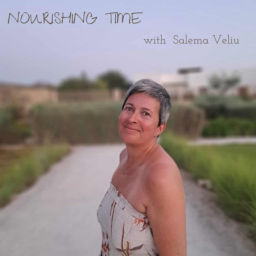
Nourishing Time Podcast with Salema Veliu - Mindful Prompts & Practices for Zen Living in a Tech World (private feed for salemayoga@icloud.com)
Claim This Podcastby Salemas / Slow Edits
63 episodes
Updated Daily
Accepts GuestsHas SponsorsLocation 🇬🇧
32
Podcast Authority
BetaPoorBased on show quality, social media presence, reviews, charts, and more

Quality53
Social0
YouTube0
Engagement27
Podcast Overview
Welcome to Salema’s Slow Edits, a space where movement meets stillness, reflection, and curiosity. Flowing with the rhythm of life on the water, I share Reformer, Yin, Pilates, and gentle practices inspired by Movement, TCM, and Zen to help you move, soften, and live with more presence. <br/><br/><a href="https://salemaveliu.substack.com?utm_medium=podcast">salemaveliu.substack.com</a>
Language
🇺🇲
Publishing Since
4/26/2024
Unlock The Full Podcast Authority Score Report
See how your podcast performs across key metrics
32
Podcast Authority
BetaPoorBased on show quality, social media presence, reviews, charts, and more
Quality53
Social0
YouTube0
Engagement27
5
Excellent Areas
4
Good Performance
10
Growth Opportunities
excellent
Episode Length
16 minutes
Performing excellently!
good
Publishing Consistency
Every 8 days
Recommendations available
Unlock the full report to see detailed tips
poor
Episode Thumbnails
Recommendations available
Unlock the full report to see detailed tips
+16 More Metrics
Unlock comprehensive insights including:
- • YouTube presence analysis
- • Social media reach metrics
- • RSS compliance scoring
- • Podcast 2.0 features
- • Technical standards
What's Included in Your Full Report
Detailed Analytics
- Complete breakdown of all 19 authority metrics
- Personalized recommendations for each metric
- Industry benchmarks and comparisons
- Technical RSS feed analysis and compliance scoring
Growth Strategies
- Step-by-step action plans for improvement
- Quick wins to boost your score immediately
- Pro tips from successful podcasters
Get your free podcast insights report
See how your show performs across every key metric
Instant delivery
No spam
Attract Better Guests
High authority scores make your podcast more attractive to industry leaders and influencers who want to appear on credible shows.
Secure Sponsorships
Sponsors look for podcasts with proven authority and engagement. Your score demonstrates your podcast's value to potential partners.
Grow Your Audience
Understanding your strengths and weaknesses helps you make data-driven decisions to expand your listener base effectively.
1 verified contact email on file for Nourishing Time Podcast with Salema Veliu - Mindful Prompts & Practices for Zen Living in a Tech World (private feed for salemayoga@icloud.com)
Pitch yourself as a guest, propose sponsorships, or reach out directly to the host.
Recent Episodes
June 13, 2026
The Space We Rarely Give Ourselves
<p>During my most recent travels to Palma, and a stay in a wonderful, calming luxury eco resort, I began to reflect on why we find it so hard to give ourselves permission to find and create space in our lives.</p><p>This reflection has stayed with me since returning, and in many ways has become the foundation for a much deeper inquiry into how we live, move, and recover.</p><p>It is also part of the reason I felt so called to create my retreat experiences — as an opportunity for women to step out of the constant rhythm of doing, and into something more spacious, restorative, and intentional.</p><p>So why do so many of us find it so hard to give ourselves permission to find and create space in our lives. The much needed space that our nervous systems crave to find balance.</p><p>Not just the physical space, but the space to:</p><p>Pause</p><p>Rest</p><p>Breathe</p><p>Listen.</p><p>The space between responsibilities, expectations, and the constant pressure to keep doing.</p><p>This idea is not new.</p><p>In Joseph Pilates’ writing — particularly in The Lion in the Cage — there is a recurring theme that speaks to the ways in which modern life can confine, restrict, and disconnect us from our natural vitality when we lose touch with the body, the breath, and conscious living.</p><p>In many ways, he was already asking the same question we are still grappling with today: <strong>What happens when we become disconnected from ourselves?</strong></p><p>As I prepare to give a presentation on the history of Pilates, and find myself dropping snippets of this fascinating lineage into my classes, I continue to be amazed by how many people — and even many teachers — are unaware that Joseph Pilates was perhaps one of the original lifestyle coaches.</p><p>Long before wellness became an industry, Joseph understood that health was never just about exercise.</p><p>As someone who has had to make quite a few major life changes in the past due to burnout in my thirties, and as a coach myself, this feels particularly relevant.</p><p>The lifestyle choices we make matter just as much as the supplements we take or the exercise we choose.</p><p>Most people know Joseph Pilates for the Reformer, the Mat work, or the apparatus that bears his name. Yet <strong>Contrology</strong> was never simply a system of exercises. It was a philosophy for living well.</p><p>Joseph’s <strong>principles for health</strong> included things we rarely associate with fitness today:</p><p>* Fresh air</p><p>* Daily movement</p><p>* Exposure to sunlight</p><p>* Rest and sleep</p><p>* Time spent outdoors</p><p>* Efficient breathing</p><p>* Good posture</p><p>* Natural movement</p><p>* Mental wellbeing</p><p>* Moderation</p><p>* Personal responsibility for health</p><p>These ideas are not abstract. They show up in how we move, teach, and inhabit the body.</p><p><strong>When We Work Within the Method</strong></p><p><strong>In the method, control is never separate from awareness — precision is not about perfection, but about attention.</strong></p><p>For those of us who work within the Pilates method — whether teaching or practising — these principles are not abstract ideas.</p><p>They show up directly in the studio.</p><p>In the way we move through the repertoire.</p><p>In how we organise the breath.</p><p>In how we approach effort versus control.</p><p>In whether we are able to maintain precision without unnecessary tension.</p><p>In classical Pilates, we are constantly returning to questions like:</p><p>Am I moving with control, or simply moving?</p><p>Am I using what I need, or overworking what is familiar?</p><p>Can I maintain length, support, and organisation while under load?</p><p>And perhaps most importantly — can I stay present within the movement, rather than rushing to the end of it?</p><p>This is where the method and the philosophy meet.</p><p><strong>What strikes me is how relevant these ideas still feel.</strong></p><p>Long before we spoke about nervous system regulation, stress physiology, burnout, recovery, or wellbeing, Joseph Pilates understood something fundamental:</p><p><strong>Health is not built through exercise alone.</strong></p><p>It is created through the relationship between movement, rest, environment, mindset, and the way we live our everyday lives.</p><p>Yet modern life often pulls us in the opposite direction. We celebrate productivity. We wear busyness as a badge of honour. We fill every available moment. So when we begin to feel depleted, our instinct is often to do more.</p><p>Train harder.</p><p>Work harder.</p><p>Push harder.</p><p>But what if the answer isn’t always found in doing more?</p><p>What if it is found in releasing more to creating some space?</p><p>Space to recover.</p><p>Space to regulate.</p><p>Space to reconnect with what the body is asking for.</p><p>This is something I see repeatedly in my work with women navigating burnout, hormonal transitions, perimenopause, menopause, and conditions such as endometriosis.</p><p>Often the body is not asking for more effort. </p><p>It is asking for more support.</p><p>More balance.</p><p>More compassion.</p><p>More listening.</p><p>Perhaps this is what Joseph Pilates understood all along. That true strength is not simply physical. It is the ability to live in a way that supports vitality, resilience, and wellbeing and longevity over the long term.</p><p>Maybe the space we rarely give ourselves is not a luxury after all.</p><p>Perhaps it is one of the most important ingredients of health.</p><p>Many classical Pilates schools also reference his original book which is still the <strong>primary source text</strong> practitioners refer to.</p><p>* Return to Life Through Contrology (Joseph Pilates, 1945)</p><p>* The Lion in the Cage: Joseph Pilates and his Legacy</p><p><strong>Which of Joseph Pilates’ lifestyle principles feels most missing in your life right now?</strong></p><p>For me, this question has been a continual thread through both my teaching and my own lived experience — especially following periods of burnout and major life change in my thirties.</p><p>It is also what has shaped the spaces I now feel called to create for others.</p><p>My upcoming retreat in Mallorca is one of the spaces where this philosophy becomes lived experience.</p><p>The environment shapes the nervous system more than we realise.</p><p>Not as an escape from life, but as an opportunity to step away from the noise long enough to reconnect with it more honestly.</p><p>This connects everything back to Pilates philosophy + embodiment.</p><p>A place where movement, rest, and reflection are given equal value.</p><p>Where the principles of Contrology are not just explored in the studio, but lived in a wider sense — through how we rest, breathe, and allow ourselves to simply be.</p><p>Because perhaps this is what Joseph Pilates understood all along: That health is not something we chase. It is something we return to, when we create enough space to hear ourselves again.</p><p>For full details and the brochure, DM me “PALMA” or view it <a target="_blank" href="https://linktr.ee/salemaveliu">here: PALMA PILATES </a></p><p>Thank you for being here, reading, listening and sharing my work. I hope you may benefit in some way from the insights and practices provided to help you navigate your personal and life’s ever changing landscape.</p><p>Salemas Slow Edits is inspired by slow living on the water, my love 4 movement all with a touch of Aussie ease. Expect journalling prompts and movement and meditation practices to help you find your laid back vibe. Providing various insights from science, nature, zen & various philosophies to help heal and inspire longevity along the way.</p><p><p>SALEMA'S / SLOW EDITS is a reader-supported publication. To receive new posts and support my work, consider becoming a free or paid subscriber.</p></p><p></p> <br/><br/>Thank you for subscribing. <a href="https://salemaveliu.substack.com/p/the-space-we-rarely-give-ourselves/comments?utm_medium=podcast&utm_campaign=CTA_5">Leave a comment</a> or <a href="https://salemaveliu.substack.com/p/the-space-we-rarely-give-ourselves?utm_source=substack&utm_medium=podcast&utm_content=share&action=share&token=eyJ1c2VyX2lkIjoyMTYzMjU1MSwicG9zdF9pZCI6MjAxNzU2NDgzLCJpYXQiOjE3ODE2NTk1MzgsImV4cCI6MTc4NDI1MTUzOCwiaXNzIjoicHViLTIyNDM3NjgiLCJzdWIiOiJwb3N0LXJlYWN0aW9uIn0.kW9fYP5n1EU6BXenrCZilgA8p6E7JO8KAHMs9t4MQVE&utm_campaign=CTA_5">share this episode</a>.
February 23, 2026
Reform & Renew: Life in Motion
<p></p><p>The pause between movements—the space between breaths—is where we connect to the deeper rhythm of life. It is where we encounter the stillness that grounds and nourishes</p><p>us.” <strong>Bonnie Bainbridge Cohen</strong></p><p></p><p>Welcome to <strong>Salema’s Slow Edits</strong>.</p><p>A space where movement meets stillness, reflection, and curiosity. Reformer, Yin, Pilates, and gentle movement provide the canvas to explore life with intention. Inspired by the quiet wisdom of Movement, TCM, and Zen, I share practices, prompts, and reflections to help you move, soften, and live with more presence.</p><p>Salema’s Slow Edits flows with the rhythm of my life on the water and the laid-back energy of coastal Australia—open, grounded, unhurried. Movement becomes meditation, reflection becomes practice, and curiosity becomes presence.</p><p>More than movement.It’s presence. It’s practice. It’s life, gently edited.</p><p>Life in midlife is full of shifts—physically, hormonally, and emotionally. Peri- and menopause for women bring changes that affect our energy, strength, and how we move through the world. That’s why I’ve been exploring <strong>Reformer Yin</strong>, a practice that meets your body where it is, working deeply into muscles, fascia, and joints while supporting the nervous system.</p><p>In this podcast, I’ll share how this method l’ve been practising and teaching known as Reformer Yin can help <strong>reform your movement, restore balance, and renew your sense of vitality</strong>, not just for peri- or menopause, but for life as a whole.</p><p>Alongside my upcoming workshops at The Ness Club, we’ll dive into the components of the practice, explore its benefits, and give you practical ways to bring mindful, intentional movement into your everyday life.</p><p>So welcome…….</p><p>Peri-menopause and menopause are not just phases—they are <strong>whole-body transitions</strong>. Estrogen and progesterone fluctuations affect nearly every system in the body: connective tissue becomes less resilient, joints feel stiffer, sleep patterns shift, and the nervous system becomes more sensitive. We can begin to notice at first subtle changes at first in posture, core stability, and even energy levels. If these shifts are left unmanaged, they can contribute to chronic discomfort, reduced mobility, and a sense of losing control over your body and basically not feeling like yourself.</p><p>I was drawn to Reformer Yin because l was looking for practice that could help regulate and balance my nervous system/s. A practice which <strong>doesn’t fight the body</strong> but instead works <strong>with the body’s biology</strong>—its fascial structure, joint mechanics, and neuro-hormonal rhythms. And for anyone navigating peri- or menopause, that’s exactly the kind of practice that feels empowering rather than exhausting.</p><p>Unlike high-intensity workouts that push through fatigue or repetitive strength-only routines, Reformer Yin is a <strong>targeted, mindful movement practice</strong> designed to meet your body where it is, while enhancing resilience and functional capacity. It merges the <strong>supportive mechanics of the Pilates reformer</strong> with <strong>Yin principles of long, passive stretching</strong>, producing benefits that are particularly relevant for those navigating hormonal transitions.</p><p><strong>REFORMER YIN - origins and key components</strong></p><p>Reformer Yin is a fusion of mindful movements, intentional breath work, meditation Self massage, self enquiry, fascia and targeted myofascia release techniques.</p><p><strong>12 KEY Components of this method/practice:</strong></p><p>* <strong>1. Taoist Yoga</strong> draws upon the practice, energetics and philosophy of Yin/Yang and the importance of balancing energies and our nervous systems in the body.</p><p>* <strong>2. Traditional Chinese Medicine/Meridans</strong>- Shapes are inspired by the Chinese Meridian lines are held for longer to target energy pathways and fascia release.</p><p>* <strong>3. Anatomy and pathology of movement through an energetic lens and skeletal</strong> perspective. Working with the body’s soft tissues—muscles, joints, and fascia—addressing both structural alignment and the common movement patterns that create tension or dysfunction.</p><p>* <strong>4. The 12 Major Myofascial Lines of Thomas Myers,</strong> which show that muscles, tendons, and fascia are interconnected in continuous pathways, challenging the traditional “single muscle” view of anatomy. These <strong>myofascial meridians</strong> explain how movement in one part of the body can influence distant areas, creating a dynamic, integrated system that supports fluid movement and balance.</p><p>* <strong>5. Nervous system awareness:</strong> Reformer Yin encourages working deeply with both the <strong>sympathetic</strong> and <strong>parasympathetic</strong> systems, creating awareness of how each influences movement, tension, and relaxation.</p><p>* <strong>6. Breathing Techniques </strong>(Pranayama practices) from the Yogic tradition.</p><p>* <strong>7. Chakras Yoga Philosophy.</strong></p><p>* <strong>8. Long holds for joints and energy:</strong> Reformer Yin uses extended posture holds to gently open joints, improve mobility, and stimulate the flow of energy through fascial and TCM meridian lines, supporting overall vitality.</p><p>* <strong>9. Shapes are divided into Lower and Upper Body segments.</strong></p><p>* <strong>10. Trigger point therapy & stretching:</strong> Release tension in sensitive muscle areas with targeted pressure with (footbar, massage, or peanut ball) to improve flexibility in fascia and muscles through dynamic, static, or PNF stretching.</p><p>* <strong>11. Hands on Assists for gentle support</strong>(with consent).</p><p>* <strong>12. Supportive spring tension:</strong> Using lighter reformer springs to provide support rather than resistance, allowing safe, controlled movement and deeper access to muscles and fascia.</p><p>This method was created by my teacher Sam Sales at Barre Body Australia and represents her life’s work into understanding various forms of movement and body mechanics.</p><p>5 Ways that Reformer Yin Supports the Midlife Body</p><p><strong>1. Connective Tissue Health</strong></p><p>Hormonal changes reduce collagen elasticity, affecting tendons, ligaments, and fascia. Reformer Yin uses sustained holds and gentle loading to improve flexibility and tissue hydration, helping to maintain joint integrity and reduce stiffness. Over time, this practice can help prevent the loss of range of motion that often accompanies peri-menopause.</p><p><strong>2. Joint Preservation and Low-Impact Strength</strong></p><p>The reformer provides adjustable resistance that allows controlled, low-impact strengthening. This is crucial when estrogen decline makes joints more vulnerable to micro-trauma. By combining slow, precise movements with the reformer’s support, you maintain strength, protect cartilage, and reduce the risk of strain or injury.</p><p><strong>3. Nervous System Regulation</strong></p><p>Hormonal fluctuations often heighten sympathetic nervous system activity, increasing stress, anxiety, and sleep disturbances. The <strong>mindful, breath-focused nature of Reformer Yin</strong> encourages parasympathetic engagement, promoting relaxation, deeper sleep, and a reduction in systemic inflammation.</p><p><strong>4. Postural Alignment and Core Integration</strong></p><p>Perimenopausal shifts in body composition, spinal curvature, and pelvic stability can create imbalances. Reformer Yin emphasises <strong>spinal articulation, core engagement, and scapular stabilisation</strong>, retraining the body to move efficiently while reducing compensatory patterns that contribute to pain or fatigue.</p><p><strong>5. Hormonal and Metabolic Support </strong></p><p>Movement alone cannot replace hormonal therapy or lifestyle strategies, but Reformer Yin complements these approaches by supporting metabolic health, reducing chronic inflammation, and improving circulation. For many, this combination helps mitigate symptoms like bloating, pelvic tension, and general fatigue.</p><p>Why I Keep Coming Back</p><p>I was drawn to Reformer Yin because it <strong>doesn’t fight the body</strong>. It works <strong>with the body’s biology</strong>—its fascial structure, joint mechanics, and neuro-hormonal rhythms. And for anyone navigating peri- or menopause, that’s exactly the kind of practice that feels empowering rather than exhausting.</p><p>This practice isn’t flashy. It’s a <strong>clinically intelligent</strong>, intuitive, and profoundly respectful of how the body changes with hormones, age, and lifestyle. Every session feels like a reset: tissues release, muscles reconnect, my nervous system calms, and I feel more present in my body.</p><p>Why It Works Better Than Conventional Approaches</p><p>Traditional Pilates or yoga practices often focus either on strength or flexibility. Reformer Yin <strong>integrates both</strong>, with the <strong>added benefit of mechanical assistance and resistance modulation</strong>. This means midlife bodies can safely achieve deep tissue release without overexertion, while simultaneously activating stabilising muscles to maintain functional capacity.</p><p>For people in peri- or menopause, this is transformative: the practice addresses <strong>both the physical and neurological consequences of hormonal change</strong>. It’s restorative yet energising, gentle yet effective, and evidence-informed in its approach to connective tissue, joint health, and nervous system regulation.</p><p>Practical Takeaways</p><p>* Start with <strong>controlled sessions</strong> 1–3 times per week to allow tissue adaptation.</p><p>* Focus on <strong>quality over quantity</strong>: depth and precision matter more than duration.</p><p>* Use <strong>breath and mindfulness</strong> as part of the practice to enhance nervous system benefits.</p><p>* Combine with <strong>supportive lifestyle habits</strong> (sleep, hydration, nutrition, stress management) for maximal impact.</p><p>In short, <strong>Reformer Yin is not just a workout—it’s a comprehensive, functional approach to navigating midlife transitions</strong>. It equips the body to maintain strength, flexibility, and resilience, while simultaneously calming the nervous system and supporting overall well-being. For anyone looking to <strong>reform their peri- or menopause experience</strong>, this practice offers an empowering, clinically-informed path to body confidence, comfort, and control.</p><p>Thanks for joining me today! Reformer Yin is about more than exercise—it’s about listening to your body, moving with intention, and feeling renewed. If you’d like to explore it further, I’m offering <strong>1:1 Reformer Yin sessions via Zoom</strong>—please <strong>direct message me</strong> if you’re interested. And don’t forget to keep an eye out for my upcoming workshops at The Ness Club, where we’ll dive even deeper into this practice. In future posts, I’ll also be exploring <strong>pelvic health</strong>, including how specific Reformer movements can support the body—and which ones to approach with caution.</p><p></p><p>SALEMA'S / SLOW EDITS is a reader-supported publication. To receive new posts and support my work, consider becoming a free or paid subscriber.</p><p></p><p></p> <br/><br/>Thank you for subscribing. <a href="https://salemaveliu.substack.com/p/reform-and-renew-life-in-motion/comments?utm_medium=podcast&utm_campaign=CTA_5">Leave a comment</a> or <a href="https://salemaveliu.substack.com/p/reform-and-renew-life-in-motion?utm_source=substack&utm_medium=podcast&utm_content=share&action=share&token=eyJ1c2VyX2lkIjoyMTYzMjU1MSwicG9zdF9pZCI6MTg4OTAyNjI1LCJpYXQiOjE3NzE5MTI3NTIsImV4cCI6MTc3NDUwNDc1MiwiaXNzIjoicHViLTIyNDM3NjgiLCJzdWIiOiJwb3N0LXJlYWN0aW9uIn0.wOppA0VIEnfX1JyHBshAdxhw7itDCzSxlA0t0PTZCos&utm_campaign=CTA_5">share this episode</a>.
January 6, 2026
Restore & Reform Your Nervous System & Raise Your Vibration for 2026
<p></p><p></p><p>A snapshot from one of my reformer stretch/yin sessions @thenessclub.</p><p>Hello friends, it’s been a while…..October actually was my last full post.</p><p>Why the pause?….</p><p>Well there has been a lot of changes going on behind the scenes and these days l’m a bit more in tune with myself, knowing when l need to retreat, to regroup, to reinvent and when to push forward.</p><p>How about you?</p><p>Welcome back if you’ve been here before, and welcome if this is your first time.</p><p>I created SlowForm Living with Salema, as an invitation for you to slow down, pause and nestle into reflections on life inspired by my slow living on the water, my love 4 movement, travel and all with a touch of an Aussie vibe. Here l offer helpful journalling prompts along with various practices to help you find your laid back vibe to enjoy life and to help you connect with your purpose.</p><p>This is a free subscription currently however, if you would like to contribute an offering of thanks then you can donate here <a target="_blank" href="https://ko-fi.com/nourishingrealitywithsalema">buy me a coffee</a></p><p>All subscriptions and donations greatly appreciated.</p><p>So what makes my first offering of 2026 different? Well it’s not just grounded in intuition and energy — but also in <strong>science-backed mechanisms</strong> showing the benefits of intentional practices like reformer yin can help you align with the season influencing your nervous system, stress response, and psychological resilience.</p><p>So let’s get started.</p><p>With pre Christmas organising and expectations still lingering in the air and now post festive holidays. You’ll be forgiven if you still feeling mentally hung over…….while you recover from the end of one year with expectations for the new year hovering overhead. Exploring realistic new daily structures, a new rhythm that is more in tune with you.</p><p>So how are you feeling dear friends?</p><p>Are you feeling depleted?</p><p>Do you find yourself already imposing too many goals and deadlines?</p><p>Right, take a short pause wherever you are right now - to breathe, be still and listen to what is stirring underneath the surface….</p><p><strong>Some Prompts for this time………</strong></p><p>What needs to be heard?</p><p>What needs attention ?</p><p>What needs to release?</p><p>What boundaries need to be honoured emotionally and physically?</p><p>What is emotional and physical nourishment looking like for you right now?</p><p>What are you feeling?</p><p>What do you need to feel safe?</p><p>Typically the winter months are for retreating, listening, eating warming foods and taking rest to prepare for moving forward in the spring. Many of these elements reflected through many eastern systems including Ayurveda, Yoga, Yin Yoga, Reformer Yin (which draws from TCM).</p><p>All of these systems share one thing in common - they honours seasonal transitions rather than rushing them, which is essential for nervous system balance.</p><p><strong>Seasonal Biology and the Nervous System</strong></p><p>From a physiological standpoint, any seasonal framework closely mirrors our modern understanding of <strong>biological rhythms</strong>. Human systems operate in cycles of stimulation, recovery, and integration. During winter and late winter, circadian rhythms slow, tissue repair increases, and the <strong>autonomic nervous system</strong> benefits from greater <strong>parasympathetic dominance</strong>.</p><p>When we ignore these rhythms and continue to push high output, the nervous system often remains in a low-grade sympathetic state. Over time, this can reduce recovery capacity, impair breath mechanics, and increase background muscular tone. The body isn’t asking for a reset—it’s asking for <strong>regulation.</strong></p><p><strong>The Winter / Water Phase in TCM</strong></p><p>According to <strong>Traditional Chinese Medicine (TCM)</strong>, we are currently in the <strong>Winter / Water phase</strong>—a season associated with conservation, storage, and deep restoration. This phase is governed by the <strong>Kidney and Bladder systems</strong>, which in TCM relate not only to fluid regulation and skeletal support, but also speaks to the body’s capacity for <strong>endurance, adaptability, and the body’s stress response for recovery, resilience, and nervous system stability</strong></p><p><strong>From a physiological perspective</strong>, this seasonal framework aligns closely with what we understand about human biology. During winter and late winter, metabolic demand naturally shifts, circadian rhythms slow, and the <strong>autonomic nervous system</strong> shows a greater need for parasympathetic dominance—supporting repair, integration, and energy preservation. This is not a time for abrupt resets or constant stimulation, but for gradual consolidation.</p><p><strong>Kidney / Water Themes: Fear, Willpower, and Resilience</strong></p><p>In TCM, the Kidney system is closely associated with <strong>fear and willpower</strong>. Practices that support this system are not about pushing through discomfort, but about building trust in the body’s capacity to adapt.</p><p>Reformer Yin encourages stillness without collapse, effort without force. This balance supports emotional regulation alongside physical resilience, helping individuals meet challenge with steadiness rather than reactivity.</p><p><strong>Energetically,</strong> the Water element is linked to <strong>fear and willpower</strong>. When balanced, it supports resilience and quiet strength. When depleted, it can manifest as anxiety, fatigue, tension in the lower back, or difficulty regulating stress. Seasonal practices during this phase aim to preserve energy rather than expend it.</p><p>Seasonally, this phase asks for conservation rather than expenditure—creating the conditions for strength to be restored, not forced.</p><p>Yet so many of us go against this natural cycle and flow.</p><p>Tuning into these shifts—rather than overriding them—can be profoundly supportive. Perhaps this is why the Chinese New Year, or lunar calendar, often feels more aligned with who we really are.</p><p>For how can we raise our vibration to meet the start of new cycles if our nervous system is completely depleted?</p><p><strong>Practising With the Season & Ayurveda</strong></p><p>Seasonal practices are not about stopping movement—they are about timing and intention. Winter asks us to consolidate, integrate, and restore so that energy can be mobilised effectively when activity naturally increases.</p><p>Reformer Yin respects this phase. It supports tissue repair, neural integration, and long-term sustainability, rather than short-term output.</p><p>This is not a retreat from strength.</p><p>It is the foundation that allows strength, clarity, and momentum to return—more efficiently and with greater ease.</p><p>Equally, Ayurveda works with energies and elements of the universe as well as seasons. The universe is believed to be broken down into 5 elements: Earth - Water- Fire - Air and Ether which are also the five seasons of Ayurveda broken down into 3 types/doshas.</p><p>* <strong>Vata</strong> = movement, creativity, change</p><p>* <strong>Pitta</strong> = transformation, intensity, focus</p><p>* <strong>Kapha</strong> = stability, calm, nurturing</p><p>Everyone has all three doshas, but most people are <strong>dominant in one or two</strong>, which shapes their <strong>body, mind, digestion, habits, and emotional patterns</strong>—basically their natural blueprint. Ayurveda helps balance these energies through <strong>diet, lifestyle, exercise, and mindfulness</strong>, tailored to your unique dosha combination.</p><p><strong>The Three Dosha’s</strong></p><p><strong>1. Vata Dosha – The Energy of Movement</strong></p><p><strong>Elements:</strong> Air + Ether </p><p><strong>Qualities:</strong> Light, dry, cold, mobile, irregular, subtle</p><p><strong>Body & Physical Traits:</strong></p><p>* Usually lean or thin</p><p>* Dry skin and hair</p><p>* Quick movements and gestures</p><p>* Irregular appetite and digestion</p><p><strong>Mind & Behaviour:</strong></p><p>* Creative, imaginative, and quick-thinking</p><p>* Energetic but can tire easily</p><p>* Often adaptable but may feel anxious or restless under stress</p><p>* Love variety and change</p><p><strong>Health Tendencies:</strong></p><p>* Prone to dryness (skin, hair, joints)</p><p>* Can get bloating, constipation, or cold-related issues</p><p>* Balance with warmth, grounding, regular routines, and nourishing foods</p><p><strong>Lifestyle Tips:</strong></p><p>* Keep warm, stay hydrated</p><p>* Eat grounding, moist, and warm foods</p><p>* Maintain a regular schedule for sleep, meals, and work</p><p>* Gentle exercises like yoga, tai chi, or walking</p><p><strong>2. Pitta Dosha – The Energy of Transformation</strong></p><p><strong>Elements:</strong> Fire + Water</p><p><strong>Qualities:</strong> Hot, sharp, oily, intense, penetrating, light</p><p><strong>Body & Physical Traits:</strong></p><p>* Medium build, muscular</p><p>* Warm body temperature</p><p>* Strong digestion, good appetite</p><p>* Prone to rashes, acne, or overheating</p><p><strong>Mind & Behavior:</strong></p><p>* Intelligent, focused, ambitious</p><p>* Strong-willed and passionate</p><p>* Can be easily irritable or impatient</p><p>* Enjoy challenges and intellectual pursuits</p><p><strong>Health Tendencies:</strong></p><p>* Prone to inflammation, acid reflux, or skin irritations</p><p>* Can overwork or overthink, leading to stress</p><p>* Balance with cooling, calming routines and foods</p><p><strong>Lifestyle Tips:</strong></p><p>* Avoid overheating; enjoy cooling foods and environments</p><p>* Practice meditation or calming exercises</p><p>* Eat foods that are less spicy, lighter, and cooling</p><p>* Engage in moderate exercise, avoid excessive heat</p><p></p><p><strong>3. Kapha Dosha – The Energy of Stability</strong></p><p><strong>Elements:</strong> Earth + Water</p><p><strong>Qualities:</strong> Heavy, slow, steady, soft, cold, oily</p><p><strong>Body & Physical Traits:</strong></p><p>* Solid, strong build, sometimes heavier</p><p>* Smooth, oily skin</p><p>* Calm movements and steady stamina</p><p>* Slower digestion</p><p><strong>Mind & Behavior:</strong></p><p>* Loyal, patient, nurturing, and calm</p><p>* Can be resistant to change</p><p>* Enjoy routine, comfort, and stability</p><p>* May have a tendency to attachment or lethargy</p><p><strong>Health Tendencies:</strong></p><p>* Prone to weight gain, congestion, or sluggishness</p><p>* Can get depression or low motivation if out of balance</p><p>* Balance with stimulating, energizing, and light practices</p><p><strong>Lifestyle Tips:</strong></p><p>* Engage in regular exercise to stay active</p><p>* Eat lighter, spicier, and more energizing foods</p><p>* Keep changing routines occasionally to avoid stagnation</p><p>* Stay mentally stimulated and socially engaged</p><p><strong>Do you resonate with any of the above?</strong></p><p><strong>Reformer Yin</strong></p><p>Physical practices like <strong>Reformer Yin</strong> embody the philosophy of moving with the seasons, offering space to slow down, regulate, and reconnect, allowing the body and the nervous system to move through change with more ease and awareness. This way of marking time is more consistent with how the body actually functions. Human physiology operates through <strong>biological rhythms and adaptive cycles</strong>, not abrupt resets. Neural, hormonal, and musculoskeletal systems require periods of load, recovery, and integration to function optimally.</p><p>When these rhythms are ignored—particularly in relation to the <strong>autonomic nervous system</strong>—we often attempt to accelerate output at the very moment the body is signalling for down-regulation, recovery, and consolidation. Therefore, understanding how you hold, stand and support yourself reflects your approach to your physicality and wellbeing.</p><p><strong>Why Reformer Yin Particularly Supportive Now</strong></p><p><strong>Reformer Yin</strong> offers a practice structure that aligns naturally with this season. The slower pace, longer-held positions, and external support of the reformer and its springs reduce unnecessary muscular effort and mechanical load which in turn allow the nervous system to down-regulate. Supporting vagal tone, improves breath mechanics, and helps restore balance between sympathetic drive and parasympathetic recovery.</p><p>Longer holds allow connective tissue and fascial networks time to adapt without force. <strong>This supports hydration of tissues, improves joint feedback, and promotes a sense of safety within the nervous system—key during the Water phase.</strong></p><p>Reformer Yin encourages stillness without collapse, effort without force. This balance supports emotional regulation alongside physical resilience, helping individuals meet challenge with steadiness rather than reactivity.</p><p>A snapshot of a reformer yin class…….</p><p><strong>Bridging the Western biomechanics/neuroscience with Eastern (TCM) Principles</strong></p><p>The way you hold, stand, and support your body reflects how your musculoskeletal and nervous systems are organised over time. From a Western perspective, these postural strategies reveal learned motor patterns, load distribution, and autonomic tone. From an Eastern viewpoint, they also express how energy is conserved, directed, or depleted within the body.</p><p>Observing these patterns can offer insight into habitual holding behaviours—both physical and behavioural—highlighting where compensation, inefficiency, or stress responses have become embedded in the system.</p><p><strong>Integrating Biology, Biomechanics, and Balance</strong></p><p>Yesterday, after one of my classes, I found myself in conversation with a couple of students—one of whom is a biology teacher. She shared how much she appreciates the way biology and biomechanics are woven into the class, and how understanding why we move the way we do has helped her recognise her own patterns more clearly.</p><p>That exchange stayed with me, because it speaks to something fundamental. While Reformer Pilates is often associated with control, precision, and technique, it is also a powerful system of <strong>rehabilitation for both the mind and the body</strong>. The patterns we adopt in movement often mirror the patterns we live by. How do you approach physical challenge? Is it with constant effort and drive, or with responsiveness and adaptability?</p><p>From both Eastern and Western perspectives, sustainable movement requires balance. In Eastern frameworks, this is the interplay between <strong>yang</strong> (active, heated, outward energy) and <strong>yin</strong> (passive, receptive, restorative states). In Western physiology, this mirrors the relationship between the <strong>sympathetic nervous system</strong> (fight or flight) and the <strong>parasympathetic nervous system</strong> (rest and digest).</p><p>Most modern life already places us in prolonged sympathetic activation—constant doing, processing, and output. When this state becomes continuous, it can lead to depletion, reduced recovery, and increased reactivity. Movement practices that only reinforce this pattern may unintentionally add to the load.</p><p>When we intentionally access parasympathetic states through breath, slower pacing, and supported movement, we begin the process of <strong>nervous system harmonisation</strong>. Over time, this reduces reactivity, improves regulation, and allows both physical and psychological resilience to develop.</p><p></p><p>Certain styles of Reformer, when approached with awareness, can offer a space to practise this balance—not just in the body, but in how we meet effort, challenge, and rest in life.</p><p>Thank you for being here, reading, listening and sharing my work. I hope you may benefit in some way from the insights and practices provided to help you navigate your personal and life’s ever changing landscape.</p><p>SlowForm Living is inspired by slow living on the water, my love 4 movement all with a touch of Aussie ease. Expect journalling prompts and movement and meditation practices to help you find your laid back vibe. Providing various insights from science, nature, zen & various philosophies to help heal and inspire longevity along the way.</p><p>All of this coming to you from my floating lodge on the water in Cambridge, England.</p><p></p><p></p><p></p><p>Thanks for reading SlowForm Living with Salema Veliu ! This post is public so feel free to share it.</p><p></p><p></p><p></p><p>SlowForm Living with Salema Veliu is a reader-supported publication. To receive new posts and support my work, consider becoming a free or paid subscriber.</p><p></p><p></p> <br/><br/>Thank you for subscribing. <a href="https://salemaveliu.substack.com/p/restore-and-reform-your-nervous-system/comments?utm_medium=podcast&utm_campaign=CTA_5">Leave a comment</a> or <a href="https://salemaveliu.substack.com/p/restore-and-reform-your-nervous-system?utm_source=substack&utm_medium=podcast&utm_content=share&action=share&token=eyJ1c2VyX2lkIjoyMTYzMjU1MSwicG9zdF9pZCI6MTgzNTU3NzU0LCJpYXQiOjE3Njc3MjE3MjUsImV4cCI6MTc3MDMxMzcyNSwiaXNzIjoicHViLTIyNDM3NjgiLCJzdWIiOiJwb3N0LXJlYWN0aW9uIn0.jdUkL_thJJQYrQNRsUWPwjjd2ZH23Yt610l0nner9BM&utm_campaign=CTA_5">share this episode</a>.
63 total episodes available
Deep-dive analytics for Nourishing Time Podcast with Salema Veliu - Mindful Prompts & Practices for Zen Living in a Tech World (private feed for salemayoga@icloud.com)
Frequently asked questions
Have a different question and can't find the answer you're looking for? Reach out to our support team by sending us an email and we'll get back to you as soon as we can.
- What is Nourishing Time Podcast with Salema Veliu - Mindful Prompts & Practices for Zen Living in a Tech World (private feed for salemayoga@icloud.com)?
- How often does this podcast release new episodes?
This podcast updates daily.
- Where can I listen to this podcast?
This podcast is available on 6 platforms including Apple Podcasts, Spotify, and more. You can also use the RSS feed directly.
- Does this podcast accept guests?
Information about guest appearances is not available.
Legal Disclaimer
Pod Engine is not affiliated with, endorsed by, or officially connected with any of the podcasts displayed on this platform. We operate independently as a podcast discovery and analytics service.
All podcast artwork, thumbnails, and content displayed on this page are the property of their respective owners and are protected by applicable copyright laws. This includes, but is not limited to, podcast cover art, episode artwork, show descriptions, episode titles, transcripts, audio snippets, and any other content originating from the podcast creators or their licensors.
We display this content under fair use principles and/or implied license for the purpose of podcast discovery, information, and commentary. We make no claim of ownership over any podcast content, artwork, or related materials shown on this platform. All trademarks, service marks, and trade names are the property of their respective owners.
While we strive to ensure all content usage is properly authorized, if you are a rights holder and believe your content is being used inappropriately or without proper authorization, please contact us immediately at hey@podengine.ai for prompt review and appropriate action, which may include content removal or proper attribution.
By accessing and using this platform, you acknowledge and agree to respect all applicable copyright laws and intellectual property rights of content owners. Any unauthorized reproduction, distribution, or commercial use of the content displayed on this platform is strictly prohibited.