
The episodic pre-published publishing of: Now, Dhammapada. This is an interpretation of the historical Buddha’s teaching. This will eventually take printed book form but first we shall podcast it and support it with Substacking! <br/><br/><a href="https://awakewax.substack.com?utm_medium=podcast">awakewax.substack.com</a>
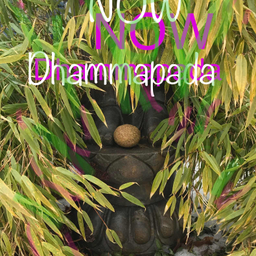
Now, Dhammapada
Claim This Podcastby p. m. cheevers
5 episodes
Updated Daily
Accepts GuestsHas SponsorsLocation 🇺🇸
Podcast Overview
The episodic pre-published publishing of: Now, Dhammapada. This is an interpretation of the historical Buddha’s teaching. This will eventually take printed book form but first we shall podcast it and support it with Substacking! <br/><br/><a href="https://awakewax.substack.com?utm_medium=podcast">awakewax.substack.com</a>
Language
🇺🇲
Publishing Since
2/20/2022
1 verified contact email on file for Now, Dhammapada
Pitch yourself as a guest, propose sponsorships, or reach out directly to the host.
Recent Episodes
July 28, 2022
Verse 2
<p>Verse 2: </p><p>Heartmind precedes all experience. Heartmind leads all experience. All experience is heartmind molded. If with a clear heartmind we speak or act, happy wellbeing follows like our friendly shadow. </p><p>Originally posted via awakewax.substack.com</p><p></p><p>For more and related works of p.m.cheevers see/hear: www.awakewax.com</p> <br/><br/>This is a public episode. If you would like to discuss this with other subscribers or get access to bonus episodes, visit <a href="https://awakewax.substack.com?utm_medium=podcast&utm_campaign=CTA_1">awakewax.substack.com</a>
June 6, 2022
Ch.1 Paired Extremes, Verse 1
<p><strong>Please Note:</strong> If your podcast reader truncates the accompanying text below please read the full text on my Substack: awakewax.substack.com</p><p>1. Paired Extremes Now, heartmind precedes all experience. Heartmind leads all experience. All experience is heartmind molded. If with a disturbed heartmind we speak or act, discontent follows like the back wheels follow the front wheels of an earth bound vehicle. (1) 1,2,3 </p><p><strong>Recording Note</strong>: You may notice a change in speed/tone with the audio well into the recording and an apparent edit/jump cut @7:48”. This was a hiccup in the recording/substack system. The lost dialog was minimal and immaterial to the message– though it is a somewhat jarring cut. It does seem that “bugs” and weirdness with Substack will be with us… so, notes like this should be looked for if you are wondering about recording anomalies. I will embrace the imperfections/limitations of the system and I hope you will too! Notes like this should explain any of these episode related oddities🧐</p> <br/><br/>This is a public episode. If you would like to discuss this with other subscribers or get access to bonus episodes, visit <a href="https://awakewax.substack.com?utm_medium=podcast&utm_campaign=CTA_1">awakewax.substack.com</a>
March 27, 2022
Preface (continued)
<p><strong>Below is the text of what is voiced in this episode, it is basically a continuation of the previous episode but in manuscript form it is from the one preface of Now, Dhammapada. </strong></p><p>At times you may find it comforting to pluck a single verse or fragment out of the 423 verses that make up most translations of the Dhammapada. Its natural to want to simplify the depth of what the Buddha was getting at and cherish it as the entirety of the Buddha’s teaching. Taking a verse or two as representative of the entirety of the Buddha’s teaching would be a big mistake yet it is an unfortunate side effect of the aphoristic form that the Dhammapada presents. Humans have this deep need to label and simplify lived experience. Subjectively it is perhaps more helpful than communally to rely on these simplifications. This four-pronged iconic framework of the Dhamma therefore can perhaps clarify and help us keep in perspective the larger whole that a phrase is a part.</p><p>Lapsing into thinking the Buddha said or the Buddha didn’t say is a conventional way of speaking, however to truly believe this way of speaking is delusion. All too common delusion. Truly believing the accuracy of knowing what a person said thousands of years ago requires something well beyond knowledge. It requires belief.</p><p>And belief is very handy sort of shorthand to recollecting experience, however it is absolutely inaccurate if blind belief, a belief not tested or experientially verified, becomes a sort of proxy for practiced experience. At the heart of what the Buddha taught is experiential not simply intellectual. The Buddha didn’t say any of this and the Buddha said all of this. It is for you to test out.</p><p>Now, Dhammapada is an interpretation of translations into contemporary, at times colloquial North American usages of the English language. It is intended to relay the spirit of the Dhamma, the Way, translated for today.</p><p>Simile and metaphor are a large part of the character and appeal of the Dhammapada, however many of the reference points, images and realities of long ago can be easily missed or totally not be relevant in today’s world. For example when is the last time you rode in or saw a chariot? When points of reference are very faint in relation to today’s lived experience I have taken the liberty of transposing the subjects of the simile or metaphor to a more easily relatable and thus understood subject and footnoted accordingly. For example instead of a chariot I have used a vehicle in parts of Now Dhammapada.</p><p>Of great importance and easily misunderstood are the many verses pointed at monastic concerns which are often not relevant to lay life. In these verses I have paired down or at times drawn out the lay concerns that are at the heart of the teachings. In some particularly liberal interpretations, I have footnoted the instance. But readings of other Dhammapada’s will be necessary for you to get the widest interpretation of the multifaceted fabric of the Dhammapada. Though I hope this take on the Dhammapada is of help to you please understand that you really should checkout some other more traditional versions of the Dhammapada as you live your life of practice.</p><p>You will notice that there are quite a few paragraphs that are very similar to immediate antecedents and they actually read as almost inadvertent typographic doubles. Likely having come into the translations over the course of a couple thousand years worth of telling. This too should be another level of reminder to the fact that the Dhammapada is a collection of translated words, a product of a primarily monastic lineage with undoubtedly multiple authors who have translated how to live wisely and kindly as taught well over two thousand years ago by one particular person.</p><p>Each Dhammapada is just one anthology of key ingredients constituting a life of release from discontent as reported to have been taught by the Buddha, a once real person who walked and talked across the north of present day India. </p><p>Lastly, please note that if you do not have a practiced experience with the Eightfold Path paired with some reading of the canon, there are likely to be many verses of the Dhammapada that will seem rather random or maybe even platitudinous. No worries, get to know the Dhammapada and then again in the future after having practiced the Eightfold Path read it a knew and see it a knew. The Dhammapada at its best is a reminder of what you have practiced wisely and what you continue to practice more wisely over time. Now, Dhammapada…</p> <br/><br/>This is a public episode. If you would like to discuss this with other subscribers or get access to bonus episodes, visit <a href="https://awakewax.substack.com?utm_medium=podcast&utm_campaign=CTA_1">awakewax.substack.com</a>
5 total episodes available
Deep-dive analytics for Now, Dhammapada
Frequently asked questions
Have a different question and can't find the answer you're looking for? Reach out to our support team by sending us an email and we'll get back to you as soon as we can.
- What is Now, Dhammapada?
- How often does this podcast release new episodes?
This podcast updates daily.
- Where can I listen to this podcast?
This podcast is available on 4 platforms including Apple Podcasts, Spotify, and more. You can also use the RSS feed directly.
- Does this podcast accept guests?
No, this podcast does not typically feature guests.
Legal Disclaimer
Pod Engine is not affiliated with, endorsed by, or officially connected with any of the podcasts displayed on this platform. We operate independently as a podcast discovery and analytics service.
All podcast artwork, thumbnails, and content displayed on this page are the property of their respective owners and are protected by applicable copyright laws. This includes, but is not limited to, podcast cover art, episode artwork, show descriptions, episode titles, transcripts, audio snippets, and any other content originating from the podcast creators or their licensors.
We display this content under fair use principles and/or implied license for the purpose of podcast discovery, information, and commentary. We make no claim of ownership over any podcast content, artwork, or related materials shown on this platform. All trademarks, service marks, and trade names are the property of their respective owners.
While we strive to ensure all content usage is properly authorized, if you are a rights holder and believe your content is being used inappropriately or without proper authorization, please contact us immediately at hey@podengine.ai for prompt review and appropriate action, which may include content removal or proper attribution.
By accessing and using this platform, you acknowledge and agree to respect all applicable copyright laws and intellectual property rights of content owners. Any unauthorized reproduction, distribution, or commercial use of the content displayed on this platform is strictly prohibited.