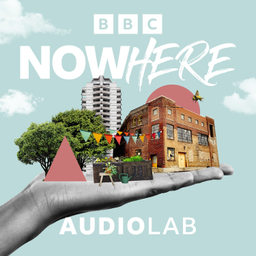
From a Liverpudlian pie shop reviving abandoned streets to a Welsh village reclaiming a radical past. From ‘citizen scientists’ exposing the slow death of the river Wye to activists resisting the loss of London’s queer spaces. Now Here tells stories of people fighting back.
These very different landscapes share common threads. At their heart is a question: how can we rethink our relationship with the land and each other? We cross the UK to find out how ordinary people are making a new kind of future. One that isn’t a distant utopia. One that’s here, now.
Over the years, Scottish islands have become collector items for the rich and famous. The Isle of Ulva has always been considered the perfect possession and it’s suffered more than most. Once home to 600 people, just five were left in 2015. Can this tiny community bring their almost-deserted island back to life?
In this episode, we meet those living on Ulva who tell us how they decided to buy back their island from its millionaire owner and run it themselves. Academic and land reform campaigner, Alastair McIntosh, shows us the links between Scotland’s violent history of dispossession and the most concentrated pattern of private land ownership in Europe today.
Writer, producer and presenter: May Robson
Supervising Producer: Emily Esson
Sound Designer: Steve Urquhart
Theme Music: Contours
Executive Producer: Elizabeth Clark
Now Here is a BBC Scotland Production for BBC Sounds Audio Lab
Commissioning Editor: Khaliq Meer
15 Feb 2024
6. Building a Queer Utopia
London markets itself as a world-class queer city. But the capital has lost 58% of its LGBTQ+ venues since 2006. Why are queer spaces disappearing so rapidly and what has been lost?
When legendary queer pub The Joiners Arms was shut down by developers in 2015, it didn’t go without a fight. In this episode, we meet people who are resisting the closure of queer spaces and imagining new ones of their own.
Olimpia Burchiellaro and Jon Ward discuss well-intentioned efforts to 'save' LGBTQ+ venues and the contradictions of 'inclusion' as cities are gentrified. We visit a new drag night, Lèse Majesté, and talk to an architectural collective to glimpse what community-owned queer spaces might actually look and feel like.
Writer, producer and presenter: May Robson
Supervising Producer: Emily Esson
Sound Design: Steve Urquhart
Theme Music: Contours
Executive Producer: Elizabeth Clark
BBC Scotland Production for BBC Sounds Audio Lab
Commissioning Editor: Khaliq Meer
15 Feb 2024
4. The Ripple Effect
Walking along the River Wye’s banks, it seems elegant and everlasting, but beneath the surface all is not well.
In this episode, we meet people living along the river who have trained as “citizen scientists” to monitor water pollution themselves. Braving muddy banks and wet feet every week, what drives them to protect a river that they say is dying?
Led by indigenous groups, a movement to recognise the natural world as alive and with rights is gaining momentum around the world. We speak to Mumta Ito, a lawyer for Nature’s Rights, about how the legal construction of nature as a dead thing - resources that humans can own and extract - goes hand-in-hand with our exploitative economic system today.
Do rivers really belong to us? How can the actions of a small group of determined people reframe our relationships with nature and one another?
Writer, producer and presenter: May Robson
Supervising Producer: Emily Esson
Sound Designer: Steve Urquhart
Theme Music: Contours
Executive Producer: Elizabeth Clark
Now Here is a BBC Scotland Production for BBC Sounds Audio Lab
Commissioning Editor: Khaliq Meer
15 Feb 2024
5. From the Ground Up
Gardens and green spaces might not be what springs to mind when you think of the industrial heartlands of Birmingham. But the city has long been the allotment capital of the UK, and these spaces are crucial to the rhythms of inner-city life.
In the aftermath of the 1980s Handsworth uprisings, it was allotments Eunice McGhie-Belgrave used to regrow her community. In this episode, we speak to Eunice, who arrived with the Windrush generation and formed the community group Shades of Black. She reflects on racism, resistance and the importance of documenting the untold stories of green spaces.
Digging deeper into the archives with sociologist Lisa Palmer, we uncover the ideological battle that raged in Birmingham over who and what allotments were for. The legacy of Shades of Black lives on. Today, people are creating community gardens with arts organisation Grand Union in a rapidly changing landscape, as the arrival of high-speed railway HS2 looms.
Writer, producer and presenter: May Robson
Supervising Producer: Emily Esson
Sound Design: Steve Urquhart
Theme Music: Contours
Executive Producer: Elizabeth Clark
BBC Scotland Production for BBC Sounds Audio Lab
Commissioning Editor: Khaliq Meer
15 Feb 2024
3. Halls of Hope
Miners’ Institutes used to be the centre of every village across the South Wales coalfield. Paid for and built by the miners themselves, they were a place to organise, to meet and to learn.
When pit closures began, hundreds of these buildings were forced to close. These ruins of industrial culture are scattered across the landscape, acting as physical reminders of losses that reverberate through time.
For Cefn Fforest, a former mining community nestled deep in the Valleys, the discovery of their now crumbling Miners’ Institute tapped into something deep inside. In this episode, we speak to people living in the village about their memories of the building - the polished oak floors, grand halls and vast library - and their ambitions to rebuild the now derelict space.
Miners’ Institutes, along with miners’ hospitals and schools, were built long before the welfare state was introduced. Can the spirit of solidarity and autonomy within these walls shape the future?
Writer, producer and presenter: May Robson
Supervising Producer: Emily Esson
Sound Designer: Steve Urquhart
Theme Music: Contours
Executive Producer: Elizabeth Clark
Now Here is a BBC Scotland Production for BBC Sounds Audio Lab
Commissioning Editor: Khaliq Meer
15 Feb 2024
2. Loaf by Loaf
For Liverpool fans, the pilgrimage to the Anfield stadium is the defining feature of home games. But come here when the football’s not on and you’ll find the streets are strangely empty. Where one big red business is worth billions, just down the road are rows of boarded up houses and shuttered shops.
In this episode, we hear from people living in Anfield about the false promises of “regeneration”. They fought for their homes, but saw their community emptied out and left decades later in half-demolished limbo.
Starting with a beloved pie shop, this community is now breathing new life into their area by bringing empty buildings into community use. Community Land Trusts, forged during the Civil Rights movement in the American South, are quietly spreading across the UK today - can this alternative approach succeed in levelling the playing field?
Writer, producer and presenter: May Robson
Supervising Producer: Emily Esson
Sound Designer: Steve Urquhart
Theme Music: Contours
Executive Producer: Elizabeth Clark
Now Here is a BBC Scotland Production for BBC Sounds Audio Lab
Commissioning Editor: Khaliq Meer
8 Feb 2024
Introducing Now Here
From a Liverpudlian pie shop reviving abandoned streets to a Welsh village reclaiming a radical past. From ‘citizen scientists’ exposing the slow death of the river Wye to activists resisting the loss of London’s queer spaces. Now Here tells stories of people fighting back.
These very different landscapes share common threads. At their heart is a question: how can we rethink our relationship with the land and each other? We cross the UK to find out how ordinary people are making a new kind of future. One that isn’t a distant utopia. One that’s here, now.
Reach and audience
Public platform figures. Ratings count people who left a rating, not total listeners.
Spotify
5.0 / 5
8 ratings
Contact Now Here
Guest appearances
Does not typically book guests
Based on episode analysis; this does not confirm that the show is currently accepting guests.
Host of Now Here?
Claim your podcast to manage its listing and keep your show details accurate.
Pod Engine is an independent podcast discovery and analytics service and is not affiliated with or endorsed by this podcast. Artwork and show content belong to their owners. Full legal notice.
Explore this show Podcast research with Pod Engine