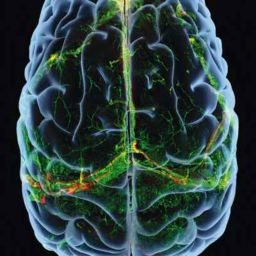
BrainPod is the podcast from the journal Neuropsychopharmacology, produced in association with Nature Publishing Group. Join us as we delve into the latest basic and clinical research that advance our understanding of the brain and behavior, featuring highlighted content from a top journal in fields of neuroscience, psychiatry, and pharmacology. For complete access to the original papers and reviews featured in this podcast, subscribe to Neuropsychopharmacology.<hr><p style='color:grey; font-size:0.75em;'> Hosted on Acast. See <a style='color:grey;' target='_blank' rel='noopener noreferrer' href='https://acast.com/privacy'>acast.com/privacy</a> for more information.</p>
NPP BrainPod
Claim This Podcastby Springer Nature
4.2(19 reviews)
74 episodes
Updated Bi-weekly
Accepts GuestsHas SponsorsLocation 🇬🇧
49
Podcast Authority
BetaFairBased on show quality, social media presence, reviews, charts, and more

Quality28
Social0
YouTube85
Engagement92
Podcast Overview
BrainPod is the podcast from the journal Neuropsychopharmacology, produced in association with Nature Publishing Group. Join us as we delve into the latest basic and clinical research that advance our understanding of the brain and behavior, featuring highlighted content from a top journal in fields of neuroscience, psychiatry, and pharmacology. For complete access to the original papers and reviews featured in this podcast, subscribe to Neuropsychopharmacology.<hr><p style='color:grey; font-size:0.75em;'> Hosted on Acast. See <a style='color:grey;' target='_blank' rel='noopener noreferrer' href='https://acast.com/privacy'>acast.com/privacy</a> for more information.</p>
Language
🇺🇲
Publishing Since
1/18/2012
Unlock The Full Podcast Authority Score Report
See how your podcast performs across key metrics
49
Podcast Authority
BetaFairBased on show quality, social media presence, reviews, charts, and more
Quality28
Social0
YouTube85
Engagement92
7
Excellent Areas
2
Good Performance
10
Growth Opportunities
excellent
Episode Length
9 minutes
Performing excellently!
good
Show Notes Quality
3.0/5
Recommendations available
Unlock the full report to see detailed tips
poor
Publishing Consistency
Every 71 days
Recommendations available
Unlock the full report to see detailed tips
+16 More Metrics
Unlock comprehensive insights including:
- • YouTube presence analysis
- • Social media reach metrics
- • RSS compliance scoring
- • Podcast 2.0 features
- • Technical standards
What's Included in Your Full Report
Detailed Analytics
- Complete breakdown of all 19 authority metrics
- Personalized recommendations for each metric
- Industry benchmarks and comparisons
- Technical RSS feed analysis and compliance scoring
Growth Strategies
- Step-by-step action plans for improvement
- Quick wins to boost your score immediately
- Pro tips from successful podcasters
Get your free podcast insights report
See how your show performs across every key metric
Instant delivery
No spam
Attract Better Guests
High authority scores make your podcast more attractive to industry leaders and influencers who want to appear on credible shows.
Secure Sponsorships
Sponsors look for podcasts with proven authority and engagement. Your score demonstrates your podcast's value to potential partners.
Grow Your Audience
Understanding your strengths and weaknesses helps you make data-driven decisions to expand your listener base effectively.
13 verified contact emails on file for NPP BrainPod
Pitch yourself as a guest, propose sponsorships, or reach out directly to the host.
Recent Episodes
May 15, 2026
Incentive salience, not psychomotor sensitization or tolerance, drives escalation of cocaine self-administration in heterogeneous stock rats
<p>There are a number of theories that have been studied to try to explain addiction and drug use escalation, and thus to also create animal models of that behavior that can then serve to help develop treatments. One theory for escalation is that people feel worse and worse over time and so they take the drug to feel better. Another is that they just don’t get as much of a reaction to the drug and so need more and more of it to get the euphoria. And then there’s something called incentive salience, which is a craving for the drug.</p><br><p>Read the full study here: <a href="https://www.nature.com/articles/s41386-026-02350-0" rel="noopener noreferrer" target="_blank">Incentive salience, not psychomotor sensitization or tolerance, drives escalation of cocaine self-administration in heterogeneous stock rats | Neuropsychopharmacology</a></p><hr><p style='color:grey; font-size:0.75em;'> Hosted on Acast. See <a style='color:grey;' target='_blank' rel='noopener noreferrer' href='https://acast.com/privacy'>acast.com/privacy</a> for more information.</p>
February 23, 2026
Oxytocin neurons in the anterior and posterior paraventricular nucleus have distinct behavioral functions and electrophysiological profiles
<p>Oxytocin has become known for having anti-anxiety and affiliative behavioral effects. That’s why clinicians and researchers are excited about using oxytocin as a potential therapeutic. </p><br><p>Brian Trainor is a professor at UC Davis, and his lab has been studying this complexity for the past decade. For an animal model, they work with a territorial, aggressive, monogamous rodent species called California mice. If the male is removed and the female is forced to defend their nest, she will experience what’s known as social defeat, and she will exhibit what’s called inhibited affiliative behavior, the type that can be affected by oxytocin — and this effect can be studied in a mouse’s brain.</p><br><p>Read the full study here: https://www.nature.com/articles/s41386-026-02352-y</p><hr><p style='color:grey; font-size:0.75em;'> Hosted on Acast. See <a style='color:grey;' target='_blank' rel='noopener noreferrer' href='https://acast.com/privacy'>acast.com/privacy</a> for more information.</p>
January 7, 2026
The genetics of cannabis lifetime use
<p>Cannabis, which is increasingly legally available, both for therapeutic and recreational use, is now one of the most commonly used drugs worldwide. Of people who have ever used cannabis, studies vary, but they estimate that about 10-25 percent of people who use cannabis go on to develop cannabis use disorder.</p><br><p>Uri Bright is a postdoctoral associate at the Yale School of Medicine and is one of the authors of a recent study in the journal Neuropsychopharmacology on the genetics of cannabis lifetime use — which is anyone who has ever used cannabis even once. That’s a distinct population from people who have cannabis use disorder, as his colleagues had looked into in the previous study.</p><hr><p style='color:grey; font-size:0.75em;'> Hosted on Acast. See <a style='color:grey;' target='_blank' rel='noopener noreferrer' href='https://acast.com/privacy'>acast.com/privacy</a> for more information.</p>
74 total episodes available
Recent guests on NPP BrainPod
Guests from recent episodes — sign up to see every guest that has ever appeared on this show.
Karl Karlsson
Guest
Similar Podcasts
Discover related shows you might enjoy

Nature Podcast
Springer Nature Limited

Science Friday
Science Friday and WNYC Studios

Science Magazine Podcast
Science Magazine

Inner Cosmos with David Eagleman
iHeartPodcasts

Hidden Brain
Hidden Brain, Shankar Vedantam

Quanta Science Podcast
Quanta Magazine

The Peter Attia Drive
Peter Attia, MD

Science Vs
Spotify Studios

The Science of Happiness
PRX and Greater Good Science Center

PsychRounds: The Psychiatry Podcast
Dr. Tanner Hewitt, Dr. Larry Wang and Dr. Bradley Miller

New Scientist Podcasts
New Scientist

TED Radio Hour
NPR
Short Wave
NPR

Discovery
BBC World Service

Speaking of Psychology
American Psychological Association
Deep-dive analytics for NPP BrainPod
Frequently asked questions
Have a different question and can't find the answer you're looking for? Reach out to our support team by sending us an email and we'll get back to you as soon as we can.
- What is NPP BrainPod?
- How often does this podcast release new episodes?
This podcast updates bi-weekly.
- Where can I listen to this podcast?
This podcast is available on 10 platforms including Apple Podcasts, Spotify, and more. You can also use the RSS feed directly.
- Does this podcast accept guests?
Yes, this podcast regularly features guests.
Legal Disclaimer
Pod Engine is not affiliated with, endorsed by, or officially connected with any of the podcasts displayed on this platform. We operate independently as a podcast discovery and analytics service.
All podcast artwork, thumbnails, and content displayed on this page are the property of their respective owners and are protected by applicable copyright laws. This includes, but is not limited to, podcast cover art, episode artwork, show descriptions, episode titles, transcripts, audio snippets, and any other content originating from the podcast creators or their licensors.
We display this content under fair use principles and/or implied license for the purpose of podcast discovery, information, and commentary. We make no claim of ownership over any podcast content, artwork, or related materials shown on this platform. All trademarks, service marks, and trade names are the property of their respective owners.
While we strive to ensure all content usage is properly authorized, if you are a rights holder and believe your content is being used inappropriately or without proper authorization, please contact us immediately at hey@podengine.ai for prompt review and appropriate action, which may include content removal or proper attribution.
By accessing and using this platform, you acknowledge and agree to respect all applicable copyright laws and intellectual property rights of content owners. Any unauthorized reproduction, distribution, or commercial use of the content displayed on this platform is strictly prohibited.