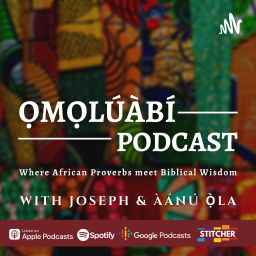
This is the podcast where African Proverbs and Biblical Wisdom converge. Each episode focuses on a Yorùbá proverb which is then reflected upon in the light of scriptures. The podcast aims both to showcase a rich collection of African proverbs and offer such indigenous wisdom to young adults of African descent and, indeed, anyone!
Omoluabi Podcast | Season 8 Episode 2
EPISODE TITLE: A Proverb on Walking in the Light, Not in Darkness
PROVERB CONSIDERED: A Yoruba proverb which teaches that “The darkness of the night does not recognise who is wealthy.”
Context:
Rooted in the traditional Yoruba practice of divination, the proverb suggests that darkness makes it difficult to distinguish between people of different social standing, wealth or accomplishments.
A person who chooses to wander in darkness should not be surprised if they are treated without the honour or recognition their status would ordinarily command.
The proverb extends beyond literal darkness to the choices we make, the company we keep and the situations we willingly enter.
Joseph and Anu explore how walking in darkness, metaphorically speaking, can expose us to indignities and consequences inconsistent with our identity as God's children.
The central lesson is that those who desire to be treated honourably must also choose to walk honourably.
Biblical Connections & Applications:
1 Samuel 28:7–14 – King Saul disguised himself to consult a medium at Endor. By entering a forbidden setting, he placed himself in a position where his royal identity and dignity were compromised.
Proverbs 13:20 – "He who walks with wise men will be wise, but the companion of fools will be destroyed." The company we keep influences our conduct, reputation and destiny.
1 John 1:7 – "But if we walk in the light as He is in the light, we have fellowship with one another, and the blood of Jesus Christ His Son cleanses us from all sin." Walking in God's light brings fellowship and cleansing.
Psalm 1:1–6 – The blessed person refuses to walk in the counsel of the ungodly, stand in the path of sinners or sit among the scornful. The Lord watches over the way of the righteous, but the way of the ungodly leads to destruction.
Matthew 5:13–16 – Jesus calls His followers the salt of the earth and the light of the world. Our conduct should reflect this identity and bring glory to God.
1 Peter 2:9 – Believers are described as a chosen generation, a royal priesthood and a holy nation, called out of darkness into God's marvellous light.
Practical Takeaways:
Walk in the light by choosing integrity, transparency and godliness in your everyday decisions.
Be mindful of the places you go, the activities you engage in and the company you keep. Your environment can influence how others perceive and treat you.
Do not compromise your Christian identity by engaging in activities that contradict your calling as an ambassador of Christ.
Remember that wealth, titles, achievements or spiritual status do not exempt anyone from the consequences of unwise choices.
Avoid situations that unnecessarily expose you to shame, dishonour or moral compromise.
Let your conduct reflect your identity as a member of God's royal priesthood. If you desire honour, live honourably.
Choose the path of righteousness, remembering that the Lord watches over the way of those who walk with Him.
12 Oct 2026
S8E01 - A Proverb on DIVINE SECURITY & PROTECTION
Omoluabi Podcast | Season 8 Episode 1
EPISODE TITLE: A Proverb on Divine Security and Protection
PROVERB CONSIDERED: A Yoruba proverb which teaches that “The termite can have no adverse effect on a wall.”
Context:
In traditional Nigerian settings, termites are known for gradually destroying wooden furniture and structures from within. However, they cannot similarly penetrate or consume a solid cement wall.
The proverb illustrates the principle that certain things are naturally resistant to particular threats, regardless of how persistently those threats present themselves.
Joseph and Anu connect this imagery to the security believers enjoy in God. Just as termites cannot destroy a solid wall, the schemes of the enemy cannot ultimately prevail against those who stand firmly in Christ.
The proverb reminds us that our confidence is not in our own strength but in God's unfailing power and protection.
Biblical Connections & Applications:
Nehemiah 6:15–16 – Despite the opposition and schemes of their enemies, the Israelites completed the rebuilding of Jerusalem's wall. Their enemies recognised that the work had been accomplished with God's help.
Isaiah 54:17 – "No weapon formed against you shall prosper, and every tongue which rises against you in judgment you shall condemn." God's people can stand confidently in His protection despite opposition.
John 16:33 – "In the world you will have tribulation; but be of good cheer, I have overcome the world." Jesus assures believers of His victory even in the face of life's troubles.
Acts 17:28 – "For in Him we live and move and have our being." Our security and existence are rooted in God, who sustains us.
Matthew 7:24–25 – Jesus describes the wise person who builds their house upon the rock. Despite the rain, floods and winds, the house remains standing because it has a firm foundation.
Practical Takeaways:
Build your life firmly on Christ, the Rock that never fails, rather than relying on your own strength.
Remember that opposition does not necessarily mean defeat. God's purposes can prevail despite the schemes of the enemy.
Do not allow fear of spiritual attacks or life's challenges to overshadow your confidence in God's protection.
Recognise that being secure in Christ does not mean being exempt from difficulties, but that difficulties cannot ultimately overturn His victory.
Draw encouragement from past testimonies of God's faithfulness, just as the rebuilding of Jerusalem's wall demonstrated His power.
Face each day with renewed confidence, knowing that your life is sustained by God and that Christ has already overcome the world.
10 Sept 2025
S7E04 - A Proverb on AVOIDING UNNECESSARY RISKS - “Ajá tó rí mótò tó dúró fi ara-a rè bọ Ògún”
PROVERB CONSIDERED: “Ajá tó rí mótò tó dúró fi ara-a rè bọ Ògún.”
(Translation: A dog that sees a motor vehicle and stands in its way makes itself a sacrifice to Ògún.)
Context:
In Yoruba culture, Ògún is the deity of iron and the patron deity for hunters (because of all the metallic intruments they use); one of Ògún's favourite sacrifices is dogs.
The proverb warns against ignoring obvious dangers. A dog that recklessly stands before a moving car is doomed to destruction, becoming an “unnecessary sacrifice.”
The heart of the proverb is about taking unnecessary risks.
The lesson: heed warnings, practise foresight, and avoid self-inflicted harm.
Biblical Connections & Applications:
Proverbs 22:3 – “A prudent man foresees danger and hides himself: but the simple pass on, and are punished.”
Proverbs 28:1 – “The wicked flee when no man pursues: but the righteous are as bold as a lion.” (Yet boldness without prudence is foolishness.)
Acts 1:4 – Jesus told the disciples to “wait for the promise of the Father”—a reminder to pause and heed spiritual guidance.
Proverbs 6:6–8 – The wisdom of ants gathering food in summer teaches preparation and foresight.
Lamentations 3:27 – It is good to bear responsibility early, preparing for future challenges.
Practical Takeaways:
Ignorance or overconfidence can make us blind to danger. Avoid the “confidence that only ignorance can supply.”
Do not ignore red flags in relationships, careers, or spiritual life; danger ignored today can destroy tomorrow.
Don’t toy with sin or assume grace will shield you from its consequences.
Learn from the wisdom of older generations rather than dismissing their experiences.
Be proactive in practical matters (e.g., renewing visas, planning ahead) instead of leaving things until it is too late.
Take time to pause, listen, and follow the checks of the Spirit before making big decisions.
Reach and audience
Public platform figures. Ratings count people who left a rating, not total listeners.
Apple Podcasts (US)
5.0 / 5
1 ratings
Spotify
5.0 / 5
8 ratings
Contact Omoluabi Podcast
Guest appearances
Does not typically book guests
Based on episode analysis; this does not confirm that the show is currently accepting guests.
Host of Omoluabi Podcast?
Claim your podcast to manage its listing and keep your show details accurate.
Pod Engine is an independent podcast discovery and analytics service and is not affiliated with or endorsed by this podcast. Artwork and show content belong to their owners. Full legal notice.
Explore this show Podcast research with Pod Engine