19 Oct 2026
Ep 110 – How to Stop Being Defensive in Marriage (Even When You're Right)
Can you be right in an argument and still be hurting your marriage? Absolutely.
When your spouse confronts you about something you’ve said or done, what’s your first reaction? Do you listen to understand, or immediately start preparing your defense?
Defensiveness is one of the biggest obstacles to healthy communication in marriage. Even when your spouse is wrong about the original disagreement, they might be right about how you’ve treated them.
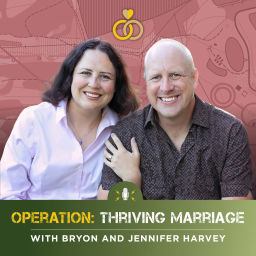
In this episode of Operation: Thriving Marriage, Bryon and Jennifer Harvey explore how Christian couples can handle criticism, take responsibility for their actions, and resolve marital conflict without getting trapped in blame, defensiveness, or endless arguments.
What You’ll Learn in This Episode
Why being right doesn’t mean you’re treating your spouse right. You can have a legitimate complaint and still respond in ways that damage your marriage.
The difference between Problem A and Problem B. Discover why the original disagreement isn’t always what keeps couples fighting.
How to stop being defensive when your spouse confronts you. Learn to listen for understanding instead of preparing your next argument.
How to take responsibility without accepting all the blame. Healthy accountability means owning your actions, not taking responsibility for everything your spouse does.
Why understanding your spouse doesn’t require agreeing with them. Learn to acknowledge your spouse’s feelings while remaining committed to truth.
How to apologize without making excuses. Why adding “but” to an apology can undermine reconciliation.
How biblical forgiveness helps couples move forward. Address the hurt caused during conflict before returning to the original disagreement.
The Difference Between Problem A and Problem B
Every married couple experiences disagreements about money, parenting, intimacy, household responsibilities, or other everyday issues.
Those disagreements are Problem A.
But when the disagreement leads to yelling, sarcasm, contempt, defensiveness, or withdrawal, couples create Problem B: the damage caused by how they’ve treated each other during the conflict.
Here’s the important distinction:
You can be 100% right about Problem A and 100% wrong about Problem B.
Resolving conflict in marriage requires dealing with both problems. Being right about the original issue doesn’t excuse treating your spouse poorly.
What Does the Bible Say About Defensiveness in Marriage?
Jesus challenges us in Matthew 7:3–5 to examine the plank in our own eye before attempting to remove the speck from someone else’s.
James 1:19 reminds Christians to be quick to listen, slow to speak, and slow to become angry.
These biblical principles remind us that healthy marriage communication begins with humility, personal accountability, and a willingness to listen.
Your spouse doesn’t have to be completely right for God to use them to reveal something you need to change.
A Practical Challenge for Your Marriage
The next time your spouse tells you that something you’ve done has hurt them, resist the temptation to immediately explain why you were right.
Instead, ask yourself:
“Even if my spouse is wrong about the situation, what might they be right about in how I treated them?”
Listen carefully. Take responsibility for your actions. Offer a sincere apology when you’ve done wrong, and work together to resolve the underlying disagreement.
Thriving marriages aren’t built by two people who are never wrong. They’re built by two people who become increasingly willing to own when they are.
Keep Growing Your Marriage
If this episode helped you think differently about conflict and communication, subscribe to Operation: Thriving Marriage for practical, biblically grounded conversations about building a healthy, God-honoring marriage.
Share this episode with a couple who might benefit from learning how to navigate disagreements without allowing defensiveness to damage their connection.
Remember: Marriage isn’t about winning ar