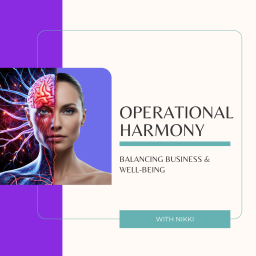
Operational Harmony: Balancing Business & Mental Wellbeing
Claim This Podcastby Nikki Walton
Podcast Authority
Beta
Podcast Overview
<p><strong>Operational Harmony: Balancing Business & Mental Wellbeing</strong>Welcome to <strong>Operational Harmony</strong>, the podcast where we bridge the gap between entrepreneurial success and mental wellbeing. Hosted by a solopreneur who understands the unique challenges of juggling business growth and personal health, this show is your go-to resource for practical advice and heartfelt support.</p><p> </p><h3><strong>Podcast Focus:</strong></h3><p> </p><p>In each episode, we dive into essential tips and information for entrepreneurs and solopreneurs, tackling the specific challenges you face when working alone or with a small team. Our unique format splits each episode into two halves: one focusing on business strategies and the other on mental wellbeing, changing your approach to your personal and professional life.</p><p> </p><h3><strong>Target Audience:</strong></h3><p> </p><p>We cater specifically to entrepreneurs and solopreneurs who are eager to optimize their business practices while maintaining a healthy mind. Whether you're looking for strategic advice or ways to handle stress, this podcast is designed for you.</p><p> </p><h3><strong>Format and Structure:</strong></h3><p> </p><p>With a versatile format, our episodes include:</p><p> </p><p><br></p><p> </p><h3><strong>Unique Selling Points:</strong></h3><p> </p><p>Unlike other podcasts that separate business and mental health, <strong>Operational Harmony</strong> integrates both, recognizing that over 70% of entrepreneurs face mental health challenges. We bring these topics closer together, providing a balanced perspective that’s often missing in the market.</p><p> </p><h3><strong>Guest Speakers:</strong></h3><p> </p><p>Our guest speakers, who vary in expertise from mental health professionals to seasoned business leaders, bring valuable insights tailored to the topics at hand. While we aim to feature high-profile guests, our primary focus is on delivering content that resonates with and supports our listeners. While I strive to maintain a balanced and respectful dialogue, some guests may present thoughts, teachings, and ideas that I may not fully agree with. However, I welcome them to share their perspectives, as they have the potential to resonate with and help someone out there.</p><p> </p><h3><strong>Personal Motivation:</strong></h3><p> </p><p>Inspired by personal experience, this podcast was born out of a desire to let fellow solopreneurs know they’re not alone. Sharing struggles and strategies from both personal and professional realms, we aim to create a supportive community where listeners can find solace and strength.</p><p> </p><h3><strong>Goals and Outcomes:</strong></h3><p> </p><p>Our mission is to ensure that you know you’re not alone in your journey. We hope to impart coping skills and practical advice that help you identify and solve problems swiftly, ultimately leading to a more balanced life and business.</p><p> </p><h3><strong>Additional Resources:</strong></h3><p> </p><p>Join our <strong>Discord community</strong> for ongoing support, access to downloadable guides, and comprehensive show notes for every episode. Engage with like-minded individuals and find the resources you need to thrive.</p><p> </p><h3><strong>Promotion and Engagement:</strong></h3><p> </p><p>Stay connected with us on all major social media platforms (except Twitter) @nikkisoffice, including a video version on YouTube, and subscribe to our <strong>newsletter</strong> for updates on new episodes and special content.</p><p> </p><p> </p><p> </p><p>Tune in to <strong>Operational Harmony</strong>, where we balance the scales between business success and mental wellbeing, one episode at a time.</p><p> </p><p><br></p><p> </p><p><br></p><p> </p><p><br></p>
Language
🇺🇲
Publishing Since
8/1/2024
Unlock The Full Podcast Authority Score Report
See how your podcast performs across key metrics
Podcast Authority
Beta
Recommendations available
Unlock the full report to see detailed tips
Recommendations available
Unlock the full report to see detailed tips
Unlock comprehensive insights including:
- • YouTube presence analysis
- • Social media reach metrics
- • RSS compliance scoring
- • Podcast 2.0 features
- • Technical standards
Detailed Analytics
- Complete breakdown of all 19 authority metrics
- Personalized recommendations for each metric
- Industry benchmarks and comparisons
- Technical RSS feed analysis and compliance scoring
Growth Strategies
- Step-by-step action plans for improvement
- Quick wins to boost your score immediately
- Pro tips from successful podcasters
See how your show performs across every key metric
High authority scores make your podcast more attractive to industry leaders and influencers who want to appear on credible shows.
Sponsors look for podcasts with proven authority and engagement. Your score demonstrates your podcast's value to potential partners.
Understanding your strengths and weaknesses helps you make data-driven decisions to expand your listener base effectively.
2 verified contact emails on file for Operational Harmony: Balancing Business & Mental Wellbeing
Pitch yourself as a guest, propose sponsorships, or reach out directly to the host.
Recent Episodes

July 6, 2026
Inside the Room: What Therapy Really Looks Like
<p>Natasha D'Arcangelo, Chief Clinical Officer at LB Health, sits down with Nikki to take apart what actually happens between the chair and the couch: crisis resources, why friends can't replace a trained therapist, how long therapy really takes, and why healing moves in fragments and puzzle pieces instead of one clean Hollywood moment. Two very different vantage points on the same work.</p><p>Natasha: <a href="https://www.linkedin.com/in/natasha-darcangelo/" target="_blank">https://www.linkedin.com/in/natasha-darcangelo/</a></p><p><br></p><p><strong>Fully Timestamped Show Notes</strong></p><p>00:00 Natasha's background and role as Chief Clinical Officer at LB Health</p><p> 02:00 How she became a therapist by accident</p><p> 04:00 Her specialties: trauma, anxiety, neurodivergence, children of immigrants</p><p> 05:00 The questions people are afraid to ask about therapy</p><p> 07:00 What to do in a crisis: 988, ER, behavioral health hospitals</p><p> 09:00 Nikki's own experience checking into a behavioral health facility</p><p> 10:00 How long therapy actually takes, two very different cases</p><p> 12:00 Natasha's goal: to put herself out of a job</p><p> 13:00 Nikki's diagnostic history</p><p> 14:00 Grief doesn't follow a schedule</p><p> 16:00 Grief isn't something you get over</p><p> 17:00 Grief compounds with each loss</p><p> 18:00 Why friends can't substitute for a therapist</p><p> 20:00 Trauma "lives in your nervous system"</p><p> 22:00 Nikki's years before finding stability</p><p> 23:00 The friend echo chamber</p><p> 25:00 Fear of judgment with friends vs. a therapist</p><p> 27:00 The Reddit story: toxic advice from newly divorced friends</p><p> 29:00 Fear of being alone blinds people to toxic influence</p><p> 30:00 Red flags: friends or partners building walls</p><p> 32:00 The therapist as an objective third party</p><p> 34:00 The first therapist you meet may not be the right one</p><p> 36:00 The research: relationship predicts outcomes, not credentials</p><p> 38:00 It's fine to ask for a specific identity or specialty match</p><p> 40:00 Red flag: a therapist offended by your questions</p><p> 41:00 Nikki's bad-fit stories</p><p> 44:00 Nikki's non-negotiables with a new therapist</p><p> 45:00 The intake session and the mind-body connection</p><p> 47:00 Setting goals together as a roadmap</p><p> 49:00 Modalities: talk therapy, EMDR, brainspotting</p><p> 50:00 Homework between sessions</p><p> 52:00 What a normal session looks like</p><p> 54:00 Humor has a place in therapy</p><p> 56:00 The full emotional range after a session</p><p> 58:00 How you know it's working: no Hollywood moment</p><p> 60:00 The puzzle metaphor for progress</p><p> 63:00 Why practicing coping skills outside session matters</p><p> 64:00 The Aldi credit card story and the "cherry pickers" technique</p><p> 65:00 Adapting the five senses grounding technique</p><p> 69:00 Practicing skills in real life</p><p> 71:00 The physical reminder on Nikki's desk</p><p> 72:00 Returning to therapy for a new season of life</p><p> 74:00 Having a backup therapist for continuity</p><p> 76:00 "The stupid thing": Nikki's wall against self-destructive thoughts</p><p> 77:00 Medication isn't a crutch</p><p> 79:00 Weaning off medication safely</p><p> 80:00 Reporting side effects to your provider</p><p> 81:00 Nikki's medication-adjustment story</p><p> 84:00 Closing thought: it's okay to not be okay, and TherapyDen as a starting point</p>

June 29, 2026
Working With vs. Working For: The Expert Standard in Operations
<p>Dr. Michelle Griffin, CEO of Griffin Resources, joins Nikki to talk about what it means to work with clients instead of just for them. They cover AI tools, Gen Z in the workforce, a $3M embezzlement case, plagiarism, business ethics, and why the real grind behind any business stays invisible until someone finally looks.</p><p><br></p><p>Website: griffin-resources.com</p><p>LinkedIn: linkedin.com/in/michelle-griffin-phd</p><p><br></p><p><strong style="color: rgb(154, 194, 229);">Fully Timestamped Show Notes</strong></p><p><br></p><p><strong style="color: rgb(201, 209, 217);">**[</strong><strong style="color: rgb(182, 212, 237);">00:00:00</strong><strong style="color: rgb(201, 209, 217);">] Dr. Michelle Griffin introduces Griffin Resources**</strong></p><p>PhD in Industrial-Organizational Psychology, CEO of Griffin Resources, outsourced HR, payroll, recruiting, and leadership coaching for small to mid-sized businesses. Approximately 80 clients across the US, including some international companies.</p><p><br></p><p><strong style="color: rgb(201, 209, 217);">**[</strong><strong style="color: rgb(182, 212, 237);">00:01:00</strong><strong style="color: rgb(201, 209, 217);">] Building a recruiting team through delegation**</strong></p><p>Dr. Griffin dislikes recruiting personally. She convinced a former colleague to join as a contractor after pandemic layoffs. That person now runs the entire recruiting department. The team was built because clients asked for it, not because it was the plan from the start.</p><p><br></p><p><strong style="color: rgb(201, 209, 217);">**[</strong><strong style="color: rgb(182, 212, 237);">00:03:00</strong><strong style="color: rgb(201, 209, 217);">] Running a company while finishing a PhD**</strong></p><p>Expected passive income from hiring people to do the work. Instead ended up running a company full time and attending school full time simultaneously. Chose to hire for every new skill clients requested rather than learn everything personally.</p><p><br></p><p><strong style="color: rgb(201, 209, 217);">**[</strong><strong style="color: rgb(182, 212, 237);">00:05:00</strong><strong style="color: rgb(201, 209, 217);">] The VA distinction: working with vs. working for**</strong></p><p>Dr. Griffin draws a firm line between working for someone (task execution) and working with them (guidance, expert pushback, teaching). A VA plugs A into B. An operations expert tells you why that sentence cannot go out and what it looks like if it does.</p><p><br></p><p><strong style="color: rgb(201, 209, 217);">**[</strong><strong style="color: rgb(182, 212, 237);">00:07:00</strong><strong style="color: rgb(201, 209, 217);">] Internal presence with clients**</strong></p><p>Griffin Resources typically gets an internal email address and operates inside the client's ecosystem. Clients often do not realize the support is outsourced. This structure creates long-term relationships. Most clients at their size stay for many years.</p><p><br></p><p><strong style="color: rgb(201, 209, 217);">**[</strong><strong style="color: rgb(182, 212, 237);">00:09:00</strong><strong style="color: rgb(201, 209, 217);">] The "how high" problem: not just executing on command**</strong></p><p>Dr. Griffin coaches her team not to run and do something the moment a client says jump. Being the expert means researching, guiding, and giving feedback before executing. Doing otherwise gets the client in trouble and the firm in trouble.</p><p><br></p><p><strong style="color: rgb(201, 209, 217);">**[</strong><strong style="color: rgb(182, 212, 237);">00:13:00</strong><strong style="color: rgb(201, 209, 217);">] Standing up to executives on FLSA compliance**</strong></p><p>A CEO wanted to pay salaried exempt employees overtime for a project. Dr. Griffin explained that treating exempt employees as non-exempt reclassifies them. She proposed a bonus structure instead, ran it by the payroll team and attorneys, and gave the CEO what he actually wanted, just legally.</p><p><br></p><p><strong style="color: rgb(201, 209, 217);">**[</strong><strong style="color: rgb(182, 212, 237);">00:15:00</strong><strong style="color: rgb(201, 209, 217);">] Refusing discriminatory terminations**</strong></p><p>Has directly pushed back against executives wanting to fire employees after learning about health conditions, disabilities, or neurodivergence. Has stood firm in those rooms, even through heated arguments. These are not suggestions. They are refusals.</p><p><br></p><p><strong style="color: rgb(201, 209, 217);">**[</strong><strong style="color: rgb(182, 212, 237);">00:15:30</strong><strong style="color: rgb(201, 209, 217);">] Copyright and plagiarism in client work**</strong></p><p>A client tried to take another person's video scripts and rebrand them. Dr. Griffin called it what it was: plagiarism, illegal, and a problem she was not going to help with. She redirected the client toward making the content their own.</p><p><br></p><p><strong style="color: rgb(201, 209, 217);">**[</strong><strong style="color: rgb(182, 212, 237);">00:17:30</strong><strong style="color: rgb(201, 209, 217);">] Self-plagiarism in doctoral work**</strong></p><p>Writing a 360-page dissertation while managing a business. Turnitin scanned for self-plagiarism throughout the entire body of prior work. Every repeated idea had to be rewritten. Graduated in 2023, just as AI hit the market.</p><p><br></p><p><strong style="color: rgb(201, 209, 217);">**[</strong><strong style="color: rgb(182, 212, 237);">00:19:30</strong><strong style="color: rgb(201, 209, 217);">] AI in video editing: what works and what does not**</strong></p><p>Dr. Griffin uses Descript for word-level editing on her full-length videos. Auto-edit AI tools produce cuts she considers unusable. She keeps the editing manual until the video is done, then runs the finished product through Opus Clips for short-form content selection.</p><p><br></p><p><strong style="color: rgb(201, 209, 217);">**[</strong><strong style="color: rgb(182, 212, 237);">00:21:00</strong><strong style="color: rgb(201, 209, 217);">] Phone editing tools: the CapCut conversation**</strong></p><p>Nikki tried CapCut and hates it. Phone-based editing makes precision impossible. Desktop editing with full screen access is the only way to do the work accurately. Both acknowledge this may be a preference shaped by how they work, not a universal truth.</p><p><br></p><p><strong style="color: rgb(201, 209, 217);">**[</strong><strong style="color: rgb(182, 212, 237);">00:23:30</strong><strong style="color: rgb(201, 209, 217);">] When AI editing makes the speaker look intoxicated**</strong></p><p>Dr. Griffin's team used AI to edit an internal onboarding video. The result made her eyes look partially closed in a way the original footage did not show. The words also stopped aligning with mouth movements. Descript was the recommended fix.</p><p><br></p><p><strong style="color: rgb(201, 209, 217);">**[</strong><strong style="color: rgb(182, 212, 237);">00:27:00</strong><strong style="color: rgb(201, 209, 217);">] Social media as the new marketing infrastructure**</strong></p><p>Traditional ads and radio have largely been replaced by accessible video content for small business owners. Dr. Griffin built 90 percent of Griffin Resources through LinkedIn networking, especially during COVID. Posting came later, after the social team was established.</p><p><br></p><p><strong style="color: rgb(201, 209, 217);">**[</strong><strong style="color: rgb(182, 212, 237);">00:29:00</strong><strong style="color: rgb(201, 209, 217);">] Two lanes of podcasting**</strong></p><p>Nikki describes the over-invested podcaster who builds a studio and burns out before the money arrives, versus the sustainable approach where good equipment is a byproduct of existing meeting infrastructure. She is in her third season. The guest who lectures her to sleep still occasionally gets through.</p><p><br></p><p><strong style="color: rgb(201, 209, 217);">**[</strong><strong style="color: rgb(182, 212, 237);">00:31:00</strong><strong style="color: rgb(201, 209, 217);">] What makes content worth listening to**</strong></p><p>Authentic connection over divisive positioning. When the goal is to bring people together, the work tends to last. When the goal is to tear people apart, eventually the audience figures it out.</p><p><br></p><p><strong style="color: rgb(201, 209, 217);">**[</strong><strong style="color: rgb(182, 212, 237);">00:32:00</strong><strong style="color: rgb(201, 209, 217);">] The influencer myth**</strong></p><p>Kids are naming influencer as a career path. Dr. Griffin and Nikki both push back: social media is a grind, not a windfall. The perfect life online is manufactured. The one-pan cooking video used a lot more dishes. The highlight reel hides the math.</p><p><br></p><p><strong style="color: rgb(201, 209, 217);">**[</strong><strong style="color: rgb(182, 212, 237);">00:38:00</strong><strong style="color: rgb(201, 209, 217);">] Generational job turnover patterns**</strong></p><p>Boomers: stayed for pensions. Gen X: the unmonitored generation, figured things out independently, thrives in the right workplace. Millennials: discovered that job-hopping every two years produces better salary growth than loyalty. Gen Z: leaving at three to six months, often before finishing the learning curve.</p><p><br></p><p><strong style="color: rgb(201, 209, 217);">**[</strong><strong style="color: rgb(182, 212, 237);">00:44:00</strong><strong style="color: rgb(201, 209, 217);">] Gentle parenting without consequences**</strong></p><p>Children raised without experiencing consequences arrive at the workforce expecting things to ease up when they stop being enjoyable. The employer absorbs the cost. Dr. Griffin is direct: the problem is the parent, not the game.</p><p><br></p><p><strong style="color: rgb(201, 209, 217);">**[</strong><strong style="color: rgb(182, 212, 237);">00:46:00</strong><strong style="color: rgb(201, 209, 217);">] Life skills gaps in the newest workforce**</strong></p><p>Employers report incoming workers who do not know how to address an envelope, use a stamp, write a check, or sign their name in cursive. Professional language norms are also collapsing: shorthand from personal messaging is appearing in business communication.</p><p><br></p><p><strong style="color: rgb(201, 209, 217);">**[</strong><strong style="color: rgb(182, 212, 237);">00:49:00</strong><strong style="color: rgb(201, 209, 217);">] AI is not the threat: the real workforce question**</strong></p><p>A company that fires the people running the AI to save money will not be in business much longer. AI is a partner to the employee. It helps people do more, faster, with less overhead. The pattern throughout history is the same: industries shift, jobs transition, some disappear and others emerge.</p><p><br></p><p><strong style="color: rgb(201, 209, 217);">**[</strong><strong style="color: rgb(182, 212, 237);">00:51:00</strong><strong style="color: rgb(201, 209, 217);">] Historical parallel: horses to cars**</strong></p><p>The United States took roughly 20 to 25 years to transition from horse-and-carriage to automotive infrastructure. Blacksmiths, stable workers, and innkeepers did not vanish. They transitioned. There are still blacksmiths. The same pattern applies to every technological shift.</p><p><br></p><p><strong style="color: rgb(201, 209, 217);">**[</strong><strong style="color: rgb(182, 212, 237);">00:54:00</strong><strong style="color: rgb(201, 209, 217);">] Using AI ethically and effectively**</strong></p><p>Dr. Griffin pits Gemini, ChatGPT, and Claude against the same question to compare outputs. She uses AI for spelling, grammar, and tone rather than source-based research. She has seasoned her ChatGPT with her own voice so the output does not sound robotic. She is clear on the line: enhance your work, not steal someone else's.</p><p><br></p><p><strong style="color: rgb(201, 209, 217);">**[</strong><strong style="color: rgb(182, 212, 237);">01:01:00</strong><strong style="color: rgb(201, 209, 217);">] Mental health and client delivery**</strong></p><p>Dr. Griffin mentions being in a very dark place mentally during the early period with her longest-running client. The work still got done. The client still got deliveries. No one knew. She notes this without drama, as a fact of how the work often operates.</p><p><br></p><p><strong style="color: rgb(201, 209, 217);">**[</strong><strong style="color: rgb(182, 212, 237);">01:04:00</strong><strong style="color: rgb(201, 209, 217);">] Follow-through as the real test of ownership**</strong></p><p>Wanting to own a business is not sufficient. The follow-through to actually do it when it is hard, boring, or unglamorous is what separates businesses that grow from those that stall. If the passion is not there to sustain the grind, working for someone else is a valid and respectable path.</p><p><br></p><p><strong style="color: rgb(201, 209, 217);">**[</strong><strong style="color: rgb(182, 212, 237);">01:05:00</strong><strong style="color: rgb(201, 209, 217);">] Fraud, embezzlement, and the hands-off owner**</strong></p><p>Dr. Griffin describes the patterns she sees across roughly 10 percent of her client engagements: personal expenses run through the company, misclassified business expenses, and in the most serious cases, payroll manipulation and offshore diversion. The conditions for theft are created when owners delegate and step back without retaining any visibility.</p><p><br></p><p><strong style="color: rgb(201, 209, 217);">**[</strong><strong style="color: rgb(182, 212, 237);">01:06:00</strong><strong style="color: rgb(201, 209, 217);">] The hospital chain embezzlement case**</strong></p><p>Griffin Resources took over payroll for a hospital chain client and noticed money missing. Benefits invoices showed as paid in the books but funds were going elsewhere. The investigation revealed the controller had been funneling money to offshore accounts. Approximately 1 million was found initially; the FBI ultimately identified 3 million total. The controller fled the country. The CFO and CEO faced consequences.</p><p><br></p><p><strong style="color: rgb(201, 209, 217);">**[</strong><strong style="color: rgb(182, 212, 237);">01:08:00</strong><strong style="color: rgb(201, 209, 217);">] Trust and oversight in bookkeeping**</strong></p><p>Dr. Griffin does not handle her own books because her brain locks up around her own finances. She has a trusted friend who does it. But she is clear: that level of trust does not exist in most workplaces. Business owners need enough knowledge of their own books to catch what is wrong.</p><p><br></p><p><strong style="color: rgb(201, 209, 217);">**[</strong><strong style="color: rgb(182, 212, 237);">01:10:00</strong><strong style="color: rgb(201, 209, 217);">] Social media careers done right**</strong></p><p>If social media is the direction, do it well. Pay attention to what is working. Do not copy someone else's content word for word. Be enough your own that you are not riding someone else's momentum. And do not fake it.</p><p><br></p><p><strong style="color: rgb(201, 209, 217);">**[</strong><strong style="color: rgb(182, 212, 237);">01:12:00</strong><strong style="color: rgb(201, 209, 217);">] Knowing yourself before choosing a direction**</strong></p><p>You have to know who you are before you can decide what you want to do. If that takes longer, fine. Go work somewhere else while you figure it out. The idea that you need to know by 18 is not accurate, and the pressure to choose before the self is formed creates a lot of the downstream chaos in the workforce.</p><p><br></p><p><strong style="color: rgb(201, 209, 217);">**[</strong><strong style="color: rgb(182, 212, 237);">01:13:00</strong><strong style="color: rgb(201, 209, 217);">] College debt and the trades conversation**</strong></p><p>Nikki paid off undergrad at 35 and still carries school debt from her PhD. Dr. Griffin notes that trades can produce six-figure incomes without a degree. College makes sense for specific career paths. For everything else, the debt-to-outcome math often does not work.</p><p><br></p><p><strong style="color: rgb(201, 209, 217);">**[</strong><strong style="color: rgb(182, 212, 237);">01:20:00</strong><strong style="color: rgb(201, 209, 217);">] Masking emotions in HR**</strong></p><p>Nikki describes moving room to room in her corporate HR days: one conversation involving a terminal illness, the next a performance review, the next a board presentation. Learning to not let one room follow you into the next is a skill developed out of necessity, not comfort.</p><p><br></p><p><strong style="color: rgb(201, 209, 217);">**[</strong><strong style="color: rgb(182, 212, 237);">01:21:00</strong><strong style="color: rgb(201, 209, 217);">] Alignable meeting and the fraudulent stock**</strong></p><p>Dr. Griffin describes a group networking meeting where someone began pitching a stock investment. As the person spoke, she recognized the elements as insider trading. She went quiet. Her friend texted her: "Fix your face." After the meeting, the friend looked it up. The stock had been flagged and locked by the Trade Commission as fraudulent. Her face told the truth before the research confirmed it.</p>

June 15, 2026
Healing the Wound That's Running Your Business
<h2>TW: This episode contains discussion of physical and sexual abuse.</h2><h3>Robert Bleck survived severe childhood abuse and built Source Completion Therapy from what that experience required. His three-phase process traces symptoms back to their emotional source and completes the wound rather than managing around it. In this episode, he connects unprocessed trauma directly to the decisions that cause businesses to collapse under their own growth. Systems problems and emotional avoidance tend to run on the same root. robertbleck.com | linkedin.com/in/robert-bleck-744aa4367</h3><p><br></p><h2><br></h2><h2><br></h2><h2>Fully Timestamped Show Notes</h2><p>[00:00:00] Introduction — Robert Bleck introduces himself as a survivor of severe childhood abuse and creator of Source Completion Therapy, a three-phase program designed to heal deep emotional wounds.</p><p>[00:01:00] The abuse begins — physical and emotional abuse starting at age three, daily degradation, and the instruments his mother used.</p><p>[00:02:00] Tied to the bed — the night his mother tied him to his bed at age three or four; the terror he still visualizes today and the fears it created.</p><p>[00:03:00] Age nine — a deep compassion for suffering forms; the beginning of Robert's drive to help humanity.</p><p>[00:04:00] Age fourteen — Robert stands up to his mother for the last time. Sports and nature as survival strategies.</p><p>[00:05:00] College and PhD — choosing psychology over medicine; entering private practice; recognizing that existing therapies were not deep enough.</p><p>[00:06:00] Building Source Completion Therapy — identifying what worked and what didn't across every therapy he knew; assembling a sequence that produced long-term, permanent results.</p><p>[00:07:00] The three phases — Awareness, Relive/Reexperience/Release, and Completion; overview of what each involves.</p><p>[00:08:00] The nature of a newborn — born pure, innocent, and dependent; why the caregiver relationship is the foundation everything else rests on.</p><p>[00:09:00] When caregivers fail — the breach of trust and the feelings it generates; what the child cannot process.</p><p>[00:10:00] The emotional consequences of abuse — worthlessness, inadequacy, rage, betrayal, shame; why the brain suppresses rather than processes.</p><p>[00:11:00] Diversions — repressed feelings channeled into obsessions, phobias, addictions, road rage, eating disorders; why treating only the behavior doesn't hold.</p><p>[00:12:00] Phase 1: Awareness — the eating disorder case study; the client who had tried everything and was certain her childhood had nothing to do with it.</p><p>[00:13:00] Phase 2: Relive — using hypnosis and visualization to return to the source figure; how hypnosis actually works in a therapeutic context.</p><p>[00:14:00] Phase 3: Completion — confronting the source figure; outcome of the eating disorder case; long-term results and what changed for the client's family.</p><p>[00:15:00] When the perpetrator is dead — going to the grave, speaking aloud, burning letters; the mechanics of completion when direct confrontation isn't possible.</p><p>[00:16:00] The rape survivor who couldn't sleep in a bed or take a shower — what the completion process looked like; the outcome of that work.</p><p>[00:17:00] Virtual options, visualization in-office, and why behavioral therapy falls short — treating the symptom without the source creates new diversions.</p><p>[00:18:00] What therapeutic hypnosis actually is — not stage performance; more like deep daydreaming or movie absorption; the relaxation method explained.</p><p>[00:19:00] Pacing, safety, and patience — Robert never pushes past what a person can hold; the process moves at each individual's pace.</p><p>[00:20:00] Case study: award-winning actress — out-of-body experiences, addiction, toxic relationships; misdiagnosed as schizophrenic; why she sought Robert out.</p><p>[00:21:00] The root underneath the actress's chaos — a father who abandoned the family, never praised her, never loved her; the endless search for approval.</p><p>[00:22:00] The actress's outcome — career restored, toxic relationships released, drugs stopped; emails of gratitude still arriving.</p><p>[00:23:00] Topic shift: business scaling stability — Nikki introduces the operational side of the conversation; what breaks when you go from zero to scale without systems.</p><p>[00:24:00] Processes in your head will sink your business — why no one else can follow what only exists in the owner's memory.</p><p>[00:25:00] The cost of vague job descriptions — when roles are undefined, people drift into whatever fills the gap, and the essential work doesn't get done.</p><p>[00:26:00] Role drift in action — the secretary who becomes IT because no one hired for tech; what happens when accountability has no clear address.</p><p>[00:27:00] Written processes are not optional — "write it down" is not a suggestion; weak decision-making is a guarantee of failure.</p><p>[00:28:00] What a real decision sounds like — "this is how we're doing this; if we find a problem, we'll adjust"; why "maybe" is a cop-out.</p><p>[00:29:00] Processes must evolve with scale — what works at ten people breaks at fifty; the difference between being rigid and being clear.</p><p>[00:30:00] Team culture breaks down at scale — and no bonding experience fixes it; the CEO must treat every department with equal respect.</p><p>[00:31:00] IT, postal workers, and what happens when suppressed frustration finally surfaces — the connection between ignored employees and eventual blowups.</p><p>[00:32:00] Word of mouth travels — the reputation you build internally is the reputation that follows you externally.</p><p>[00:33:00] Social media and the illusion of control — even anonymous posts find their source; how perception compounds.</p><p>[00:34:00] Walmart example — scale buys tolerance; small and mid-size businesses don't have that buffer.</p><p>[00:35:00] Stability = repeatability + reputation + ability to scale — Nikki's core operational framework.</p><p>[00:36:00] Arrogance as a growth killer — the difference between having money and being better than someone.</p><p>[00:37:00] Robert connects the dots — the entrepreneur who was buying twenty houses to earn his father's approval; how emotional wounds drive operational chaos.</p><p>[00:38:00] No amount of money fills what caregivers left empty — material accumulation as a diversion; what actually has to happen instead.</p><p>[00:39:00] Nikki's parallel — her mother, the dismissal from family members, and accountability as a non-negotiable.</p><p>[00:40:00] "Hurt people hurt people" — and still have to be held responsible; the distinction between understanding and excusing.</p><p>[00:41:00] Nothing substitutes for feeling and processing — the material world cannot fill the emotional gap; what actually changes when the work is done.</p><p>[00:42:00] Wrap-up — write everything down, treat people with respect, repair problems when they surface, and don't mistake money for worth.</p><p>[00:43:00] Closing — Robert and Nikki reflect on their shared experiences; closing exchange.</p>
79 total episodes available
Recent guests on Operational Harmony: Balancing Business & Mental Wellbeing
Guests from recent episodes — sign up to see every guest that has ever appeared on this show.
Ashwin Gulati
Guest
Alisa
Guest
Hillary Cisco
Guest
Jyoti
Guest
Nikki
Guest
David Creel
Guest
Jason Sisneros
Guest
Amelia Moore
Guest
Victoria Gallagher
Guest
Heidi Chance
Guest
Sabrina Oso
Guest
Lori Lander
Guest
Deep-dive analytics for Operational Harmony: Balancing Business & Mental Wellbeing
Frequently asked questions
Have a different question and can't find the answer you're looking for? Reach out to our support team by sending us an email and we'll get back to you as soon as we can.
- What is Operational Harmony: Balancing Business & Mental Wellbeing?
<p><strong>Operational Harmony: Balancing Business & Mental Wellbeing</strong>Welcome to <strong>Operational Harmony</strong>, the podcast where we bridge the gap between entrepreneurial success and mental wellbeing. Hosted by a solopreneur who understands the unique challenges of juggling business growth and personal health, this show is your go-to resource for practical advice and heartfelt support.</p><p> </p><h3><strong>Podcast Focus:</strong></h3><p> </p><p>In each episode, we dive into essential tips and information for entrepreneurs and solopreneurs, tackling the specific challenges you face when working alone or with a small team. Our unique format splits each episode into two halves: one focusing on business strategies and the other on mental wellbeing, changing your approach to your personal and professional life.</p><p> </p><h3><strong>Target Audience:</strong></h3><p> </p><p>We cater specifically to entrepreneurs and solopreneurs who are eager to optimize their business practices while maintaining a healthy mind. Whether you're looking for strategic advice or ways to handle stress, this podcast is designed for you.</p><p> </p><h3><strong>Format and Structure:</strong></h3><p> </p><p>With a versatile format, our episodes include:</p><p> </p><p><br></p><p> </p><h3><strong>Unique Selling Points:</strong></h3><p> </p><p>Unlike other podcasts that separate business and mental health, <strong>Operational Harmony</strong> integrates both, recognizing that over 70% of entrepreneurs face mental health challenges. We bring these topics closer together, providing a balanced perspective that’s often missing in the market.</p><p> </p><h3><strong>Guest Speakers:</strong></h3><p> </p><p>Our guest speakers, who vary in expertise from mental health professionals to seasoned business leaders, bring valuable insights tailored to the topics at hand. While we aim to feature high-profile guests, our primary focus is on delivering content that resonates with and supports our listeners. While I strive to maintain a balanced and respectful dialogue, some guests may present thoughts, teachings, and ideas that I may not fully agree with. However, I welcome them to share their perspectives, as they have the potential to resonate with and help someone out there.</p><p> </p><h3><strong>Personal Motivation:</strong></h3><p> </p><p>Inspired by personal experience, this podcast was born out of a desire to let fellow solopreneurs know they’re not alone. Sharing struggles and strategies from both personal and professional realms, we aim to create a supportive community where listeners can find solace and strength.</p><p> </p><h3><strong>Goals and Outcomes:</strong></h3><p> </p><p>Our mission is to ensure that you know you’re not alone in your journey. We hope to impart coping skills and practical advice that help you identify and solve problems swiftly, ultimately leading to a more balanced life and business.</p><p> </p><h3><strong>Additional Resources:</strong></h3><p> </p><p>Join our <strong>Discord community</strong> for ongoing support, access to downloadable guides, and comprehensive show notes for every episode. Engage with like-minded individuals and find the resources you need to thrive.</p><p> </p><h3><strong>Promotion and Engagement:</strong></h3><p> </p><p>Stay connected with us on all major social media platforms (except Twitter) @nikkisoffice, including a video version on YouTube, and subscribe to our <strong>newsletter</strong> for updates on new episodes and special content.</p><p> </p><p> </p><p> </p><p>Tune in to <strong>Operational Harmony</strong>, where we balance the scales between business success and mental wellbeing, one episode at a time.</p><p> </p><p><br></p><p> </p><p><br></p><p> </p><p><br></p> - How often does this podcast release new episodes?
This podcast updates daily.
- Where can I listen to this podcast?
This podcast is available on 9 platforms including Apple Podcasts, Spotify, and more. You can also use the RSS feed directly.
- Does this podcast accept guests?
Yes, this podcast regularly features guests.
Legal Disclaimer
Pod Engine is not affiliated with, endorsed by, or officially connected with any of the podcasts displayed on this platform. We operate independently as a podcast discovery and analytics service.
All podcast artwork, thumbnails, and content displayed on this page are the property of their respective owners and are protected by applicable copyright laws. This includes, but is not limited to, podcast cover art, episode artwork, show descriptions, episode titles, transcripts, audio snippets, and any other content originating from the podcast creators or their licensors.
We display this content under fair use principles and/or implied license for the purpose of podcast discovery, information, and commentary. We make no claim of ownership over any podcast content, artwork, or related materials shown on this platform. All trademarks, service marks, and trade names are the property of their respective owners.
While we strive to ensure all content usage is properly authorized, if you are a rights holder and believe your content is being used inappropriately or without proper authorization, please contact us immediately at hey@podengine.ai for prompt review and appropriate action, which may include content removal or proper attribution.
By accessing and using this platform, you acknowledge and agree to respect all applicable copyright laws and intellectual property rights of content owners. Any unauthorized reproduction, distribution, or commercial use of the content displayed on this platform is strictly prohibited.