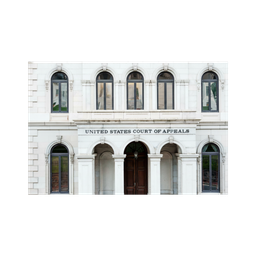
About Oral Arguments from the U.S. Court of Appeals
This podcast brings you inside real federal appellate courtrooms, where lawyers present live, time-limited arguments and judges test the strength of each side’s case. Each episode features unedited audio of arguments that supplement written briefs, giving listeners a front-row seat to how panels question counsel, clarify contested legal issues, and shape the law in areas ranging from civil rights to business disputes and criminal appeals.
Yinnv Liu v. Monthly: Date Argued: February 20th, 2026; Docket Number: 25-2074
Case Summary:
In the case of Yinnv Liu v. Monthly (Docket No. 25-2074), argued before the U.S. Court of Appeals for the Seventh Circuit on February 20, 2026, the relevant facts are as follows:
Fact Summary
The litigation is a complex commercial and intellectual property dispute involving Yinnv Liu (the plaintiff/appellant) and the defendant company Monthly (associated with Monthly.com (http://Monthly.com)), along with several other entities including Joybuy.
The core factual conflict centers on a breach of contract and copyright infringement claim related to online educational content and digital assets. Monthly operates a platform that hosts creative classes and "learning experiences" taught by high-profile instructors.
A primary issue in the record involves the ownership and distribution rights of specific instructional materials. The plaintiff alleges that Monthly and its partner entities, such as Joybuy, exceeded the scope of their licensing agreements by sub-licensing or distributing her proprietary content across international markets without proper authorization or compensation.
The factual background includes a dispute over digital rights management (DRM) and the "terms of service" that govern how independent creators interact with the Monthly platform. Monthly contends that the plaintiff voluntarily entered into a broad "Master Services Agreement" that granted the company extensive rights to adapt and monetize the content in exchange for a percentage of subscription revenue.
In early 2025, a district court granted a partial summary judgment in favor of the defendants, ruling that the plain language of the electronic contracts signed by the plaintiff shielded the companies from the majority of the claims regarding unauthorized international distribution.
The current appeal, docketed as 25-2074, challenges that interpretation. The appellant argues that the contracts were unconscionable adhesion contracts—meaning they were presented on a "take-it-or-leave-it" basis with grossly one-sided terms that a reasonable creator would not have knowingly accepted.
The appellate record also scrutinizes whether the defendants provided an accurate accounting of the revenues generated from the plaintiff's specific content modules, a factual point that underpins the plaintiff’s claim for damages.
During the oral arguments on February 20, 2026, the Seventh Circuit panel focused on the "clickwrap" nature of the agreement and whether the specific clauses allowing for "global sub-licensing" were sufficiently conspicuous to be enforceable under Illinois and federal law.
21 Feb 2026
Dickerson v. BPP PCV Owners LLC: Date Argued: February 20th, 2026; Docket Number: 24-3147
In the case of Dickerson v. BPP PCV Owners LLC (Docket No. 24-3147), argued before the U.S. Court of Appeals for the Second Circuit on February 20, 2026, the relevant facts are as follows:
The litigation was initiated by Gloria D. Dickerson, a pro se plaintiff and resident of Peter Cooper Village (PCV) in Manhattan, against the property owner, BPP PCV Owners LLC (a joint venture involving Blackstone and Ivanhoé Cambridge).
The core of the factual dispute involves allegations of housing discrimination, harassment, and retaliation related to the plaintiff's tenancy. Dickerson, a long-term resident, alleged that the management company engaged in discriminatory practices that affected her right to quiet enjoyment and equal access to housing services.
A significant portion of the lower court record focused on procedural hurdles; the defendant moved to dismiss the case on the grounds that the plaintiff's First Amended Complaint failed to state a claim upon which relief could be granted and was "vague and conclusory" regarding specific civil rights violations.
In early 2024, the district court granted the motion to dismiss but gave the plaintiff leave to file a Second Amended Complaint. A factual "comedy of errors" ensued when the pro se plaintiff attempted to file the new complaint at the wrong physical address in Manhattan (80 Worth Street), leading the court to provide additional time and guidance on proper filing procedures.
The case was eventually dismissed with prejudice by the District Court for the Southern District of New York after it found that the plaintiff’s subsequent filings still failed to satisfy the federal pleading standards, particularly the "Five Ws" (who, what, where, when, and why) required to establish a plausible claim of discrimination.
The current appeal, docketed as 24-3147, challenges that final dismissal. The plaintiff argues that the trial court applied an overly stringent standard to her pro se filings and ignored the substantive evidence of harassment she provided.
During the oral arguments on February 20, 2026, the Second Circuit panel examined whether the district court abused its discretion in denying the plaintiff further opportunities to amend her complaint and whether the existing record contained sufficient factual "nuggets" to warrant a trial on the merits.
The defense maintained that BPP PCV Owners LLC acted within its rights as a landlord and that the plaintiff's grievances did not rise to the level of federal civil rights violations or actionable breaches of the lease agreement.
21 Feb 2026
Immanuel Baptist Church v. City of Chicago:Date Argued: February 20th, 2026; Docket Number: 25-1951
In the case of Immanuel Baptist Church v. City of Chicago (Docket No. 25-1951), argued before the U.S. Court of Appeals for the Seventh Circuit on February 20, 2026, the relevant facts are as follows:
The litigation was initiated by Immanuel Baptist Church, a small congregation that had been leasing property at 1443 West Roosevelt Road in Chicago since 2011.
The dispute began in 2016 when the church attempted to purchase the leased property, but its lender required confirmation from the City that the building complied with local zoning and parking ordinances.
Under the Chicago Zoning Ordinance, religious assemblies were classified under a "Parking Group" requiring one off-street parking space for every eight seats of occupancy, which meant the church needed 19 dedicated spaces it did not possess.
The church alleged that the City’s enforcement was discriminatory because other secular assembly uses, such as public libraries and live theater venues of similar size, were exempt from these specific off-street parking requirements.
The factual record shows that after the church filed suit, the City passed a new ordinance in 2019 that reduced the church's specific parking requirement to zero, but the church argued the damage had already been done.
The church contended that the City’s initial refusal and the resulting two-year delay caused it to lose the opportunity to purchase an adjacent building and forced it to pay higher prices and insurance premiums, constituting a "substantial burden" on its religious exercise.
In late 2023, a district court ruled in favor of the church on the substantial burden claim under RLUIPA (Religious Land Use and Institutionalized Persons Act) but limited the damages to approximately $14,590 for specific out-of-pocket expenses.
The current appeal, docketed as 25-1951, involves a challenge to the district court's final judgment, specifically regarding the calculation of damages and the dismissal of the church's "equal terms" claims.
During the oral arguments on February 20, 2026, the Seventh Circuit panel examined whether the City’s application of "subjective" criteria during the zoning review process triggered the individualized assessment protections of federal law.
Reach and audience
Public platform figures. Ratings count people who left a rating, not total listeners.
Apple Podcasts (US)
5.0 / 5
2 ratings
Contact Oral Arguments from the U.S. Court of Appeals
Guest appearances
Does not typically book guests
Based on episode analysis; this does not confirm that the show is currently accepting guests.
Host of Oral Arguments from the U.S. Court of Appeals?
Claim your podcast to manage its listing and keep your show details accurate.
Pod Engine is an independent podcast discovery and analytics service and is not affiliated with or endorsed by this podcast. Artwork and show content belong to their owners. Full legal notice.
Explore this show Podcast research with Pod Engine