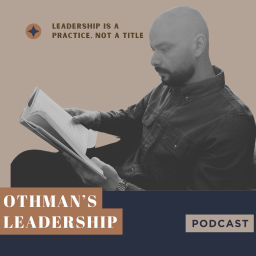
Leadership insights

Othman's Leadership Podcast
Claim This Podcastby Reda Othman
Podcast Authority
Beta
Podcast Overview
Unlock The Full Podcast Authority Score Report
See how your podcast performs across key metrics
Podcast Authority
Beta
Recommendations available
Unlock the full report to see detailed tips
Recommendations available
Unlock the full report to see detailed tips
Unlock comprehensive insights including:
- • YouTube presence analysis
- • Social media reach metrics
- • RSS compliance scoring
- • Podcast 2.0 features
- • Technical standards
Detailed Analytics
- Complete breakdown of all 19 authority metrics
- Personalized recommendations for each metric
- Industry benchmarks and comparisons
- Technical RSS feed analysis and compliance scoring
Growth Strategies
- Step-by-step action plans for improvement
- Quick wins to boost your score immediately
- Pro tips from successful podcasters
See how your show performs across every key metric
High authority scores make your podcast more attractive to industry leaders and influencers who want to appear on credible shows.
Sponsors look for podcasts with proven authority and engagement. Your score demonstrates your podcast's value to potential partners.
Understanding your strengths and weaknesses helps you make data-driven decisions to expand your listener base effectively.
1 verified contact email on file for Othman's Leadership Podcast
Pitch yourself as a guest, propose sponsorships, or reach out directly to the host.
Recent Episodes

April 30, 2026
E60: Michael Segovia on Why Your Differences Are Your Greatest Leadership Superpower
Dr. Reda Othman sat with Michael Segovia, Principal Consultant at the Myers-Briggs Company and a 38-year practitioner of personality type science, to explore how leaders can use the Myers-Briggs Type Indicator to understand themselves more deeply, communicate across difference, and build teams where people don't just coexist — they thrive. Michael brings a rare combination of personal vulnerability and research-backed insight, making this conversation as practical as it is memorable. Michael opens with a childhood moment of feeling profoundly different — and how that early experience became the lens through which he now helps organizations recognize and celebrate the very people they're at risk of sidelining. He also walks through a striking real-world example: a high-performing INTj leadership team that consistently left their own meetings having each reached a completely different decision — not because of dysfunction, but because their shared preference for introverted intuition meant they were each processing internally rather than collectively. The result was confusion that looked like conflict but was actually a type dynamic hiding in plain sight. This episode is essential for school leaders, executive teams, and anyone responsible for building alignment across a diverse leadership cabinet. Key Takeaways Discover why "feeling different" in a leadership context is not a weakness to manage but a superpower to deploy — and how great organizations are built by leaders who learn to celebrate what they don't immediately understand. Learn how the MBTI Step Two report moves beyond four letters to reveal why two people with the same type can communicate and lead in completely different ways — and why that matters for team cohesion. Understand how stress doesn't reveal character flaws — it exaggerates personality preferences, and knowing your type gives you a roadmap for what happens to your leadership when pressure hits. Apply the practice of "flexing" — adapting your style not by abandoning who you are, but by stretching intentionally toward what the person in front of you actually needs. Recognize the "mini-me" trap: how organizations unconsciously promote leaders who resemble the leaders already in power, and what that costs in innovation, inclusion, and team effectiveness. Learn to ask your team the simplest question most directive leaders never ask: "What do you need from me — and am I giving it to you?

April 18, 2026
E59: Dr. Ryan Rosiello on How Journey Mapping Transforms the Way Leaders Develop People
Dr. Reda Othman sat with Dr. Ryan Rosiello, Manager of Leadership Development at United Natural Foods (UNFI), to explore how journey mapping — a practice most leaders have never thought to apply — can fundamentally change the way organizations design experiences for the people they're developing. Ryan breaks down journey mapping not as a design tool, but as a leadership mindset: one that forces you to stop seeing programs through your own eyes and start seeing them through the eyes of your participants. Two moments in this conversation stand out. First, Ryan walks through how his team mapped every touchpoint of a senior leadership program — from the welcome moment all the way through long-term application — and the extraordinary feedback that followed when participants felt genuinely seen throughout the experience. Second, he shares a candid insight about one of the most common traps leaders fall into: designing for themselves rather than for the people they serve — and the specific practices he uses to stay anchored in participant reality. This episode is practical, grounded, and immediately applicable for school leaders, L&D professionals, and any executive who designs experiences for their teams. Key Takeaways 1. Understand that journey mapping is a leadership mindset, not just a design technique — it's about connecting every decision to the human experience of the people you're leading. 2. Learn how to chart program objectives across two dimensions: what participants should know and what they should feel — because both matter equally in a well-designed leadership experience. 3. Apply Ryan's practice of sitting in the room as an observer during your own programs to experience them the way your participants do, not the way you planned them. 4. Discover how focus groups, one-on-one interviews, and surveys each surface different kinds of insight — and why using all three together gives you the fullest picture of participant experience. 5. Avoid the trap of designing through your own lens by anchoring decisions in participant data and gathering perspectives from multiple stakeholders, including direct reports of program participants. 6. Use the simple discipline of getting the journey down on paper visually — whatever format works — as the single most practical starting point for journey mapping in any context.

March 31, 2026
E58: Joe Connolly on Leading So Others Can Flourish
Dr. Reda Othman interviews Joe Connolly, Executive Director at Yale, about living servant leadership and building belonging through intentional practices.
60 total episodes available with 25 transcripts
Recent guests on Othman's Leadership Podcast
Guests from recent episodes — sign up to see every guest that has ever appeared on this show.
Madeline Negrón
Guest
Teresa Hill
Guest
Gabrielle Dolan
Guest
Dr Andrea Carter
Guest
Dr Miko Nino
Guest
Maryellen Manning
Guest
Michael Merline
Guest
Dr Laurie Shanderson
Guest
Dr Rick Bailey
Guest
Nora Osman
Guest
Dr Alaina Szlachta
Guest
Nikki Vassallo
Guest
Deep-dive analytics for Othman's Leadership Podcast
Frequently asked questions
Have a different question and can't find the answer you're looking for? Reach out to our support team by sending us an email and we'll get back to you as soon as we can.
- What is Othman's Leadership Podcast?
- How often does this podcast release new episodes?
This podcast updates weekly.
- Where can I listen to this podcast?
This podcast is available on 6 platforms including Apple Podcasts, Spotify, and more. You can also use the RSS feed directly.
- Does this podcast accept guests?
Yes, this podcast regularly features guests.
Legal Disclaimer
Pod Engine is not affiliated with, endorsed by, or officially connected with any of the podcasts displayed on this platform. We operate independently as a podcast discovery and analytics service.
All podcast artwork, thumbnails, and content displayed on this page are the property of their respective owners and are protected by applicable copyright laws. This includes, but is not limited to, podcast cover art, episode artwork, show descriptions, episode titles, transcripts, audio snippets, and any other content originating from the podcast creators or their licensors.
We display this content under fair use principles and/or implied license for the purpose of podcast discovery, information, and commentary. We make no claim of ownership over any podcast content, artwork, or related materials shown on this platform. All trademarks, service marks, and trade names are the property of their respective owners.
While we strive to ensure all content usage is properly authorized, if you are a rights holder and believe your content is being used inappropriately or without proper authorization, please contact us immediately at hey@podengine.ai for prompt review and appropriate action, which may include content removal or proper attribution.
By accessing and using this platform, you acknowledge and agree to respect all applicable copyright laws and intellectual property rights of content owners. Any unauthorized reproduction, distribution, or commercial use of the content displayed on this platform is strictly prohibited.