About Proven Strategies for a Resilient Mindset and Emotional Healing
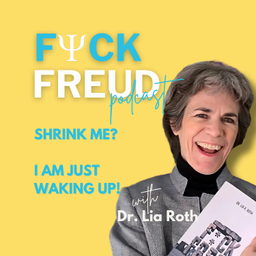
Shrink Me? I’m Just Waking Up is the podcast for people who suspect their self-knowledge might be performing for an audience.
Dr. Lia Roth — psychoanalyst, author, and professional detector of scripts people mistake for personality — takes apart the roles we slip into when the relational field stops feeling safe.
Betrayal. Shame. Desire. Relational theory. Narrative identity. Meaning. Recognition. Autonomy. Attachment.
No wellness platitudes. No soft-focus healing theater. Just short, sharp episodes about what the body registers before the mind writes the press release.
Every Sunday, we clear the noise, spot the crack, and come back to what actually matters.
Questioning your favorite self-description may have side effects. Fortunately, I'm not that kind of doctor, so this is not medical advice. It's worse. It might actually start to make sense.
Topics: psychoanalysis, relational theory, betrayal, shame, attachment, narrative identity, meaning-making, autonomy, recognition vs. approval, psychology podcast, self-help critique, desire
Regulate the body. Not because the feeling is wrong, but because it is carrying questions it cannot answer alone.
Sometimes the smallest things can leave us activated. You reached, and the response did not arrive on schedule.
Sometimes, dysregulation is is not a feeling that got too loud. But an interrogation arrived without words.
This episode looks at primary shame, the positions we take when belonging goes uncertain, and how to return to yourself before you decide what an unanswered gesture means.
What you'll take away:
Why being unanswered lands differently than being threatened, and why the usual advice misses it
Primary shame, and what happens the moment wanting someone stops producing them
One-minute practice you can do tonight, with a message you have already sent
References
Benjamin, Jessica. The Bonds of Love: Psychoanalysis, Feminism, and the Problem of Domination. New York: Pantheon Books, 1988.
Gratz, Kim L., and Lizabeth Roemer. "Multidimensional Assessment of Emotion Regulation and Dysregulation: Development, Factor Structure, and Initial Validation of the Difficulties in Emotion Regulation Scale." Journal of Psychopathology and Behavioral Assessment 26, no. 1 (2004): 41–54.
Thompson, Ross A. "Emotion Dysregulation: A Theme in Search of Definition." Development and Psychopathology 31, no. 3 (2019): 805–815.
18 Oct 2026
Land Somewhere Safe - Regulate, Read Decide & Become
Someone else’s dysregulation can reach you in seconds. Suddenly, you’re explaining, fixing, apologizing, or becoming whatever the moment seems to require.
In this episode, Dr. Lia Roth uses the Four Moves—Regulate, Read, Decide, Become—to create an interval between someone else’s affect and the position you take.
Because you can care about what happens between you without becoming a function for it.
11 Oct 2026
That Text You Almost Sent · Need, Demand, and the Freedom to Be Yourself
You know the text.
You want someone you love. You miss them. Maybe you need them. And somewhere between the feeling and your thumb hitting send, I wish you were here becomes You haven’t checked in on me all week.
Both sentences may come from the same place. But they do something very different to the person receiving them.
In this episode of Shrink Me? I Am Just Waking Up, Dr. Lia Roth explores the difference between need and demand.. and why the and how that difference opens the space for choice, freedom, and love.
Drawing from Binary Relationship Theory (BRT), Hegel’s recognition problem, and Jessica Benjamin’s work on mutual recognition, Roth looks at what happens when another person’s freedom becomes difficult to tolerate.
The episode moves through the Four Moves—Regulate, Read, Decide, Become—to a different understanding of autonomy.
Autonomy is not learning not to need people. It is being able to need someone without requiring them to stop being themselves.
Four Takeaways
Need and demand are structurally different.
A forced yes cannot give you the same thing as a free yes.
No is part of mature love.
Autonomy is not self-sufficiency.
References & Further Reading
Jessica Benjamin — work on mutual recognition, intersubjectivity, and recognition of the other as a separate subject.
G. W. F. Hegel — recognition and the master–bondsman dialectic, particularly the problem created when recognition comes from a consciousness whose independence has been subordinated.
Lia A. Roth — Get In or Get Out, But Don’t Stay in the Freakn’ Middle — on the space between the status quo and the growth required to change it.
Lia A. Roth — Not Anymore — forthcoming; on relational roles, recruitment, and the development of autonomy within relationship.
Binary Relationship Theory (BRT) — the relational field, recognition, recruitment, mattering, and autonomy.
Reach and audience
Public platform figures. Ratings count people who left a rating, not total listeners.
Apple Podcasts (US)
5.0 / 5
3 ratings
Podcast Authority Score: 25 / 100
A composite of feed quality, social presence, YouTube performance and engagement. Read the methodology.
Quality
51
Social presence
0
YouTube
0
Engagement
0
Host of Proven Strategies for a Resilient Mindset and Emotional Healing?
Claim your podcast to manage its listing and keep your show details accurate.
Pod Engine is an independent podcast discovery and analytics service and is not affiliated with or endorsed by this podcast. Artwork and show content belong to their owners. Full legal notice.
Explore this show Podcast research with Pod Engine