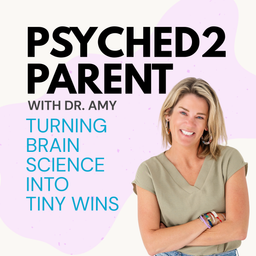
Podcast thumbnail for Psyched2Parent: Turning Brain Science into Tiny Wins for Parents

Psyched2Parent: Turning Brain Science into Tiny Wins for Parents

Claim This Podcast

by Dr. Amy Patenaude, Ed.D., NCSP

5.0(11 reviews)
52 episodes
Updated Daily
Accepts GuestsHas SponsorsLocation 🇺🇸

Podcast Overview

Psyched2Parent turns brain science into tiny wins for parents raising big-feeling, strong-willed, big-hearted, big-brained kids, especially the ones who hold it together at school and unravel at home. I'm Dr. Amy Patenaude, a school psychologist, parent coach, and your school psych in your pocket. Each week, I help you decode what's underneath the behavior, understand your child's brain and nervous system, and figure out what to do next at home and at school. You'll get parent-friendly explanations, tiny wins you can actually use, scripts for hard moments, and practical guidance for navigating school supports like IEPs, 504 plans, evaluations, and accommodations. We talk about meltdowns, executive function, anxiety, perfectionism, transitions, screen-time conflict, learning differences, and the messy middle of raising kids who feel deeply and need support that actually fits. The goal is not perfection. The goal is more clarity, more connection, fewer power struggles, and a steadier path forward, one tiny win at a time.

Language

🇺🇲

Publishing Since

12/2/2025

1 verified contact email on file for Psyched2Parent: Turning Brain Science into Tiny Wins for Parents

Pitch yourself as a guest, propose sponsorships, or reach out directly to the host.

Recent Episodes

Episode thumbnail for Is It Dyslexia? When Reading and Spelling Don't Stick

June 29, 2026

Is It Dyslexia? When Reading and Spelling Don't Stick

<h1>Is It Dyslexia? When Reading and Spelling Don't Stick</h1> <h2>Episode Summary</h2> <p>Wondering if your bright child's reading struggles, spelling problems, or homework meltdowns could be signs of dyslexia? In this episode, Dr. Amy Patenaude explains why reading and spelling may not "stick" for some kids, even when they're smart, verbal, and trying hard. You'll learn how dyslexia and learning load can look like avoidance, shutdowns, attention problems, or math fact struggles, and what to ask the school when "they're doing fine" doesn't match what you see at home.</p> <h2>This episode is for you if...</h2> <ul> <li>Your child is bright, verbal, and curious, but reading is slow or exhausting.</li> <li>Spelling doesn't stick, even with practice.</li> <li>Homework turns into tears, shutdowns, anger, or avoidance.</li> <li>Teachers say your child is "doing fine," but home tells a different story.</li> <li>You're wondering if it's dyslexia, ADHD, anxiety, sleep, motivation, or learning load.</li> <li>You want clear school scripts without writing a novel of an email.</li> </ul> <h2>In this episode you'll learn</h2> <ul> <li><strong>Spot</strong> signs of dyslexia and related learning struggles in bright kids.</li> <li><strong>Understand</strong> why reading, spelling, writing, and math facts can take so much brain fuel.</li> <li><strong>Recognize</strong> when attention problems may actually be learning load or overload.</li> <li><strong>Name</strong> the cost of learning struggles: time, tears, and self-story.</li> <li><strong>Ask</strong> the school for a clear intervention plan, progress data, and a review date.</li> <li><strong>Try</strong> tiny, low-shame supports at home without turning homework into a nightly battle.</li> </ul> <h2>Key Takeaway</h2> <p><strong>It's not a motivation problem. It's a mapping problem.</strong></p> <p>When reading and spelling don't stick, kids may need explicit support to build the brain's "word photo album," plus accommodations that reduce fatigue while skills grow.</p> <h2>Tiny Wins to Try This Week</h2> <p>Pick one. One is enough.</p> <ul> <li><strong>Notice when the crash happens.</strong> Is it during reading out loud, spelling, writing ideas on paper, math facts, or copying steps?</li> <li><strong>Write one dot-log sentence for three days.</strong> "Reading took ___ minutes + [tears/avoidance]. Audio helped."</li> <li><strong>Try one support.</strong> Audio + print for one assignment, speech-to-text for a first draft, or grid paper for math.</li> <li><strong>Send one clear school email.</strong> "I'm noticing a pattern. What supports are in place, and what data will we review in 6–8 weeks?"</li> <li><strong>Lower the load before homework.</strong> Try snack, a short reset, and one tiny ask instead of jumping straight into the worksheet.</li> </ul> <h2>Free Resources</h2> <h3>Volcano Moments + Hurricane Level Feelings Phrases Guide</h3> <p>When homework, transitions, or after-school runway turn into a full volcano moment, this guide gives you words to borrow so you don't have to improvise while everyone is already escalated.</p> <p><a href="https://psyched2parent.myflodesk.com/volcanomoments" target="_blank" rel="noopener">Grab the Volcano Moments freebie here.</a></p> <h3>Summer Without the Spiral</h3> <p>If summer brings more screen battles, transition stress, big feelings, or "now what do we do all day?" energy, grab this free support to help your family move through summer with more structure and less spiraling.</p> <p><a href="https://psyched2parent.myflodesk.com/summerspiral" target="_blank" rel="noopener">Grab Summer Without the Spiral here.</a></p> <h2>What to Ask the School</h2> <p>Use these questions to move from vague reassurance to an actual plan:</p> <ul> <li>What is the <strong>goal skill</strong>, and what is the <strong>instructional plan</strong> to build it?</li> <li>What intervention is being used?</li> <li>How many minutes per week?</li> <li>Is it individual or small group?</li> <li>How will progress be measured?</li> <li>When will we review the data?</li> </ul> <h2>Research Snapshot</h2> <p>This episode is informed by current dyslexia definitions, dyslexia myth-busting resources, and school psychology guidance on Specific Learning Disability evaluation and support. The key takeaway for parents: dyslexia is not a lack of intelligence or effort, and bright kids can compensate in ways that make the struggle harder to see at school. Comprehensive evaluations should look at patterns across multiple sources of data, not just one score, and instructional response data should help guide support without becoming an endless waiting room. The episode translates these ideas into parent language: <strong>pattern, cost, response</strong>.</p> <h2>Resources and Links</h2> <ul> <li>Follow Psyched2Parent on Instagram<br /> <a href="https://www.instagram.com/psyched2parent/" target="_blank" rel="noopener">https://www.instagram.com/psyched2parent/</a></li> <li>Follow Psyched2Parent on Facebook<br /> <a href="https://www.facebook.com/psyched2parent/" target="_blank" rel="noopener">https://www.facebook.com/psyched2parent/</a></li> <li>Support Amy's fundraiser for the Kyle Pease Foundation<br /> <a href= "https://kyle-pease-foundation-inc.networkforgood.com/projects/297130-amy-patenaude-s-fundraiser" target="_blank" rel= "noopener">https://kyle-pease-foundation-inc.networkforgood.com/projects/297130-amy-patenaude-s-fundraiser</a></li> </ul> <h2>Disclaimer</h2> <p>"This podcast is for informational and educational purposes only and is not medical, psychological, or legal advice. Listening to this podcast does not create a provider-client relationship. If you're concerned about your child's mental health, safety, or development, please consult a qualified professional in your area."</p>

Episode thumbnail for Traveling With Kids Who Melt Down: A Regulation Plan

June 22, 2026

Traveling With Kids Who Melt Down: A Regulation Plan

<h1>Traveling With Kids Who Melt Down: A Regulation Plan</h1> <p>If travel with your big-feeling kid feels less like a vacation and more like scanning the horizon for the next meltdown, this episode is for you. After a two-week multigenerational trip that included a 16-hour nonstop flight, Dr. Amy shares what actually helped her family get through long travel days, sibling spice, sensory overload, screen decisions, and those "everyone is hot, hungry, cramped, and done" moments.</p> <p>You'll learn the simple travel rhythm that made the biggest difference: <strong>Move. Meet. Mellow. Then screens.</strong> We're not doing screen shame here. Screens can absolutely be a tool on travel days, but this episode will help you use them on purpose instead of letting them become the only coping plan. The goal is not a perfect trip. It's helping your child's nervous system, and yours, stay supported enough to enjoy the good parts.</p> <h2>What you'll take from this episode</h2> <ul> <li>A simple travel rhythm: <strong>Move. Meet. Mellow. Then screens.</strong></li> <li>Why travel meltdowns are often about capacity, not attitude</li> <li>How to build in movement before long stretches of sitting</li> <li>Why connection matters before kids disappear into screens</li> <li>What "mellow time" is and how it helps kids downshift after busy moments</li> <li>How to set screen boundaries before your good parent brain goes offline</li> <li>What to say when siblings get spicy and fairness becomes a courtroom case</li> </ul> <h2>Parent script to copy</h2> <p>"Here's what's next. Here's what might change. If it changes, we'll get information and make a new plan."</p> <p>"We're not solving fairness right now. Bodies are hot and hungry. Reset button."</p> <p>"Mellow means quiet downshift time so our brains can come back online."</p> <p>"If you need screens to survive today, that is allowed. Screens start at ___. Screens end at ___. When screens end, you can choose mellow or Kindle."</p> <h2>Tiny Wins to try this week</h2> <p>Pick one. One is enough.</p> <ul> <li>🧳 <strong>Travel rhythm:</strong> Write <strong>Move. Meet. Mellow. Then screens.</strong> in your Notes app before your next outing or trip.</li> <li>🏃 <strong>Move:</strong> Pick one movement tool you can use anywhere: hallway walk, toe taps, wall push, playground stop, or ball toss.</li> <li>🌿 <strong>Mellow:</strong> Define mellow for your family: "Mellow is quiet downshift time so our brains can come back online."</li> <li>📱 <strong>Screens:</strong> Decide one screen boundary before the hard moment: "Screens start at ___. Screens end at ___."</li> <li>🔥 <strong>Sibling spice:</strong> Practice saying, "We're not solving fairness right now," then offer snack or mellow.</li> </ul> <h2>Helpful links</h2> <ul> <li><a href= "https://psyched2parent.myflodesk.com/summerspiral">Summer Without the Spiral</a></li> <li><a href= "https://psyched2parent.myflodesk.com/volcanomoments">Volcano Feelings Freebie</a></li> <li><a href="https://psyched2parent.com/podcast/">Shownotes and previous episodes</a></li> </ul> <h2>Connect</h2> <ul> <li><a href= "https://www.instagram.com/psyched2parent/">Instagram</a></li> <li><a href= "https://www.facebook.com/psyched2parent/">Facebook</a></li> <li><a href= "https://www.tiktok.com/@psyched2parent">TikTok</a></li> </ul> <h2>Support the show</h2> <p>If this episode helped, share it with the friend who has a big trip coming up and a kid who struggles with waiting, screens, or sibling spice.</p> <p>You can also leave a review wherever you listen, follow along on Instagram for the hot mess express version of Dr. Amy outside office hours, or donate to KPF if you're in a season where you can give.</p> <p><a href= "https://kyle-pease-foundation-inc.networkforgood.com/projects/297130-amy-patenaude-s-fundraiser"> Donate to KPF</a></p> <h2>Disclaimer</h2> <p>"This podcast is for informational and educational purposes only and is not medical, psychological, or legal advice. Listening to this podcast does not create a provider-client relationship. If you're concerned about your child's mental health, safety, or development, please consult a qualified professional in your area."</p>

Episode thumbnail for Pride Month, Panic, and the Open Door: How to Stay Connected When Kids Ask Big Questions

June 15, 2026

Pride Month, Panic, and the Open Door: How to Stay Connected When Kids Ask Big Questions

<h1>Pride Month, Panic, and the Open Door</h1> <h2>How to Stay Connected When Kids Ask Big Questions</h2> <p>June is Pride Month, and this episode is for every parent who wants to support LGBTQ+ kids, raise kind allies, and know what to say when children ask big questions about identity, Pride, pronouns, belonging, or friends.</p> <p>Maybe your child is LGBTQ+. Maybe your child is questioning. Maybe your child has a friend who came out. Maybe your child saw a rainbow flag and asked, "What does Pride mean?" Or maybe you simply want your child to grow up as an ally, advocate, safe friend, and kind human.</p> <p>In this episode, Dr. Amy Patenaude talks about how parents can move out of panic mode and into safe-adult mode. You'll hear how inclusivity connects to start-line access, finish-line belonging, school safety, family connection, and the belief that there is always room at the table for one more.</p> <p>This is not a politics episode. It's a relationship-safety episode.</p> <p><strong>The goal is not a perfect conversation. The goal is an open door.</strong></p> <h2>This episode is for you if…</h2> <ul> <li>Your child has asked questions about Pride Month, LGBTQ+ identity, pronouns, or belonging</li> <li>Your child has a friend who is LGBTQ+ or questioning</li> <li>You want to support your child but feel scared of saying the wrong thing</li> <li>You want your child to grow up as an ally, advocate, and safe friend</li> <li>You care about creating a home where hard, tender conversations can happen</li> </ul> <h2>In this episode, you'll learn</h2> <ul> <li>How to talk to kids about Pride Month, LGBTQ+ identity, pronouns, and belonging in simple, age-appropriate ways</li> <li>Why parents can feel panicky or awkward when children ask big questions, even when they love their kids deeply</li> <li>What kids may be listening for underneath the literal question: "Am I safe with you?"</li> <li>How to respond if your child comes out, tells you about a friend, or asks you to use a different name or pronoun</li> <li>Why protecting your child's privacy matters and how to let them control their own story</li> <li>How to advocate at school if your child is experiencing teasing, bullying, exclusion, or identity-based comments</li> <li>How to raise kids who become allies, advocates, and safe friends for LGBTQ+ peers</li> </ul> <h2>Tiny Wins to try this week</h2> <ul> <li>Try one sentence of visible safety: "In our family, people are allowed to be who they are."</li> <li>Send one micro-connection text: "Thinking of you. Love you." No lecture attached.</li> <li>Pause before reacting and ask: "Is this about my child's safety, or is my nervous system trying to win the internet?"</li> <li>Try one repair rep: "I've said some things in the past that I would handle differently now. I'm learning, and I want you to know I love you."</li> <li>Ask one privacy question: "Is this something you want help sharing, or something you want to keep private for now?"</li> </ul> <p>Pick one. One is enough.</p> <h2>Free resources</h2> <p><strong>Volcano Feelings Freebie</strong><br /> For those big, hot, explosive-feeling moments when everyone's nervous system is doing a thing.<br /> <a href= "https://psyched2parent.myflodesk.com/volcanomoments">https://psyched2parent.myflodesk.com/volcanomoments</a></p> <p><strong>Summer Without the Spiral</strong><br /> For more structure, less chaos, and fewer summer meltdowns.<br /> <a href= "https://psyched2parent.myflodesk.com/summerspiral">https://psyched2parent.myflodesk.com/summerspiral</a></p> <h2>Mentioned in this episode</h2> <p><strong>Amy's Kyle Pease Foundation Fundraiser</strong><br /> <a href= "https://kyle-pease-foundation-inc.networkforgood.com/projects/297130-amy-patenaude-s-fundraiser"> https://kyle-pease-foundation-inc.networkforgood.com/projects/297130-amy-patenaude-s-fundraiser</a></p> <p><strong>Sara Wiles on Instagram</strong><br /> <a href= "https://www.instagram.com/sara_wiles/">https://www.instagram.com/sara_wiles/</a></p> <h2>Connect with Psyched2Parent</h2> <p><strong>Instagram</strong><br /> <a href= "https://www.instagram.com/psyched2parent/">https://www.instagram.com/psyched2parent/</a></p> <p><strong>Facebook</strong><br /> <a href= "https://www.facebook.com/psyched2parent/">https://www.facebook.com/psyched2parent/</a></p> <h2>Disclaimer</h2> <p>"This podcast is for informational and educational purposes only and is not medical, psychological, or legal advice. Listening to this podcast does not create a provider-client relationship. If you're concerned about your child's mental health, safety, or development, please consult a qualified professional in your area."</p>

52 total episodes available

Deep-dive analytics for Psyched2Parent: Turning Brain Science into Tiny Wins for Parents

Frequently asked questions

Have a different question and can't find the answer you're looking for? Reach out to our support team by sending us an email and we'll get back to you as soon as we can.

What is Psyched2Parent: Turning Brain Science into Tiny Wins for Parents?

Psyched2Parent turns brain science into tiny wins for parents raising big-feeling, strong-willed, big-hearted, big-brained kids, especially the ones who hold it together at school and unravel at home.

I'm Dr. Amy Patenaude, a school psychologist, parent coach, and your school psych in your pocket. Each week, I help you decode what's underneath the behavior, understand your child's brain and nervous system, and figure out what to do next at home and at school.

You'll get parent-friendly explanations, tiny wins you can actually use, scripts for hard moments, and practical guidance for navigating school supports like IEPs, 504 plans, evaluations, and accommodations. We talk about meltdowns, executive function, anxiety, perfectionism, transitions, screen-time conflict, learning differences, and the messy middle of raising kids who feel deeply and need support that actually fits.

The goal is not perfection. The goal is more clarity, more connection, fewer power struggles, and a steadier path forward, one tiny win at a time.

How often does this podcast release new episodes?

This podcast updates daily.

Where can I listen to this podcast?

This podcast is available on 4 platforms including Apple Podcasts, Spotify, and more. You can also use the RSS feed directly.

Does this podcast accept guests?

No, this podcast does not typically feature guests.

Legal Disclaimer

Pod Engine is not affiliated with, endorsed by, or officially connected with any of the podcasts displayed on this platform. We operate independently as a podcast discovery and analytics service.

All podcast artwork, thumbnails, and content displayed on this page are the property of their respective owners and are protected by applicable copyright laws. This includes, but is not limited to, podcast cover art, episode artwork, show descriptions, episode titles, transcripts, audio snippets, and any other content originating from the podcast creators or their licensors.

We display this content under fair use principles and/or implied license for the purpose of podcast discovery, information, and commentary. We make no claim of ownership over any podcast content, artwork, or related materials shown on this platform. All trademarks, service marks, and trade names are the property of their respective owners.

While we strive to ensure all content usage is properly authorized, if you are a rights holder and believe your content is being used inappropriately or without proper authorization, please contact us immediately at hey@podengine.ai for prompt review and appropriate action, which may include content removal or proper attribution.

By accessing and using this platform, you acknowledge and agree to respect all applicable copyright laws and intellectual property rights of content owners. Any unauthorized reproduction, distribution, or commercial use of the content displayed on this platform is strictly prohibited.