- 16
- Episodes
- 5
- Ratings
- Bi-weekly
- Cadence
- 2026
- First episode
About Raised on Shame
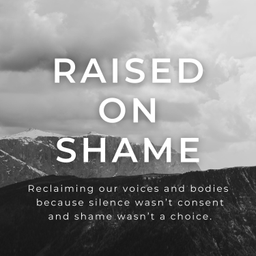
Raised on Shame is a trauma-informed podcast about unlearning shame-based beliefs rooted in faith, purity culture, and high-control systems. Hosted by Licensed Mental Health Counselor and EMDR therapist Kimberly Wilder, the show explores how shame shapes identity, relationships, bodies, and choice. This is not about abandoning faith, it’s about reclaiming agency, voice, and self-trust. You decide what comes next.
- Publisher
- Kimberly Wilder, LMHC
- Category
- health & fitness
- Language
- en
- Explicit
- Yes
- First episode
- 4 Jan 2026
- Latest episode
- 13 Oct 2026
Latest episodes
16 episodes in the feed.
13 Oct 2026
It Was Never Yours to Carry: Growing Up with Addiction, Grief, and Shame
In this episode of Raised on Shame, Kimberly Wilder sits down with licensed clinical social worker Jennifer Kimlingen for a deeply personal conversation about growing up in a family affected by alcoholism and addiction, losing both parents as a teenager, and understanding the grief and shame she carried into adulthood. Jennifer shares what it was like to know something was wrong long before the adults around her explained it. Together, Kim and Jennifer explore what happens when children are left to fill in the blanks and why the stories they create can sometimes be more painful than the truth. They discuss addiction's impact on the entire family, talking to children honestly and in developmentally appropriate ways, and giving children language for experiences they already know are happening. Jennifer also reflects on the conversation with her father that changed how she understood her childhood: his addiction, her mother's absence, her family's history, and, most importantly, that none of it was her fault. The conversation also explores grieving the parent you needed, the childhood you did not have, and the relationship that might have been. Kim and Jennifer discuss mother loss, becoming mothers themselves, recovery, community, and breaking generational patterns. You are loved. And it is not your fault. Growing up with parental alcoholism and addiction Why children notice more than adults realize How secrecy and silence can become shame Addiction's impact on the family AA, Al-Anon, and Alateen Grieving an unavailable parent Mother loss and mother-daughter grief Therapy, recovery, and community Talking to children about addiction, death, divorce, bodies, and sex Family and genetic risk without fear or shame Creating safety for adolescents to ask for help Breaking generational patterns Alcoholics Anonymous (AA) Support for people who want help with their drinking. https://www.aa.org (https://www.aa.org/) Al-Anon Family Groups Support for people affected by someone else's drinking. https://al-anon.org (https://al-anon.org/) Alateen Support for teens affected by someone else's drinking. https://al-anon.org/newcomers/teen-corner-alateen/ (https://al-anon.org/newcomers/teen-corner-alateen/) Cunt: A Declaration of Independence by Inga Muscio Women's bodies, sexuality, language, and shame. Motherless Daughters by Hope Edelman The lasting impact of mother loss. Crying in H Mart by Michelle Zauner Mother loss, grief, identity, family, food, and culture. The Primal Wound by Nancy Newton Verrier The author's theory about adoption and early maternal separation. Beautiful Things by Hunter Biden Addiction, relapse, grief, family, and recovery. Divorce: Dinosaurs Divorce by Laurene Krasny Brown & Marc Brown Bodies & Boundaries: Getting Smart About Your Private Parts by Gail Saltz Grief: The Invisible String by Patrice Karst; The Memory Box by Joanna Rowland; When Dinosaurs Die by Laurene Krasny Brown & Marc Brown Feelings & Shame: The Color Monster by Anna Llenas; In My Heart by Jo Witek; The Way I Feel by Janan Cain; The Dot by Peter H. Reynolds; I Am Enough by Grace Byers Children do not need to understand every adult detail to know something is happening. When adults remain silent, children are left to make sense of what they see and feel on their own. Their questions can turn inward: Was it me? Did I do something wrong? Is something wrong with me? Honest, developmentally appropriate conversations give children language for their experiences. Honesty does not mean telling children everything. It means giving them truthful information they can understand, making room for questions, and showing them that difficult things can be talked about. Sometimes the most important things a child needs to hear are simple: I love you. You can talk to me. This is not your fault. Raised on Shame is a podcast about the stories we inherit, the shame we carry, and what happens when we start questioning both. This season, we're deconstructing "happily ever after" and the expectations we've inherited about what a good life is supposed to look like.
29 Sept 2026
Happily as We Go: Shame, Trauma, and the Work of Healing
What if healing is not about finally arriving at happily ever after, but learning how to live happily as we go? In this episode of Raised on Shame, Kimberly talks with Paul Schulte about religious trauma, shame, identity, grief, EMDR, and the importance of doing our own work. Paul reflects on growing up gay in a deeply religious family, coming of age during the AIDS crisis, and the ways unprocessed trauma can shape how we see ourselves, our relationships, and even the work we do to help others. They also explore therapist burnout, the danger of avoiding our own pain, the role of grief in healing, and what Paul has learned through decades of trauma work, including his recent work training military psychologists in Ukraine. At the heart of the conversation is a hopeful reminder: we are designed to heal. Sometimes the key is already on the floor. We just have to be willing to look in the mirror, put down the shield, and pick it up. Maybe the goal was never happily ever after. Maybe it is happily as we go. Guest's Website (https://emdrbypaul.com/ ) & Google App (https://play.google.com/store/apps/details?id=com.paul.Imover)& Apple App (https://apps.apple.com/us/app/imover-emdr/id6763722061)& Books (https://linktr.ee/PaulSchulte) Host's Website (www.wildertally.com)
15 Sept 2026
What If Shame Isn’t the Problem?
What if shame itself isn’t actually the problem? In this episode of Raised on Shame, Kimberly sits down with psychotherapist, writer, and researcher Dr. Judith Pilla, author of How Shame Runs the World, for a conversation that challenges some of our most common assumptions about shame. Dr. Pilla argues that shame, in and of itself, is simply an emotion. The real question is how humans use it. Together, Kimberly and Dr. Pilla explore the difference between prosocial shame, which can communicate boundaries and help us learn, and corrosive shame, which is used to control, diminish, or harm. The conversation also examines how our values determine which messages of shame we accept, what happens when inherited beliefs no longer fit, and why deconstructing religion, perfectionism, relationships, and cultural expectations can change the power shame has over us. And in a conversation especially fitting for a podcast called Raised on Shame, Kimberly allows some of her own assumptions about shame to be challenged in real time. What if healing from shame isn’t about eliminating the emotion entirely, but learning which messages deserve our attention and which ones we are allowed to refuse? As Dr. Pilla puts it: "Prosocial shame: use it, then lose it. Corrosive shame: refuse it, then lose it." Shout Your Shame What were you taught to be ashamed of? What are you unlearning? What’s the thing you’ve always wanted to say out loud? Call 448-488-7046 and leave an anonymous voicemail. Your message may be featured in a future episode of Raised on Shame. Please do not include identifying information about anyone else. Resources Judith Pilla, Ph.D. (https://www.linkedin.com/in/judithpillaphd/) Book: How Shame Runs the World (https://www.simonandschuster.com/books/How-Shame-Runs-the-World/Judith-Pilla/9780757325618) Guest's Website (https://www.howshamerunstheworld.com/#home) Blog (https://www.howshamerunstheworld.com/post/the-national-academy-of-sciences-takes-a-step-toward-understanding-shame) Research (https://news.okstate.edu/articles/communications/2026/psychology-professor-publishes-study-challenging-how-we-view-shame) Host's Website (www.wildertally.com)
1 Sept 2026
Who Told Us What Happily Ever After Means?
Season 2 of Raised on Shame begins with a question: Who told us what happily ever after was supposed to look like? This season, we’re deconstructing happily ever after and the stories we inherit about love, marriage, divorce, family, faith, identity, and what a “good life” is supposed to be. And to start that conversation, Kimberly sits down with two returning guests: her daughters. Together, they talk about what makes an ending happy, whether a story can still be good when it doesn’t end the way you expected, what makes a family, how we know we are loved, and whether it’s possible to have more than one happily ever after. Their answers are funny, thoughtful, unexpected, and sometimes surprisingly profound. Because maybe the story not ending the way you expected doesn’t mean it was a bad story. Maybe happily ever after can change. And maybe the most important thing we can learn is that we’re allowed to write our own ending. Welcome to Season 2 of Raised on Shame: Deconstructing Happily Ever After.
23 Aug 2026
Raised on Shame Season 2: Deconstructing Happily Ever After
Season Two of Raised on Shame is here. This season, we're Deconstructing Happily Ever After and questioning the stories we inherited about love, marriage, family, faith, identity, and what a good life is supposed to look like. What happens when the life you were taught to want no longer fits? What becomes possible when you realize you're allowed to write your own story? And this season, I want to hear from you. Shout Your Shame is our new anonymous call-in voicemail. Call 448-488-7046 to tell us what you were taught to be ashamed of, what you're unlearning, or the thing you've always wanted to say out loud. Your message may be featured in a future episode. Join us for Season Two of Raised on Shame, starting September 1.
19 May 2026
There Are No Wrong Answers
There Are No Wrong Answers Consent, God, and ASMR: Raised on Shame, Kids Edition Season One Finale In this special Mother’s Day season finale of Raised on Shame, Kimberly sits down with her daughters for tea, questions, giggles, and an unscripted conversation about God, love, shame, consent, death, boundaries, curiosity, and the questions adults are sometimes afraid to answer. Together, they explore: what love feels like whether grownups know everything what consent means what shame feels like what happens after people die why asking questions matters and what it sounds like when children are allowed to think out loud without fear This episode is messy, funny, thoughtful, philosophical, tender, distracting, sincere, and deeply human. Topics discussed include: emotional safety shame-free parenting spirituality and faith bodily autonomy consent and boundaries grief and death childhood curiosity raising children without fear-based conversations Books & Resources Mentioned Let’s Talk About Body Boundaries, Consent and Respect A children’s book focused on body ownership, consent, respectful relationships, boundaries, and emotional safety. Midtown Reader (https://midtownreader.com/book/9781925089189?utm_source=chatgpt.com) Amazing You!: Getting Smart About Your Private Parts A body-awareness book for young children focused on anatomy, privacy, boundaries, and age-appropriate conversations about bodies. Midtown Reader (https://midtownreader.com/book/9780142410585?utm_source=chatgpt.com) Listener Reflection Take a quiet moment sometime this week and ask yourself: “What questions was I afraid to ask as a child?” Or: “What parts of myself learned that curiosity was unsafe?” You do not have to solve those questions. Just notice them. And if you have children in your life, maybe ask them a real question and let their answer exist without correcting it. If this episode resonated with you: follow the podcast leave a rating or review share the episode with someone you trust or send a message about what stood out to you Disclaimer Raised on Shame is a storytelling and conversational podcast and is not a substitute for therapy, mental health treatment, medical advice, or crisis services. The views shared in this episode are personal reflections and lived experiences intended for educational and reflective purposes only. Connect with Kimberly and find additonal resources at wildertally.com (https://www.wildertally.com?utm_source=chatgpt.com) If this episode resonated with you: follow the podcast leave a rating or review share the episode with someone you trust or send a message about what stood out to you Thank you for listening to season one of Raised on Shame.
5 May 2026
Faith, Shame, and the Stories We Inherit
In this episode, Kimberly Wilder, LMHC sits down with filmmaker and storyteller Candace Young for a deeply personal conversation about faith, identity, and the stories that shape us. What happens when two people grow up with completely different experiences of Christianity and still choose to sit at the same table and talk about it? Kimberly Wilder, LMHC shares her experience of growing up in a highly rule-based, shame-driven religious environment in the South. Candace offers a contrasting perspective, describing a childhood where faith was modeled through love, connection, and lived example rather than control. Together, they explore what it means to question what you were taught, to define your own beliefs, and to navigate spirituality on your own terms. This conversation moves through: religious trauma versus relational spirituality how shame forms across different life experiences racism, identity, and feeling like an outsider adoption, belonging, and internalized narratives of feeling unwanted the pressure placed on women to carry and care for everything learning to trust your own voice and intuition interdependence and asking for help without guilt purity culture, silence around sex, and generational patterns grief, death, and evolving beliefs about what comes after At its core, this episode is about connection. Not agreement. Not conversion. Just the willingness to listen, to hold space, and to let different truths exist side by side. Resources & Media Mentioned The Motorcycle Diaries (film) (https://www.imdb.com/title/tt0318462/) American Pie (film) (https://www.imdb.com/title/tt0163651/?ref_=fn_t_1) The Pitt (TV show) (https://www.imdb.com/title/tt31938062/?ref_=fn_t_1) Claws (TV series) (https://www.imdb.com/title/tt5640558/) Let Us Prey (Documentary) (https://www.imdb.com/title/tt29926213/) Mickee Faust Club (Tallahassee theater collective) (https://www.mickeefaust.com/) Five Wishes (end-of-life planning resource) (https://www.fivewishes.org/)
21 Apr 2026
You Were Never Meant to Do This Alone
In this episode of Raised on Shame, we explore the role of community in healing. This conversation centers on a truth that often gets overlooked in trauma work: healing does not happen in isolation. While many of us have learned to cope, survive, and even function on our own, those adaptations often come at the cost of connection. We talk about what happens when shame is carried alone, how trauma can disrupt our sense of belonging, and why safe, attuned relationships are not optional in the healing process, they are essential. This episode invites you to consider: How isolation may have been an adaptive response, not a personal failure What it means to experience being seen and understood without judgment How community can begin to shift long-held patterns of shame What safe connection actually looks like, beyond surface-level interaction There is also space in this conversation for the complexity of community. For many, connection has not always been safe. Rebuilding trust in relationships can be slow, layered, and deeply personal. If you have ever felt like you were carrying too much on your own, this episode is for you. Resources & Support This podcast is not a substitute for therapy.If this episode brought anything up for you, support matters. You can find additional resources www.wildertally.com/resources (https://www.wildertally.com/resources) Guest Information Deborah Jean Nielsen, LMFT, ATR-BC, EMDR Certified Therapist, EMDRIA Approved Consultant You can find her: website www.deborahnielsen.com (www.deborahnielsen.com) book Breaking Whole (https://www.audible.com/pd/Breaking-Whole-Audiobook/B0F2GMD55X?loginAttempt=true&ref=a_search_c3_lProduct_1_1&ref_pageloadid=not_applicable&plink=QNvoeYrrgeahqk22&pageLoadId=vJhXidYgcSK2lu5h&qid=1743526296&creativeId=0d6f6720-f41c-457e-a42b-8c8dceb62f2c&sr=1-1&showAmznLopSignalBanner=true) Stay Connected Season one of Raised on Shame is coming to a close soon. If you want to stay connected for the final episodes and what’s coming next, follow the podcast so you don’t miss future releases. About the Podcast Raised on Shame explores trauma, shame, and healing through honest conversations that bridge clinical understanding and lived experience.
7 Apr 2026
The Shows That Raised Me
I wasn’t raised by television. But I learned how to live from it. In this episode, I introduce myself through the shows that shaped me, because for a long time, they were my only access to the world outside the one I grew up in. Raised in a controlled environment, I wasn’t just watching TV. I was studying it. Learning relationships, desire, identity, and belonging from fragments. And trying to build a self from that. This episode is about exposure, what happens when you grow up without a shared cultural language, and what it takes to unlearn the stories that were never fully yours. If you’ve ever felt behind, out of sync, or like everyone else knew something you didn’t, start here.
24 Mar 2026
Gaslighting in the Name of God
Religious Trauma, Spiritual Abuse, and Rebuilding Self-Trust @wilder_tally | info@wildertally.com | www.wildertally.com (http://www.wildertally.com) Raised on Shame is a podcast about religious trauma, deconstruction, shame based faith systems, and learning to trust yourself again after leaving high control religion. Gaslighting is often used as a buzzword, but clinically it has a specific meaning. Gaslighting is a form of psychological manipulation where someone repeatedly distorts or dismisses your reality, causing you to doubt your thoughts, memories, and perceptions. In religious trauma and high control environments, gaslighting can be especially difficult to recognize. Language framed as “truth,” “growth,” or “spiritual authority” can override your internal experience. Over time, this can disconnect you from your intuition, your body, and your sense of self. In this episode of Raised on Shame, Kimberly Wilder, licensed trauma therapist, explores gaslighting in religious contexts, including how spiritual abuse, power dynamics, and shame based systems contribute to self-doubt and loss of self-trust. This episode integrates trauma-informed clinical insight, psychological research, and lived experience to help you identify gaslighting, understand its impact, and begin rebuilding trust in yourself after religious harm. Later in the episode, Kimberly is joined by a guest who brings both clinical and lived experience to explore how gaslighting operates in spiritual environments and how it differs from genuine care and support. • What gaslighting is (clinical definition vs common misuse) • Gaslighting in religious trauma and high control faith systems • Spiritual abuse and the role of power and authority • The difference between gaslighting and disagreement • Spiritual bypassing vs trauma-informed care • How gaslighting impacts memory, identity, and self-trust • Why survivors of religious trauma often doubt themselves If it feels supportive, you might reflect on: • Where have I been taught to question my own reality? • What happens in my body when I trust my perception? • What messages have shaped how I interpret my experiences? • What do I know to be true about my experience, without external validation? You might also try a grounding practice: • Name three things you know to be true about your experience • Notice what shifts in your body as you say them • Pay attention to any sense of clarity, resistance, or relief Explore trauma-informed resources, therapist directories, and support for religious trauma recovery: • https://www.wildertally.com/resources (https://www.wildertally.com/resources) Research referenced in this episode: • Gaslighting as a social and psychological control mechanism (American Sociological Review) • Scientific American: How gaslighting manipulates reality • National Library of Medicine (PMC): Psychological impact of gaslighting • APA PsycNet: Gaslighting and self-concept disruption • Trauma Resolution and Recovery Institute Books on religious trauma, gaslighting, and healing: • The Body Keeps the Score by Bessel van der Kolk • What My Bones Know by Stephanie Foo • When Religion Hurts You by Laura Anderson • Leaving the Fold by Marlene Winell If this episode on gaslighting and religious trauma resonated with you, you are welcome to share your questions or reflections. Your questions may be included in a future Q and A episode. Interested in sharing your story or expertise? Apply to be a guest: • https://www.wildertally.com (https://www.wildertally.com) Follow, rate, and review Raised on Shame to support the podcast and help others navigating religious trauma and deconstruction find this content. This episode discusses religious trauma, gaslighting, spiritual abuse, and psychological harm in a trauma-informed and non-graphic way. This podcast is not a substitute for therapy or mental health care. If you are seeking support for religious trauma or emotional distress, visit: • https://www.wildertally.com/resources (https://www.wildertally.com/resources)
10 Mar 2026
Learning Safety in Relationships After Desconstruction
Episode 5: Healthy Relationships After Deconstruction @wilder_tally | info@wildertally.com | www.wildertally.com Raised on Shame is a podcast about religious trauma, shame based faith systems, and learning to trust yourself again after deconstruction. Relationships can feel complicated for many reasons. After religious trauma or leaving high control faith communities, connection can feel especially confusing. Many people navigating religious trauma recovery find that intimacy and attachment feel different than expected. You may want closeness deeply while your body reacts to intimacy as if it is unsafe. That tension can feel disorienting, especially if you were taught that love should feel peaceful, certain, or instantly right. In this episode of Raised on Shame, Kimberly Wilder explores what happens to attachment after shame based environments, leaving high control religion, and navigating religious deconstruction. We talk about why relationships can feel activating after leaving high control systems, why emotional intensity is often mistaken for connection, and why rebuilding trust in your internal signals takes time. Later in the episode, Kimberly speaks with N’Deye Delgado, who shares her experience growing up in a highly sheltered environment shaped by modesty culture, silence around sexuality, and strong expectations about womanhood. Together they explore what it means to enter adulthood without foundational information about bodies, boundaries, and consent, and how those gaps can affect early relationships. This conversation is not about judging the past or finding a perfect way to relate. It is about understanding how environments shape attachment and learning to approach connection with more awareness and compassion. In this episode we discuss: • Why relationships can feel activating after leaving high control systems • Wanting connection while also fearing intimacy • How shame based environments shape attachment patterns • Why emotional intensity can be mistaken for connection • Green flags in healthier relationships such as pacing, curiosity, and repair • Growing up in environments shaped by modesty culture and silence around sexuality • The risks of withholding information about bodies and consent • Why education and open conversations help protect young people Reflection questions If it feels supportive this week, try noticing your nervous system in relationships: • Does this relationship allow space for pacing? • Can I express uncertainty, boundaries, or questions? • What happens when I listen to my internal signals? Safety in relationships is not about never feeling activated. It is about how connection responds when activation occurs. You might also reflect on: • When does connection feel grounding rather than overwhelming? • Where might intensity be mistaken for closeness? • What would it look like to move at a pace your nervous system can tolerate? Resources • Leaving the Fold by Marlene Winell • When Religion Hurts You by Laura Anderson • Attached by Amir Levine and Rachel Heller • Polywise by Jessica Fern • What My Bones Know by Stephanie Foo • The Myth of Normal by Gabor Maté and Daniel Maté • Religious Trauma Institute • OMGYes (www.OMGYes.com) • Planned Parenthood (plannedparenthood.org/learn/stds-hiv-safer-sex/safer-sex) Pop culture • Shiny Happy People • Keep Sweet: Pray and Obey • Wild Wild Country • Going Clear: Scientology and the Prison of Belief • Holy Hell • First Reformed • Silence • Calvary • Twisted Yoga This episode discusses spiritual trauma, shame based environments, and relational harm in a trauma informed and non graphic way. This podcast is not a substitute for therapy or mental health care. If you are looking for support, you can find a therapist here: • https://www.emdria.org/find-an-emdr-therapist/ • https://www.psychologytoday.com
24 Feb 2026
Leaving Didn’t Heal Me, Grieving Did
Leaving a harmful system doesn’t always bring immediate relief. Sometimes it brings grief - quiet, complicated, and hard to name. Especially when what was lost wasn’t just belief, but community, certainty, identity, and belonging. In this episode of Raised on Shame, we talk about ambiguous loss - the kind of grief that doesn’t have a clear ending or social permission to exist. We explore why leaving alone doesn’t heal, why grief often shows up as anger, numbness, or shame, and why missing something that harmed you doesn’t mean you made the wrong choice. Together, we cover: What ambiguous loss is and why it’s so common after leaving shame-based or high-control systems Losing community, certainty, and identity all at once Why grief doesn’t always look like sadness How anger, numbness, or shame can be expressions of unacknowledged grief Giving yourself permission to miss what mattered -even if it also caused harm A gentle writing practice to help name loss, growth, and what still aches This episode isn’t about rushing healing or finding meaning in pain. It’s about allowing grief to exist without judgment - and recognizing that grieving is not a step backward, but part of integration. If it feels supportive, try this writing prompt: What I lost What I gained What still aches There’s no requirement that gain outweigh loss. Honesty is enough. As you move through the week, consider: What are you still grieving, even if you don’t wish it back? This episode discusses grief, loss, and spiritual harm in a non-graphic, trauma-informed way. This podcast is not a substitute for therapy or mental health care. If you’re looking for additional support, resources for finding a therapist in your area are available in the show notes. Books Ambiguous Loss by Pauline Boss (https://midtownreader.com/book/9788184980608) It’s OK That You’re Not OK by Megan Devine (https://midtownreader.com/search?q=It%E2%80%99s%20OK%20That%20You%E2%80%99re%20Not%20OK%20by%20Megan%20Devine) Braiding Sweet Grass by Robin Wall Kimmerer (https://midtownreader.com/book/9781571313560) Man's Search for Meaning by Viktor E. Frankl (https://midtownreader.com/book/9780807014271) Tuesdays with Morrie by by Mitch Albom (https://midtownreader.com/book/9780767905923) It Didn't Start with You: How Inherited Family Trauma Shapes Who We Are and How to End the Cycle by Mark Wolynn (https://midtownreader.com/book/9781101980385) When Religion Hurts You by Laura Anderson (https://midtownreader.com/book/9781587435881) Trauma Therapy Eye Movement Desensitization and Reprocessing (EMDR) Therapy Somatic Experiencing® (SE) Cognitive Processing Therapy (CPT) Other Resources Religious Trauma Institute (https://www.religioustraumainstitute.com/) Religious Trauma Syndrome (https://www.journeyfree.org/rts/) Expressive writing research — James Pennebaker (https://www.apa.org/news/podcasts/speaking-of-psychology/expressive-writing) Pop Culture (Blanket trigger warning for all - please read reviews before viewing) Still Small Voice (MUBI) Surviving Death (Netflix) Shrinking (Apple TV+) The Leftovers (HBO) The Unknown Country (MUBI) Station Eleven (HBO) The Moon Was the First TV (MUBI) Practice/Journal Prompt Try writing three lists: What I lost What I gained What still aches There is no requirement that gain outweigh loss. This podcast is not a substitute for therapy or mental health care. If you’re looking for additional support, resources for finding a therapist in your area are available below. Find a Therapist https://www.emdria.org/find-an-emdr-therapist/ (https://www.emdria.org/find-an-emdr-therapist/) www.psychologytoday.com (http://www.psychologytoday.com) PracticeReflectionContent NoteReminderResourcesReminder
10 Feb 2026
Your Body Was Never the Problem
Many of us were taught-explicitly or quietly-that our bodies could not be trusted. Whether through purity culture, dieting, or both, the message was often the same: control your body, monitor your impulses, and override what you feel. In this episode of Raised on Shame, we explore how purity culture and diet culture fracture body awareness in remarkably similar ways. Through a trauma-informed lens, we talk about how disconnection from the body often develops as a survival strategy-and why rebuilding embodiment doesn’t require confidence, sexuality, or positivity. Together, we cover: How purity culture and dieting teach distrust of the body Common sex myths and body-image beliefs many women carry into adulthood Why advice like “just relax” often increases shame instead of safety How trauma reshapes body awareness and sensation A gentle practice for reclaiming neutral body awareness This episode is about presence, not performance. It’s about learning to notice your body again—without fixing it, judging it, or demanding anything from it. As you listen this week, consider starting with neutrality: Notice one neutral body sensation (temperature, pressure, contact) Let awareness be enough—no interpretation or change required This episode discusses purity culture, diet culture, shame, and body disconnection in a non-graphic, trauma-informed way. What to be a guest on the show? Click here (https://kwilderlmhc.wixsite.com/wilder-wellness/podcast) and scroll to the bottom of the page to complete the form. Books Health at Every Size - Linda Bacon (https://midtownreader.com/book/9781935618256) Intuitive Eating & Intuitive Eating Workbook - Evelyn Tribole & Elyse Resch (https://midtownreader.com/book/9781648484599) More Than A Body: Your Body Is an Instrument, Not an Ornament - Lexie Kite, Lindsay Kite, et al. (https://www.morethanabody.org/more-than-a-body-book/) The F*ck It Diet: Eating Should Be Easy - Caroline Dooner (https://midtownreader.com/book/9780062883629) Shameless: A Sexual Reformation - Nadia Bolz-Weber (https://nadiabolzweber.com/shameless/) The Marriage Portrait by Maggie O'Farrell (https://midtownreader.com/book/9780593315088) Trauma Therapy Eye Movement Desensitization and Reprocessing (EMDR) Therapy Somatic Experiencing® (SE) Cognitive Processing Therapy (CPT) Other Resources Religious Trauma Institute (https://www.religioustraumainstitute.com/) The Reclamation Collective (https://www.reclamationcollective.com/) Center for Body Trust® (https://centerforbodytrust.com/) Betty Martin’s Wheel of Consent (https://centerforbodytrust.com/) www.OMGYes.com (http://www.omgyes.com) Happiness in America, Part 1-The Secret to a 'Good Life,' According to an 80-Year Study (https://open.spotify.com/episode/5yZRgJ28BKWCXqxUQfbsPP?si=Styywed3Qhi-nDEq_YV32A) Pop Culture (Blanket trigger warning for all - please read reviews before viewing) Let Us Prey: A Ministry of Scandals (HBO) The Keepers (Netflix) Under the Banner of Heaven (FX / Hulu) Spotlight The Vow (HBO) Dying for Sex (Hulu) Reflection/Journal Prompt Where did you first learn to override your body’s signals—and what did that protect you from? This podcast is not a substitute for therapy or mental health care. If you’re looking for additional support, resources for finding a therapist in your area are available below. Find a Therapist https://www.emdria.org/find-an-emdr-therapist/ (https://www.emdria.org/find-an-emdr-therapist/) www.psychologytoday.com (http://www.psychologytoday.com)
27 Jan 2026
Discernment, Intuition, or Hypervigilance?
Many of us were taught to look outside ourselves for answers—to seek approval, guidance, or certainty from authority, faith, or fear. Over time, this can make it hard to know the difference between intuition, discernment, and a trauma-driven threat response. In this episode of Raised on Shame, we explore how trauma and shame-based systems can rewire intuition, often training people out of trusting their own bodies and instincts. We talk about why phrases like “pray about it” or “don’t trust your heart” can unintentionally disrupt self-trust, especially in high-control or faith-based environments. Together, we cover: The difference between intuition, discernment, and hypervigilance (without jargon) How trauma shifts decision-making from inner knowing to survival Why urgency is often a clue that fear—not intuition—is leading How self-trust is rebuilt slowly after shame-based control A simple body-based practice for mapping intuition versus fear This episode is not about telling you what decisions to make. It’s about helping you notice how your body learned to make them—and how that process can gently change. As you listen this week, notice: How does your body signal fear? How does it signal safety? There’s no need to act on what you notice. Awareness is enough. This episode discusses trauma, shame, and high-control systems in a non-graphic, trauma-informed way. Practice Content Note This episode discusses trauma, shame, and high-control systems in a non-graphic, trauma-informed way. Resources Books Healing the Fragmented Selves of Trauma Survivors by Janina Fisher The Body Keeps the Score by Bessel van der Kolk Waking the Tiger: Healing Trauma by Book by Peter A. Levine When Religion Hurts You by Laura Anderson Untamed by Glennon Doyle Rumors Secrets & Lies: Poems about Pregnancy, Abortion & Choice by Carol Knight (Editor), Kristine Snodgrass (Editor) (https://midtownreader.com/book/9781934695791) Out on a Limb by Shirley MacLaine (https://midtownreader.com/book/9780553273700) Trauma & Nervous System Eye Movement Desensitization and Reprocessing (EMDR) Therapy Somatic Experiencing® (SE) Cognitive Processing Therapy (CPT) Other Resources Religious Trauma Institute (https://www.religioustraumainstitute.com/) The Reclamation Collective (https://www.reclamationcollective.com/) People Leave Cults (https://www.peopleleavecults.com/) Marlene Winell's Religious Trauma Syndrome (https://www.journeyfree.org/rts/) Betty Martin’s Wheel of Consent (https://www.artofconsent.co.uk/wheel-of-consent) Linda Marie's Artwork (https://kwilderlmhc.wixsite.com/wilder-wellness/post/art-by-linda-marie-cossa) Priestess vs Patriarchy. Palaver Tree Theater. March 2025 (https://www.youtube.com/watch?v=k7FPJbWEVew) Why Men Love War The Rewilding by Ada Limón (https://aprweb.org/poems/the-rewilding) Pop Culture (Blanket trigger warning for all - please read reviews before viewing) Shrinking (Apple TV+)The OA (Netflix) Undone (Amazon Prime) Take Shelter Severance (Apple TV+) Arrival Reflection/Journal Prompt How does your body signal fear—and how does it signal safety? Reminder This podcast is not a substitute for therapy or mental health care. If you’re looking for additional support, resources for finding a therapist in your area are available below. Find a Therapist https://www.emdria.org/find-an-emdr-therapist/ (https://www.emdria.org/find-an-emdr-therapist/) www.psychologytoday.com (http://www.psychologytoday.com)
13 Jan 2026
When God Sounded Like Shame
Shame is something many of us feel but were never taught to name. In this opening episode, Kimberly explores what shame actually is, how it differs from guilt, and how it takes root in silence, control, and conditional belonging, especially within faith-based and high-control systems. Through reflection, nervous-system awareness, and poetry, this episode invites listeners to begin noticing shame with compassion, not judgment. Kimberly also interviews Kendra Lumadue about her time in Catholic school you can find her on Instagram and Tumblr @teeth_ings. Resources Books I Thought It Was Just Me (But It Isn’t) by Brené Brown Adult Children of Emotionally Immature Parents by Lindsay Gibson Healing the Fragmented Selves of Trauma Survivors by Janina Fisher When Religion Hurts You by Laura Anderson Trauma & Nervous System Eye Movement Desensitization and Reprocessing (EMDR) Therapy Somatic Experiencing® (SE) Cognitive Processing Therapy (CPT) Other Resources Religious Trauma Institute (https://www.religioustraumainstitute.com/) The Reclamation Collective (https://www.reclamationcollective.com/) People Leave Cults (https://www.peopleleavecults.com/) Betty Martin’s Wheel of Consent (https://www.wheelofconsent.org/wheel) Talking To Your Child About Online Pornography Exposure (https://www.aap.org/en/patient-care/media-and-children/center-of-excellence-on-social-media-and-youth-mental-health/qa-portal/qa-portal-library/qa-portal-library-questions/talking-to-your-child-about-online-pornography-exposure/?srsltid=AfmBOooCWnVdPYUqK0-C5ElLqJi7qbnY5dFeHjBy2XqmAK7c3TKCN2k3) Pop Culture (Blanket trigger warning for all - please read reviews before viewing) Midnight Mass (Netflix) Rectify (SundanceTV) BoJack Horseman (Netflix) Encanto (Disney+) Far from the Tree (Disney+) Other Podcasts Exvangelical with Blake Chastain Unlocking Us with Brené Brown Plain English with Derek Thompson Reflection/Journal Prompt Where did you first learn that being yourself might cost you belonging? Reminder This podcast is not a substitute for therapy or mental health care. If you’re looking for additional support, resources for finding a therapist in your area are available below. Find a Therapist https://www.emdria.org/find-an-emdr-therapist/ (https://www.emdria.org/find-an-emdr-therapist/) www.psychologytoday.com (http://www.psychologytoday.com)
4 Jan 2026
Raised on Shame Coming January 13, 2026 - Trailer
First episode releases January 13, 2026 Raised on Shame is a trauma-informed podcast about unlearning the beliefs that kept us silent, disconnected, and small, especially those rooted in faith, purity culture, and high-control systems. Hosted by licensed therapist and EMDR-certified clinician Kimberly Wilder, the show explores shame, attachment, identity, and healing through grounded conversation, lived experience, poetry, and cultural reflection. This is not a podcast about abandoning faith. It’s about reclaiming agency. If you were taught to be “good” at the cost of being whole, this space is for you.
Reach and audience
Public platform figures. Ratings count people who left a rating, not total listeners.
- Apple Podcasts (US)
- 5.0 / 5
- 1 ratings
- Spotify
- 5.0 / 5
- 4 ratings
Contact Raised on Shame
- Guest appearances
- Books guests
Based on episode analysis; this does not confirm that the show is currently accepting guests.
Host of Raised on Shame?
Claim your podcast to manage its listing and keep your show details accurate.
Pod Engine is an independent podcast discovery and analytics service and is not affiliated with or endorsed by this podcast. Artwork and show content belong to their owners. Full legal notice.
Explore this show
Podcast research with Pod Engine