on the galaxy of turds you happen to stumble on this one. Why do you want to waste your precious time on random talk from someone just random walk on a random path of a random universe. These are the pebbles I collected on the walk, treasures to myself, your opinion may vary
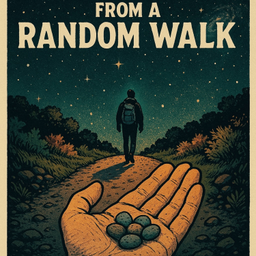
Random Walk Random Talk
Claim This Podcastby Qiang Zhou
6 episodes
Updated Daily
Accepts GuestsHas Sponsors
31
Podcast Authority
BetaPoorBased on show quality, social media presence, reviews, charts, and more

Quality63
Social0
YouTube0
Engagement0
Podcast Overview
on the galaxy of turds you happen to stumble on this one. Why do you want to waste your precious time on random talk from someone just random walk on a random path of a random universe. These are the pebbles I collected on the walk, treasures to myself, your opinion may vary
Language
🇺🇲
Publishing Since
4/2/2025
Unlock The Full Podcast Authority Score Report
See how your podcast performs across key metrics
31
Podcast Authority
BetaPoorBased on show quality, social media presence, reviews, charts, and more
Quality63
Social0
YouTube0
Engagement0
7
Excellent Areas
1
Good Performance
11
Growth Opportunities
excellent
Publishing Consistency
Every 2 days
Performing excellently!
good
iTunes Tags
6.5/10
Recommendations available
Unlock the full report to see detailed tips
poor
Episode Thumbnails
Recommendations available
Unlock the full report to see detailed tips
+16 More Metrics
Unlock comprehensive insights including:
- • YouTube presence analysis
- • Social media reach metrics
- • RSS compliance scoring
- • Podcast 2.0 features
- • Technical standards
What's Included in Your Full Report
Detailed Analytics
- Complete breakdown of all 19 authority metrics
- Personalized recommendations for each metric
- Industry benchmarks and comparisons
- Technical RSS feed analysis and compliance scoring
Growth Strategies
- Step-by-step action plans for improvement
- Quick wins to boost your score immediately
- Pro tips from successful podcasters
Get your free podcast insights report
See how your show performs across every key metric
Instant delivery
No spam
Attract Better Guests
High authority scores make your podcast more attractive to industry leaders and influencers who want to appear on credible shows.
Secure Sponsorships
Sponsors look for podcasts with proven authority and engagement. Your score demonstrates your podcast's value to potential partners.
Grow Your Audience
Understanding your strengths and weaknesses helps you make data-driven decisions to expand your listener base effectively.
1 verified contact email on file for Random Walk Random Talk
Pitch yourself as a guest, propose sponsorships, or reach out directly to the host.
Recent Episodes
April 15, 2025
Brecka & Rogan: Biohacks for Health Optimisation
<p>Welcome to this deep dive on health and well-being, featuring insights from Gary Brecka and others. Today, we’re focusing on what actually works—strategies around illness, diet, exercise, and lifestyle that yield real results.</p><p><strong>Seed Oils</strong><br>Brecka highlights how common oils like canola (originally rapeseed) undergo intense processing—using neurotoxins like hexane, high heat that makes oils rancid, and sodium hydroxide (a carcinogen) for deodorizing. These processes can create pro-inflammatory compounds. He recommends less processed fats like olive oil or beef tallow.</p><p><strong>Blue Zones</strong><br>People in these longevity hotspots don’t follow a specific diet but share lifestyle patterns: whole foods, strong community ties, natural movement, and a sense of purpose. Notably, assisted living facilities are rare—elders remain integrated in family life, reducing isolation, which is linked to longer lifespan. Digital connection, Brecka argues, doesn’t replace face-to-face interaction.</p><p><strong>Regenerative Farming</strong><br>Seed to Table in Florida is a successful organic farm that avoids pesticides, using physical deterrents like reflective cellophane. The model shows fresh, local produce is viable without chemicals or long supply chains.</p><p><strong>Hydrogen Gas Therapy</strong><br>Brecka’s favorite biohack, hydrogen acts as a selective antioxidant via the NRF2 pathway, supporting the body’s own defense enzymes. A study on seniors drinking hydrogen water showed preserved telomeres, better cognition, and reduced inflammation. Transdermal use (e.g., hydrogen bath bombs) may help arthritis and skin conditions. Cold water enhances absorption—ideal for cold plunges.</p><p><strong>Microcirculation</strong><br>70% of blood flow is in microvasculature, driven by vasa motion—not just heart pressure. Issues here may underlie most idiopathic hypertension. Hydrogen and resveratrol support this circulation. Red light therapy might help by restoring microvascular function.</p><p><strong>Exercise & Recovery</strong><br>Brecka recommends gentler oxygen therapy in a sauna for those with limited mobility. He notes cold plunges may hinder muscle growth if done right after a workout—best to plunge before or hours after. Benefits include brown fat activation and dopamine spikes. Saunas post-workout support muscle growth and heart health.</p><p><strong>Rogan’s Routine</strong><br>He combines Zone 2 cardio and HIIT (e.g., Tabatas on a Rogue Echo Bike), with functional strength work like chin-ups and loaded carries. Key takeaways: don’t overtrain, treat strength as a skill, and prioritize quality over exhaustion. Injury prevention includes muscle balance and rotational training.</p><p><br></p><p><strong>Hyperbaric Oxygen Therapy (HBOT)</strong><br>Using a hard-shell chamber, he experiences better oxygen delivery, cognitive function, and reduced inflammation. He references an Israeli study showing telomere lengthening from HBOT. He stresses safety—avoiding 100% oxygen due to fire risk. Hard chambers deliver deeper benefits compared to soft ones.</p><p><strong>Supplements</strong><br>Daily creatine (for muscle and brain), TMG (for methylation), plus vitamin D, K2, and a multivitamin. He takes essential amino acids (Perfect Aminos) but warns collagen lacks key ones for muscle building. His morning drink includes mineral salt, hydrogen tablets, and aminos—emphasizing how mineral deficiencies are widespread and foundational.</p><p><strong>Gut Health & Mood</strong><br>Constipation may stem from dehydration or lack of minerals. Nighttime anxiety could be tied to elevated catecholamines—helped by nutrients like magnesium, methyl B12, and B-complex. Neurotransmitters like dopamine and serotonin depend on proper nutrition and gut health. Brecka connects mood disorders to nutrient deficiencies and impaired methylation.</p><p><strong>Medical System Critique</strong><br>He argues the current system treats symptoms (e.g., cholesterol via statins) without exploring root causes like nutrient gaps. The influence of pharma and isolated drug studies further limits effectiveness. A personalized, preventative approach—rooted in lifestyle and nutrition—offers a better path.</p>
April 10, 2025
The Great Power Index
<p>**Key Themes and Concepts**</p><p><br></p><p>**Composite Power Index:** At the heart of the analysis is a "Strength Gauge" (0–1 scale) that reflects a country's overall power, factoring in economic, technological, social, political, and military strength—not just traditional might.</p><p><br></p><p>**Eight Core Measures:** The index emphasizes Education, Innovation & Technology, Competitiveness, Military, Trade, Economic Output, Financial Center status, and Reserve Currency Status.</p><p><br></p><p>**Additional Factors:** Geology, Resource Allocation Efficiency, Acts of Nature, Infrastructure & Investment, Character/Determination/Civility, and Governance/Rule of Law also play important roles.</p><p><br></p><p>**Big Cycles:** Long-term structural trends—like Debt Burden, Internal Conflict, Economic Position, and Wealth/Values Gaps—are used to project trajectories.</p><p><br></p><p>**Z-Scores:** Metrics are standardized using Z-scores, showing current levels and 3-year/20-year trends for comparability across nations.</p><p><br></p><p>**Quality vs. Quantity:** The report stresses quality indicators (e.g., education quality, per capita measures) over sheer size to highlight efficiency and productivity.</p><p><br></p><p>**Debt Analogy:** Debt is likened to a “scuba bottle”—useful for short-term boosts, but unsustainable long-term if income growth doesn’t keep up.</p><p><br></p><p><br></p><p>**Country-Specific Insights**</p><p><br></p><p>- **United States (0.89):** Strong overall, but deteriorating "Big Cycle" indicators—high debt, wealth gaps, and declining internal order.</p><p>- **China (0.80):** Gaining strength, though key structural cycles are weakening. Moderate debt, positive growth outlook.</p><p>- **Eurozone (0.56):** Mixed results; moderate financial strain, but improving debt trends.</p><p>- **Germany (0.38):** Declining innovation and competitiveness, but low debt.</p><p>- **Japan (0.33):** Mixed outlook, with modest improvements in some areas despite weak trade and output.</p><p>- **South Korea (0.32):** Positive innovation trends and low debt.</p><p>- **India (0.30):** High growth potential but lags in education, tech, and competitiveness.</p><p>- **Russia (0.26):** Strong geology, but weak internal order and governance; debt and financial health are concerns.</p><p>- **Singapore (0.24):** Strong in finance and infrastructure.</p><p>- **Turkey (0.21):** Favorable financial position, moderately low debt.</p><p>- **Switzerland (0.19):** Strong finance sector, but economic outlook is slipping.</p><p>- **Brazil (0.18):** Good geology, poor governance, and vulnerable to natural events.</p><p>- **Netherlands (0.17):** High quality, but limited by small size.</p><p>- **Indonesia (0.17):** Strong financials, low debt, and high expected growth.</p><p>- **Italy (0.17):** Weak financial position with high, flatlining debt.</p><p>- **Saudi Arabia (0.15):** Strong financial indicators and civic strength.</p><p>- **Mexico (0.14):** Scores well in competitiveness and civic character.</p><p>- **South Africa (0.10):** Strong competitiveness, otherwise limited.</p><p>- **Argentina (0.07):** Among the lowest performers.</p><p><br></p><p>---</p><p><br></p><p>**Per Capita Adjustments**</p><p><br></p><p>GDP per capita and education-adjusted income data reveal deep disparities. For instance, the US leads with $83.1k per capita, while India’s is just $2.5k. Adjusting for education quality widens this gap (USA: 0%, India: -95%).</p><p><br></p><p>---</p><p><br></p><p>**Other Key Metrics**</p><p><br></p><p>- **Corruption & Rule of Law:** Singapore, UAE, and Norway score highest. Brazil and Argentina rank poorly.</p><p>- **Cultural Values:** UAE and India emphasize achievement, unlike many European nations.</p><p>- **Innovation:** South Korea and Switzerland are leaders.</p><p>- **Self-Sufficiency:** UAE and Singapore score well; France and Italy do not.</p><p><br></p><p>**Conclusion**</p><p><br></p><p>The *DalioRay Great Powers Index* offers a rich, layered analysis of national power. It goes beyond traditional measures, emphasizing long-term dynamics, quality metrics, and the complex role of debt. The report underscores the risks of focusing only on short-term or military indicators, urging a broader understanding of sustainable strength. The “scuba bottle” metaphor is a cautionary tale about overreliance on debt-fueled growth.</p><p><br></p>
April 6, 2025
Dalio's Changing World Order
<li><br></li><li>**The Big Cycle: Rise and Fall of Empires** </li><li>History moves in cycles—not linearly. Powers rise, peak, and decline, shaped by internal dynamics and major events like wars or pandemics. Life expectancy trends highlight progress and setbacks, with dips during crises (e.g., Spanish flu, COVID-19). These cycles are primarily human-driven, not caused by nature or geology.</li><li><br></li><li>**Determinants of Power** </li><li>Eight key, interconnected measures define national strength:</li><li>1. Economic Output </li><li>2. Military Strength </li><li>3. Innovation & Technology </li><li>4. Trade </li><li>5. Cost Competitiveness </li><li>6. Financial Markets </li><li>7. Reserve Currency Status </li><li>8. Resource Allocation Efficiency </li><li><br></li><li>Other important factors include education, debt, and internal/external stability. A decline in one area often leads to declines in others. The data relies on historical proxies due to limitations.</li><li><br></li><li>**Money, Credit, and Debt Cycles** </li><li>Money evolves in three forms:</li><li>- Type 1: Hard Money (metal) – High credibility, low credit </li><li>- Type 2: Claims on Hard Money (banknotes) – More credit, less credibility </li><li>- Type 3: Fiat Money (USD) – Maximum credit, least credibility </li><li><br></li><li>Reserve currencies follow the rise/fall of empires. Over time, fiat money often loses value, especially during empire decline. Historical examples: Dutch Guilder, British Pound, US Dollar.</li><li><br></li><li>**Investment Insights** </li><li>Asset performance varies by country and cycle phase. Wars, revolutions, and collapses can wipe out investments. Real (inflation-adjusted) returns differ across regions and eras. Gold and hard assets often outperform during declines. </li><li>Key strategy: diversify across assets, countries, and currencies. Cycles reveal the importance of resilience in portfolio construction.</li><li><br></li><li>**Internal and External Conflict** </li><li>Economic stress increases conflict risk. Examples: German Revolutions (1848), Taiping Rebellion, Spanish Civil War. Market impacts include volatility, closures, asset seizures, and devaluation. Statistical models link worsening economic indicators to higher chances of unrest.</li><li><br></li><li>**Case Studies: Dutch, British, U.S. Empires** </li><li>- **Dutch**: Rose via trade/finance, fell due to war, debt, and weakening currency. </li><li>- **British**: Industrialized, led globally, declined post-WWI/WWII. </li><li>- **U.S.**: Rose with innovation and military strength; now faces debt, division, and rising external challenges.</li><li><br></li><li>**The Rise of China** </li><li>China has its own historical cycles. Since 1949 (especially after 1978 reforms), it has entered a rising phase—marked by rapid economic growth, innovation, and global influence. China is now competing in areas like trade, military, and currency.</li><li><br></li><li>**Current Global Landscape** </li><li>Power "gauges" show the U.S. still leads but faces challenges (e.g., internal division). China ranks second with momentum across key indicators. Other nations show mixed strengths. Long-term trends suggest China’s rise will continue, while U.S. dominance may fade without renewal.</li><li><br></li><li>**External Shocks** </li><li>Although not part of the core cycle, events like pandemics, climate change, and disasters can accelerate or disrupt historical trends.</li><li><br></li><li>Empires follow predictable patterns. Understanding the Big Cycle helps forecast shifts in power and guide investment decisions. The U.S. faces headwinds, China is rising, and diversification remains critical in a volatile global landscape.</li><li><br></li>
6 total episodes available
Deep-dive analytics for Random Walk Random Talk
Frequently asked questions
Have a different question and can't find the answer you're looking for? Reach out to our support team by sending us an email and we'll get back to you as soon as we can.
- What is Random Walk Random Talk?
- How often does this podcast release new episodes?
This podcast updates daily.
- Where can I listen to this podcast?
This podcast is available on 4 platforms including Apple Podcasts, Spotify, and more. You can also use the RSS feed directly.
- Does this podcast accept guests?
Information about guest appearances is not available.
Legal Disclaimer
Pod Engine is not affiliated with, endorsed by, or officially connected with any of the podcasts displayed on this platform. We operate independently as a podcast discovery and analytics service.
All podcast artwork, thumbnails, and content displayed on this page are the property of their respective owners and are protected by applicable copyright laws. This includes, but is not limited to, podcast cover art, episode artwork, show descriptions, episode titles, transcripts, audio snippets, and any other content originating from the podcast creators or their licensors.
We display this content under fair use principles and/or implied license for the purpose of podcast discovery, information, and commentary. We make no claim of ownership over any podcast content, artwork, or related materials shown on this platform. All trademarks, service marks, and trade names are the property of their respective owners.
While we strive to ensure all content usage is properly authorized, if you are a rights holder and believe your content is being used inappropriately or without proper authorization, please contact us immediately at hey@podengine.ai for prompt review and appropriate action, which may include content removal or proper attribution.
By accessing and using this platform, you acknowledge and agree to respect all applicable copyright laws and intellectual property rights of content owners. Any unauthorized reproduction, distribution, or commercial use of the content displayed on this platform is strictly prohibited.