
Join Tim Facciola every week as he cracks open the craft behind the sci-fi and fantasy stories we can’t stop obsessing over. From worldbuilding and magic systems to character arcs, lore, pacing, and plot architecture, Reading Things and Writing Stuff is your gateway into how legendary tales are made. Tim — award-winning author of the Eventual Realm series — blends deep craft insight with an accessible, imaginative approach, helping you sharpen your writing, expand your worlds, and forge stories that feel truly epic. Whether you’re building your first realm or leveling up your storytelling game
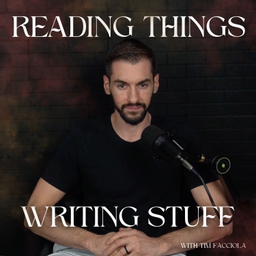
Reading Things and Writing Stuff : Fantasy Writing, Worldbuilding & The Art of Storycraft
Claim This Podcastby Tim Facciola
5.0(2 reviews)
9 episodes
Updated Daily
Accepts GuestsHas Sponsors
Podcast Overview
Join Tim Facciola every week as he cracks open the craft behind the sci-fi and fantasy stories we can’t stop obsessing over. From worldbuilding and magic systems to character arcs, lore, pacing, and plot architecture, Reading Things and Writing Stuff is your gateway into how legendary tales are made. Tim — award-winning author of the Eventual Realm series — blends deep craft insight with an accessible, imaginative approach, helping you sharpen your writing, expand your worlds, and forge stories that feel truly epic. Whether you’re building your first realm or leveling up your storytelling game
Language
🇺🇲
Publishing Since
11/21/2025
Reach the team behind Reading Things and Writing Stuff : Fantasy Writing, Worldbuilding & The Art of Storycraft
Verified contact details for this show aren't on file yet — sign up to get notified when they land.
Recent Episodes
February 7, 2026
Moral Reasoning: The Psychology Behind Believable Characters
<p></p><p><strong>In this episode…</strong><br>I dive into one of the most powerful—and most overlooked—tools in storytelling: <strong>moral reasoning</strong>. Specifically, how understanding why characters make decisions—not whether those decisions are “right” or “wrong”—can be the difference between a story that feels inevitable and one that feels contrived.</p><p>I start with a frustration I know many readers share: when a character suddenly makes a decision that doesn’t align with how we understand them. The infamous 90-degree turn off a narrative cliff. To unpack why that happens—and how to prevent it—I explore <strong>Lawrence Kohlberg’s stages of moral development</strong> and how they apply directly to character psychology, internal arcs, theme, and reader trust.</p><p>We break down the six levels of moral reasoning across the three stages—pre-conventional, conventional, and post-conventional—and clarify a crucial distinction: <strong>moral reasoning is not morality</strong>. This isn’t about what’s good or evil. It’s about what a character considers when making a choice.</p><p>Using examples from Les Misérables, John Q, Game of Thrones, Avatar: The Last Airbender, The Greatcoats, noir crime dramas, and my own work in Eventual Realm, I show how different levels of moral reasoning create organic conflict, believable transformations, and meaningful thematic payoff. We explore why some characters are tragic, others cautionary, and why highly principled characters often clash violently with rigid systems.</p><p>I also dig into the rules of moral development—why characters can only grow one step at a time, why sudden jumps feel false, how regression works (and when it doesn’t), and why readers often struggle to understand characters whose moral reasoning is more than two “rungs” away from their own.</p><p>By the end, you’ll see how moral reasoning underpins <strong>character consistency, internal arc, thematic resonance, relationship dynamics, worldbuilding, and even marketing</strong>. When you understand how characters think, everything starts to make sense.</p><p>If you’ve ever thought “I’m not buying this” while reading—or worried readers might think that about your own work—this episode is for you.</p><ul><li><p>Why character decisions break reader trust</p></li><li><p>Moral reasoning vs. morality (and why conflating them kills stories)</p></li><li><p>Kohlberg’s six levels of moral development</p></li><li><p>Pre-conventional, conventional, and post-conventional thinking</p></li><li><p>Self-centered vs. socially driven vs. principle-driven characters</p></li><li><p>Why most societies (and stories) rely on fours</p></li><li><p>Fives, sixes, martyrs, and system-challengers</p></li><li><p>Tragedy vs. cautionary tales</p></li><li><p>How moral reasoning drives internal arc and theme</p></li><li><p>Why growth must be gradual—and earned</p></li><li><p>Regression arcs and jaded heroes</p></li><li><p>Conflict between characters at different moral levels</p></li><li><p>Reader empathy, representation, and imprinting</p></li><li><p>The “4.5” moral reasoner and sociopathic law-as-self</p></li><li><p>How moral reasoning affects worldbuilding and marketing</p></li></ul><p>Les Misérables — Victor Hugo<br>John Q<br>Game of Thrones — George R.R. Martin<br>The Greatcoats — Sebastien de Castell<br>Avatar: The Last Airbender<br>Classic noir detective fiction<br>Eventual Realm — Tim Fasa</p><p><strong>Instagram:</strong> @timfacciola_theauthor<br><strong>Apply to work with me:</strong><br><a href="" target="_new" rel="noopener">https://docs.google.com/forms/d/e/1FAIpQLSejci7iaHU3--TT8TOo82boYj7OsUIap3FscyQ4Qc2f8Z0EkQ/viewform</a><br><strong>Read </strong><strong>A Vengeful Realm</strong><strong>:</strong><br><a href="" target="_new" rel="noopener">https://www.amazon.com/dp/B0CK143ZK2</a><br><strong>Everything else:</strong><br><a href="https://linktr.ee/timfacciola" target="_new" rel="noopener">https://linktr.ee/timfacciola</a></p><p>What We Cover:Books, Films & Series Mentioned:Connect with Tim:</p>
January 24, 2026
Secondary Characters or Background Noise?
<p>In this episode…I’m diving into one of my favorite—and most misunderstood—elements of storytelling: the secondary cast. Not background noise. Not disposable side characters. But the characters who matter, shape the story, and create emotional weight long after the page is turned.We start by defining what a secondary cast actually is, moving beyond surface-level archetypes like “mentor” or “sidekick” and into deeper role functions that serve the story. From logical, emotional, and support allies on the protagonist’s side, to opposition, diversion, and buffer characters across the axis of antagonism, we explore how meaningful casts are built—and why not every story needs all of them.Using examples from Red Rising, Sun Eater, The Licanius Trilogy, The Will of the Many, Nevernight, Ashes of the Sun, Avatar: The Last Airbender, Star Wars, Harry Potter, and more, I break down what makes secondary casts memorable… and why some fall flat. We talk five-man bands, unreliable buffers, reluctant allies, and why killing a character only works if the reader actually cares.I also pull from my own work—including Eventual Realm—to show how role functions are relative, perspective-driven, and constantly shifting. Characters can be allies in one system, adversaries in another, and buffers in between—and that web of relationships is where stories gain depth, tension, and meaning.Whether you love sprawling epic casts or tightly focused narratives like Finding Nemo, this episode will help you understand when secondary characters elevate a story—and when they just take up air.If your cast feels flat, forgettable, or interchangeable… this episode is for you.What We Cover:What a secondary cast really is (and what it isn’t)Role functions vs. archetypesLogical, emotional, and support alliesThe five-man band and character differentiationOpposition and diversion charactersBuffer characters: benevolent, reluctant, unreliable, and unempoweredWhy secondary characters must do somethingWhen large casts help—and when they hurtGenre expectations and audience focusWhy character deaths only work if they matterPerspective, relativity, and shifting rolesHow secondary casts reinforce theme and catharsisBooks, Shows & Series Mentioned:Red Rising — Pierce BrownSun Eater: Empire of Silence — Christopher RuocchioThe Licanius Trilogy — James IslingtonThe Will of the Many — James IslingtonNevernight Chronicle — Jay KristoffAshes of the Sun — Django WexlerThe Lord of the Rings — J.R.R. TolkienStar Wars: A New HopeHarry Potter and the Sorcerer’s Stone — J.K. RowlingAvatar: The Last AirbenderFinding NemoEventual Realm — Tim FasaConnect with Tim:Instagram:@timfacciola_theauthorApply to work with me:https://docs.google.com/forms/d/e/1FAIpQLSejci7iaHU3--TT8TOo82boYj7OsUIap3FscyQ4Qc2f8Z0EkQ/viewformRead A Vengeful Realm:https://www.amazon.com/dp/B0CK143ZK2Everything else:https://linktr.ee/timfacciola</p>
January 2, 2026
The Antagonistic System: The Key to Powerful Storytelling
<p></p><p><strong>In this episode…</strong><br>I’m breaking down the second of the two essential role functions in storytelling: the antagonistic system. Not just “the villain,” but the full network of forces—characters, institutions, beliefs, and power structures—that push back against your protagonist and create meaningful conflict.</p><p>We explore why strong antagonism is genre-dependent, how stakes scale from cozy to epic, and why the antagonist doesn’t always have to be a mustache-twirling bad guy. From distant, godlike forces to intimate opposition within the protagonist’s own allies, antagonism works best when it’s layered, interconnected, and felt everywhere—even when it’s not on the page.</p><p>Using examples from Mistborn, The Lord of the Rings, Red Rising, A Song of Ice and Fire, and The Fifth Season, we examine how antagonistic systems uphold the status quo, how diversion and opposition characters deepen tension, and why allies-turned-enemies create some of the most powerful moments in fiction. We also talk about harmonious stories, mystery-driven antagonism, and how role functions shift depending on perspective—because everyone is the hero of their own story.</p><p>Finally, I pull back the curtain on my own work, including Eventual Realm, Goran, and Boone Blessed, to show how nested systems of conflict—political, religious, social, and divine—create pressure, theme, and momentum across an entire series.</p><p>If your story feels “safe,” low-stakes, or like your protagonist doesn’t have enough to push against—this episode is for you.</p><ul><li><p>What an antagonistic system really is (and why it’s more than a villain)</p></li><li><p>The axis of antagonism and how power imbalances raise stakes</p></li><li><p>Genre expectations: cozy vs. epic vs. dark fantasy</p></li><li><p>Main antagonists vs. diversion and opposition characters</p></li><li><p>Conflict from within the protagonist’s own allies</p></li><li><p>Allies becoming enemies—and why it works so well</p></li><li><p>Harmonious stories and non-villain antagonists</p></li><li><p>Antagonism through perspective and moral conflict</p></li><li><p>Hidden antagonists in mystery-driven narratives</p></li><li><p>How layered systems reinforce theme and meaning</p></li><li><p>Why weak antagonism leads to weak stories</p></li></ul><ul><li><p>Mistborn: The Final Empire — Brandon Sanderson</p></li><li><p>The Lord of the Rings — J.R.R. Tolkien</p></li><li><p>Red Rising — Pierce Brown</p></li><li><p>A Song of Ice and Fire — George R.R. Martin</p></li><li><p>The Fifth Season — N.K. Jemisin</p></li><li><p>Goran — Tim Fasa</p></li><li><p>Eventual Realm — Tim Fasa</p></li></ul><p><strong>Instagram:</strong><br>@timfacciola_theauthor</p><p><strong>Apply to work with me:</strong><br><a href="" target="_new" rel="noopener">https://docs.google.com/forms/d/e/1FAIpQLSejci7iaHU3--TT8TOo82boYj7OsUIap3FscyQ4Qc2f8Z0EkQ/viewform</a></p><p><strong>Read </strong><strong>A Vengeful Realm</strong><strong>:</strong><br><a href="" target="_new" rel="noopener">https://www.amazon.com/dp/B0CK143ZK2</a></p><p><strong>Everything else:</strong><br><a href="" target="_new" rel="noopener">https://linktr.ee/timfacciola</a></p><p><strong>What We Cover:Books, Shows & Series Mentioned:Connect with Tim:</strong></p>
9 total episodes available
Deep-dive analytics for Reading Things and Writing Stuff : Fantasy Writing, Worldbuilding & The Art of Storycraft
Frequently asked questions
Have a different question and can't find the answer you're looking for? Reach out to our support team by sending us an email and we'll get back to you as soon as we can.
- What is Reading Things and Writing Stuff : Fantasy Writing, Worldbuilding & The Art of Storycraft?
- How often does this podcast release new episodes?
This podcast updates daily.
- Where can I listen to this podcast?
This podcast is available on 4 platforms including Apple Podcasts, Spotify, and more. You can also use the RSS feed directly.
- Does this podcast accept guests?
No, this podcast does not typically feature guests.
Legal Disclaimer
Pod Engine is not affiliated with, endorsed by, or officially connected with any of the podcasts displayed on this platform. We operate independently as a podcast discovery and analytics service.
All podcast artwork, thumbnails, and content displayed on this page are the property of their respective owners and are protected by applicable copyright laws. This includes, but is not limited to, podcast cover art, episode artwork, show descriptions, episode titles, transcripts, audio snippets, and any other content originating from the podcast creators or their licensors.
We display this content under fair use principles and/or implied license for the purpose of podcast discovery, information, and commentary. We make no claim of ownership over any podcast content, artwork, or related materials shown on this platform. All trademarks, service marks, and trade names are the property of their respective owners.
While we strive to ensure all content usage is properly authorized, if you are a rights holder and believe your content is being used inappropriately or without proper authorization, please contact us immediately at hey@podengine.ai for prompt review and appropriate action, which may include content removal or proper attribution.
By accessing and using this platform, you acknowledge and agree to respect all applicable copyright laws and intellectual property rights of content owners. Any unauthorized reproduction, distribution, or commercial use of the content displayed on this platform is strictly prohibited.