- 13
- Episodes
- 8
- Ratings
- 2023
- First episode
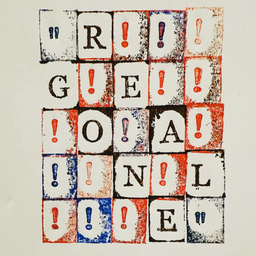
About REAL GONE
A new podcast about alternative music histories.
- Publisher
- Emmet McKeown
- Category
- arts · music
- Language
- en
- Explicit
- No
- First episode
- 8 May 2023
- Latest episode
- 26 Oct 2025
Latest episodes
13 episodes in the feed.
26 Oct 2025
S02E05 Jazz, Africa & Islam - Part Three: 'Search for a New Land'
The involvement of progressive Jazz musicians with Islam in the 1950s and 60s was shaped by the practices of Sunni Islam and the Black internationalism of several African American Muslim communities formed in the early 20th Century, notably the Islamic Mission of America (1939), the Addeynu Allahe-Universal Arabic Association (1938) and the First Cleveland Mosque (1937). These Sunni organisations emphasised the importance of pride in African ancestry, and their goals of self-reliance, empowerment and spiritual uplift through independent Islamic programs, institutions, and networks appealed to growing numbers of young Black Americans, including outsider Jazz musicians. The full roster of Art Blakey & The Jazz Messengers, pianist Ahmad Jamal, saxophonist Sahib Shihab, McCoy Tyner and many others all converted to Islam during this period. Growing militancy within the American Islamic communities and the wider Civil Rights movement aided the expansion of the Nation of Islam, spearheaded by its charismatic national spokesman Malcolm X. Famous Hard Bop musicians Grant Green and Lee Morgan and soul and blues legend Etta James were all NOI members, producing some of the greatest American music of the 20th Century. The international reach of the American Islamic movements put them on a collision course with the counterrevolutionary efforts of the FBI and CIA during the 1960s, when the Civil Rights Movement had its most profound successes but experienced its greatest tragedies. Books: What The Music Said: Black Popular Music & Black Popular Culture - Mark Anthony Neal Soundtrack to A Movement: African American Islam, Jazz & Black Internationalism - Richard Brent Turner A Love Supreme - Ashley Khan Giant Steps / Cookin' - Kenny Mathieson 3 Shades of Blue: Miles Davis, John Coltrane, Bill Evans & The Lost Empire of Cool - James Kaplan Jazz & Justice - Gerald Horne Tracks: The Call - Sahib Shihab Hannibal's Cannibals - Ahmed Abdul-Malik Poinciana - Ahmad Jamal Cease The Bombing / Alone, Together – Grant Green Search for A New Land / Mr Kenyetta - Lee Morgan Anything to Say You're Mine – Etta James EMCK
12 Oct 2025
S02E04 Jazz, Africa & Islam - Part Two: 'Scenes In The City'
The demographic shift of The Great Migration during the period following the Civil War was a transformative historical moment for African Americans where they seized the opportunity to forge new cultural identities in the northern cities of the United States like Boston, New York, Philadelphia, and Detroit. Dancehalls and music venues like The Savoy Ballroom in Harlem became important culture centres for new generations of young Black Americans whose lives and urban politics were soundtracked by the revolutionary Bebop Jazz being played in venues like Minton's Playhouse and Monroe's Uptown by musical mavericks like Charlie Parker, Dizzy Gillespie and Max Roach. During a period of monumental social and political change, Hard Bop and its more aggressive, bluesier tones would reflect the harshness of these modern urban environments. Black Jazz artists would introduce aesthetic innovations to re-establish Jazz music's link to Black working class culture, and to stay two steps ahead of the mass market consumerism and appropriation that swept through American culture in the 1950s. Hard Bop was heavily influenced by the music of the Black Church, particularly the gospel stylings which emanated from the Baptist Churches of Chicago. As time progressed, with the traditional Black Church seen as representative of a moderate mainstream class within the Black population, conversion to Islam became an increasingly common component of the new urban identities which emerged in the period following World War II, with Black Muslims adopting what they saw as a modern ideology that offered models of self-determination and solidarity for working class African Americans in the mid-20th Century. Islamic themes of spirituality and universal brotherhood seeped into Jazz music and were most famously represented in the music of John Coltrane and his 1965 masterpiece 'A Love Supreme'. Tracks: Take My Hand, Precious Lord - Thomas Dorsey Filthy McNasty - Horace Silver Quintet Woody N' You - Coleman Hawkins Song of Happiness - McCoy Tyner Tenderly - Lynn Hope Onda Callejara - Ry Cooder Acknowledgement / Pursuance / Psalm - John Coltrane Books: What The Music Said: Black Popular Music & Black Popular Culture - Mark Anthony Neal Soundtrack to A Movement: African American Islam, Jazz & Black Internationalism - Richard Brent Turner A Love Supreme - Ashley Khan Giant Steps / Cookin' - Kenny Mathieson 3 Shades of Blue: Miles Davis, John Coltrane, Bill Evans & The Lost Empire of Cool - James Kaplan Jazz & Justice - Gerald Horne EMCK
18 Jul 2025
S02E03 Jazz, Africa & Islam - Part One: 'Uhuru Afrika'
The late 1950s and 60s are associated with Black Americans developing pride in their African heritage, an association that had its roots in the activism of Marcus Garvey and Paul Robeson in earlier decades. At different points during the 20th Century, the domestic Civil Rights struggle was viewed as intertwined with the fate of Africa and anti-colonialism more broadly. During this period Jazz music went through a period of intense 'Africanization' in what could be seen as re-valourization of the African legacy. Music Professor Ingrid Monson writes about how "Afrocentrism and cultural nationalism added to a mass of experiences, memories, and references that make up the psycho-mythological cultural heritage of the African-American community". This Africanization in the social outlook of Black Americans and the influence of American Islamic organisations is reflected in the Jazz music of the time, both in the style and character of the music itself and the religious and political activities of the leading Jazz musicians. Artists such as Art Blakey, Max Roach, Bilal Abdurrahmann, Randy Weston, and John Coltrane chronicled the changing social and political landscape of America during the Civil Rights movement and facilitated a celebration of African and Islamic culture that had not been possible during decades of intense racism, segregation, discrimination, and brutality. Tracks: Art Blakey - 'The Feast' (Holiday for Skins) / 'Cubano Chant' (Drum Suite) / The Freedom Rider Duke Ellington - 'Take The A Train' Randy Weston - 'Kucheza Blues' (Uhuru Afrika) Abdul Abdurrahmann - 'The Night' Ahmed Abdul-Malik - 'Wakida Hena' (Jazz Sounds of Africa) East New York Ensemble of Music - 'Ti-Ti' (At The Helm) EMCK
16 Jan 2025
S01E08 - Sensational Glue: The Loft & Pre-Disco Nightlife in Downtown New York (1970-75)
In the period between 1970-1975 the LGBT population of New York City were at the forefront of claiming new territory in re-purposing the abandoned post-industrial lofts of SoHo and the other neglected parts of Downtown Manhattan. The network of Gay underground clubs established during this period, the characteristics that distinguished them from public dancehalls and discotheques of the previous decades, and the innate brilliance of their operators (people like Michael Fesco, David Mancuso, and Nicky Siano) set the foundation for Disco's conquest of radio and the recording industry, and its cultural domination in the latter half of the decade. This episode tells some of the story of those nightclubs in the pre-Disco era (The Loft, The Gallery, The Sanctuary, The Flamingo, and the Tenth Floor among them) that would have a crucial influence on Disco's success, places that music writer Andrew Kopkind refers to as the "sensational glue" for Gay congregation in New York City. The beating heart of this scene was 'musical host' David Mancuso. The Loft parties in his home at 647 Broadway then 99 Prince Street in the heart of SoHo, and his message that 'Love Saves The Day', synthesized so much of what was special about this period of New York in the early 1970s, and the best dance music experience of any time. Tracks: 'I'll Be Holding On' - Al Dowling 'Drums of Passion' - Babatunde Olatunji 'Empty Bed Blues' - Bette Midler 'Sweet Sixteen' - Diga Rhythm Band 'Girl, You Need A Change of Mind' - Eddie Kendricks 'Soul Makossa' - Manu Dibango 'Law of the Land' - The Temptations 'Just Look What You've Done' - Brenda Holloway 'Aint No Stoppin' Us Now (12" Dub Version) - Risco Connection Books: 'Love Saves The Day: A History of American Dance Music' by Tim Lawrence 'Turn The Beat Around' by Peter Shapiro 'Hot Stuff: Disco and The Remaking of American Culture' by Alice Echols 'Last Night A DJ Saved My Life' by Bill Brewster & Frank Broughton 'Discotheque Archives' by Greg Wilson EMCK
19 Nov 2024
S01E07 - The STONEWALL Uprising 1969 & The Christopher Street Liberation Day March 1970
Historian and activist, Dr. Martin Duberman, and LGBTQ+ rights leader, Marsha P. Johnson, explore the pivotal Stonewall uprising and its lasting impact on the struggle for Gay liberation and cultural revolution.
19 Oct 2024
S01E06 - VICE PATROL: The Policing of Queer Nightlife & Gay Activism in 20th Century America
From the 1930s through to the 1960s the regulation of Queer nightlife in America was permanently on the agenda of the police authorities. Persecution by local police ran parallel to the activities of the State liquor authorities, newly empowered in the years following the Repeal of Prohibition to shut down licensed bars and clubs where there was any indication of Gay activity therein. The draconian manner in which the liquor boards targeted Gay clientele prompted a form of activism fed into the nascent Gay Rights movement. We are spending the next few episodes examining the history of how this activism, specifically around New York and San Francisco, led to legal reforms that would be fundamental to the development of Gay social life and, more specifically, nightclub culture in the Pre-Disco era of the early 1970s. This period, which followed the Stonewall Riots of 1969, saw an acceleration in Gay social culture that dovetailed with technological developments in music production and presentation. The network of underground clubs in Downtown New York operated by Gay promoters (like David Mancuso, Nicky Siano, and Michael Brody) and supported significantly by the LGBT population of the City (including The Sanctuary, The Loft, The Gallery and later the Paradise Garage) would serve as the incubators for Disco and modern electronic dance music. Often not exclusive to an LGBT crowd, these venues were nonetheless sustained by a sense of underground identity and solidarity that had developed in the face of severe aggression and discrimination on the part of Governmental authorities against Queer people throughout the 20th Century in America.
8 Aug 2024
S02E02 'Birth of The Cool' (The Post-Bebop Years)
The role of jazz music in Cold War propaganda and the respect which foreign audiences attributed to it greatly influenced its place in American culture. However, its wider cultural acceptance by the early 1950s was aided by significant developments in musical styles and performance environments. The ability of musicians, critics, and promoters to equate jazz with a genuine artistic sensibility derived partly from changes that brought one wing of the music (classified as Cool Jazz, Third Stream, and West Coast Jazz) “closer to the appearance of a fashionable and utterly respectable modernist classical music”. Musicians like Dave Brubeck and Miles Davis enjoyed immense success and became household names. This transition brought into sharp relief the extent to which race relations within the United States were transforming at this point in time with greater emphasis on social de-segregation and integration. These developments would both influence and be influenced by the radical changes in how Jazz music was composed, recorded, and performed live. The broader racial composition of musicians and audiences would manifest itself in the form of more diverse, sometimes oppositional, musical styles; the Afro-American influence of the blues and spirituals clashing against and melding with the modernist aesthetics of European classical music. Tracks: Dave Brubeck Quartet - 'Le Souk' (Dave Goes To College) Dave Brubeck Quartet - 'Take Five' (Time Out) Duke Ellington - 'Diminuendo In Blue' (Live at Newport) Modern Jazz Quartet - 'Between the Devil and the Deep Blue Sea' (The Modern Jazz Quartet) Lennie Tristano - 'Wow' Dizzy Gillespie - 'Swing Low, Sweet Cadillac (The Ebullient Mr. Gillespie) Shorty Rogers - 'Short Stop' (Cool and Crazy) Miles Davis - 'Moon Dreams' & 'Budo' (Birth of the Cool) Miles Davis Sextet - 'Walkin' (Walkin') EMCK
24 May 2024
S02E01 'Cool War - The Jazz Ambassadors'
During the Cold War, America recruited some of its most talented Jazz musicians in a cultural propaganda war against the Soviet Union. Dizzy Gillespie, Louis Armstrong, Dave Brubeck, and Duke Ellington were all enlisted to perform in the Middle East, South America and post-colonial Africa, parts of the World where America’s interests were dictated by its geo-political strategy. Musicians that experienced racial and economic hardship at home were suddenly being celebrated by the American Government for their musical innovation, and representation of cultural freedom. Their place on the world stage and the celebration of Jazz music abroad altered the perception of the music at home. Jazz music would develop a political importance and establish itself during the 1950s as the distinctive American artform. This official State branding was problematic in many ways, and as we move through the season, we will discuss how some of the greatest American musicians and political activists of the 20th Century; Max Roach, Ornette Coleman, Cecil Taylor, and John Coltrane among them, would revolutionize musical culture and the position of Jazz musicians in relation to American society. In doing so they would effectively deconstruct the Americanization of the music, re-infusing Jazz with an African heritage that was by the mid-50s in danger of being stripped away. The development of Jazz music is representative of the shifting social and economic patterns of the United States during this period. These artists managed to tie their music to the everyday social struggles of their people and the political challenges of the time, while at the same time creating music that was deeply spiritual and transcendental. Tracks: 'Cherokee' - Duke Ellington ‘Koko’ - Charlie Parker 'Saturday Night Fish Fry' - Louis Jordan 'Kush (Live)' - Dizzy Gillespie 'In A Persian Market' - Wilbur De Paris 'The Real Ambassador' - Dave & Iola Brubeck, Louis Armstrong 'The Eternal Triangle' - Dizzy Gillespie, Sonny Stitt & Sonny Rollins Books: This Is Our Music: Free Jazz, the Sixties, and American Culture (The Arts and Intellectual Life in Modern America) Paperback - Iain Anderson Soundtrack to a Movement: African American Islam, Jazz, and Black Internationalism - Richard Brent Turner Freedom Sounds, Civil Rights Call Out to Jazz In Africa - Ingrid Monson
1 Aug 2023
S01E05 REAL GONE – "Universal Zulu Nation" (The South Bronx 1970-76, Gil Scott-Heron, The Nuyorican Poets Café and Archie Shepp's 'Attica Blues')
Completed in 1972, the construction of the Cross-Bronx Expressway resulted in the displacement of over 60,000 people from primarily Black and Latino neighbourhoods in the South Bronx, New York City. A combination of severe austerity measures including the closure of fire stations combined with ‘Disinvestment’ by local landlords and widespread arson further contributed to the decimation of 80% of available housing stock, with large swathes of The Bronx left in ruins. In this same period, following the Hoe Avenue Gang Truce of 1971, the street parties hosted by Kool Herc, Afrika Bambaataa and Grandmaster Flash (all children of Caribbean immigrants) would trigger the emergence of Hip-Hop which would impose an irreversible influence on global music culture in the decades that followed. The music of NYC resident Gil-Scott Heron in the early 70s would transform and elevate American soul and jazz music, informing Hip-Hop as it progressed into THE dominant form of musical expression for socially conscious Black artists from the 1980s onwards. Venues like The Nuyorican Poets Cafe opening in 1973 would facilitate the growth of a more lyrical street poetry throughout the City. And Archie Shepp’s seismic 1972 album “Attica Blues” would represent an attempt to transcend the brutal events of the 1971 Attica State Prison Uprising where 43 men were killed when State authorities regained control of the prison from inmates protesting living conditions after a five-day siege. A vital period in Black American music culture. Books ‘Black Noise” Rap Music and Black Culture in Contemporary America’ – Dr. Tricia Rose ‘Can’t Stop Won’t Stop: A History of The Hip-Hop Generation’ – Jeff Chang ‘The Come Up: An Oral History of the Rise of Hip-Hop’ – Jonathan Abrams ‘The Last Holiday’ – Gil Scott-Heron Songs ‘Death Rap’ – Margo’s Kool Out Crew ‘Apache’ – Incredible Bongo Band ‘Zulu Nation Throwdown’ – Afrika Bambaataa & The Soul Sonic Force ‘Fantastic Freaks at The Dixie’ – Fantastic Freaks (Wild Style OST) ‘The Bottle’ / ‘The Revolution Will Not Be Televised’ - Gil Scott-Heron ‘Give It Up or Turnit A Loose’ – James Brown ‘Accents’ – Denice Frohman (Live at The Nuyorican Café) ‘Attica Blues’ / ‘Quiet Dawn’ – Archie Shepp EMCK
15 Jun 2023
S01E04 REAL GONE – "The Artistic Colonization of SoHo"
In this episode, we veer away from discussing musicians almost entirely and focus on the establishment of the area south of Houston Street known as SoHo as the centre of habitation for other artists living in the City in the early 1970s. We discuss how the physical features of the abandoned industrial loft buildings made it attractive for artists to live and work in this Downtown neighbourhood, and how the influx of galleries (both commercial and co-operative) shifted the centre of the New York Artworld from Midtown to SoHo. The consolidation of artists in the area helped create a new politicised community that managed to spearhead opposition to the Lower Manhattan Expressway project, saving a large section of Downtown Manhattan from destruction and economic abandonment, in doing so preserving the area’s architecture and cultural importance for decades to come. Books Aaron Shkuda - “The Lofts of SoHo: Gentrification, Art, and Industry in New York, 1950-1980” (2016) Sharon Zukin – “Loft Living: Culture and Capital in Urban Change” (1989) Jane Jacobs – “The Death & Life of Great American Cities” (1961) Songs Meredith Monk – “Education of the Girlchild: The Tale” / “Fear & Loathing in Gotham: Gotham Lullaby” (Dolmen Music - 1981) EMCK
7 Jun 2023
S01E03 "Cooks In The Kitchen" (Experimental Electronic Music in Downtown New York 1970-1977)
In this episode, we move beyond Jazz to discuss some of the other experimental music and art that was being pioneered in early 1970s New York, specifically in the Downtown artists’ lofts and experimental performance venues around the area south of Houston Street known as SoHo. One particular venue known as The Kitchen had special importance for the City’s exponents of new electronic music and the presentation of ground-breaking mixed media art. We also discuss the creation of two of the greatest American experimental albums of all time, Steve Reich’s “Music for 18 Musicians” and Laurie Spiegel’s “The Expanding Universe”. Books Steve Reich – “Conversations” Philip Glass – “Words Without Music” Kris Needs – “Dream Baby Dream (Suicide: A New York Story)" https://pitchfork.com/features/article/9886-blood-and-echoes-the-story-of-come-out-steve-reichs-civil-rights-era-masterpiece/ https://pitchfork.com/features/article/9002-laurie-spiegel/ Songs La Monte Young – “Composition 1960 No. 7” Philip Glass - Music In Twelve Parts, Part 8 (1974) Steve Reich – “It’s Gonna Rain” (1965), “Come Out” (1967), Music for 18 Musicians, Part VIII” (1978) Laurie Spiegel – “Patchwork” & “East River Dawn” (1976) Suicide – Rocket U.S.A. (1977) EMCK
25 May 2023
S01E02 "Wildflowers" (Free Jazz in New York City 1970-75)
We discuss the network of Downtown Jazz Lofts created by experimental musicians in Manhattan in the early 1970s. We examine how the spirit of independence and artistic adventure dovetailed with a determined organisation by jazz musicians to create an alternative to the traditional music industry platforms. These factors culminated in the formation of the New York Musicians Organisation (NYMO) and the counter-festival staged by the NYMO to challenge the imposition of the Newport Jazz Festival which was held in New York City for the first time in 1972. The growth and decline of the Jazz Loft scene is representative of the changing economic conditions of the City at this time, and how the ethics of Black Nationalism were adopted by many Jazz musicians as a central part of their personal and musical identity. Books “Loft Jazz: Improvising New York in the 1970s” by Michael C Heller. “As Serious As Your Life: Black Music and the Free Jazz Revolution: 1957-1977” by Val Wilmer. “Love Goes To Buildings On Fire” by Will Hermes. Music 'Tranquility' - Sam Rivers (Crystals) / 'Crossing (Fourth Movement' - Cecil Taylor (Silent Tongues) / 'Hence Forth' - Roy Ayers (Red, Black & Green) / 'Blue Phase' - Ahmed Abdullah (Wildflowers 3 - The New York Loft Jazz Sessions) / 'Four Winds' - Dave Holland Quartet (A Conference of the Birds) / 'You Gotta Have Freedom' - Pharaoh Sanders (Live at Fabrik Hamburg 1980) / 'Marshmallow' - Anthony Braxton (In the Tradition) EMCK
8 May 2023
S01E01 - "Running Wild" (The New York Cabaret Laws)
We introduce our new podcast, the first season of which aims to examine the development of new music in New York in the first half of the 1970s. We then skip back to the period following the repeal of Prohibition to discuss the restrictive effect of the 1926 Cabaret Laws which massively affected how small music clubs were able to operate in New York, and the personal impact of the regulations on artists such as Billie Holiday, Miles Davis, and Thelonius Monk. We also consider how the administrative reforms introduced by progressive Mayor John Lindsay removed some of the more destructive effects on performing musicians. Books: Paul Chevigny: "Gigs: Jazz and the Cabaret Laws in New York City" Songs: Fats Waller - "Aint Misbehavin'" / Billie Holiday - "T'Aint Nobody's Business If I Do" / Thelonius Monk - "Blue Monk" (Live at The Five Spot 1968) / Zoot Sims - "“Lover Come Back to Me” – Live at The Half Note NYC 1959 EMCK
Reach and audience
Public platform figures. Ratings count people who left a rating, not total listeners.
- Apple Podcasts (US)
- 5.0 / 5
- 1 ratings
- Spotify
- 5.0 / 5
- 7 ratings
Podcast Authority Score: 23 / 100
A composite of feed quality, social presence, YouTube performance and engagement. Read the methodology.
- Quality
- 32
- Social presence
- 0
- YouTube
- 0
- Engagement
- 32
Contact REAL GONE
- Guest appearances
- Books guests
Based on episode analysis; this does not confirm that the show is currently accepting guests.
Host of REAL GONE?
Claim your podcast to manage its listing and keep your show details accurate.
Pod Engine is an independent podcast discovery and analytics service and is not affiliated with or endorsed by this podcast. Artwork and show content belong to their owners. Full legal notice.
Explore this show
Podcast research with Pod Engine