- 76
- Episodes
- 3
- Ratings
- 2025
- First episode
- 5B
- YouTube views
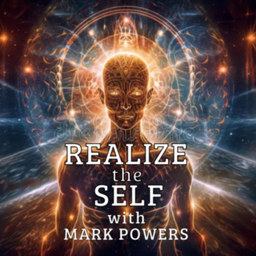
About Realize the Self
This show is about Self Realization. Awakening to ones true self, the eternal witness within. Not the mind, not the body, pure conscious awareness. We are all there is, was, or ever will be. Know thyself! ALL suffering stems from the mind. Still the mind, quiet the mind, dissolve the mind to experience ones true nature and in our true nature we ultimately are everlasting peace, happiness, equanimity, and infinite love. You are THAT!
- Publisher
- Mark Powers
- Category
- education
- Language
- en
- Explicit
- No
- First episode
- 12 Apr 2025
- Latest episode
- 28 Feb 2026
Latest episodes
76 episodes in the feed.
28 Feb 2026
EMOTIONAL ENERGY IS CURRENCY AND YOU'RE PAYING DAILY
1. Trauma and Early Programming From a psychological perspective, we are not born “traumatized,” but we are born highly programmable. A newborn nervous system is: Extremely sensitive Dependent on caregivers for regulation Shaping itself through experience If early needs (safety, attunement, touch, emotional mirroring) are inconsistently met, the nervous system adapts for survival. This adaptation can become trauma. Trauma isn’t just catastrophic events. It’s: Chronic misattunement Emotional neglect Feeling unseen or unsafe Sudden shock without support The infant brain wires itself around survival patterns: Hypervigilance People-pleasing Dissociation Emotional suppression These patterns become our subconscious programming. Biologically, we’re wired for attachment and belonging. That makes us programmable through: Family dynamics Cultural narratives Authority structures Reward/punishment systems Because survival equals connection, we internalize whatever ensures attachment — even if it costs authenticity. So trauma is often not just an event, but a conditioning loop: “If I act this way, I stay safe.” Over time, that loop becomes identity. In many traditions, especially within Hindu and Buddhist philosophy, karma refers to action and consequence — not punishment. Karma can be understood psychologically as: Repeated unconscious patterns Emotional reactions on autopilot Habitual relational dynamics From this perspective: Trauma creates reactive behavior. Reactive behavior creates consequences. Consequences reinforce the original wound. That cycle is karma in motion. You’re not being cosmically punished. You’re running unprocessed emotional imprints. Healing trauma interrupts karma because awareness stops unconscious repetition. The concept of loosh originates from the writings of Robert Monroe. He described it as emotional energy harvested by non-physical beings. In esoteric circles, loosh is often interpreted as: Emotional intensity Especially fear, pain, suffering Psychologically (without taking the literal harvesting idea), trauma does generate: High emotional charge Reactive energy Survival stress hormones Unresolved trauma keeps people in: Fear Conflict Scarcity Drama cycles Whether metaphysical or symbolic, trauma produces energy that keeps systems running — personal and societal systems. The idea of “pendulums” comes from Vadim Zeland and his book series Reality Transurfing. Pendulums are: Collective thought structures Emotional fields fed by attention Social, political, religious, ideological systems They gain strength from: Emotional charge Conflict Polarization Trauma makes people easier to hook into pendulums because: Dysregulated nervous systems seek certainty Wounded identities seek belonging Fear seeks authority Unhealed trauma fuels emotional reactivity. Emotional reactivity feeds pendulums. Here’s the synthesis: Early life → nervous system adapts for survival. Adaptation becomes trauma imprint. Trauma creates unconscious reactive patterns. Reactive patterns generate karmic cycles. Emotional charge feeds collective systems (pendulums). Those systems reinforce trauma narratives. It’s a feedback loop between: Individual nervous system Collective structures Emotional energy Not exactly. We are: Born vulnerable. Born dependent. Born neurologically unfinished. In imperfect systems (which all human systems are), trauma is almost inevitable to some degree. But here’s the key: The same neuroplasticity that allowed trauma programming allows rewiring. Awareness disrupts: Karma (pattern loops) Loosh generation (emotional charge) Pendulum attachment (collective feeding) From both psychology and spirituality, the “way out” looks similar: Nervous system regulation Shadow integration Emotional processing Conscious response instead of reaction Reducing emotional excess (less polarity, less drama) When trauma is metabolized: Karma softens. Pendulums lose grip. Emotional energy stabilizes. Identity becomes less reactive.
26 Feb 2026
DISSOLVE YOUR IDENTITY WITH A SINGLE POINT
1. What Is Bindu?In Sanskrit, “Bindu” literally means point or drop. In yogic philosophy, it refers to:The primordial point of creationThe source of manifestationThe point where duality emerges from unityIn tantric and yogic systems, bindu is often associated with:The subtle point at the back/top of the head (sometimes called Bindu Visarga)The origin of subtle sound (nada)The seed of consciousness before thought arisesIn meditative experience, bindu represents the point of pure awareness before mental activity forms. 2. The Structure of Bindu MeditationBindu meditation is not one single technique — it appears in various tantric, kriya, and raja yoga traditions — but it typically involves these core elements: A. Single-Pointed Awareness (Ekagrata)You focus attention on:A physical point (like between the eyebrows, or back crown)A visualized point of lightThe space before thought arisesA subtle inner sound or vibrationThe point acts as a concentration anchor. B. Dissolving the ObserverAs attention stabilizes:The object of meditation becomes steady.The sense of “I am meditating on this” begins to weaken.The distinction between:ObserverAct of observingObserved object…starts to collapse.This is where bindu meditation shifts from concentration to self-inquiry without analysis. C. Entering the “Point Before Thought”At deeper stages:Thoughts slow dramatically.The space between thoughts widens.Awareness rests in a non-conceptual point-like stillness.Practitioners report:Inner lightInner sound (nada)TimelessnessExpansion from a point into vastnessParadoxically, the point becomes infinite space.3. Bindu and Self-RealizationSelf-realization in yogic philosophy means recognizing:You are not the body, not the mind, not the personality —you are pure awareness itself.Bindu meditation supports this by:1. Deconstructing the Ego StructureThe ego is maintained by:Continuous thought narrationMemory referencingIdentity reinforcementWhen awareness rests in the bindu:Narrative thinking pauses.The “self-story” dissolves.Identity loosens.You begin experiencing:Awareness without identityPresence without personality 2. Experiencing the WitnessA key stage is recognizing the witness consciousness:Thoughts ariseEmotions ariseSensations ariseBut something remains untouchedEventually, even the witness dissolves.This is often described in non-dual traditions as:Unity consciousnessPure beingTurīya (the fourth state beyond waking, dreaming, deep sleep) 4. The Neuropsychology Behind ItModern neuroscience offers partial explanations for what may be happening.A. Default Mode Network (DMN) SuppressionThe Default Mode Network is associated with:Self-referential thinkingRuminationAutobiographical memoryStudies show deep meditation reduces activity in this network.When DMN quiets:The narrative self weakens.Boundaries feel less rigid.Unity experiences increase.This correlates strongly with reports of self-realization. B. Increased Gamma SynchronyAdvanced meditators show:High gamma brainwave coherenceIncreased inter-network integrationThis suggests:Greater global brain synchronizationLess fragmentation of processingSubjectively experienced as:ClarityUnityNon-dual awareness C. Thalamocortical RegulationMeditation alters sensory gating mechanisms:Reduced automatic sensory processingIncreased internal awarenessThis may explain:Inner light phenomenaSubtle sound perceptionBody boundary dissolution 5. The Psychological Mechanism of “Point” FocusWhy a point?The mind typically:ScansComparesLabelsDividesFocusing on a single bindu:Collapses perceptual complexity.Reduces cognitive branching.Forces neural efficiency.As complexity reduces:Thought production decreases.Self-referential loops weaken.Awareness stabilizes.The point becomes a gateway to silence.
25 Feb 2026
TIBETAN BOOK OF THE DEAD IS NOT WHAT YOU THINK
What it actually is (and isn’t)The Tibetan Book of the Dead is the common Western name for the Bardo Thödol, which translates roughly to “Liberation Through Hearing in the Intermediate State.” A few important clarifications:It’s not a single book written by one author.It’s a collection of guided instructions traditionally read aloud to someone who is dying, has just died, or is in deep meditation.It comes out of Tibetan Vajrayana Buddhism, attributed to Padmasambhava (8th century), though compiled later.Despite the spooky title, it’s really a manual for consciousness.The key idea: Bardo (the in-between)“Bardo” means interval or transitional state. Death is just one of several bardos. Classic teaching lists six bardos, but the most famous three are:The Bardo of Living – ordinary waking lifeThe Bardo of Dying – the dissolution of body and sensesThe Bardo of Dharmata – the moment of pure awarenessThe Bardo of Becoming – where rebirth tendencies formHere’s the kicker:👉 Self-realization can happen in any bardo, not just after death.How this connects to self-realization At its core, the Bardo Thödol is saying:You already are awakened awareness — you just don’t recognize it.Self-realization = recognition, not achievement.The most important moment: the Clear LightDuring death (and also deep meditation), consciousness briefly encounters the Clear Light of Reality:Pure awareness No egoNo storyNo self/other divideIf you recognize this moment as your own true nature, liberation happens instantly.If you don’t, the mind:PanicsGraspsProjects visions (peaceful → wrathful deities)Falls back into habitual identity → rebirthSo the entire text trains you for one skill:Recognize awareness when it appears — without flinching.That’s self-realization in Tibetan terms. The famous peaceful and wrathful deities aren’t external beings judging you.They represent:Emotional energiesArchetypal patternsAspects of your own mindThe instructions repeatedly say things like:“Do not be afraid. These appearances are your own mind.”Self-realization = seeing fear, desire, beauty, terror, and bliss as expressions of awareness itself.Why fear blocks awakeningA huge theme in the text is fear = misrecognition. Fear arises when awareness mistakes its own energy for something “other”Wrathful visions scare the egoThe ego recoils → duality returnsSo the practice is radical:Relax into everything. Even terror. Especially terror.That’s why Tibetan Buddhism emphasizes:Familiarity with deathMeditation on impermanenceTraining in recognizing awareness nowWhy it’s really for the living Despite the name, monks will tell you:“If you can’t recognize awareness while alive, you won’t do it while dying.”Practices tied to the Book of the Dead include:Dzogchen (Great Perfection)MahamudraDeity yogaDream yogaAll of them train continuous recognition of mind’s nature across:WakingDreamingDyingSelf-realization becomes portable. The deep takeawayThe Tibetan Book of the Dead is brutally simple beneath the symbolism:You are not your thoughts You are not your emotions You are not even your fear of deathYou are the awareness in which all of it appearsLiberation doesn’t come from escaping experience.It comes from recognizing yourself as experience itself.
Reach and audience
Public platform figures. Ratings count people who left a rating, not total listeners.
- YouTube views
- 4,657,709,572
- Score snapshot 15 Sept 2025
- Apple Podcasts (US)
- 5.0 / 5
- 3 ratings
Podcast Authority Score: 61 / 100
A composite of feed quality, social presence, YouTube performance and engagement. Read the methodology.
- Quality
- 72
- Social presence
- 0
- YouTube
- 93
- Engagement
- 32
Host of Realize the Self?
Claim your podcast to manage its listing and keep your show details accurate.
Pod Engine is an independent podcast discovery and analytics service and is not affiliated with or endorsed by this podcast. Artwork and show content belong to their owners. Full legal notice.
Explore this show
Podcast research with Pod Engine