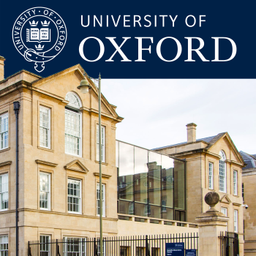
About Recollecting Oxford Medicine: Oral Histories
The Recollecting Oxford Medicine oral history project originated when Peggy Frith, as President of Oxford Medical Alumni, recognised the potential of recorded interviews to capture stories, memories and voices from the Oxford Medical school and Oxford Hospitals. The interviewees were selected to cover, from an Oxford perspective over almost a century, the many changes in the practice of medicine and medical teaching, of both local and national importance. The material would supplement the Bodleian Libraries' extensive archives related to notable Oxford medical researchers. Between 2011 and 2021 Derek Hockaday, Oxford physician since the 1960s, along with Frith and others, interviewed 50 current or former professors, directors, researchers, clinicians and technicians who span from the Second World War until the present day. This podcast series comprises the publicly accessible recordings from the oral history project.
Album cover: Radcliffe Infirmary, 2019. Photograph by Billy Wilson, available under the terms of CC BY-NC 2.0 https://creativecommons.org/licenses/by-nc/2.0/legalcode
Derek Hockaday interviews Martin Vessey, Emeritus Professor of Public Health, 4 June 2014 Topics discussed include: (00:00:15) how MV came to Oxford; (00:01:36) John Honour; (00:03:46) choosing to focus on epidemiology and statistics, learning about statistics and computing post medical qualification and return to clinical house appointments; (00:07:28) meeting Richard Doll; (00:10:14) comparing Oxford and London computing facilities; (00.11:39) MD thesis, United States trip and return to Oxford, (00:14:39) work under direction of Richard Doll at Medical Research Council statistical research unit and effect on direction of career; (00:18:26) MRC and World Health Organisation; (00:19:49) fertilisation and contraceptive work; (00:23:42) studies relating to the etiology of cervical cancer; (00:26:58) research into menopause and investigation of hormone replacement; (00:31:22) differences in different generations of contraceptive pills; (00:36:34) social and community medicine in relation to epidemiology; (00:42:02) interactions with and teaching medical students; (00:48:57) attending medical and surgical grand rounds; (00:50:17) research, papers and breast cancer screening; (00:55:51) Royal Commission on Environmental Pollution; (00:58:50) Rosemary Rue; (01:02:04) travelling for conferences; (01:04:10) supervising DPhil students; (01:09:20) final thoughts on career; (01:11:53) women in epidemiology and medicine.
20 Jan 2022
Mike Dunnill
Derek Hockaday interviews Mike Dunnill, researcher, pathologist and former Director of Clinical Studies,10 February 2012. Topics discussed include: (00:00:10) first coming to Oxford from Bristol in 1956, Department of Pathology facilities; (00:04:00) becoming interested in medical education, George Pickering's committee for Medical School at Nottingham; (00:05:18) becoming Director of Clinical Studies in 1967; (00:06:15) report outlining changes to Honours schools coinciding with the Royal Commission on Medical Education,1969; (00:11:27) lunchtime post-mortem demonstrations; (00:15:21) the [Richard] Doll committee; (00:19:46) graduate assistants work in 1950s in Oxford; (00:21:10) staff on the Pathology course; (00:25:16) the Nuffield Committee; (00:26:38) increasing student numbers for clinical school; (00:28:10) George Pickering.
20 Jan 2022
Ann Taylor
Derek Hockaday interviews Ann Taylor, researcher and physiologist, 20 January 2016. Topics discussed include: (00:01:25) family connection to Oxford, teenage years in Oxford High school for girls, entry into Somerville and old quota system; (00:02:57) being under the care of Dorothy Hodgkin in the medical school; (00:04:32) Janet Vaughn; (00:05:20) thoughts on schools year, practical work and courses; (00:11:00) working at the Pickering unit, comparing Witts and Pickering; (00:12:38) role post-research; (00:16:10) appointed first medical tutor and lecturer at St. Anne's college, work with H.B Parry in the Nuffield Institute; (00:21:15) work at Stanford, America, thoughts on American healthcare system, work under Roy Maffly on cell biology (effects of antimitotic drugs); (00:24:10) submitting research paper to the Congress of Nephrology, grant application having to be under Roy Maffly's name; (00:28:26) moving to Cornell University Medical School, department of physiology, and work on microtubules; (00:31:57) returning to Oxford, lectureship in physiology department joint appointment allocation with St Edmund Hall, tutoring and lecturing; (00:35:40) running the renal physiology course; (00:239:12) memories of colleagues in the department of physiology; (00:41:38) thoughts on Oxford Medical system; (00:45:25) family at time of clinical course, support with children; (00:48:03) being the first woman fellow at St Edmund Hall in 1980; (00:52:25) relationship between clinical and pre-clinical departments, surgeons; (00:56:51) ward sisters and nurses.
Pod Engine is an independent podcast discovery and analytics service and is not affiliated with or endorsed by this podcast. Artwork and show content belong to their owners. Full legal notice.
Explore this show Podcast research with Pod Engine