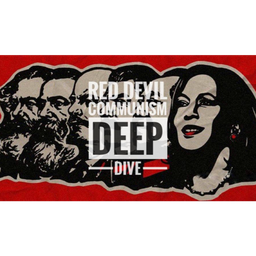
Red Devil: Unmasking Communism’s Evil
Claim This Podcastby tehranist
Podcast Authority
Beta
Podcast Overview
<p>The "evil of Communism" is a phrase often used to critique the ideology and its historical implementations, typically pointing to a mix of philosophical, economic, and human rights concerns. Critics argue that Communism, as envisioned by Marx and Engels—where private property is abolished, and the state controls production—leads to authoritarianism, economic stagnation, and widespread suffering. Let’s break it down based on common arguments and historical examples, without pretending I’ve got some cosmic authority on good and evil.</p><p>Philosophically, detractors say Communism denies individual freedom. The idea of collective ownership sounds noble—everyone shares, nobody starves—but in practice, it’s enforced by a centralized power that crushes dissent to maintain "equality." Ayn Rand types call it a war on the self: you can’t own what you make, so why bother innovating? The counter is that capitalism hoards wealth for a few, but critics fire back that at least it doesn’t pretend everyone’s the same.</p><p>Historically, the rap sheet’s long. Stalin’s Soviet Union: forced collectivization in the 1930s killed millions through famine—Ukraine’s Holodomor alone might’ve taken 4 million. Mao’s Great Leap Forward: 20-45 million dead from starvation and overwork, depending on who’s counting. Pol Pot’s Cambodia: nearly 2 million executed or starved in a utopian reset. These aren’t just "mistakes"—critics say they’re baked into Communism’s DNA. When you try to engineer human nature out of people, resistance builds, and the state responds with gulags or mass graves. Data backs this: the Black Book of Communism estimates 94 million deaths tied to Communist regimes, though some scholars debate the tally’s precision.</p><p>Economically, it’s a mess too. Central planning flops—look at the Soviet Union’s bread lines or Venezuela’s collapse. The idea’s that smart guys in a room can outguess markets, but they can’t. Prices signal demand; without them, you get shortages or useless surpluses. Cuba’s got free healthcare, sure, but people still risk shark-infested waters to escape.</p><p>Defenders say true Communism’s never been tried—those were corrupt distortions. Marx didn’t blueprint tyranny, just a classless endgame. Fair point: the manifesto’s vague on execution. But critics counter that’s the flaw—without a practical map, you’re left with power vacuums that tyrants fill.</p><p></p>
Language
🇺🇲
Publishing Since
3/20/2025
Unlock The Full Podcast Authority Score Report
See how your podcast performs across key metrics
Podcast Authority
BetaRecommendations available
Unlock the full report to see detailed tips
Recommendations available
Unlock the full report to see detailed tips
Unlock comprehensive insights including:
- • YouTube presence analysis
- • Social media reach metrics
- • RSS compliance scoring
- • Podcast 2.0 features
- • Technical standards
Detailed Analytics
- Complete breakdown of all 19 authority metrics
- Personalized recommendations for each metric
- Industry benchmarks and comparisons
- Technical RSS feed analysis and compliance scoring
Growth Strategies
- Step-by-step action plans for improvement
- Quick wins to boost your score immediately
- Pro tips from successful podcasters
See how your show performs across every key metric
High authority scores make your podcast more attractive to industry leaders and influencers who want to appear on credible shows.
Sponsors look for podcasts with proven authority and engagement. Your score demonstrates your podcast's value to potential partners.
Understanding your strengths and weaknesses helps you make data-driven decisions to expand your listener base effectively.
Reach the team behind Red Devil: Unmasking Communism’s Evil
Verified contact details for this show aren't on file yet — sign up to get notified when they land.
Recent Episodes
March 20, 2025
Communism Labeling Opponents Tactic_01
<p>The provided sources discuss a <strong>1943 directive from communist party headquarters in the United States</strong> that instructed members to <strong>label opponents as "fascist," "Nazi," or "anti-semitic"</strong> to discredit them. This tactic aimed to exploit the <strong>negative connotations of these terms</strong> during World War II to manipulate public perception and <strong>silence dissenting voices</strong> rather than engage in substantive debate. The sources emphasize the <strong>strategic and manipulative nature of this labeling</strong> and suggest that similar tactics using different labels persist in contemporary political discourse, highlighting the importance of critical thinking. This podcast excerpt also introduces the intention to explain "hidden and scary corners of the communist movement."</p>
1 total episodes available
Deep-dive analytics for Red Devil: Unmasking Communism’s Evil
Frequently asked questions
Have a different question and can't find the answer you're looking for? Reach out to our support team by sending us an email and we'll get back to you as soon as we can.
- What is Red Devil: Unmasking Communism’s Evil?
<p>The "evil of Communism" is a phrase often used to critique the ideology and its historical implementations, typically pointing to a mix of philosophical, economic, and human rights concerns. Critics argue that Communism, as envisioned by Marx and Engels—where private property is abolished, and the state controls production—leads to authoritarianism, economic stagnation, and widespread suffering. Let’s break it down based on common arguments and historical examples, without pretending I’ve got some cosmic authority on good and evil.</p><p>Philosophically, detractors say Communism denies individual freedom. The idea of collective ownership sounds noble—everyone shares, nobody starves—but in practice, it’s enforced by a centralized power that crushes dissent to maintain "equality." Ayn Rand types call it a war on the self: you can’t own what you make, so why bother innovating? The counter is that capitalism hoards wealth for a few, but critics fire back that at least it doesn’t pretend everyone’s the same.</p><p>Historically, the rap sheet’s long. Stalin’s Soviet Union: forced collectivization in the 1930s killed millions through famine—Ukraine’s Holodomor alone might’ve taken 4 million. Mao’s Great Leap Forward: 20-45 million dead from starvation and overwork, depending on who’s counting. Pol Pot’s Cambodia: nearly 2 million executed or starved in a utopian reset. These aren’t just "mistakes"—critics say they’re baked into Communism’s DNA. When you try to engineer human nature out of people, resistance builds, and the state responds with gulags or mass graves. Data backs this: the Black Book of Communism estimates 94 million deaths tied to Communist regimes, though some scholars debate the tally’s precision.</p><p>Economically, it’s a mess too. Central planning flops—look at the Soviet Union’s bread lines or Venezuela’s collapse. The idea’s that smart guys in a room can outguess markets, but they can’t. Prices signal demand; without them, you get shortages or useless surpluses. Cuba’s got free healthcare, sure, but people still risk shark-infested waters to escape.</p><p>Defenders say true Communism’s never been tried—those were corrupt distortions. Marx didn’t blueprint tyranny, just a classless endgame. Fair point: the manifesto’s vague on execution. But critics counter that’s the flaw—without a practical map, you’re left with power vacuums that tyrants fill.</p><p></p> - How often does this podcast release new episodes?
This podcast updates daily.
- Where can I listen to this podcast?
This podcast is available on 4 platforms including Apple Podcasts, Spotify, and more. You can also use the RSS feed directly.
- Does this podcast accept guests?
No, this podcast does not typically feature guests.
Legal Disclaimer
Pod Engine is not affiliated with, endorsed by, or officially connected with any of the podcasts displayed on this platform. We operate independently as a podcast discovery and analytics service.
All podcast artwork, thumbnails, and content displayed on this page are the property of their respective owners and are protected by applicable copyright laws. This includes, but is not limited to, podcast cover art, episode artwork, show descriptions, episode titles, transcripts, audio snippets, and any other content originating from the podcast creators or their licensors.
We display this content under fair use principles and/or implied license for the purpose of podcast discovery, information, and commentary. We make no claim of ownership over any podcast content, artwork, or related materials shown on this platform. All trademarks, service marks, and trade names are the property of their respective owners.
While we strive to ensure all content usage is properly authorized, if you are a rights holder and believe your content is being used inappropriately or without proper authorization, please contact us immediately at hey@podengine.ai for prompt review and appropriate action, which may include content removal or proper attribution.
By accessing and using this platform, you acknowledge and agree to respect all applicable copyright laws and intellectual property rights of content owners. Any unauthorized reproduction, distribution, or commercial use of the content displayed on this platform is strictly prohibited.