
Hegel's philosophy on line.
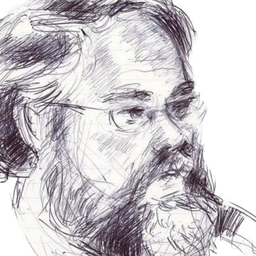
Robbert Veen's Hegel Podcast
Claim This Podcastby Robbert Veen
5.0(1 reviews)
24 episodes
Updated Daily
Accepts GuestsHas Sponsors
Podcast Overview
Hegel's philosophy on line.
Language
🇺🇲
Publishing Since
6/20/2018
1 verified contact email on file for Robbert Veen's Hegel Podcast
Pitch yourself as a guest, propose sponsorships, or reach out directly to the host.
Recent Episodes
January 4, 2021
The Family - Encyclopedia #518-522
<p>When Hegel speaks about the family, he has a very specific form of family life in mind. We call that the petty bourgeois family. In our time we can no longer consider the family essential as an economic entity, nor the larger community of blood relatives. The organization of economic life has limited the various functions that the family can fulfill.</p> <p>This has meant, for example, that in the family the personal relationship of a sexual and affective nature has become the most important. With in addition a permanent function in the education of children.</p> <p>However, this does not mean that we can ignore Hegel's views as historically irrelevant. After all, Hekel tries to express in the form of the concept what is essential for the realization of freedom. His question is: what is necessary for the moral construction of common life. The family thus has a necessary function in the realization of such a community. So we must read the texts about the family from our own perspective that hates, that of the realization of freedom.</p> <p>According to Hegel, man is more than just a legal person or a moral subject. Man is involved in social relationships in a substantial way. The spirit of a community is the condition of morality, and without morality law cannot stand. The social community is able to give a concrete determination to the good, that is to say the unity of law and welfare. The family is the first and immediate form in which the unity of right and welfare is realized. In the family, man is no longer an abstraction. Only within the community do people really exist. The primary situation of communal life is the family.</p> <p>Love is the element that guarantees the unity of the general and the particular. In the family I do not exist as a separate individual, but I am part of a living community. That community is held together by trust and love. And such unity is not primarily understood, but felt. Family members faithfully care for each other and are emotionally connected. In the family it is not about laws and not about a rational structure of living together. Hence, dislike says that this is about the "individual in his natural generality."</p> <p>Natural sexual differentiation and forms of spontaneous affectivity is not just a natural given. It is about the natural generality, but it exists as a spiritual reality. The physical duality of the sexes is being transformed into a spiritual unity. Love is reason in% of the feeling. It is unity in the multiplicity. If we take sexuality as purely physical, it remains characterized by a mutual outward goat.</p> <p>The mind is unable to think of this union in marriage and the multiplicity in the physical distinct union in unity with each other. However, human reason is capable of this.</p> <p>Love is a paradox according to Hegel. I give up my own independence and now exist in unity with others. That loss is experienced by me as the answer to a desire. It is satisfying that as an individual I can nevertheless give up my independence in order to derive the value and meaning of my existence from my involvement with others.</p> <p><br></p> <p><br></p>
January 10, 2020
Transition to Social Ethics - Encyclopedia #511 & 512
<p>Discussion of the two paragraphs that mark the transition between Morality and Social Ethics (Sittlichkeit). </p>
November 8, 2019
The particularity of good actions - par. 508 Encyclopedia
<p>508 But though the good is the universal of will - a universal determined in itself - and thus including in it particularity - still so far as this particularity is in the first instance still abstract, there is no principle at hand to determine it. Such determination therefore starts up also outside that universal; and as heteronomy or determinance of a will which is free and has rights of its own, there awakes here the deepest contradiction. (a) In consequence of the indeterminate determinism of the good, there are always several sorts of good and many kinds of duties, the variety of which is a dialectic of one against another and brings them into collision. At the same time because good is one, they ought to stand in harmony; and yet each of them, though it is particular duty, is as good and as duty absolute. It falls upon the agent to be the dialectic which, superseding this absolute claim of each, concludes such a combination of them as excludes the rest.</p>
24 total episodes available
Deep-dive analytics for Robbert Veen's Hegel Podcast
Frequently asked questions
Have a different question and can't find the answer you're looking for? Reach out to our support team by sending us an email and we'll get back to you as soon as we can.
- What is Robbert Veen's Hegel Podcast?
- How often does this podcast release new episodes?
This podcast updates daily.
- Where can I listen to this podcast?
This podcast is available on 4 platforms including Apple Podcasts, Spotify, and more. You can also use the RSS feed directly.
- Does this podcast accept guests?
No, this podcast does not typically feature guests.
Legal Disclaimer
Pod Engine is not affiliated with, endorsed by, or officially connected with any of the podcasts displayed on this platform. We operate independently as a podcast discovery and analytics service.
All podcast artwork, thumbnails, and content displayed on this page are the property of their respective owners and are protected by applicable copyright laws. This includes, but is not limited to, podcast cover art, episode artwork, show descriptions, episode titles, transcripts, audio snippets, and any other content originating from the podcast creators or their licensors.
We display this content under fair use principles and/or implied license for the purpose of podcast discovery, information, and commentary. We make no claim of ownership over any podcast content, artwork, or related materials shown on this platform. All trademarks, service marks, and trade names are the property of their respective owners.
While we strive to ensure all content usage is properly authorized, if you are a rights holder and believe your content is being used inappropriately or without proper authorization, please contact us immediately at hey@podengine.ai for prompt review and appropriate action, which may include content removal or proper attribution.
By accessing and using this platform, you acknowledge and agree to respect all applicable copyright laws and intellectual property rights of content owners. Any unauthorized reproduction, distribution, or commercial use of the content displayed on this platform is strictly prohibited.