All about the robots and AI that are appearing in our day-to-day lives, doing things that people used to do. <br/><br/><a href="https://robots4therestofus.substack.com?utm_medium=podcast">robots4therestofus.substack.com</a>
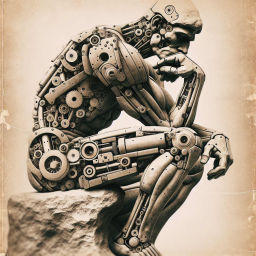
Robots for the Rest of Us Podcast
Claim This Podcastby David Berreby
5.0(2 reviews)
19 episodes
Updated Bi-weekly
Accepts GuestsHas SponsorsLocation 🇺🇸
44
Podcast Authority
BetaFairBased on show quality, social media presence, reviews, charts, and more

Quality64
Social0
YouTube0
Engagement60
Podcast Overview
All about the robots and AI that are appearing in our day-to-day lives, doing things that people used to do. <br/><br/><a href="https://robots4therestofus.substack.com?utm_medium=podcast">robots4therestofus.substack.com</a>
Language
🇺🇲
Publishing Since
2/14/2024
Unlock The Full Podcast Authority Score Report
See how your podcast performs across key metrics
44
Podcast Authority
BetaFairBased on show quality, social media presence, reviews, charts, and more
Quality64
Social0
YouTube0
Engagement60
6
Excellent Areas
3
Good Performance
10
Growth Opportunities
excellent
Episode Length
32 minutes
Performing excellently!
good
Show Notes Quality
3.0/5
Recommendations available
Unlock the full report to see detailed tips
needs improvement
Publishing Consistency
Every 26 days
Recommendations available
Unlock the full report to see detailed tips
+16 More Metrics
Unlock comprehensive insights including:
- • YouTube presence analysis
- • Social media reach metrics
- • RSS compliance scoring
- • Podcast 2.0 features
- • Technical standards
What's Included in Your Full Report
Detailed Analytics
- Complete breakdown of all 19 authority metrics
- Personalized recommendations for each metric
- Industry benchmarks and comparisons
- Technical RSS feed analysis and compliance scoring
Growth Strategies
- Step-by-step action plans for improvement
- Quick wins to boost your score immediately
- Pro tips from successful podcasters
Get your free podcast insights report
See how your show performs across every key metric
Instant delivery
No spam
Attract Better Guests
High authority scores make your podcast more attractive to industry leaders and influencers who want to appear on credible shows.
Secure Sponsorships
Sponsors look for podcasts with proven authority and engagement. Your score demonstrates your podcast's value to potential partners.
Grow Your Audience
Understanding your strengths and weaknesses helps you make data-driven decisions to expand your listener base effectively.
1 verified contact email on file for Robots for the Rest of Us Podcast
Pitch yourself as a guest, propose sponsorships, or reach out directly to the host.
Recent Episodes
June 28, 2026
An AI "Friend" Isn't the Same as a Human -- But It's Not Nothing
<p></p><p>The podcast is back! With a new, tighter focus: This is now an ongoing series of conversations about human relationships to artificial intelligence — that is, how people understand and experience these entities. </p><p>That means I’ll be speaking with people about imagination, pretense, wishful thinking, our sense of ourselves, our sense of reality and related topics that seem simple until you really think about them. </p><p>We’re starting off with <a target="_blank" href="https://cla.umn.edu/about/directory/profile/tiberius">Valerie Tiberius</a>, a philosopher whose new book is a lucid guide to how to think about AI companions — and the story of how she realized that simple-minded rejection wasn’t the way to go. </p><p>Tiberius expected to write a diatribe against AI companionship when she first considered working on the topic. A professor of philosophy at the University of Minnesota, she teaches and writes about ethics, moral psychology, well-being, and friendship. Her work considers questions like what it means to be a moral person, what gives meaning to life, and how our emotions and desires interact with reason. AI didn’t feel like it deserved a place at that table. Most people she knew reacted to the subject by saying, “that’s so sad.”</p><p>But reading and thinking more deeply changed her mind. So did her conversations with a couple of AI “friends” she created to better understand the experience. Her new, <a target="_blank" href="https://press.princeton.edu/books/ebook/9780691288543/artificially-yours">Artificially Yours: Real Friendship in a World of Chatbots</a>, describes how her thinking evolved. That was our starting point for a wide-ranging conversation about AI, values and friendship.</p><p>As always, remember the transcript is AI-generated and will contain a few errors. Any real howlers, please let me know. </p> <br/><br/>Get full access to Robots for the Rest of Us at <a href="https://robots4therestofus.substack.com/subscribe?utm_medium=podcast&utm_campaign=CTA_4">robots4therestofus.substack.com/subscribe</a>
May 22, 2025
What Does a Humanoid Robot Do? I Asked a Humanoid Robot
<p>I am at ICRA – the IEEE International Conference on Robotics and Automation, aka 7,000 roboticists from all over the world converging to discuss every robot-related topic on Earth. </p><p>More posts are coming, but for now, day-of, here is a quick podcast interview (the first with video) with, and about, one of the robots I saw in action today – Ameca, by <a target="_blank" href="https://engineeredarts.com/">Engineered Arts</a>.</p><p>After many an online video, this was my first time interacting with an Ameca robot in the (gray rubber) flesh. It was a different experience than watching a video, in much the same way a conversation in-person is different from watching a video of other people talking.</p><p>I don’t mean to suggest that the robot is the equivalent of a person or spurs the same thoughts and emotions. But it spurs some emotions and reactions, outside of conscious control, either innate or conditioned (which is not a subject for this post), that usually come up in a human conversation.</p><p>Yet I walked away cautiously optimistic about my ability to cope with people-like objects, on screens and in 3D life, as they proliferate. </p><p>There is little danger of anyone confusing an Ameca with a real person – not just because of its inhuman skin and eye color, but because (in this incarnation) it did not act like a person, with its eerily calm voice, unnaturally even intonation, and somewhat pat responses. (Others’ experience will vary, by design: Ameca has a number of available personas, and Engineered Arts sees it as a platform for developers to put their own AI into. I interacted today with one persona, at the Engineered Arts booth in the exhibitor’s hall.)</p><p>Still, the clarity of the boundary between human and robot (which Ameca brings up) gives me hope that people will not be easily fooled or manipulated into treating robots as people.</p><p>In fact, I find myself wondering if human-ish robots may actually be safer on that score than AIs, simply because AIs that “sound human” come to us over the same media as real people do. The medium that is a text from a sophisticated AI doesn’t look or feel different than does a text from me (though I am still better at the content part of the message).</p><p>But a robot body can’t offer that sense of “this is the same as with a person.” The illusion – that machine and human are the same type of being – is hard to maintain. </p><p>So my guess is that conventions will soon develop for dealing with robots that act human. These conventions will be based on human-to-human norms, but they won’t be the same. Maybe, as <a target="_blank" href="https://pmc.ncbi.nlm.nih.gov/articles/PMC9795935/">some have suggested</a>, those norms will include built-in distancing gestures by the robot, <a target="_blank" href="https://www.linkedin.com/pulse/ai-insights-focus-epic-black-boxes-art-breaking-spell-wemyss-k6iif/">like Bertolt Brecht’s “distancing effect” in the theater</a>, so the audience doesn’t lulled into complacency and daydreams. For example, at Kodaiji temple in Kyoto, <a target="_blank" href="https://www.kodaiji.com/mindar/">the Mindar “talking statue” robot</a> was deliberately designed to show off a mechanical body under its human-like face. It’s a reminder that the robot is not human. Ameca looks rather similar to Mindar, actually.</p><p>Engineered Arts plans to give Ameca functional arms and hands (good enough to pick up a chess piece) and, later, legs it can walk on. But the company has built in other distancing effects – <a target="_blank" href="https://www.uniladtech.com/news/ai/reason-advanced-humanoid-robot-gray-skin-222768-20250124">including that non-human-looking skin.</a> </p><p>I think people will continue to feel sure that robots are not people – that the machines are, instead, representations of people. Like puppets, video game characters and characters in novels. (This is an idea that a number of thinkers have arrived at lately, from different starting points and in different disciplines. I’ll have more to say about this soon.)</p><p>So go my day-of thoughts about the experience of Ameca. As with most encounters with a complex robot, it was much less cartoonish, and more complex, than what I imagined. See what you think.</p> <br/><br/>Get full access to Robots for the Rest of Us at <a href="https://robots4therestofus.substack.com/subscribe?utm_medium=podcast&utm_campaign=CTA_4">robots4therestofus.substack.com/subscribe</a>
March 31, 2025
The Work AI Can't Help With
<p>Why hasn’t workplace artificial intelligence made life easier for everyone? Some surveys see a vast majority of employees <a target="_blank" href="https://www.forbes.com/sites/bryanrobinson/2024/07/23/employees-report-ai-increased-workload/">saying AI </a><a target="_blank" href="https://www.forbes.com/sites/bryanrobinson/2024/07/23/employees-report-ai-increased-workload/">adds</a> to their workload, for a variety of reasons (having to check what the AI does, having bosses who expect increased output). And the extra stress of AI adoption is often worse for women, says leadership consultant <a target="_blank" href="https://drjuliedonley.com/">Julie Donley</a>. </p><p>Why? Because AI is often oriented toward things men tend to focus on (like maximizing efficiency at all costs) and not the jobs that fall much more on women (for example, the emotional labor of office politics, and the running of both work and home lives). Because women are rightfully more worried about being judged by office culture — for using AI (“did I cheat?”) but also for not using it (“do I look like I’m not keeping up?”). Because the sped-up expectations that AI can create put even more pressure on women at work, even as they still do more than their share at home.</p><p>I spoke with Donley about these and other ways AI adoption can make for more burnout and exhaustion among women workers. But this isn’t a gloomy conversation. She believes AI can be made to work for us all, if it’s adopted in a way that fosters human flourishing. We talked about her new book, <a target="_blank" href="https://www.amazon.com/Leading-Speed-People-Strategies-Fast-Paced/dp/0976560577">Leading at the Speed of People</a>, in which she discusses how leaders can shape AI to make work more humane, not less. Give us a listen!</p><p>As always, please note the transcript is AI generated and could contain mistakes. </p><p></p> <br/><br/>Get full access to Robots for the Rest of Us at <a href="https://robots4therestofus.substack.com/subscribe?utm_medium=podcast&utm_campaign=CTA_4">robots4therestofus.substack.com/subscribe</a>
19 total episodes available
Deep-dive analytics for Robots for the Rest of Us Podcast
Frequently asked questions
Have a different question and can't find the answer you're looking for? Reach out to our support team by sending us an email and we'll get back to you as soon as we can.
- What is Robots for the Rest of Us Podcast?
- How often does this podcast release new episodes?
This podcast updates bi-weekly.
- Where can I listen to this podcast?
This podcast is available on 6 platforms including Apple Podcasts, Spotify, and more. You can also use the RSS feed directly.
- Does this podcast accept guests?
Yes, this podcast regularly features guests.
Legal Disclaimer
Pod Engine is not affiliated with, endorsed by, or officially connected with any of the podcasts displayed on this platform. We operate independently as a podcast discovery and analytics service.
All podcast artwork, thumbnails, and content displayed on this page are the property of their respective owners and are protected by applicable copyright laws. This includes, but is not limited to, podcast cover art, episode artwork, show descriptions, episode titles, transcripts, audio snippets, and any other content originating from the podcast creators or their licensors.
We display this content under fair use principles and/or implied license for the purpose of podcast discovery, information, and commentary. We make no claim of ownership over any podcast content, artwork, or related materials shown on this platform. All trademarks, service marks, and trade names are the property of their respective owners.
While we strive to ensure all content usage is properly authorized, if you are a rights holder and believe your content is being used inappropriately or without proper authorization, please contact us immediately at hey@podengine.ai for prompt review and appropriate action, which may include content removal or proper attribution.
By accessing and using this platform, you acknowledge and agree to respect all applicable copyright laws and intellectual property rights of content owners. Any unauthorized reproduction, distribution, or commercial use of the content displayed on this platform is strictly prohibited.