
The Zero Hour (aka Hollywood Radio Theater) was a 1973–74 American radio drama anthology series hosted by Rod Serling. With tales of mystery, adventure and suspense, the program was broadcast for two seasons. Some of the scripts were written by Serling. <br />The radio series debuted on September 3, 1973, in syndication, and was picked up by the Mutual Broadcasting System in December. The original format featured five-part dramas broadcast Monday through Friday with the story coming to a conclusion on Friday. Including commercials, each part was approximately 30 minutes long. Mutual affiliates were free to broadcast the series in any available time slot that they wished. <br />In 1974, still airing five days a week, the program changed to a full story in a single 30-minute installment with the same actor starring throughout the week in all five programs. That format was employed from late April 1974 to the end of the series in July 1974. <br />Producer J. M. Kholos was a Los Angeles advertising man who acquired the rights to suspense novels, including Tony Hillerman's The Blessing Way, for radio adaptations. In some cases, the titles were changed. For example, the five-part "Desperate Witness" was an adaptation of The Big Clock by Kenneth Fearing. To create a strong package, Kholos followed through by lining up top actors, including John Astin, Edgar Bergen, Joseph Campanella, Richard Crenna, John Dehner, Howard Duff, Keenan Wynn, Richard Deacon, Patty Duke, Nina Foch, George Maharis, Susan Oliver, Brock Peters and Lurene Tuttle. <br />The opening theme music was by Ferrante & Teicher. Don Hills produced the series for StudioHouse, which also produced the Salvation Army's Heartbeat Theatre. Counting each five-part show as five episodes, there were a total of 130 episodes. Failing to find a large audience due to the initial weekly serial format and lack of promotion, Mutual canceled the program, and the final episode was broadcast on July 26 1974, though many Mutual affiliates continued broadcasting repeats for several months afterwards. According to director Elliott Lewis, "They wanted as much name value as possible to help with sales. They forgot they had to sell it. Everybody sat in the office and waited for someone to call them up and buy the show."
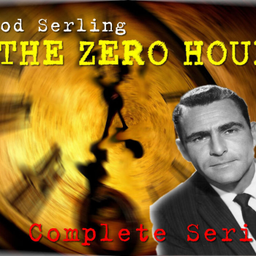
Rod Sterling - The Zero Hour
Claim This Podcastby The 'X' Zone Broadcast Network
Podcast Overview
The Zero Hour (aka Hollywood Radio Theater) was a 1973–74 American radio drama anthology series hosted by Rod Serling. With tales of mystery, adventure and suspense, the program was broadcast for two seasons. Some of the scripts were written by Serling. <br />The radio series debuted on September 3, 1973, in syndication, and was picked up by the Mutual Broadcasting System in December. The original format featured five-part dramas broadcast Monday through Friday with the story coming to a conclusion on Friday. Including commercials, each part was approximately 30 minutes long. Mutual affiliates were free to broadcast the series in any available time slot that they wished. <br />In 1974, still airing five days a week, the program changed to a full story in a single 30-minute installment with the same actor starring throughout the week in all five programs. That format was employed from late April 1974 to the end of the series in July 1974. <br />Producer J. M. Kholos was a Los Angeles advertising man who acquired the rights to suspense novels, including Tony Hillerman's The Blessing Way, for radio adaptations. In some cases, the titles were changed. For example, the five-part "Desperate Witness" was an adaptation of The Big Clock by Kenneth Fearing. To create a strong package, Kholos followed through by lining up top actors, including John Astin, Edgar Bergen, Joseph Campanella, Richard Crenna, John Dehner, Howard Duff, Keenan Wynn, Richard Deacon, Patty Duke, Nina Foch, George Maharis, Susan Oliver, Brock Peters and Lurene Tuttle. <br />The opening theme music was by Ferrante & Teicher. Don Hills produced the series for StudioHouse, which also produced the Salvation Army's Heartbeat Theatre. Counting each five-part show as five episodes, there were a total of 130 episodes. Failing to find a large audience due to the initial weekly serial format and lack of promotion, Mutual canceled the program, and the final episode was broadcast on July 26 1974, though many Mutual affiliates continued broadcasting repeats for several months afterwards. According to director Elliott Lewis, "They wanted as much name value as possible to help with sales. They forgot they had to sell it. Everybody sat in the office and waited for someone to call them up and buy the show."
Language
🇺🇲
Publishing Since
8/17/2022
1 verified contact email on file for Rod Sterling - The Zero Hour
Pitch yourself as a guest, propose sponsorships, or reach out directly to the host.
Recent Episodes
August 21, 2022
Zero Hour 1974-02-15 (45) Someone's Death - Chapter 5
Zero Hour 1974-02-15 (45) Someone's Death - Chapter 5
August 21, 2022
Zero Hour 1974-02-14 (44) Someone's Death - Chapter 4
Zero Hour 1974-02-14 (44) Someone's Death - Chapter 4
August 21, 2022
Zero Hour 1974-02-13 (43) Someone's Death - Chapter 3
Zero Hour 1974-02-13 (43) Someone's Death - Chapter 3
45 total episodes available
Deep-dive analytics for Rod Sterling - The Zero Hour
Frequently asked questions
Have a different question and can't find the answer you're looking for? Reach out to our support team by sending us an email and we'll get back to you as soon as we can.
- What is Rod Sterling - The Zero Hour?
- How often does this podcast release new episodes?
This podcast updates daily.
- Where can I listen to this podcast?
This podcast is available on 4 platforms including Apple Podcasts, Spotify, and more. You can also use the RSS feed directly.
- Does this podcast accept guests?
No, this podcast does not typically feature guests.
Legal Disclaimer
Pod Engine is not affiliated with, endorsed by, or officially connected with any of the podcasts displayed on this platform. We operate independently as a podcast discovery and analytics service.
All podcast artwork, thumbnails, and content displayed on this page are the property of their respective owners and are protected by applicable copyright laws. This includes, but is not limited to, podcast cover art, episode artwork, show descriptions, episode titles, transcripts, audio snippets, and any other content originating from the podcast creators or their licensors.
We display this content under fair use principles and/or implied license for the purpose of podcast discovery, information, and commentary. We make no claim of ownership over any podcast content, artwork, or related materials shown on this platform. All trademarks, service marks, and trade names are the property of their respective owners.
While we strive to ensure all content usage is properly authorized, if you are a rights holder and believe your content is being used inappropriately or without proper authorization, please contact us immediately at hey@podengine.ai for prompt review and appropriate action, which may include content removal or proper attribution.
By accessing and using this platform, you acknowledge and agree to respect all applicable copyright laws and intellectual property rights of content owners. Any unauthorized reproduction, distribution, or commercial use of the content displayed on this platform is strictly prohibited.