
Roots & Attachment Podcast explores relational trauma, attachment wounds, and nervous-system healing. Hosted by Erika Baum—attachment & relational trauma therapist grounded in compassion, curiosity, and helping you reconnect to your own inner wisdom. <br/><br/><a href="https://rootsandattachment.substack.com?utm_medium=podcast">rootsandattachment.substack.com</a>
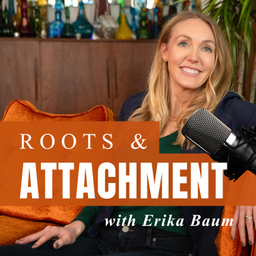
Roots and Attachment Podcast
Claim This Podcastby Erika Baum
5.0(3 reviews)
5 episodes
Updated Daily
Accepts GuestsHas Sponsors
Podcast Overview
Roots & Attachment Podcast explores relational trauma, attachment wounds, and nervous-system healing. Hosted by Erika Baum—attachment & relational trauma therapist grounded in compassion, curiosity, and helping you reconnect to your own inner wisdom. <br/><br/><a href="https://rootsandattachment.substack.com?utm_medium=podcast">rootsandattachment.substack.com</a>
Language
🇺🇲
Publishing Since
12/6/2025
1 verified contact email on file for Roots and Attachment Podcast
Pitch yourself as a guest, propose sponsorships, or reach out directly to the host.
Recent Episodes
December 31, 2025
How Attachment Styles Form (They’re Not Personality Traits)
<p>Attachment styles shape how we love, argue, pull away, cling, shut down, or stay silent in relationships—but most people don’t realize <strong>they formed long before adulthood</strong>.</p><p>In this episode of Roots & Attachment, Denver trauma therapist <strong>Erika Baum, LPCC</strong>, breaks down <strong>how attachment styles develop</strong>, why they exist, and why they are <strong>not personality traits or character flaws</strong>.</p><p>Through a relatable story and nervous-system-based explanation, you’ll learn how early caregiving experiences wire the brain for connection, protection, and survival—and why these patterns still show up in adult relationships today.</p><p>This episode is for you if:</p><p>* You’ve ever wondered “Why do I react this way in relationships?”</p><p>* You struggle with closeness, conflict, or emotional vulnerability</p><p>* You identify with anxious, avoidant, or fearful attachment patterns</p><p>* You want to heal attachment wounds without shame or self-blame</p><p>What You’ll Learn in This Episode</p><p>* What attachment styles actually are (and what they’re not)</p><p>* How attachment patterns form in early childhood</p><p>* Why babies “borrow” nervous systems from caregivers</p><p>* The real purpose of anxious and avoidant attachment styles</p><p>* Why attachment styles are survival strategies—not flaws</p><p>* How early adaptations show up in adult relationships</p><p>* Why healing attachment isn’t about fixing yourself</p><p>* How attachment patterns <strong>can change</strong> over time</p><p>Key Takeaway</p><p>Your attachment style isn’t who you are.It’s what worked when you had no better options.</p><p>And anything learned for survival can be gently updated.</p><p>About the Host</p><p><strong>Erika Baum, MA, LPCC, NCC</strong> is an attachment-focused trauma therapist based in Denver, Colorado. She specializes in treating relational trauma, C-PTSD, and attachment wounds using EMDR, Internal Family Systems (IFS), mindfulness, and nervous-system-based approaches.</p><p>Learn more about Erika’s work, therapy intensives, and attachment-focused resources at:👉 https://www.denverattachmentcounseling.com/</p><p>Relevant Keywords</p><p>attachment stylesanxious attachmentavoidant attachmentfearful avoidant attachmentsecure attachmentattachment traumachildhood traumanervous system regulationtrauma therapy DenverEMDR therapy DenverIFS therapyrelationships and attachmenthealing attachment woundsRoots and Attachment podcast</p> <br/><br/>This is a public episode. If you would like to discuss this with other subscribers or get access to bonus episodes, visit <a href="https://rootsandattachment.substack.com?utm_medium=podcast&utm_campaign=CTA_1">rootsandattachment.substack.com</a>
December 20, 2025
Home Alone: A Christmas Story About Avoidant Attachment
<p><strong>Home Alone isn’t just a Christmas classic — it’s a powerful story about attachment, the nervous system, and emotional survival.</strong></p><p>In this episode, attachment trauma therapist <strong>Erika Baum</strong> explores Home Alone through the lens of <strong>avoidant attachment</strong>, breaking down how dismissive avoidant and fearful avoidant patterns form in childhood — often in families that look “functional” from the outside.</p><p>Using Kevin McAllister and the McAllister family as a case study, Erika explains how emotional unavailability, chronic stress, humiliation, and missed repair moments shape a child’s nervous system and teach them to survive by becoming self-reliant instead of connected. You’ll also hear how avoidant attachment can show up more subtly in high-achieving or upper-middle-class environments, why it often goes unnoticed, and how research actually explains the relationship between attachment and socioeconomic stress.</p><p>This episode weaves together <strong>attachment theory, nervous system science, real-world clinical insight, and Buddhist wisdom</strong>, including the powerful metaphor of The Second Arrow — showing how avoidant attachment isn’t a flaw, but a learned survival strategy.</p><p>If you’ve ever been told you’re “independent,” “low-maintenance,” or “fine on your own” — but struggle with closeness, emotional safety, or letting others support you — this episode is for you.</p><p><strong>You’ll learn:</strong></p><p>How avoidant attachment forms in childhood</p><p>The difference between dismissive avoidant and fearful avoidant attachment</p><p>Why emotional unavailability (not lack of love) shapes attachment patterns</p><p>How avoidant attachment often hides behind competence and success</p><p>Why healing doesn’t come from trying harder — but from safe connection</p><p>To learn more about attachment-focused trauma therapy, EMDR, IFS, and nervous system healing, visit <strong>Denver Attachment Counseling</strong>:👉 <a target="_blank" href="https://www.denverattachmentcounseling.com/">https://www.denverattachmentcounseling.com/</a></p> <br/><br/>This is a public episode. If you would like to discuss this with other subscribers or get access to bonus episodes, visit <a href="https://rootsandattachment.substack.com?utm_medium=podcast&utm_campaign=CTA_1">rootsandattachment.substack.com</a>
December 15, 2025
The Fixer Pattern: When Safety Meant Managing Everyone Else
<p>Do you feel responsible for everyone else’s emotions?Do you step in, smooth things over, and fix problems—often before anyone even asks?Do you struggle to relax unless everyone around you is okay?</p><p>In this episode of <strong>Roots & Attachment</strong>, we explore the Fixer role — not as a personality flaw, but as a <strong>nervous-system survival strategy</strong> that often develops in childhood homes shaped by emotional unpredictability, addiction, or chronic conflict.</p><p>Fixers don’t fix because they want control.They fix because not fixing once meant danger.</p><p>Using real-life examples (yes, including <strong>Emily in Paris</strong>), attachment science, and a powerful client story, Erika breaks down:</p><p>* Why fixers are hyper-attuned to tension and silence</p><p>* How over-functioning develops as a childhood survival role</p><p>* The link between fixing, anxious attachment, and chronic nervous-system activation</p><p>* Why relaxation can feel unsafe for fixers</p><p>* The hidden emotional and physical costs of carrying everyone else</p><p>* What actually heals the fixer pattern (and it’s not trying harder)</p><p>You’ll hear the story of “Melissa,” a woman who grew up managing emotional chaos—and how her fixer wiring followed her into adulthood through anxiety, exhaustion, and physical symptoms… until she learned something radically different:</p><p><strong>Safety without fixing.</strong></p><p>This episode is for you if:</p><p>* You avoid conflict at all costs</p><p>* You feel guilty saying no</p><p>* You’re everyone’s go-to support person</p><p>* You feel anxious until problems are resolved</p><p>* You learned early that keeping the peace meant staying safe</p><p>Healing the fixer doesn’t mean you stop caring.It means you stop disappearing.</p><p>✨ Learn more about Erika’s work, therapy intensives, and resources at👉 <a target="_blank" href="http://www.denverattachmentcounseling.com"><strong>www.denverattachmentcounseling.com</strong></a></p><p>If this episode resonated, consider sharing it with someone who’s been carrying too much for too long.</p><p>We are wounded in relationship — and we heal in relationship.</p> <br/><br/>This is a public episode. If you would like to discuss this with other subscribers or get access to bonus episodes, visit <a href="https://rootsandattachment.substack.com?utm_medium=podcast&utm_campaign=CTA_1">rootsandattachment.substack.com</a>
5 total episodes available
Deep-dive analytics for Roots and Attachment Podcast
Frequently asked questions
Have a different question and can't find the answer you're looking for? Reach out to our support team by sending us an email and we'll get back to you as soon as we can.
- What is Roots and Attachment Podcast?
- How often does this podcast release new episodes?
This podcast updates daily.
- Where can I listen to this podcast?
This podcast is available on 4 platforms including Apple Podcasts, Spotify, and more. You can also use the RSS feed directly.
- Does this podcast accept guests?
No, this podcast does not typically feature guests.
Legal Disclaimer
Pod Engine is not affiliated with, endorsed by, or officially connected with any of the podcasts displayed on this platform. We operate independently as a podcast discovery and analytics service.
All podcast artwork, thumbnails, and content displayed on this page are the property of their respective owners and are protected by applicable copyright laws. This includes, but is not limited to, podcast cover art, episode artwork, show descriptions, episode titles, transcripts, audio snippets, and any other content originating from the podcast creators or their licensors.
We display this content under fair use principles and/or implied license for the purpose of podcast discovery, information, and commentary. We make no claim of ownership over any podcast content, artwork, or related materials shown on this platform. All trademarks, service marks, and trade names are the property of their respective owners.
While we strive to ensure all content usage is properly authorized, if you are a rights holder and believe your content is being used inappropriately or without proper authorization, please contact us immediately at hey@podengine.ai for prompt review and appropriate action, which may include content removal or proper attribution.
By accessing and using this platform, you acknowledge and agree to respect all applicable copyright laws and intellectual property rights of content owners. Any unauthorized reproduction, distribution, or commercial use of the content displayed on this platform is strictly prohibited.