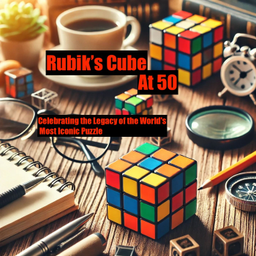
Podcast thumbnail for Rubik's Cube at 50

Rubik's Cube at 50

Claim This Podcast

by Inception Point AI

5.0(2 reviews)
1 episodes
Updated Weekly
Accepts GuestsHas SponsorsLocation 🇭🇺

Podcast Overview

The Rubik's Cube, a multicolored 3D puzzle that has both fascinated and frustrated millions around the globe, is celebrating a significant anniversary. This humble yet complex puzzle, invented by Ernő Rubik in 1974, has not only become a beloved pastime but also a symbol of ingenuity and intellectual challenge. As we mark this milestone, it is a perfect time to reflect on the Rubik's Cube's journey from a classroom teaching tool to a cultural icon and its profound impact on popular culture, mathematics, and education. From its conception as an educational aid to its rise as a global phenomenon, the Rubik's Cube has undergone a remarkable evolution. Its journey has been marked by moments of brilliance, challenges, and triumphs, reflecting the very nature of the puzzle itself. In this comprehensive blog, we will delve into the history of the Rubik's Cube, explore its cultural impact, uncover the mathematics behind it, and celebrate its role in competitive cubing and education. Join us as we unravel the colorful layers of this iconic puzzle and discover why it continues to captivate minds around the world. History of the Rubik's Cube The Rubik's Cube was invented in 1974 by Ernő Rubik, a Hungarian architect and professor of architecture. Initially called the "Magic Cube," it was designed as a teaching aid to help explain three-dimensional geometry. Little did Rubik know that his invention would soon captivate the world. Ernő Rubik's original motivation for creating the cube was to address a teaching challenge. As a professor, he sought a tangible way to demonstrate spatial relationships to his students. The initial prototype, made of wood and paper, featured a rudimentary mechanism that allowed the smaller cubes to move independently without falling apart. After much trial and error, Rubik successfully created a functioning model, unaware that he had just birthed an icon. After receiving a patent in Hungary in 1975, the puzzle was rebranded as the "Rubik's Cube" and began its global journey. The toy company Ideal Toy Corporation brought the cube to international markets in 1980, where it quickly gained popularity. By the mid-1980s, the Rubik's Cube had become a worldwide craze, with millions of units sold and a burgeoning community of enthusiasts dedicated to solving the puzzle. The 1980s were a golden era for the Rubik's Cube. It became a must-have toy, with competitions, clubs, and even dedicated magazines sprouting up around the globe. The cube's popularity was not limited to children; adults were equally enchanted, finding joy and challenge in its complex simplicity. The puzzle's appeal transcended age, gender, and culture, making it a true universal phenomenon. Despite its initial success, the Rubik's Cube faced a decline in popularity towards the late 1980s. However, the 21st century saw a resurgence, fueled by a renewed interest in puzzles and brain games. This revival was accompanied by advancements in solving techniques and a growing online This content was created in partnership and with the help of Artificial Intelligence AI.

Language

🇺🇲

Publishing Since

7/17/2024

2 verified contact emails on file for Rubik's Cube at 50

Pitch yourself as a guest, propose sponsorships, or reach out directly to the host.

Recent Episodes

Episode thumbnail for Celebrating the Legacy of the World's Most Iconic Puzzle

July 17, 2024

Celebrating the Legacy of the World's Most Iconic Puzzle

The Rubik's Cube, a multicolored 3D puzzle that has both fascinated and frustrated millions around the globe, is celebrating a significant anniversary. This humble yet complex puzzle, invented by Ernő Rubik in 1974, has not only become a beloved pastime but also a symbol of ingenuity and intellectual challenge. As we mark this milestone, it is a perfect time to reflect on the Rubik's Cube's journey from a classroom teaching tool to a cultural icon and its profound impact on popular culture, mathematics, and education. From its conception as an educational aid to its rise as a global phenomenon, the Rubik's Cube has undergone a remarkable evolution. Its journey has been marked by moments of brilliance, challenges, and triumphs, reflecting the very nature of the puzzle itself. In this comprehensive blog, we will delve into the history of the Rubik's Cube, explore its cultural impact, uncover the mathematics behind it, and celebrate its role in competitive cubing and education. Join us as we unravel the colorful layers of this iconic puzzle and discover why it continues to captivate minds around the world. History of the Rubik's Cube The Rubik's Cube was invented in 1974 by Ernő Rubik, a Hungarian architect and professor of architecture. Initially called the "Magic Cube," it was designed as a teaching aid to help explain three-dimensional geometry. Little did Rubik know that his invention would soon captivate the world. Ernő Rubik's original motivation for creating the cube was to address a teaching challenge. As a professor, he sought a tangible way to demonstrate spatial relationships to his students. The initial prototype, made of wood and paper, featured a rudimentary mechanism that allowed the smaller cubes to move independently without falling apart. After much trial and error, Rubik successfully created a functioning model, unaware that he had just birthed an icon. After receiving a patent in Hungary in 1975, the puzzle was rebranded as the "Rubik's Cube" and began its global journey. The toy company Ideal Toy Corporation brought the cube to international markets in 1980, where it quickly gained popularity. By the mid-1980s, the Rubik's Cube had become a worldwide craze, with millions of units sold and a burgeoning community of enthusiasts dedicated to solving the puzzle. The 1980s were a golden era for the Rubik's Cube. It became a must-have toy, with competitions, clubs, and even dedicated magazines sprouting up around the globe. The cube's popularity was not limited to children; adults were equally enchanted, finding joy and challenge in its complex simplicity. The puzzle's appeal transcended age, gender, and culture, making it a true universal phenomenon. Despite its initial success, the Rubik's Cube faced a decline in popularity towards the late 1980s. However, the 21st century saw a resurgence, fueled by a renewed interest in puzzles and brain games. This revival was accompanied by advancements in solving techniques and a growing online community, ensuring that the Rubik's Cube would remain a beloved and enduring challenge for generations to come. Popularity and Cultural Impact The Rubik's Cube's rise to fame in the 1980s was meteoric. Its colorful, enigmatic design captured the imagination of people of all ages, and soon, the cube was ubiquitous in households, schools, and offices. The puzzle became a symbol of intellectual prowess and a test of patience and perseverance. Its cultural significance was further cemented by appearances in various media, including movies, television shows, and literature. Films like "The Pursuit of Happyness" and "Blade Runner" featured the Rubik's Cube, using it as a metaphor for complexity and problem-solving. The cube's influence extended to fashion and art, inspiring designs and works that played with its iconic colors and structure. Beyond its representation in media, the Rubik's Cube became a cultural touchstone, symbolizing the intellectual zeitgeist of the 1980s. It was a...

1 total episodes available

Deep-dive analytics for Rubik's Cube at 50

Frequently asked questions

Have a different question and can't find the answer you're looking for? Reach out to our support team by sending us an email and we'll get back to you as soon as we can.

What is Rubik's Cube at 50?

The Rubik's Cube, a multicolored 3D puzzle that has both fascinated and frustrated millions around the globe, is celebrating a significant anniversary. This humble yet complex puzzle, invented by Ernő Rubik in 1974, has not only become a beloved pastime but also a symbol of ingenuity and intellectual challenge. As we mark this milestone, it is a perfect time to reflect on the Rubik's Cube's journey from a classroom teaching tool to a cultural icon and its profound impact on popular culture, mathematics, and education. From its conception as an educational aid to its rise as a global phenomenon, the Rubik's Cube has undergone a remarkable evolution. Its journey has been marked by moments of brilliance, challenges, and triumphs, reflecting the very nature of the puzzle itself. In this comprehensive blog, we will delve into the history of the Rubik's Cube, explore its cultural impact, uncover the mathematics behind it, and celebrate its role in competitive cubing and education. Join us as we unravel the colorful layers of this iconic puzzle and discover why it continues to captivate minds around the world. History of the Rubik's Cube The Rubik's Cube was invented in 1974 by Ernő Rubik, a Hungarian architect and professor of architecture. Initially called the "Magic Cube," it was designed as a teaching aid to help explain three-dimensional geometry. Little did Rubik know that his invention would soon captivate the world. Ernő Rubik's original motivation for creating the cube was to address a teaching challenge. As a professor, he sought a tangible way to demonstrate spatial relationships to his students. The initial prototype, made of wood and paper, featured a rudimentary mechanism that allowed the smaller cubes to move independently without falling apart. After much trial and error, Rubik successfully created a functioning model, unaware that he had just birthed an icon. After receiving a patent in Hungary in 1975, the puzzle was rebranded as the "Rubik's Cube" and began its global journey. The toy company Ideal Toy Corporation brought the cube to international markets in 1980, where it quickly gained popularity. By the mid-1980s, the Rubik's Cube had become a worldwide craze, with millions of units sold and a burgeoning community of enthusiasts dedicated to solving the puzzle. The 1980s were a golden era for the Rubik's Cube. It became a must-have toy, with competitions, clubs, and even dedicated magazines sprouting up around the globe. The cube's popularity was not limited to children; adults were equally enchanted, finding joy and challenge in its complex simplicity. The puzzle's appeal transcended age, gender, and culture, making it a true universal phenomenon. Despite its initial success, the Rubik's Cube faced a decline in popularity towards the late 1980s. However, the 21st century saw a resurgence, fueled by a renewed interest in puzzles and brain games. This revival was accompanied by advancements in solving techniques and a growing online

This content was created in partnership and with the help of Artificial Intelligence AI.

How often does this podcast release new episodes?

This podcast updates weekly.

Where can I listen to this podcast?

This podcast is available on 4 platforms including Apple Podcasts, Spotify, and more. You can also use the RSS feed directly.

Does this podcast accept guests?

Yes, this podcast regularly features guests.

Legal Disclaimer

Pod Engine is not affiliated with, endorsed by, or officially connected with any of the podcasts displayed on this platform. We operate independently as a podcast discovery and analytics service.

All podcast artwork, thumbnails, and content displayed on this page are the property of their respective owners and are protected by applicable copyright laws. This includes, but is not limited to, podcast cover art, episode artwork, show descriptions, episode titles, transcripts, audio snippets, and any other content originating from the podcast creators or their licensors.

We display this content under fair use principles and/or implied license for the purpose of podcast discovery, information, and commentary. We make no claim of ownership over any podcast content, artwork, or related materials shown on this platform. All trademarks, service marks, and trade names are the property of their respective owners.

While we strive to ensure all content usage is properly authorized, if you are a rights holder and believe your content is being used inappropriately or without proper authorization, please contact us immediately at hey@podengine.ai for prompt review and appropriate action, which may include content removal or proper attribution.

By accessing and using this platform, you acknowledge and agree to respect all applicable copyright laws and intellectual property rights of content owners. Any unauthorized reproduction, distribution, or commercial use of the content displayed on this platform is strictly prohibited.