
Tune into these regular podcast episodes for Sādhanā members with Erin Lee.
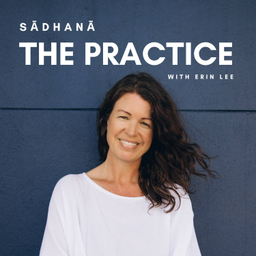
Sādhanā - The Practice
Claim This Podcastby Erin Lee
6 episodes
Updated Daily
Accepts GuestsHas Sponsors
Podcast Overview
Tune into these regular podcast episodes for Sādhanā members with Erin Lee.
Language
🇺🇲
Publishing Since
1/26/2026
1 verified contact email on file for Sādhanā - The Practice
Pitch yourself as a guest, propose sponsorships, or reach out directly to the host.
Recent Episodes
May 19, 2026
Yoga for Mental Health
<p>Yoga was originally designed to support mental wellbeing — to help still the common fluctuations and obstacles of the mind, and reconnect with something greater than our own individual self.</p> <p>Modern psychology and neuroscience are only beginning to catch up to what ancient yoga traditions have understood for thousands of years: that the body, energy, and mind are deeply interconnected.</p> <p>In this rich and grounded conversation, <strong>Erin Lee sits down with psychotherapist and yoga teacher Sabine Schroeder to explore the powerful intersection between yoga, mental health and trauma-informed practice. </strong></p> <p>Together they discuss how yoga can support nervous system regulation, emotional resilience and greater self-awareness — while also acknowledging the importance of practising skilfully, safely and with context.</p> <p>The conversation explores:</p> <ul> <li>embodiment, breath and co-regulation</li> <li>trauma and the “window of tolerance”</li> <li>belonging and community</li> <li>the profound impact of pace, presence and connection in modern life.</li> </ul> <p>Erin and Sabine also share insights from their collaborative <a href="https://themindfulyogaschool.mykajabi.com/yoga-for-mental-health-course" target="_blank" rel="noopener noreferrer">Yoga for Mental Health course</a>, created to support yoga teachers, facilitators, practitioners and students in understanding how these ancient practices can be integrated in ways that are empowering, compassionate and trauma-informed.</p> <p>Find the Yoga for Mental Health (& Trauma-Informed Yoga) online course at <a href="https://themindfulyogaschool.mykajabi.com/yoga-for-mental-health-course">https://www.themindfulyogaschool.com/yoga-for-mental-health-course</a></p> <p>Find Sabine at: <a href="https://empatherapies.com/">https://empatherapies.com/</a></p>
March 29, 2026
…and then what? Dissolving the illusion of what’s next
<p>We spend much of our lives moving toward the next thing:</p> <p>The next home. <br>The next version of ourselves. <br>The moment when everything will finally feel settled. <br><br>But what happens when we pause… and ask: …and then what? I</p> <p>n this episode, Erin reflects on a simple yet profound question — one that cuts through even the most subtle forms of striving.</p> <p>From moving house and chasing the “perfect setup,” to the quiet effort within meditation, to navigating grief and the uncertainty of life, this conversation explores how deeply the habit of “what’s next” runs.</p> <p>This episode gently points us back to what remains when the chasing softens.</p>
March 6, 2026
Lightening Up in our Practice
<p>Erin reflects on a common challenge many practitioners face: taking spiritual practice too seriously. In this episode, she explores the difference between sincere dedication and the heaviness that can arise when meditation or yoga becomes another goal to achieve.</p> <p>Drawing on teachings from Jetsunma Tenzin Palmo and her own recent vipassana retreat experience, Erin discusses how self-criticism, expectations, and “spiritual guilt” can show up before, during, and after practice.</p> <p>Instead, she invites listeners to approach practice with more lightness, curiosity, and humour.</p> <p>Rather than striving for special experiences, the real work of meditation is simply becoming familiar with the mind as it is.</p> <p>A gentle reminder to keep practicing — but not so tightly.</p> <h3>Teaching by Jetsunma Tenzin Palmo</h3> <p class="p1">In traditional Buddhist countries, people are quite realistic and laid back concerning dharma practice. Although they have deep faith and devotion, they understand that we are all flawed human beings. So they tend to be less critical both of themselves and others.</p> <p class="p1">Western students, on the other hand, often try to become the perfect practitioner, to transform themselves into a Japanese or Tibetan, assuming not only the outer etiquette, but the inner attitudes of one’s adopted dharma country. Usually, however, this approach merely accentuates one’s low self-esteem and lack of confidence. To walk the path with confidence, we need to accept and befriend ourselves, to feel at ease in our own skin.</p> <p class="p1">Most Buddhist teachers have encountered the tendency of Western practitioners to take themselves and the dharma very seriously. Perhaps it is a leftover from the students’ traditional religious backgrounds, but there is sometimes a humourless quality to the intensity and focus on achievement. Solemnity and earnestness often prevail in Western dharma circles.</p> <p class="p1">One of the noticeable qualities of most Asian dharma teachers—and some Western teachers—is their readiness to laugh and joke. The Dalai Lama is a prime example of someone who spontaneously laughs when anything strikes him as funny—even in the midst of a solemn ceremony. This doesn’t mean that he isn’t deeply sincere; he’s just not too serious.</p> <p class="p1">Usually it is our old companion the ego that likes to take itself seriously in order to feel important. So when we become interested in the dharma, the ego happily cloaks itself with an aura of spirituality and readily agrees to undertake retreats and disciplines to become a better and more realized “me.” Rather than quietly working to change our minds, it is easy to fall into the trap of taking on the most advanced practices and empowerments long before we are ready. This creates discouragement and a sense of failure.</p> <p class="p1">Students sometimes ask: “What will I gain from meditation practice?” or “When will I know that I have realizations or accomplishment?” or even “What is the fastest and easiest way to enlightenment?” One of the problems seems to be making dharma practice into yet another goal to be accomplished.</p> <p class="p1">The texts assure us that we need energy and dedication to advance along the path, just as we would to become proficient in any skill or sport. Yet it is easy to fall into the pattern or trap of making one’s practice rigid and ambitious. We grow depressed when we don’t appear to be making any progress: when we meditate and nothing seems to happen, or when we cannot regain our initial experiences. Our very expectations create a barrier to the natural unfolding of the mind’s potential.</p> <p class="p1">The dharma is supposed to make our lives happier and less encumbered. “Feeders on joy shall we be,” as the Buddha said. The dharma should be like yeast in the heavy dough of our everyday existence, making our days lighter and more digestible. So when our practice becomes yet another rock in the rucksack of life, making everything seem heavier and more stressful, something isn’t working properly.</p> <p class="p1">In the famous simile of a lute, the Buddha explained that just as the strings of a musical instrument should be neither too tight nor too loose, likewise our practice should be well tuned—not too intense and not too lax. Like a marathon runner, we need to pace ourselves.</p> <p class="p1">We need to encourage ourselves and our fellow practitioners to lighten up and stop taking ourselves so seriously. Sometimes I think the seventh paramita should be a sense of humor! It is very unlikely that we will really accomplish full enlightenment in this lifetime. So what? We have countless future lives to continue the work. In this life, we can allow ourselves to relax a bit and enjoy the flowers, even as we keep walking onward.</p> <p class="p1">— Jetsunma Tenzin Palmo</p>
6 total episodes available
Deep-dive analytics for Sādhanā - The Practice
Frequently asked questions
Have a different question and can't find the answer you're looking for? Reach out to our support team by sending us an email and we'll get back to you as soon as we can.
- What is Sādhanā - The Practice?
- How often does this podcast release new episodes?
This podcast updates daily.
- Where can I listen to this podcast?
This podcast is available on 4 platforms including Apple Podcasts, Spotify, and more. You can also use the RSS feed directly.
- Does this podcast accept guests?
Information about guest appearances is not available.
Legal Disclaimer
Pod Engine is not affiliated with, endorsed by, or officially connected with any of the podcasts displayed on this platform. We operate independently as a podcast discovery and analytics service.
All podcast artwork, thumbnails, and content displayed on this page are the property of their respective owners and are protected by applicable copyright laws. This includes, but is not limited to, podcast cover art, episode artwork, show descriptions, episode titles, transcripts, audio snippets, and any other content originating from the podcast creators or their licensors.
We display this content under fair use principles and/or implied license for the purpose of podcast discovery, information, and commentary. We make no claim of ownership over any podcast content, artwork, or related materials shown on this platform. All trademarks, service marks, and trade names are the property of their respective owners.
While we strive to ensure all content usage is properly authorized, if you are a rights holder and believe your content is being used inappropriately or without proper authorization, please contact us immediately at hey@podengine.ai for prompt review and appropriate action, which may include content removal or proper attribution.
By accessing and using this platform, you acknowledge and agree to respect all applicable copyright laws and intellectual property rights of content owners. Any unauthorized reproduction, distribution, or commercial use of the content displayed on this platform is strictly prohibited.