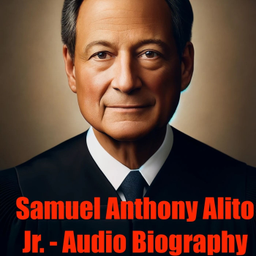
Podcast thumbnail for Samuel Anthony Alito - Audio Biography

Samuel Anthony Alito - Audio Biography

Claim This Podcast

by Inception Point AI

1 episodes
Updated Weekly
Accepts GuestsHas SponsorsLocation 🇺🇸

Podcast Overview

Samuel Anthony Alito Jr., born on April 1, 1950, in Trenton, New Jersey, is an Associate Justice of the Supreme Court of the United States. He was nominated by President George W. Bush on October 31, 2005, and took his seat on the court on January 31, 2006, following the retirement of Justice Sandra Day O'Connor. Early Life and Education: Alito grew up in Hamilton Township, New Jersey, where his father, Samuel A. Alito Sr., was the Director of Research and Planning for the New Jersey Legislature, and his mother, Rose Alito, was a schoolteacher. Alito attended Steinert High School in Hamilton, where he excelled academically and graduated as the class valedictorian in 1968. He then enrolled at Princeton University, where he earned a Bachelor of Arts degree in 1972, graduating summa cum laude. During his time at Princeton, Alito was a member of the Concerned Alumni of Princeton, a conservative group that opposed affirmative action and the admission of women to the university. After completing his undergraduate studies, Alito attended Yale Law School, where he served as the editor of the Yale Law Journal. He graduated with a Juris Doctor degree in 1975. Legal Career: Following his graduation from law school, Alito clerked for Judge Leonard I. Garth of the United States Court of Appeals for the Third Circuit from 1976 to 1977. He then worked as an Assistant U.S. Attorney for the District of New Jersey from 1977 to 1981. In 1981, Alito joined the Reagan administration as an Assistant to the Solicitor General, where he argued 12 cases before the Supreme Court. He later served as Deputy Assistant Attorney General in the Office of Legal Counsel from 1985 to 1987. In 1987, President Reagan nominated Alito to the United States Court of Appeals for the Third Circuit. He was confirmed by the Senate on April 27, 1990, and served on the Third Circuit until his elevation to the Supreme Court in 2006. Supreme Court Tenure: Since joining the Supreme Court, Alito has been known for his conservative jurisprudence and has often sided with the court's conservative bloc. He has been a strong advocate for originalism, the legal theory that the Constitution should be interpreted according to its original meaning at the time it was ratified. Alito has authored several notable opinions, including the majority opinion in Burwell v. Hobby Lobby (2014), which held that closely held for-profit corporations could be exempt from regulations that their owners religiously object to if there is a less restrictive means of furthering the law's interest. He also wrote the majority opinion in Janus v. AFSCME (2018), which ruled that public sector unions cannot require non-members to pay agency fees, dealing a significant blow to organized labor. Alito has been a consistent dissenter in cases involving LGBTQ+ rights, including Obergefell v. Hodges (2015), which legalized same-sex marriage nationwide, and Bostock v. Clayton County (2020), which held that Title VII of the Civil This content was created in partnership and with the help of Artificial Intelligence AI.

Language

🇺🇲

Publishing Since

5/17/2024

2 verified contact emails on file for Samuel Anthony Alito - Audio Biography

Pitch yourself as a guest, propose sponsorships, or reach out directly to the host.

Recent Episodes

Episode thumbnail for Samuel Anthony Alito - Audio Biography

May 17, 2024

Samuel Anthony Alito - Audio Biography

Samuel Anthony Alito Jr., born on April 1, 1950, in Trenton, New Jersey, is an Associate Justice of the Supreme Court of the United States. He was nominated by President George W. Bush on October 31, 2005, and took his seat on the court on January 31, 2006, following the retirement of Justice Sandra Day O'Connor. <br />Early Life and Education: Alito grew up in Hamilton Township, New Jersey, where his father, Samuel A. Alito Sr., was the Director of Research and Planning for the New Jersey Legislature, and his mother, Rose Alito, was a schoolteacher. Alito attended Steinert High School in Hamilton, where he excelled academically and graduated as the class valedictorian in 1968. <br />He then enrolled at Princeton University, where he earned a Bachelor of Arts degree in 1972, graduating summa cum laude. During his time at Princeton, Alito was a member of the Concerned Alumni of Princeton, a conservative group that opposed affirmative action and the admission of women to the university. <br />After completing his undergraduate studies, Alito attended Yale Law School, where he served as the editor of the Yale Law Journal. He graduated with a Juris Doctor degree in 1975. <br />Legal Career: Following his graduation from law school, Alito clerked for Judge Leonard I. Garth of the United States Court of Appeals for the Third Circuit from 1976 to 1977. He then worked as an Assistant U.S. Attorney for the District of New Jersey from 1977 to 1981. <br />In 1981, Alito joined the Reagan administration as an Assistant to the Solicitor General, where he argued 12 cases before the Supreme Court. He later served as Deputy Assistant Attorney General in the Office of Legal Counsel from 1985 to 1987. <br />In 1987, President Reagan nominated Alito to the United States Court of Appeals for the Third Circuit. He was confirmed by the Senate on April 27, 1990, and served on the Third Circuit until his elevation to the Supreme Court in 2006. <br />Supreme Court Tenure: Since joining the Supreme Court, Alito has been known for his conservative jurisprudence and has often sided with the court's conservative bloc. He has been a strong advocate for originalism, the legal theory that the Constitution should be interpreted according to its original meaning at the time it was ratified. <br />Alito has authored several notable opinions, including the majority opinion in Burwell v. Hobby Lobby (2014), which held that closely held for-profit corporations could be exempt from regulations that their owners religiously object to if there is a less restrictive means of furthering the law's interest. <br />He also wrote the majority opinion in Janus v. AFSCME (2018), which ruled that public sector unions cannot require non-members to pay agency fees, dealing a significant blow to organized labor. <br />Alito has been a consistent dissenter in cases involving LGBTQ+ rights, including Obergefell v. Hodges (2015), which legalized same-sex marriage nationwide, and Bostock v. Clayton County (2020), which held that Title VII of the Civil Rights Act protects employees from discrimination based on sexual orientation and gender identity. <br />Controversial News: In December 2020, an upside-down flag, which had been adopted by some supporters of then-President Donald Trump who were contesting the victory of Joe Biden in the 2020 presidential election, was seen flying over Justice Alito's front lawn. The incident occurred while the Supreme Court was considering a case related to the election, sparking concerns about the appearance of impartiality and the politicization of the court. <br />The flying of the upside-down flag, a symbol of distress or crisis, was interpreted by some as a sign of support for Trump's baseless claims of widespread voter fraud in the election. However, no direct statement was made by Alito or the Supreme Court regarding the flag. <br />This incident further fueled the ongoing debate about the role of the Supreme Court in American politics and...

1 total episodes available

Deep-dive analytics for Samuel Anthony Alito - Audio Biography

Frequently asked questions

Have a different question and can't find the answer you're looking for? Reach out to our support team by sending us an email and we'll get back to you as soon as we can.

What is Samuel Anthony Alito - Audio Biography?

Samuel Anthony Alito Jr., born on April 1, 1950, in Trenton, New Jersey, is an Associate Justice of the Supreme Court of the United States. He was nominated by President George W. Bush on October 31, 2005, and took his seat on the court on January 31, 2006, following the retirement of Justice Sandra Day O'Connor. Early Life and Education: Alito grew up in Hamilton Township, New Jersey, where his father, Samuel A. Alito Sr., was the Director of Research and Planning for the New Jersey Legislature, and his mother, Rose Alito, was a schoolteacher. Alito attended Steinert High School in Hamilton, where he excelled academically and graduated as the class valedictorian in 1968. He then enrolled at Princeton University, where he earned a Bachelor of Arts degree in 1972, graduating summa cum laude. During his time at Princeton, Alito was a member of the Concerned Alumni of Princeton, a conservative group that opposed affirmative action and the admission of women to the university. After completing his undergraduate studies, Alito attended Yale Law School, where he served as the editor of the Yale Law Journal. He graduated with a Juris Doctor degree in 1975. Legal Career: Following his graduation from law school, Alito clerked for Judge Leonard I. Garth of the United States Court of Appeals for the Third Circuit from 1976 to 1977. He then worked as an Assistant U.S. Attorney for the District of New Jersey from 1977 to 1981. In 1981, Alito joined the Reagan administration as an Assistant to the Solicitor General, where he argued 12 cases before the Supreme Court. He later served as Deputy Assistant Attorney General in the Office of Legal Counsel from 1985 to 1987. In 1987, President Reagan nominated Alito to the United States Court of Appeals for the Third Circuit. He was confirmed by the Senate on April 27, 1990, and served on the Third Circuit until his elevation to the Supreme Court in 2006. Supreme Court Tenure: Since joining the Supreme Court, Alito has been known for his conservative jurisprudence and has often sided with the court's conservative bloc. He has been a strong advocate for originalism, the legal theory that the Constitution should be interpreted according to its original meaning at the time it was ratified. Alito has authored several notable opinions, including the majority opinion in Burwell v. Hobby Lobby (2014), which held that closely held for-profit corporations could be exempt from regulations that their owners religiously object to if there is a less restrictive means of furthering the law's interest. He also wrote the majority opinion in Janus v. AFSCME (2018), which ruled that public sector unions cannot require non-members to pay agency fees, dealing a significant blow to organized labor. Alito has been a consistent dissenter in cases involving LGBTQ+ rights, including Obergefell v. Hodges (2015), which legalized same-sex marriage nationwide, and Bostock v. Clayton County (2020), which held that Title VII of the Civil

This content was created in partnership and with the help of Artificial Intelligence AI.

How often does this podcast release new episodes?

This podcast updates weekly.

Where can I listen to this podcast?

This podcast is available on 4 platforms including Apple Podcasts, Spotify, and more. You can also use the RSS feed directly.

Does this podcast accept guests?

Yes, this podcast regularly features guests.

Legal Disclaimer

Pod Engine is not affiliated with, endorsed by, or officially connected with any of the podcasts displayed on this platform. We operate independently as a podcast discovery and analytics service.

All podcast artwork, thumbnails, and content displayed on this page are the property of their respective owners and are protected by applicable copyright laws. This includes, but is not limited to, podcast cover art, episode artwork, show descriptions, episode titles, transcripts, audio snippets, and any other content originating from the podcast creators or their licensors.

We display this content under fair use principles and/or implied license for the purpose of podcast discovery, information, and commentary. We make no claim of ownership over any podcast content, artwork, or related materials shown on this platform. All trademarks, service marks, and trade names are the property of their respective owners.

While we strive to ensure all content usage is properly authorized, if you are a rights holder and believe your content is being used inappropriately or without proper authorization, please contact us immediately at hey@podengine.ai for prompt review and appropriate action, which may include content removal or proper attribution.

By accessing and using this platform, you acknowledge and agree to respect all applicable copyright laws and intellectual property rights of content owners. Any unauthorized reproduction, distribution, or commercial use of the content displayed on this platform is strictly prohibited.