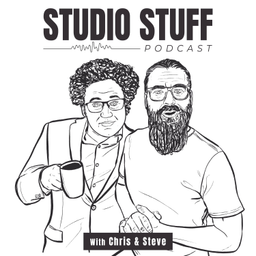
The Studio Stuff Podcast is your go-to home studio hangout, where music production, mixing, recording, and mastering meet real talk, practical advice, and the occasional lousy jokes. Hosted by Chris Selim and Steve Dierkens, this isn’t a dry, technical lecture—it’s a laid-back, no-BS conversation about making great music with the gear you actually have.
Expect real-world insights, gear, and technique debates, plugin obsessions, and plenty of laughs along the way. Plus, we love hearing from you! Send in your questions, and let’s figure this whole studio stuff thing out together.
Ep 51 - When Your Ears Fool You: Why Mixing Gets Harder the Longer You Work
Studio Stuff Podcast |When Your Ears Fool You: Why Mixing Gets Harder the Longer You Work
Ever notice how you can hear everything that's wrong with your mix in the first 30 seconds, but after working on it for a while, those problems seem to disappear?
You're not imagining things! And if you've ever listened to a finished mix weeks or months later and wondered how you missed something so obvious, you're definitely not alone.
We're back for Season 3, and we're kicking things off with a great listener question about losing perspective while mixing.
We're diving into ear fatigue, the mental side of mixing, and the habits that can slowly make us lose objectivity. From listening at lower volumes and taking breaks to using references and changing monitoring systems, we share the techniques that help us hear our mixes with fresh ears again.
And as usual, we don't agree on everything! Especially when it comes to how we listen through a song.
Plus, we tackle another common home studio question: Should you convert MIDI and virtual instruments to audio before mixing?
Listener Q&A:
Ben from Wellington, New Zealand asks:
How do you keep your ears from getting too comfortable with the mixes you're working on?
Ben finds that he can immediately identify problems when he starts listening, but within seconds, his ears begin adapting. We discuss why this happens and share practical techniques to preserve those valuable first impressions.
Gerald asks:
Should I render my VST and MIDI tracks to audio before mixing?
We explain why we generally prefer working with audio during mixing, including the benefits for CPU performance, session organization, reliability, and long-term project recall. We also talk about when keeping the original MIDI available makes sense.
👉 Got a question for us?
Send us your home studio, recording, mixing, or music production questions. We'd love to tackle them in an upcoming episode!
16 Jul 2026
Ep 50 - The Mix Sounded Worse Loud… Here’s Why!
Studio Stuff Podcast | The Mix Sounded Worse Loud… Here’s Why!
Your mix sounds great at a normal listening level. Then you turn it up—and suddenly the reverb feels too loud, the cymbals sound harsh, and the low end starts taking over.
So, does that mean the mix is bad?
In this episode, we’re breaking down why mixes can sound dramatically different at louder playback levels. We talk about how human hearing changes with volume, how your speakers and room respond differently when pushed harder, and why one bad listening experience at a friend’s house shouldn’t send you back into a full remix.
We also explain how to check your mix loud without chasing problems that may not actually exist—and why reference tracks are essential before making any major changes.
You’ll Learn:
Why your ears hear frequencies differently at different volumes
Why bass, treble, reverb, and harshness become more noticeable when listening loud
How your speakers, amplifier, and room can change as the volume increases
Why one unfamiliar listening environment is only a single data point
How to use reference tracks when checking your mix at louder levels
Why your mix should become more exciting when turned up—not more painful
Topics & Stories:
The Fletcher-Munson curves and how they affect what we hear
Why a mix can sound balanced quietly but harsh when played loud
How to tell whether the problem is your mix, the room, or the playback system
Why checking your mix loud is useful—but shouldn’t become your main way of mixing
The value of listening quietly, from another room, or while doing something else
How references help you understand what “normal” sounds like at high volume
Listener Q&A:
Shoutout to Stefan Dawson from the Netherlands!
Stefan asked why a mix he loved suddenly revealed too much reverb and harshness when played loudly at a friend’s house. We explain why that reaction is completely normal—and how to decide whether the mix actually needs fixing.
Final Takeaway:
A mix will not sound exactly the same at every volume—and it shouldn’t.
The real goal is to create a mix that stays balanced and musical while becoming more exciting as the volume rises. Check it loud, check it quiet, compare it with trusted references, and always make your final decisions in a listening environment you know.
👉 Got a question for us?
📩 Submit it here: Form Link (https://docs.google.com/forms/d/e/1FAIpQLScQolqQwFebNLmggM-0fGpGvAfknWSkYhwtok0KBg0VVoId7g/viewform?usp=header)
We pull topics directly from your questions and YouTube comments.
And if you’re digging the show, hit follow/subscribe and leave a quick review.
It really helps more home studio folks find Studio Stuff.
4 Jul 2026
Ep 49 - Serve The Song: Cutting Parts Without Crushing Egos
Ep 49 - Serve The Song: Cutting Parts Without Crushing Egos
Two listener questions, two real studio problems this week. First up, what happens when a mix has too many great ideas competing for the same space, and how do you tell someone their part has to go without bruising their ego? Then we get into toms, arguably the hardest drum element to get right, and walk through our full process for cleaning, tuning, and sampling them until they sit huge in the mix.
We're talking arrangement, ego management, and the honest truth about how many "real" tom sounds you hear on records are actually sample-blended. Spoiler: probably all of them.
You'll Learn:
Why "serving the song" beats serving your own favorite part, every time
How to mute and A/B parts so the band hears the decision instead of just being told
Our go-to approach for gating and cleaning tom bleed before anything else happens
When and why we blend in samples, and why that's not cheating
How to keep consistency across tom hits using volume automation instead of relying on inconsistent playing
Topics & Stories:
The mid-recording camera mishap that kicked off this episode
Why removing a part doesn't mean it was a bad idea
The "help me help you" mindset for dealing with band egos
Firing yourself as a drummer to serve the song
The Black Salt Audio Silencer plugin and why it changed the tom game
Why reverb, compression, and sampled drums are all just tone shaping, not cheating
Listener Q&A:
This week's questions came from two YouTube commenters. One asked how to know which parts to cut when a mix feels too dense, and how to deliver that news to a bandmate without the drama. The other asked for help getting toms to sound big and clear when everything else in the mix is dialed in.
👉 Got a question for us?
📩 Submit it here: Form Link (https://docs.google.com/forms/d/e/1FAIpQLScQolqQwFebNLmggM-0fGpGvAfknWSkYhwtok0KBg0VVoId7g/viewform?usp=header)
We pull topics directly from your questions and YouTube comments.
And if you’re digging the show, hit follow/subscribe and leave a quick review.
It really helps more home studio folks find Studio Stuff.
Reach and audience
Public platform figures. Ratings count people who left a rating, not total listeners.
YouTube views
39,591
Score snapshot 15 Sept 2025
Apple Podcasts (US)
5.0 / 5
5 ratings
Spotify
5.0 / 5
15 ratings
Podcast Authority Score: 57 / 100
A composite of feed quality, social presence, YouTube performance and engagement. Read the methodology.
Quality
70
Social presence
0
YouTube
76
Engagement
32
Contact Studio Stuff
Guest appearances
Books guests
Based on episode analysis; this does not confirm that the show is currently accepting guests.
Questions about Studio Stuff
Who hosts Studio Stuff?
hosts of Studio Stuff podcast and [Host Name] and Chris and hosts of Studio Stuff and Steve host the show. Published by Chris Selim & Steve Dierkens.
How often do new episodes come out?
The show publishes monthly, based on its RSS feed.
Does Studio Stuff take guests?
Yes. Guests have been identified in episode analyses.
Host of Studio Stuff?
Claim your podcast to manage its listing and keep your show details accurate.
Pod Engine is an independent podcast discovery and analytics service and is not affiliated with or endorsed by this podcast. Artwork and show content belong to their owners. Full legal notice.
Explore this show Podcast research with Pod Engine