
Cellist Daniel Lelchuk engages the most extraordinary thinkers, writers, musicians, and entertainers in spirited conversations and connects music to the wider world.
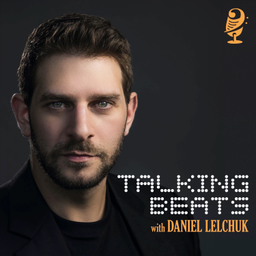
Talking Beats with Daniel Lelchuk
Claim This Podcastby Daniel Lelchuk
4.7(52 reviews)
145 episodes
Updated Daily
Accepts GuestsHas Sponsors
Podcast Overview
Cellist Daniel Lelchuk engages the most extraordinary thinkers, writers, musicians, and entertainers in spirited conversations and connects music to the wider world.
Language
🇺🇲
Publishing Since
5/15/2020
2 verified contact emails on file for Talking Beats with Daniel Lelchuk
Pitch yourself as a guest, propose sponsorships, or reach out directly to the host.
Recent Episodes
December 6, 2022
Ep. 144: Sonic Marvels, Evolution's Creativity, and the Crisis of Sensory Extinction with David George Haskell
<p>“Going out and listening is one of the most enjoyable things we do—and fruitful. By paying attention, we feed our imagination, we feed our creativity, we renew ourselves. We bust out of the algorithms and the fake news into the sensory reality of the living earth.”</p> <p>Biologist and writer David George Haksell joins the podcast, with his new book <a href="https://www.amazon.com/Sounds-Wild-Broken-Evolutions-Creativity/dp/198488154X/ref=tmm_hrd_swatch_0?_encoding=UTF8&qid=&sr=" target="_blank">Sounds Wild and Broken: Sonic Marvels, Evolution's Creativity, and the Crisis of Sensory Extinction</a>. For most of the history of the planet, the only sounds that were made came from the planet itself-- oceans, storms, rivers, rain. No animals made any sound-- until they did. What happened? What is the history of sound itself on planet earth? Fast forward to now...Haskell calls us humans "both great creators and great destroyers." What do we gain when we listen and take in the natural world? Are we losing this ability and habit? Haskell and Daniel discuss this and much more in an in-depth conversation. </p> <p>Please consider <a href="https://talkingbeats.com/support">supporting Talking Beats</a> via a one-time or recurring donation. You will contribute to us presenting the highest quality interviews with the world's most compelling people.</p> <p>David Haskell is a writer and biologist. His latest book, Sounds Wild and Broken (Viking), is an Editor’s Choice at the New York Times and explores the story of sound on Earth. Starting with the origins of animal song and traversing the whole arc of Earth history, he illuminates and celebrates the emergence, diversification, and loss of the sounds of our world, including human music and language.</p> <p>Haskell holds degrees from the University of Oxford (BA) and from Cornell University (PhD). He is William R. Kenan Jr. Professor of Biology and Environmental Studies at the University of the South, where he served as Chair of Biology. He is a Fellow of the Linnean Society of London, a 2014-2015 Fellow of the John Simon Guggenheim Memorial Foundation, a Fellow of the American Council of Learned Societies, and an Elective Member of the American Ornithologists’ Union. His scientific research on animal ecology, evolution, and conservation has been sponsored by the National Science Foundation, the Environmental Protection Agency, the Fish and Wildlife Service, the World Wildlife Fund, among others. He has served on the boards and advisory committees of local and national land conservation groups. Haskell’s classes have received national attention for the innovative ways they combine action in the community with contemplative practice. In 2009, the Carnegie and CASE Foundations named him Professor of the Year for Tennessee, an award given to college professors who have achieved national distinction and whose work shows “extraordinary dedication to undergraduate teaching.” The Oxford American featured him in 2011 as one of the southern U.S.’s most creative teachers. His teaching has been profiled in USA Today, The Tennesseean, and other newspapers.</p>
November 15, 2022
Ep. 143: Antony, Cleopatra, Octavian and the War that Made the Roman Empire with Barry Strauss
<p>"In our society, you've done your job as a citizen if you've voted, done jury duty, and paid your taxes. But Athenian democracy was direct democracy, not representative democracy-- so every citizen had to hold a public office. A radically different societal make up."</p> <p>Historian of the ancient world <a href="https://barrystrauss.com" target="_blank">Barry Strauss</a> is here, along with his new book, <a href="https://www.amazon.com/dp/1982116684/?tag=barrystrauss2-20" target="_blank">The War that Made the Roman Empire: Antony, Cleopatra, and Octavian at Actium</a>. In the wide-ranging conversation, Barry and Daniel cover many aspects of this pivotal yet little-known battle that was to define the future of the Roman Empire and consequently Western civilization. Besides the intricacies of the relationships between these larger than life figures and their ambitions, Barry connects leadership and its essential qualities to situations of today's world, so the characters of the Ancient World shine in a new relevance. Besides discussing this particular battle, Barry and Daniel also speak about the importance of teaching history in a university setting, and how crucial it is for students of the 21st century to face the tough lesson of the past-- whether pleasant or not. </p> <p>Please consider <a href="https://talkingbeats.com/support">supporting Talking Beats</a> via a one-time or recurring donation. You will contribute to us presenting the highest quality interviews with the world's most compelling people.</p> <p>Barry Strauss is a classicist and a military and naval historian and consultant. He is Professor of History and Classics, Bryce and Edith M. Bowmar Professor in Humanistic Studies at Cornell University, the visiting Corliss Dean Page Fellow at the Hoover Institution, Series Editor of Princeton’s Turning Points in Ancient History, and an author of bestselling books. Professor Strauss has spent years researching and studying the leaders of the ancient world and has written and spoken widely of their mistakes and successes. He is also a widely acclaimed military and naval historian whose analyses of the strategies and campaigns of some of history’s great commanders reveal the successful rules of engagement that were true on the battlefield and resonate in today’s boardrooms and executive suites.</p> <p>He is a former Chair of Cornell's Department of History as well as a former Director of Cornell’s Judith Reppy Institute for Peace and Conflict Studies, where he studied modern engagements from Bosnia to Iraq and from Afghanistan to Europe. He also served as Distinguished Visiting Professor in the Department of Defense Analysis at the Naval Postgraduate School. He is an expert on military strategy. He is currently director as well as a founder of Cornell’s Program on Freedom and Free Societies, which investigates challenges to constitutional liberty at home and abroad. He holds fellowships from the National Endowment for the Humanities, the German Academic Exchange Service, the Korea Foundation, the MacDowell Colony, the American School of Classical Studies at Athens, the American Academy in Rome, among others and is the recipient of Cornell’s Clark (now Russell) Award for Excellence in Teaching. In recognition of his scholarship, he received the Lucio Colletti Journalism Prize for literature and he was named an Honorary Citizen of Salamis, Greece. He holds a Ph.D. from Yale and a B.A. from Cornell. Professor Strauss's books have been translated into nineteen languages. He is also the author of over 60 scholarly articles and reviews.</p> <p>Professor Strauss is a well-known television personality with appearances on The History Channel, The Discovery Channel, CNN, PBS, and Netflix. He is the host of the popular podcast, "<a href="https://barrystrauss.com/podcast/" rel="noopener" target="_blank">ANTIQUITAS: Leaders and Legends of the Ancient World</a>," which is accessible on most platforms.</p>
October 25, 2022
Ep. 142: Saving Big Forests to Save the Planet
<p>"How do we make the case for and understand the necessity for intact forest ecosystems in a way that will resonate with people, and in a language that's accessible to the non scientist and the non specialist? People should be concerned about what's happening-- but also marvel at what still exists. We should marvel at what exists as the energy drink of action."</p> <p>Conservationist John W. Reid joins the podcast with new book in hand, co-written with the late Thomas E. Lovejoy. The book, called <a href="https://wwnorton.com/books/9781324006039" target="_blank">Ever Green: Saving Big Forests to Save the Planet</a>, explores the role forests play in our climate. What are some of the issues conservationists face today? How do major naturalistic figures like John Muir figure into today's movements? John also takes the listener on a tour of some of the most hidden indigenous peoples in the Amazon, and their intense relationship to the trees. There are five so-called "mega forests" in the world, and all are at risk. What can humans stand to gain if we put nationalistic enterprises aside and work to cooperate on the preservation of our treasured woodlands? How can an urban dweller in 21st century America become more connected to nature?</p> <p>Please consider <a href="https://talkingbeats.com/support">supporting Talking Beats</a> via a one-time or recurring donation. You will contribute to us presenting the highest quality interviews with the world's most compelling people.</p> <p><strong>John W. Reid</strong> is a conservationist and economist whose writing has appeared in the New York Times, Atlantic, and Scientific American. In 1998 he founded Conservation Strategy Fund, a group that delivers innovative training and analytical collaborations for activists, governments, and development agencies. The organization has worked with the governments of Brazil, Indonesia, Peru, Bolivia, Uganda, Mexico, California, and others; with the World Bank, USAID, the Inter-American Development Bank, and UN agencies; and with hundreds of environmental and Indigenous organizations in over 90 countries. This practical applied brand of “conservation economics” won CSF the 2012 MacArthur Award for Creative and Effective Institutions. Through it all, John got the greatest satisfaction teaching and mentoring emerging environmental leaders from around the world. It was also clear that economics, while strategically handy, was failing to appropriately value very big forests. It really could only see the value of their parts, often after disassembly. A new logic—or perhaps old wisdom—needed to guide the policies that would save our big places and planet in the process. Puzzling over these questions would eventually draw him into partnership with Tom Lovejoy, and to his current post with Nia Tero, an organization that supports Indigenous guardianship of vital ecosystems. John serves as Senior Economist and leads partnerships with several Indigenous peoples in the Brazil, Peru, and the US.</p> <p><strong>Thomas E. Lovejoy</strong> was a pioneering biologist who led and championed forest conservation efforts for over 50 years. Tom’s first encounter with a large forest was when he arrived at Belem, Brazil, the port city of the Amazon, in June of 1965. The dreams he had of a PhD in East Africa were immediately and permanently eclipsed by the experience of being in the world’s largest tropical forest, which was the size of the contiguous 48 states. It was beyond a biologist’s wildest dreams, vast, brimming with biological diversity (a term yet to be coined) myriad indigenous peoples, and encompassing parts of eight countries. Part of Tom’s role in conservation has been generating new ideas. He was the first to use the term “biological diversity,” in 1980. That year he produced the first projection of global extinctions for the Global 2000 Report to President Carter.</p>
145 total episodes available
Deep-dive analytics for Talking Beats with Daniel Lelchuk
Frequently asked questions
Have a different question and can't find the answer you're looking for? Reach out to our support team by sending us an email and we'll get back to you as soon as we can.
- What is Talking Beats with Daniel Lelchuk?
- How often does this podcast release new episodes?
This podcast updates daily.
- Where can I listen to this podcast?
This podcast is available on 4 platforms including Apple Podcasts, Spotify, and more. You can also use the RSS feed directly.
- Does this podcast accept guests?
Information about guest appearances is not available.
Legal Disclaimer
Pod Engine is not affiliated with, endorsed by, or officially connected with any of the podcasts displayed on this platform. We operate independently as a podcast discovery and analytics service.
All podcast artwork, thumbnails, and content displayed on this page are the property of their respective owners and are protected by applicable copyright laws. This includes, but is not limited to, podcast cover art, episode artwork, show descriptions, episode titles, transcripts, audio snippets, and any other content originating from the podcast creators or their licensors.
We display this content under fair use principles and/or implied license for the purpose of podcast discovery, information, and commentary. We make no claim of ownership over any podcast content, artwork, or related materials shown on this platform. All trademarks, service marks, and trade names are the property of their respective owners.
While we strive to ensure all content usage is properly authorized, if you are a rights holder and believe your content is being used inappropriately or without proper authorization, please contact us immediately at hey@podengine.ai for prompt review and appropriate action, which may include content removal or proper attribution.
By accessing and using this platform, you acknowledge and agree to respect all applicable copyright laws and intellectual property rights of content owners. Any unauthorized reproduction, distribution, or commercial use of the content displayed on this platform is strictly prohibited.