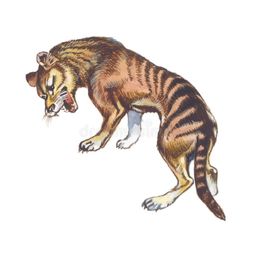
Tasmanian tiger mainland 2025.5 devils mainland mystery/Parks Victoria not screening for thylacine.
Michael Moss
- 15
- Episodes
- Weekly
- Cadence
- 2025
- First episode
About Tasmanian tiger mainland 2025.5 devils mainland mystery/Parks Victoria not screening for thylacine.
Three mainland Tasmanian devils examined to see if they were introduced or remnant on the Australian mainland. They were found on Mainland Australia. Correction second devil was found in 1971 not 1978 as i mention. Parks Victoria confirm they are not screening for Thylacine. The Tasmanian tiger has been extinct in Tasmania since late 1936. Tasmanian tiger also brought onto mainland Australia secretly ? See below links.... https://tunein.com/podcasts/Science/T... https://shows.acast.com/expedition-un... https://www.smh.com.au/national/thyla... https://www.youtube.com/watch?v=Ct0XTZaMXbc
- Publisher
- Michael Moss
- Category
- science
- Language
- en
- Explicit
- No
- First episode
- 19 May 2025
- Latest episode
- 7 Oct 2026
Latest episodes
15 episodes in the feed.
7 Oct 2026
Tasmanian Tiger Incompetence | Mainland Thylacine Search
This investigative breakdown exposes the archival oversight surrounding the final thylacine specimen at the Tasmanian Museum and Art Gallery, while connecting past institutional failures to the modern Mainland Thylacine Search. Historical data reveals that the famous zoo specimen known as "Benjamin"—a name later exposed as a historical fake—was not actually the last surviving Tasmanian tiger. Instead, a newly uncovered female specimen outlasted him before her remains were misplaced for 85 years, fundamentally altering the extinction timeline and baseline data used for current mainland tracking initiatives. https://www.nine.com.au/australia-news/tasmanian-tiger-thylacine-remains-found-in-the-back-of-tmag-museum-cupboard-20221206-p5ymzy.html Remains of last known Tasmanian tiger found in the back of a museum cupboardRaffaella CiccarelliDecember 6, 2022 - 7.13am. One of the world's enduring zoological mysteries has been solved after the remains of the last-known thylacine - also known as the Tasmanian tiger - were discovered in the back of a dusty museum cupboard.The remains were found in the collections of the Tasmanian Museum and Art Gallery (TMAG) and had been missing for more than 85 years.In a soon-to-be-published paper, researchers found the old female animal had been caught illegally by trapper Elias Churchill from the Florentine Valley. It died a few months after being sold to Beaumaris Zoo in Hobart in May 1936.The thylacine remains came into the possession of the Tasmanian Museum and Art Gallery (TMAG) in 1936, but had until now remained unidentified.The animal was skinned and its skeleton "disarticulated" for a newly-formed education collection - but it disappeared among the museum's archives."The sale was not recorded or publicised by the zoo because, at the time, ground-based snaring was illegal and Churchill could have been fined," Robert Paddle, paper co-author and comparative psychologist from the Australian Catholic University, said."The thylacine only lived for a few months and, when it died, its body was transferred to TMAG."For years, many museum curators and researchers searched for its remains without success, as no thylacine material dating from 1936 had been recorded in the zoological collection, and so it was assumed its body had been discarded."Tasmanian tiger may not be extinctAn animal called Benjamin was previously believed to the last known Tasmanian tiger, but the recent find has flipped that on its head. A thylacine called Benjamin, famously immortalised in grainy black and white video, was previously believed to be the last of the species.Benjamin died alone in his enclosure after succumbing to exposure at the Beaumaris Zoo on September 7, 1936, however, the rediscovered female is thought to have outlasted him.The remains, still attached to the five cards created for the education collection, are now on display in the museum's thylacine gallery."It is bittersweet that the mystery surrounding the remains of the last thylacine has been solved, and that it has been discovered to be part of TMAG's collection," TMAG Director Mary Mulcahy said.The Tasmanian tiger was hunted to extinction upon European settlement as farmers blamed the native carnivorous marsupial for the deaths of livestock.It became feared and in 1888 the Tasmanian government introduced a bounty of £1 per full-grown animal and 10 shillings per juvenile animal destroyed.The species was declared officially extinct in 1986. https://www.abc.net.au/news/2018-07-10/curious-hobart-what-happened-to-hobart-beaumaris-zoo/9898128 Don’t call it Benjamin. Lennard said it was a furphy that the last tiger in captivity at Beaumaris was ever known as Benjamin."That came about in the 1960s … no-one who worked at the zoo, including Alison Reid, ever knew it by that name," he explained."It is thought the person who started that, who said they worked at the zoo, never did."
19 Sept 2026
The Phantom Tasmanian Tiger of Papua New Guinea
Is the thylacine alive and in Papua New Guinea? While rumors persist of a phantom predator, evidence shows the "Tasmanian Tiger" does not exist there.New Guinea singing dog photographed in the wild for the first timecover imageJeremy Hance3 Dec 2012IndonesiaArticle Summary.Cropped close-up of New Guinea singing dog. This is arguably the first time the dingo-like canine has been photographed in the wild. Photo by: Tom Hewitt.A rarely seen canine has been photographed in the wild, likely for the first time. Tom Hewitt, director of Adventure Alternative Borneo, photographed the New Guinea singing dog during a 12-day expedition up a remote mountain in Indonesian Papua. Very closely related to the Australian dingo, the New Guinea singing dog, so named for its unique vocalizations, has become hugely threatened by hybridization with domesticated dogs.“When we reached [our guide and cook] the guide proclaimed ‘dog,'” Hewitt writes in a blog entry about his trip up Mandala Mountain. “This took me quite by surprise and it took three explanations by him for me to understand. But sure enough above us on the rocky outcrop in the bush there was a dog—the guide seemed as bemused by it being there as we were. […] We watched it for around 15 minutes as it continued to watch us. It seemed as curious as we were but not particularly scared or nervous. What stood out was how healthy it looked upon closer examination with binoculars.”Hewitt’s sighting is the first report ever of a New Guinea sighting dog in the region. Described as looking like foxes, due to reddish coats, the dogs are known for an ability to climb trees.“At the time of the sighting we were in a dramatic, wide valley with 4,000 [meter] peaks and limestone walls with waterfalls on either side,” Hewitt continues. “We spent a total of 4 days camping in this valley and there was regular contact with a number of exciting animals: couscous, possums and even tree kangaroos were seen most days, as well as many unidentified ground nesting birds living in the swamp grass. One species of bird of paradise was heard in the lower forest, but not seen. There were a few highland flowers and grasses and occasional groves of an ancient cycad species—primordial in every respect.”No one knows how rare the New Guinea singing dog has become, but in addition to being imperiled by breeding with domestic canines, the species is also hunted by locals. It is killed as a competitor and often eaten. Almost nothing is known about its life in the wild.There are no active conservation programs working to protect the species in New Guinea, however there are a number of groups in the U.S.—including New Guinea Singing Dog International and the New Guinea Singing Dog Conservation Society—that promote establishing a strong captive population as an insurance policy against extinction on the island. Just over 200 New Guinea singing dogs are found both in captivity outside New Guinea, but the population is severely inbred. https://news.mongabay.com/2012/12/new-guinea-singing-dog-photographed-in-the-wild-for-the-first-time/ Quoll farmhttps://documentarytelevision.com/aus... (https://www.youtube.com/redirect?event=video_description&redir_token=QUZZTVljRzJuTU5VbzEwMnJxempVWjZyQUEzU3xBTl9pYzRjU1hwNHNfNUFMZzlvT2Z1MXE0VjltaGRhNU5tQ2RiVVNUUDRtcmRTaWhaR05MUzJZXy1YQzAyaEhCN3RIelFOc0wtTmlod1h3WEhldEVXY0JoRTBxYUJUWV8tRlVD&q=https%3A%2F%2Fdocumentarytelevision.com%2Faustralia%2Fquoll-farm-a-600k-wildlife-hit-for-abc-australia-smithsonian-zdf-arte-nhk%2F&v=FLN-0T9kCWE)Ned Terryhttps://catalogue.nla.gov.au/catalog/... (https://www.youtube.com/redirect?event=video_description&redir_token=QUZZTVljR19GNFpmS3RpSnVNa01mUUVLenk1RnxBTl9pYzRlbkRHaThUMGZsM0dkVWdIQXFrUmVwU1k5Y1B4bDJydGJETmlwcnEweW9aTC1iYS1pWkYxNGlrMWF6QkIzbTJTMDNzd0NwRWRvREJHV2IzcVUtcUk0ZzRqVUdSQVhN&q=https%3A%2F%2Fcatalogue.nla.gov.au%2Fcatalog%2F3563253&v=FLN-0T9kCWE)
19 Sept 2026
The 4 Genetic Flaws of the Tasmanian Tiger: What it Means for Mainland Survival
"While institutional science focuses on these four genetic flaws regarding the thylacine's historic decline, my research applies this directly to the mainland Australian population. Because these gene losses occurred millions of years ago, any thylacines introduced or surviving on the mainland possessed the exact same genetic vulnerabilities as the isolated Tasmanian populations. Below is a summary of the genetic study:"November 11, 2025 at 12:55 pmHome » ANIMALS » What Really Caused The Tasmanian Tiger To Go Extinct? New Research Finds That Their Doom Began Over A Million Years Ago With The Loss Of Four Key Genesby Michael LevanduskiThe Tasmanian tiger, also known as the Thylacine (Thylacinus cynocephalus), was a major predator in Australia and surrounding regions for millions of years. The last one to be seen, however, was in 1936 and since then they are believed to have gone extinct.Most people assumed that they went extinct largely because of human influence. As people settled in different areas, they would hunt the Tasmanian tiger because it was considered a pest that would eat their livestock. While both of these things undoubtedly contributed to the hastening of extinction for the animal, a new study published in the Proceedings of the Royal Society says that they were likely headed to that fate for much longer. In fact, it says that the loss of four key genes sometime over a million years ago might have led to their downfall. In the paper, the team explains:“The thylacine genome exhibits the loss of four genes—SAMD9L, HSD17B13, CUZD1 and VWA7—each with important biological functions and implications for species fitness. Our investigation into the timing of gene loss events revealed a staggered pattern, occurring over a span of approximately 13−1 [million years ago]. This temporal distribution indicates that the gene losses were not confined to a single evolutionary event but occurred progressively after the Middle Miocene Climate Transition.”This transition time took place sometime between 15 and 13 million years ago and it is considered to be a major ecological and climate change. The ancient ancestors to the Tasmanian tiger would have been a lot smaller at the time. The animal evolved to become larger, which may have been the result of the gene changes, or the cause of them.Those four genes, however, were important for the species immune functions, including key antiviral and anti-tumor abilities. In addition, around the same time, the Tasmanian tiger experienced a reduction in its olfactory receptor genes. This reduction in sensitivity to smell indicates that the species was moving from hunting by scent to relying more on sight and hearing. the team says:“Unlike the Tasmanian Devil, a scavenger, the taller thylacine likely depended on vision and sound for hunting, aided by its ability to see over vegetation.”While the team does not know what exactly triggered these evolutionary changes, the loss of those genes made the species less able to survive in the world of the future. This does go to show that some evolutionary changes that have benefits at the time can actually cause problems for future generations. The team said:“Whatever the cause for gene loss, the loss of SAMD9L, HSD17B13, CUZD1, and VWA7 genes in the thylacine possibly had negative pleiotropic effects, potentially compromising its health by affecting antiviral defense, metabolic processes, lactation, pancreatitis, and tumor susceptibility. Although model-based population viability analyses suggest that the disease played only a minor role in thylacine extinction, other studies suggest that a ‘canine-distemper-like’ disease played a role in exacerbating its extinction.”Of course, this does not let humans off the hook entirely. Just because the Thylacine’s evolutionary path made their survival more difficult, they likely could have been fine for thousands of years more if it weren’t for the actions of people.
7 Sept 2026
Tasmanian Tiger Extinction Myth: 2026 Mainland Thylacine Search and Research
Life ScienceTasmanian tiger wrongfully hunted to extinctionSkull analysis reveals it hunted prey smaller than sheepJustine E. Hausheer • November 15, 2011Article Summary.Marie Attard and Christopher HammangA new examination of the skull of an extinct Tasmanian tiger, reported recently in the Journal of Zoology, suggests that the dog-like marsupial, also known as a thylacine, was mistakenly branded as a livestock killer and wrongfully hunted to extinction by Australian and Tasmanian farmers in the early 20th century.Skull examinations by biologist Marie Attard of the University of New South Wales indicate that the carnivore was also vulnerable to extinction because it had a very narrow range of prey, probably consisting of animals smaller than itself, like wallabies, bandicoots, and possums. Limitations in killing larger prey would have increased the thylacine’s vulnerability to extinction, unless smaller prey was consistently abundant. If Attard is correct, thylacines did not regularly hunt cattle or sheep and thus were wrongfully eradicated by farmers.Thylacines resembled a medium-sized dog, with a long, stiff tail and dark brown stripes across the rump. Wild thylacines persisted in Tasmania until the early 1930s. The last captive thylacine, nicknamed Benjamin, died of neglect in 1936 when he was left outside in cold weather. Two months before his death, the Tasmanian government passed laws to protect thylacines. Before that year, the government issued bounties on thylacines, rewarding farmers for their kills.Attard’s team used an X-ray computed tomography (CT) scanner to create a three-dimensional computer model of the skull, and then examined how the skull functioned under certain stresses, including the strain of biting and holding struggling prey. The team then compared the thylacine’s skull to those of two other carnivorous marsupials — the Tasmanian devil and the spotted-tailed quoll. These animals are closely related to the thylacine and lived alongside it.Attard’s results show that the thylacine’s skull was weaker than the other two marsupials, especially when compensating for movements caused by struggling prey. According to Attard, this finding suggests that, unlike many carnivores, the thylacine primarily hunted prey smaller than itself. It also means the thylacine probably competed with the other two marsupials for food, increasing its risk of extinction.“Particularly among large predators, the more specialized a species is, the more vulnerable they are to extinction. I want[ed] to see how specialized the diet of the thylacine was, and whether this may have increased their extinction risk,” explains Attard. Earlier news coverage of the study focused on the implication that the thylacine was mistakenly killed because its skull was too weak to allow it to kill sheep. That may not be entirely true, according to Graham Slater, an evolutionary biologist at the University of California, Los Angeles, who has performed similar studies on carnivore skulls. A more fragile skull would make it more difficult for a thylacine to kill a larger animal, but not impossible, he explains. For example, compared to a mountain lion, a coyote has a weaker, narrow skull, like the thylacine’s. But, as Slater says, “coyotes are also pretty good at killing sheep.”Little is known about the thylacine’s hunting strategy. Most eyewitness accounts indicate that the thylacine was a solitary hunter, but these reports date from just before they became extinct, and could be biased by the low numbers of thylacines alive at the time. Though it may have killed sheep on occasion, its reputation as a major predator of livestock was probably exaggerated. https://scienceline.org/2011/11/tasmanian-tiger-wrongfully-hunted-to-extinction/The mainland Tasmanian tiger is a Claytons Tasmanian tiger. It is the Tasmanian tiger you have when you are not having a Tasmanian tiger. Famous TV adverthttps://www.youtube.com/watch?v=3qf4yUMxnjw
19 Aug 2026
Mainland Australia Tasmanian tiger/ Thylacine Hunt: The £50K Fox Head Discovery (August 2026)
News UK Home News. Bug-eyed ‘fox head’ bought for £50 at market uncovered as priceless ‘holy grail’ antique. The ‘extremely rare’ Tasmanian tiger head was first bought for £50 at an antiques market. Harriette Boucher Tuesday 18 August 2026 13:01 BST. A taxidermy “fox head” bought for £50 at an antiques market has sold for £50,000 after it was revealed to be a rare Tasmanian tiger. The thylacine head saw a bidding war break out at a Bristol auction house last week . An anonymous seller had bought it at a West Country fair earlier this year because “the novelty googly eyes attached to it made them laugh”. Andrew Stowe, the auctioneer at Auctioneum, said: “When we told the vendor how much it had sold for, I thought they were about to pass out. I actually had to offer them a chair – they couldn’t believe it!” Successful bidder James Cranfield, who paid another £10,000 in fees, had gone to examine the head after seeing it in the catalogue and suspecting it did not belong to a fox, The Times reported .“It was sat on a table surrounded by all sorts of bric-a-brac and pottery. It confirmed exactly what I wanted to know,” he said . Mr Cranfield had hoped to buy it for the guide price of around £30-£50, but had to battle it out with other bidders who had also discovered it was the rare thylacine . “Unfortunately, someone else also had all the same suspicions as me, and therefore I had a battle to win it,” he said “The head I now own is the only one in existence. It is incredible.” The extinct marsupial, which was unique to Australia and New Guinea, largely disappeared from the mainland around 2,000 years ago . An isolated population survived in Tasmania, but European settlers wiped out the species . The last officially recorded thylacine died in 1936 at a zoo in Hobart, Tasmania .“Complete mounted heads of the species are virtually non-existent outside of major national museums and scientific institutions. Only 756 specimens are known to exist and of those only 101 are taxidermy . Only one taxidermy head is believed to exist .” Mr Stowe said the find was “unbelievably rare”, adding: “To find a complete item like this is almost unheard of, especially here in the UK . It was quite a shock to discover we were sitting on something so special.” 🧬 Companion Review: The New Zealand Pelt & The DNA Blueprint While the August 2026 UK auction discovery highlights how rare physical thylacine artifacts are, an older breakthrough from August 2020 in New Zealand directly connects these historical specimens to the modern mainland hunt. Discovered in a small gallery near Martinborough and verified by Te Papa curator Alan Tennyson, a pristine Tasmanian tiger pelt—originally acquired in 1923 by collector Archibald Robertson—turned out to be one of the best-preserved specimens in existence .This pelt provided an absolute goldmine for researchers. Unlike most historical specimens treated with DNA-destroying arsenic or mercury, this particular pelt was preserved using an alternative method that left long, intact fragments of DNA undamaged . Microscopic analysis also revealed that the thylacine possessed eight distinct hair types, including specialized hollow hairs designed to trap heat . This biological adaptation proves the animal was highly suited to cold, harsh climates—the exact type of terrain found in deep mainland wilderness corridors like the Strzelecki Ranges, Mainland Australia, Gippsland. This high-fidelity genetic data is exactly what modern researchers like Michael Moss rely on to deploy advanced environmental DNA (eDNA) water sampling across the Australian mainland. The 2026 UK find proves that priceless thylacine specimens are still hiding in plain sight. Quoted article https://www.independent.co.uk/news/uk/home-news/taxidermy-fox-tiger-auction-bristol-b3034665.html https://www.rnz.co.nz/news/world/424807/new-zealand-tasmanian-tiger-pelt-provides-dna-of-extinct-marsupial
7 Aug 2026
Tasmanian tiger/Thylacine thigh bone found in the Northern Territory Mainland Australia.July 2026
Ancient bone-crunching Territory thylacine femur uncovered near Alice SpringsBy Stewart Brash and Emma HaskinABC Alice SpringsTopic: PalaeontologyPosted yesterday 06/08/2026 at 6:43amA dusty fossil bed with bone The femur bone has been lying at the Alcoota fossil beds for 8 million years. (Supplied: Kirsti Abbott)In short: An intact Territory tiger (Thylacinus potens) femur has been discovered for the first time at the Alcoota Scientific Reserve near Alice Springs.The Territory tiger, which is a distant relative of the Tasmanian tiger, lived in the region about 8 million years ago. Thylacinus potens, a distant relative of the Tasmanian tiger, Thylacinus cynocephalus.The climate was drastically different to what it is now. It was wetter and the rivers were permanently flowing when the Territory tiger (Thylacinus potens) roamed the region which is now known as the Alcoota fossil bed, about 150 kilometres north-east of Alice Springs.Every two years, a team of Museum and Art Gallery of the Northern Territory (MAGNT) palaeontologists, scientists, volunteers and students from all over the country head to the scientific reserve to see what secrets they can uncover.Field trips are held at the Alcoota Scientific Reserve near Alice Springs every two years. MAGNT senior curator of earth sciences Adam Yates struck gold when working in one of the three pits at the scientific reserve.After meticulously dusting away millions of years of sediment, dirt and dust, Dr Yates uncovered for the first time an intact femur (thigh bone) of the Territory tiger.Man wearing wide brimmed hat, blue collared polo shirt and dark glass sitting in pit with bones in frontAdam Yates with the thylacine femur bone found in the south pit at the Alcoota Scientific Reserve. (Supplied: Dr Kirsti Abbott, Head of Science MAGNT)"It's the best feeling.""We've never found a whole skull, and we've certainly never found a major complete limb bone like this one."Dr Yates said initially he was not quite sure what he had found. "I was brushing away some overburden from a different bone when this ball joint appeared in front of me," he said."I didn't know what it was and kept brushing and following it back."Thylacinus potens was a dog-like predator that weighed about 38 kilograms. (Supplied: Adam Yates)He said he was actively managing his own expectations."You also have to tell yourself, 'Hang on. It could be something ordinary.'"But it was something extraordinary."Every now and then, it does turn out to be something quite exciting," he said.The discovery will provide scientists with valuable insights into the size of the animal that lived during the late Miocene and represents the first specimen of its kind in MAGNT's collection. Thylacine potens' thigh bone has been found in an 8-million-year-old fossil bed north-east of Alice Springs."We've been speculating about the thylacine from Alcoota," Dr Yates said."It's slightly different from the one from Tasmania."It was thought that the Alcoota's tiger was much bigger than its Tasmanian counterpart; however, the size of the found femur suggests the animal was not as big as first imagined."It doesn't look particularly large," Dr Yates said.The femur bone of Thylacinus potens will provide scientists with insights into the size of the dog-like animal. (Supplied: Kirsti Abbott)He said the tiger may have had some odd proportions."It had a big massive head, but a relatively small body behind it," he said."It's sort of like a bull-headed type of thing, quite different from the Tasmanian thylacine."Dr Yates said Alcoota's thylacine had broader teeth than its Dr Yates said once the bone was removed from its resting place, it would be prepared to be taken back to Megafauna Central in Alice Springs."We have to get it out of the ground in one piece," he said.He said he had been making the bone as solid as possible, digging around it to try to lift it out.
20 May 2026
Tasmanian tiger wiped out by Dingo on Mainland Australia no? Another Locally extinct mammal recently found on Mainland Australia.
https://www.sciencedaily.com/releases... (https://www.youtube.com/redirect?event=video_description&redir_token=QUFFLUhqbUlWWnVBQWtBVVdZZ3drVzc4WGtvSGVZcGJjZ3xBQ3Jtc0ttcDA3TzctX1VtWjJDM3ZLOEMwc2l5dE9xd2Fqa2VTWXpvM1FmY3I4R2NQM1g1OUNtVm5lXzhlT1phVFdBSEF2Vk10LUc3cmFDek1tMnFsWlM0TmREUXJxZXduQjl1X2dWOXJWUXRQVVY5ZTFIbmhiTQ&q=https%3A%2F%2Fwww.sciencedaily.com%2Freleases%2F2013%2F09%2F130910095413.htm&v=cu5f8ZQLX3g)Dingoes have been unjustly blamed for the extinctions on the Australian mainland of the Tasmanian tiger (or thylacine) and the Tasmanian devil, a University of Adelaide study has found. In a paper published in the journal Ecology, the researchers say that despite popular belief that the Australian dingo was to blame for the demise of thylacines and devils on the mainland about 3000 years ago, in fact Aboriginal populations and a shift in climate were more likely responsible. "Perhaps because the public perception of dingoes as 'sheep-killers' is so firmly entrenched, it has been commonly assumed that dingoes killed off the thylacines and devils on mainland Australia," says researcher Dr Thomas Prowse, Research Associate in the School of Earth and Environmental Sciences and the Environment Institute. This study below is also very interesting as the Tasmanian tiger/Thylacine i videotaped hunting in 1998 also moved like a cat...https://www.livescience.com/14006-thy... (https://www.youtube.com/redirect?event=video_description&redir_token=QUFFLUhqbFV3UDI2a1lUSmhDWXpXNVF1bjl2MGh0Nk5WQXxBQ3Jtc0tuTU92MUI5S1NKd1JLZm9ERFpPSHNYYVkteVkxaEZZN0VNRU5ValVYTG1sTzB3QkFYUDk2NGhZYXdBNFlLLXY0b0hScFdXR25QSDJpMk5wc2lzb0ZqVERtd1NRYWF2aTU1NEVrcURLZW5wWW5HWlp6RQ&q=https%3A%2F%2Fwww.livescience.com%2F14006-thylacine-hunting-behavior.html&v=cu5f8ZQLX3g)Dingoes Didn't Run Tasmanian Tigers Out of Australia. Jennifer Welsh's By Jennifer Welsh published May 4, 2011 .Though highly similar in their skull anatomy, specialized for a carnivorous diet, the thylacine, front, and the dingo very likely had different hunting styles. Researchers analyzing skeletons of the forelimbs found important differences .Though highly similar in their skull anatomy, specialized for a carnivorous diet, the thylacine and the dingo very likely had different hunting styles. Researchers analyzing skeletons of the forelimbs found important differences. The extinct thylacine, more commonly known as the "Tasmanian tiger" or "marsupial wolf," hunted more like a cat than a dog, meaning the tiger moniker may be the more appropriate nickname. Researchers hypothesized that the dingoes were a main cause of the thylacine decline in Australia, because the two species were in direct competition — using the same hunting strategies to hunt the same prey. Quokka article link..https://perthisok.com/explore/quokkas-discovered-perth-hills/ My Thylacine video • Tasmanian tiger 1998 footage South Gippsla... (https://www.youtube.com/watch?v=Ct0XTZaMXbc)Rock art my video • Thylacine rock art on mainland Australia d... (https://www.youtube.com/watch?v=FprCttxJHyk)Other recent mainland Mammal discoveries video links .. • Marsupial found after 200 years on mainlan... (https://www.youtube.com/watch?v=fMmQ3HFFI-A) • Tasmanian tiger Mainland Australia 2023.Pa... (https://www.youtube.com/watch?v=I_jyJeBFc7w) 22/05/2026 Article out today on ancient DNA dingo study 88% pure dingo in Australia. https://www.abc.net.au/news/2026-05-22/dingo-dna-new-study-dingoes-have-some-domestic-dog-genetics/106700460
31 Mar 2026
Tasmanian Tiger rock art dated on mainland Australia at less than 1000 years old- 2026.
'Scientists have long believed the dog-sized marsupial predators, along with the Tasmanian devil, were driven to extinction on the mainland over 3,000 years ago, following the arrival of a new apex predator, the dingo.But paintings inside caves at northwest Arnhem Land in the Top End, showing both species, have been dated by Griffith University researchers at just 1,000 years old.The project’s lead, the university’s chair of rock art research, Professor Paul Taçon, shared two theories about the age of the paintings.'"The artists who made the more recent paintings may have seen actual living thylacines, and some of these creatures may have survived longer in Arnhem Land,” Professor Taçon said.“Alternatively, artists may have been inspired by earlier paintings.” • Northern Territory not screening for Tasma... (https://www.youtube.com/watch?v=jeR7Xhs5Hlw)My footage i took of a Tasmanian tiger on mainland Australia in 1998. • Tasmanian tiger 1998 footage South Gippsla... https://www.sci.news/archaeology/tasmanian-tiger-tasmanian-devil-paintings-northern-australia-14657.html (https://www.youtube.com/watch?v=Ct0XTZaMXbc)https://www.envirodna.com/resources/n... (https://www.youtube.com/redirect?event=video_description&redir_token=QUFFLUhqa0FfdV93QXpIalVPZEQ4Wk05LS01WmdWUHVxUXxBQ3Jtc0trVTVKaG5jVkVIdXlhay1rU1p0Vk5iUmVmNVVIREtELTZOemJ2d1FYQ0xmSmc5bzN4V3QwcVBlUXIwVmNnMHlDMGxGd1dSVmlqTEowN2lDQWdxZ3Fjcm1ERW5JbVJPSVRwTllZVkY2Y0FGUGZNRG0xaw&q=https%3A%2F%2Fwww.envirodna.com%2Fresources%2Fnews%2Fsearching-for-tasmanian-tiger-dna&v=FprCttxJHyk)
8 Feb 2026
Tasmanian tigers introduced into Wilsons Promontory NP 1910-1915 ? Mainland Australia. Part 4-2026.
Melbourne Zoo which was on the Committee of management at Wilsons promontory National Park in South Gippsland early last century where a couple of dozen native species were released into the wilds of the state of Victoria on mainland Australia. Melbourne Zoo had access to Tasmanian tiger traders and a interest in Tasmanian tigers as they bred them in captivity and housed 48 thylacine over many decades. William Henry Dudley Le Souef (28 September 1856 – 6 September 1923). Dudley Le Souef the then director of Melbourne Zoo was on the committee of management board. This week i uncovered the following from another book called Tasmanian Tiger and Nicholas Chare is the author... ' Lastly, is a quote from respected zoo director and ornithologist William Le Souëf stating, ‘Thylacines are now getting scarce as every man’s hand is against them . . . these animals will probably become extinct before many years ’.1919. Le Souëf, Wild Life in Australia 1907 his book.Introduced, remnant or both ? See my Tune in podcast for the options on mainland Australia.https://tunein.com/podcasts/Science/T... (https://www.youtube.com/redirect?event=video_description&redir_token=QUFFLUhqbnVyMHdjUFVsTl9xVjFjRmFraUZnY01xVlpHZ3xBQ3Jtc0trQUF5OUVaa2g5MFFQMmtBeHNDQmZway0yM2xKU2tURHh6ZEV5ODlCcUZTY2JaRjNZVS1INUpzY3MyYnVOWHhJUi15T0oxSFlnU1hRaGhneTdwaVIzZTVwUWpZbE9SYzdudDl4eHVzRHFwaEhPVWROcw&q=https%3A%2F%2Ftunein.com%2Fpodcasts%2FScience%2FTasmanian-tiger-rediscovered-p2155665%2F%3FtopicId%3D200662556&v=J7cItAPyZ8Y)Environmental DNA breakthrough...https://www.envirodna.com/resources/n... (https://www.youtube.com/redirect?event=video_description&redir_token=QUFFLUhqazVVTmhoVTlYdXNVV1lMZFV6VzFXaEpOeGZwZ3xBQ3Jtc0ttN1ItV1FiLThuc1pLOE9Qa2t6UUYxUDE2TGoxQ0VXcnpfUkg1c0o5MV9JYTd2eHlIeFphNnQwYzl3QmhlRUFGUzNocEFKUFZNV3RwQnhRUVpBenJCRWJzMTJVcm1ZODN3aDg5bzRNOG1CVk5XY0dWWQ&q=https%3A%2F%2Fwww.envirodna.com%2Fresources%2Fnews%2Fsearching-for-tasmanian-tiger-dna&v=J7cItAPyZ8Y)
13 Jan 2026
Did Melbourne Zoo introduce Tasmanian tigers into the wilds of Mainland Australia? Part 3-2026.
Melbourne Zoo which was on the Committee of management at Wilsons promontory National Park early last century where a couple of dozen native species were released into the wilds of the state of Victoria on mainland Australia. Melbourne Zoo had access to Tasmanian tiger traders and a interest in Tasmanian tigers as they bred them in captivity and housed 48 thylacine over many decades. Dudley Le Souef the then director of Melbourne Zoo was on the committee of management board. He visited Tasmania searching for Tasmanian tigers to purchase .He was the then director of the Melbourne Zoo, (William Henry) Dudley Le Souef, responded with: "as we have none to spare and they are difficult to procure, I would suggest ... that I go to Tasmania tomorrow for about a fortnight and visit the various centres where these animals are found, and propose taking my magic lantern with me, so as to interest the people .1 visit in our Gardens and requirements and we should make a good profit ... I anticipate the total expenses will be under fifteen pounds". The RMZAS council agreed to this proposal. Rmzas was Melbourne Zoo in 1902.Le Souef travelled through the area where Tasmanian tigers and devils were found. He also advertised widely for the zoos involved. He also gave 2 public lectures in Launceston so that if 1 of the aforementioned species was caught, they will go to Melbourne or Antwerp. The director was eventually able to obtain the following: a pair of Tasmanian devils, 2 black opossums and most important of all: a Tasmanian tiger. This male Tasmanian tiger was caught in its lair (den) in the Tasmanian Avoca district, where Le Souef was staying on the estate of family friends, the Franks family. The station hands involved (for those who do not know what these are; it are people hired to help on a farm) were paid £7 for their effort. Le Souef returned to Melbourne with his captured animals on 24 December 1902 and wrote F. Krueger (who is therefore probably F. L'Hoëst) a letter on 1 January 1903 offering the requested animals, including "one Wolf (Tasmanian) . . . price twenty pounds". Among others, the marsupial wolf was sent to Antwerp that same month (January).Also Melbourne Zoo received many Tasmanian tigers from James Harrison a prolific Tasmanian tiger trader from northern Tasmania over a couple of decades. Harrison was also supplying other species into Wilsons promontory national park for release. Did he supply Thylacines?
8 Jan 2026
Tasmanian tiger introduction theory into mainland Australia part 2. More discoveries 2026.
This Video/Podcast explores the two main players in the introduction of native species into Wilsons Promontory National park and if they had anything to do with Tasmanian tiger.Mr James Kershaw was the honorary secretary of the committee of management from 1908- 1946 Wilsons promontory National Park and also he was the curator of zoology at the National Museum 1899-1931.William Henry Dudley Le Souef was appointed to the committee of management at Wilsons Promontory national park in 1910 until 1923. Around 1902 he also succeeded his father as director of Melbourne Zoo, and held that position until March 1923, when he retired due to ill-health. He had been violently attacked and robbed in 1919[1] and never properly recovered.The Kershaw Connection with Tasmanian tiger is revealed in this video and also Dudley Le Souef connection with Tasmanian tiger is revealed.The launceston zoo curator McGowan had contact with both of the above and wrote to Melbourne Zoo in November 1906that “Tasmanian Wolves were almost extinct & TasmanianDevils [Sarcophilus harrisii] very difficult to obtain” (letterNovember 1906).McGowan, W. 1906. Letter to W.H.D. Le Souëf, November1906. Extracts cited from Ninth Minute Book, 3/8/1903 –4/9/1910, (meeting of 3/12/1906, pp134, 135). Royal MelbourneZoo archives, Public Records Office, Melbourne. In writing to the National Museumof Victoria, McGowan noted that “complete skeletons”from thylacines possessing “damaged or rotten skins” wereavailable, but that fine, entire specimens of the specieswere now almost impossible to find (letter 21/6/1909).McGowan, W. 1906. The goal of the committee of management at Wilsons promontory national park in releasing animals was to Quote James Kershaw 'to preserve native animals that are under the threat of extinction in their native habitats'.The Tasmanian tiger would of been a prime candidate for introduction but kept quiet from local farmers and they would of killed them due to the stock killing reputation of the thylacine.The link to the book i mention https://vnpa.org.au/wp-content/upload... (https://www.youtube.com/redirect?event=video_description&redir_token=QUFFLUhqazRqbmpfemVUYkVkc3VJUEF3c3dVWTBhUWJfZ3xBQ3Jtc0tsbnl0Yk1UTjI3NEV0cF9RQjFqWlZvaFFiSEtzSnNXYW85Q1dBenlOQlAtTHRLTUdPV2M2bTBrbG1fN1M5S3g1ZG1MaEdkbkVYN193X3d1SGRwNEJITGN4Z0FnYWJJVHdISVVPRmdtT0dieUoybWwxWQ&q=https%3A%2F%2Fvnpa.org.au%2Fwp-content%2Fuploads%2F2017%2F03%2FA-History-of-Wilsons-Promontory.pdf&v=3txgfJ1V6Ig)
22 Dec 2025
Tasmanian tiger introduction into Mainland Australia theory a recent Breakthrough. 2025/2026
https://tunein.com/podcasts/Science/T... (https://www.youtube.com/redirect?event=video_description&redir_token=QUFFLUhqbUZxTHhQVGk1U2R2RzZubnhuZm9ERGlNTGthQXxBQ3Jtc0tsdzV1eXBfV1VqZTIzNlB0R0gybk55cEQzOEh6LVI1cDFqbVFGdFJjR0NUOTNWZ3RkTGpRSi1ReEtTaDFsbTdBX2JCazZPd1dRS1g3TDRxSU9Ia0dQUTZZdUpsWmwzdXhsV0lNMzNDS1JNQmRRenpUWQ&q=https%3A%2F%2Ftunein.com%2Fpodcasts%2FScience%2FTasmanian-tiger-rediscovered-p2155665%2F%3FtopicId%3D200662545&v=R_ssjy3exN4)Public records of the Wilsons Promontory National Park Committee of Management.Related Data Collector of VPRS 14555 Correspondence Files, Alphabetical Series, Secretary of the Committee of Management Collector of VPRS 14577 General Correspondence Files, Alphabetical System II, Committee of Management Collector of VPRS 3226 Outwards Letter Books, Committee of Management Collector of VPRS 3227 Minute Books, Committee of Management.The -Breakthrough - information is below that i recently uncovered regarding a known supplier of native animals to Wilsons promontory National Park for free range introduction. They were in the Tasmanian Tiger trading game.Alfred Harrap & Son, based in Launceston, Tasmania, were prominent 19th and early 20th-century wool, skin, and produce merchants that played a significant role in the commercial trade of Tasmanian tiger (thylacine) skins and the sourcing of live specimens. Key details regarding Harrap & Son and the Tasmanian Tiger:Skin Trade: In the late 19th century, Harrap & Son were active in the auction market for "Native Tiger Skins," with records showing prices ranging from 10 pence to 2 shillings per skin in 1893.Live Specimen Sourcing: The firm was involved in the demand for live animals, advertising in May 1898 for "Two Pairs Live Hyenas (or Native Tigers), uninjured".Launceston Examiner newspaper 1898.Context of Trade: Along with other collectors and dealers of the era, Harrap & Son operated during a period when the Tasmanian government paid bounties for thylacines, treating them as pests to livestock. My Video of a Tasmanian tiger taken in South Gippsland in mid November 1998 towards dusk. • Tasmanian tiger 1998 footage South Gippsla... (https://www.youtube.com/watch?v=Ct0XTZaMXbc)
4 Jun 2025
Marsupial found after 200 years on mainland Australia. Marsupial Tasmanian tiger next ?
This episode explores the recent rediscovery of locally extinct marsupials on mainland Australia and considers whether the Tasmanian tiger could be next.
24 May 2025
Parks Victoria not screening for Tasmanian tiger on Mainland Australia 2025.
Parks Victoria's Jess explains to Michael that the organization does not screen for the extinct Thylacine due to limited resources and prioritization of extant threatened species.
19 May 2025
Tasmanian tiger search mainland Australia 2025.5 devils in mainland bush found and 3 examined.
This episode explores the examination of three Tasmanian devils found on mainland Australia to determine if they are remnants or introduced species, revealing insights into the potential reestablishment of Tasmanian wildlife.
Podcast Authority Score: 24 / 100
A composite of feed quality, social presence, YouTube performance and engagement. Read the methodology.
- Quality
- 47
- Social presence
- 0
- YouTube
- 0
- Engagement
- 0
Contact Tasmanian tiger mainland 2025.5 devils mainland mystery/Parks Victoria not screening for thylacine.
- Guest appearances
- Books guests
Based on episode analysis; this does not confirm that the show is currently accepting guests.
Host of Tasmanian tiger mainland 2025.5 devils mainland mystery/Parks Victoria not screening for thylacine.?
Claim your podcast to manage its listing and keep your show details accurate.
Pod Engine is an independent podcast discovery and analytics service and is not affiliated with or endorsed by this podcast. Artwork and show content belong to their owners. Full legal notice.
Explore this show
Podcast research with Pod Engine